Restaurant i-naba

On South King Street, Restaurant i-naba occupies a stretch of Honolulu where Japanese culinary traditions and local dining habits converge. The space rewards the kind of attention that rewards quiet rooms: considered, unhurried, and oriented around what's on the plate. For those moving through Honolulu's mid-island dining corridor, it represents the neighbourhood's quieter, more deliberate register.
Pearl is the En Primeur Club membership app — saves, bookings, and concierge access live there. Same editors, same standards.
- Address
- 1610 S King St # A, Honolulu, HI 96826
- Phone
- (808) 953-2070
- Website
- inabahonolulu.com
- Directions
- Get directions
 Saves & bookings on Pearl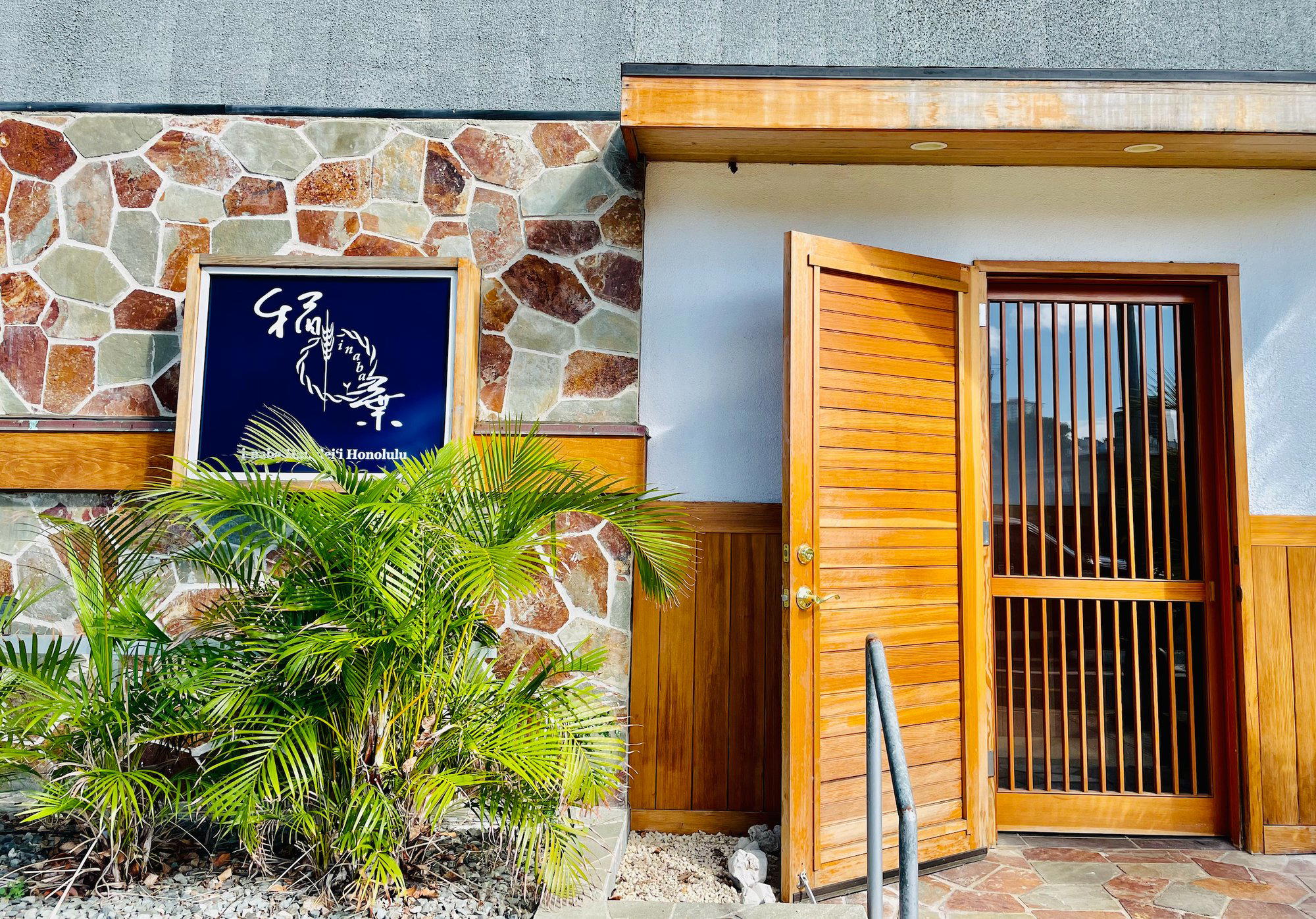
South King Street and the Architecture of Quiet Dining
Honolulu's dining energy concentrates at predictable coordinates: the waterfront corridors of Waikiki, the polished rooms of Kakaako, and the hotel dining rooms that line Kalakaua Avenue. South King Street operates differently. The stretch around 1610 is mid-island in both geography and temperament, a corridor where the city's Japanese-American community has sustained a particular kind of restaurant for decades: compact, deliberate, and largely indifferent to tourist foot traffic. Restaurant i-naba fits that pattern. Its address alone places it inside a dining tradition that predates Honolulu's recent wave of chef-driven openings and runs deeper than any single venue's tenure.
This matters because the physical container of a restaurant on South King Street carries meaning before a single plate arrives. These are not rooms designed for spectacle. They are rooms designed for repetition, for the kind of guest who returns rather than discovers, and for food that rewards familiarity rather than novelty. That spatial logic, spare and undemonstrative, sits in clear contrast to the theatrics that define the higher-profile end of Honolulu dining, venues like 53 By The Sea with its waterfront staging, or the event-formatted energy of Ahaaina Luau. i-naba's register is quieter by design, not by default.
The Spatial Logic of Mid-Island Japanese Dining
Japanese restaurants in Honolulu's mid-island neighbourhoods tend to share certain architectural instincts: controlled scale, minimal decoration, a seating arrangement that prioritises function over impression. These are not the omakase counters of Ginza, where the room's intimacy is a deliberate luxury signal, nor are they the sprawling izakaya formats that have spread across the US West Coast. They occupy a middle register, rooms where the sightlines are clear, the acoustics are manageable, and the guest is not competing with the space for attention.
That spatial restraint has a culinary counterpart. Mid-island Japanese dining in Honolulu carries the influence of Hawaii's Japanese-American community, a culinary tradition shaped by decades of adaptation, local ingredient availability, and the particular preferences of a community that has maintained its own dining culture largely independent of mainland trends. Venues like Fujiyama Texas and Ginza Bairin operate in adjacent registers, each reflecting a different point on the spectrum between tradition and adaptation. i-naba's positioning within this comparable set is defined less by a pronounced departure from convention and more by a sustained commitment to a particular way of doing things.
Where i-naba Sits in Honolulu's Wider Dining Map
Honolulu's restaurant scene has diversified considerably over the past decade. New American cooking, represented locally by venues such as Fête, has established a credible foothold. The city's longer-standing fine dining tradition, anchored by places like 3660 On the Rise, continues to draw a clientele oriented around occasion dining. And the informal, accessible end of the market remains as active as ever, with venues like 855-ALOHA representing that more casual register.
i-naba does not sit comfortably inside any of these categories. Its South King Street address places it in a neighbourhood that operates as a counterpoint to the city's more heavily trafficked dining zones, and its format, aligns with the mid-island Japanese dining tradition described above rather than with the chef-driven, media-facing restaurants that tend to dominate coverage of Hawaiian dining.
For context on what serious, deliberate dining looks like at the national level, the reference points are instructive. The commitment to spatial restraint and culinary focus that defines stronger examples from this mid-island tradition has parallels in the way venues like Single Thread Farm in Healdsburg or Blue Hill at Stone Barns in Tarrytown use the physical environment as a deliberate frame for what arrives at the table. The scale is different, the ambition differently expressed, but the underlying logic, that the room should serve the food rather than compete with it, is shared. At the further reaches of US fine dining, that principle animates the dining rooms of The French Laundry in Napa, Alinea in Chicago, and Le Bernardin in New York City, though each expresses it through an entirely different visual language.
What the Address Signals
A restaurant at 1610 S King Street is not making a bid for destination status in the conventional sense. It is not positioning itself for tourist capture or for the kind of social media visibility that drives reservation demand at venues like Atomix in New York City or Providence in Los Angeles. The address is a signal about intended audience and operating logic: this is a neighbourhood restaurant in the fullest sense, one that earns its place through consistency and community rather than through external validation.
That operating logic has its own integrity. Honolulu's mid-island dining corridor has sustained restaurants on exactly these terms for generations, and strong examples among them, whatever their format or cuisine, share a common characteristic: they are not performing for an audience beyond their own regular clientele. That quality, difficult to manufacture and easy to lose, is what makes the South King Street corridor worth attention from any visitor willing to travel beyond the waterfront.
Know Before You Go
Address: 1610 S King St #A, Honolulu, HI 96826
Neighbourhood: Mid-island South King Street corridor, Honolulu
Booking: Reservations are recommended.
Pricing: About $30 per person
Comparable Spots
Comparable venues nearby, for context on price, style, and recognition.
| Venue | Cuisine | Price | Notes |
|---|---|---|---|
| Restaurant i-nabaThis venue — the venue you are viewing | Authentic Japanese Soba and Tempura | $$$ | Not listed |
| Ichifuji | Japanese Shabu-Shabu | $$$ | Mōʻiliʻili |
| Restaurant SUNTORY | Traditional Japanese Kaiseki & Omakase | $$$ | Waikiki |
| Tanaka of Tokyo Central | Teppanyaki Steakhouse | $$ | Waikiki |
| Yohei Sushi KAHALA | Japanese-Hawaiian Omakase Sushi | $$$$ | Waialae |
| Sushi Ichika | Traditional Japanese Omakase Sushi and Tempura | $$$$ | Ala Moana |
Recognition history
Dated appearances from independent guides and award organizations, with the underlying list record or original source where available.
Opinionated About Dining Top Restaurants in North America Recommended
Opinionated About Dining
At a Glance
- Classic
- Intimate
- Lunch
- Dinner
- Local Sourcing
Current opening hours
- Monday
- 11 AM–2 PM, 5–8 PM
- Tuesday
- 11 AM–2 PM, 5–8 PM
- Wednesday
- Closed
- Thursday
- 11 AM–2 PM, 5–8 PM
- Friday
- 8–10 AM, 11 AM–2 PM, 5–8 PM
- Saturday
- 8–10 AM, 11 AM–2 PM, 5–8 PM
- Sunday
- 8–10 AM, 11 AM–2 PM, 5–8 PM
Hours can change for holidays and private events. Last verified .
Traditional Japanese with intimate counter seating and focus on authentic, healthy cuisine.