Our verdict
Alte Schule Siek occupies a converted schoolhouse in the small Schleswig-Holstein village of Siek, roughly 20 kilometres east of Hamburg. The restaurant draws from the agricultural belt surrounding the city, placing seasonal, regional sourcing at the centre of its kitchen approach. For Hamburg diners willing to leave the city limits, it offers a quieter, more grounded counterpoint to the metropolitan fine-dining circuit.

Pearl is the En Primeur Club membership app — saves, bookings, and concierge access live there. Same editors, same standards.
The menu
What to order
- Beefer Steak
- Erdkunde Menu
- Meeresbiologie Menu
A Village Address on Hamburg's Eastern Fringe
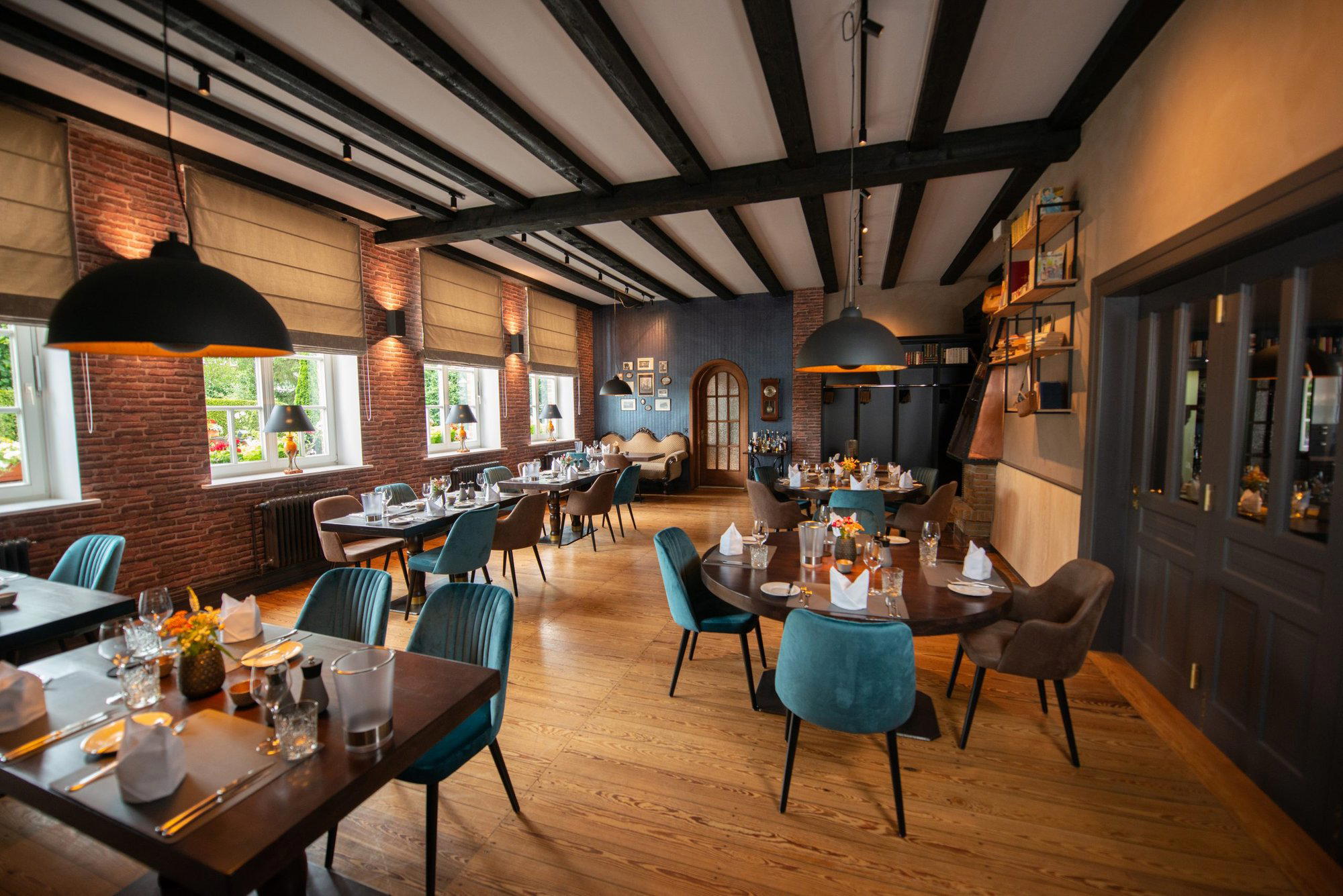
Germany's premium restaurant circuit tends to concentrate in cities or resort towns — Hamburg, Munich, the Black Forest, the Moselle valley. Siek, a municipality of a few thousand residents in Schleswig-Holstein, sits outside that circuit almost by definition. The drive east from Hamburg takes around 25 minutes, passing through the flat, productive farmland that has fed the region for centuries. Arriving at Hauptstraße 44, the former schoolhouse makes its institutional origins legible: solid northern German construction, the kind of building that was designed to last rather than to impress. That architectural restraint sets an expectation that the kitchen tends to honour.
The converted-schoolhouse format has become a reliable signal in German provincial dining. It tends to indicate a kitchen more interested in the ingredients arriving through the back door than in the theatre of a city address. That pattern holds in Siek, where the surrounding Stormarn district and the broader Hamburg Metropolitan Region provide direct access to dairy, grain, and market-garden produce without the intermediary steps that urban kitchens often absorb into their supply chains. For a broader map of what Hamburg's dining region looks like at its most formal, our full Siek restaurants guide covers the surrounding area in more detail.
What Regional Sourcing Actually Means in Schleswig-Holstein
The ingredient-sourcing argument in German regional cooking carries more weight in the north than the marketing around it sometimes suggests. Schleswig-Holstein is one of Germany's most agricultural states by land use, with particularly strong output in dairy and livestock. The proximity of the Alstertal and the wider Hamburg green belt means that kitchens in this corridor can, in principle, work with producers whose names and methods are known quantities rather than abstractions on a menu card.
That sourcing proximity matters because it compresses the cold chain between field and plate. A kitchen that can source butter, cream, or root vegetables from within 40 kilometres operates differently than one assembling ingredients from national or international distributors. The cooking that emerges from short supply chains tends toward a different register: less reliant on preservation techniques or imported luxury product, more responsive to what is actually in season in a specific latitude. In northern Germany in autumn, that means brassicas, root vegetables, game from the surrounding forests, and the freshwater fish species that run through the region's many lakes and rivers. In summer, the picture shifts toward soft fruits, new-season lamb, and the dairy output that peaks in the warmer months.
This is the culinary tradition that kitchens like Alte Schule Siek inhabit, whether or not they articulate it explicitly. It sits in a different category from the cosmopolitan creative-European model practiced at places like Aqua in Wolfsburg, which draws on Italian and Japanese references alongside German technique, or the classic French formalism of Schwarzwaldstube in Baiersbronn. It also occupies a different position from the urban creative formats represented by CODA Dessert Dining in Berlin or the modern European ambition of Vendôme in Bergisch Gladbach. The village address is not incidental to the food; it is structural to it.
How Alte Schule Siek Sits in Germany's Wider Fine-Dining Field
Germany's recognised fine-dining circuit extends from Hamburg's harbour district to the Bavarian Alps, with clusters in the Rhine-Ruhr corridor, the Black Forest, and the Moselle wine country. The range of ambition and format within that circuit is considerable. At one end, three-starred kitchens like Victor's Fine Dining by Christian Bau in Perl and Waldhotel Sonnora in Dreis operate with the precision and investment associated with the country's highest Michelin tier. Closer to Hamburg, Restaurant Haerlin represents the city's own entry into that conversation.
Alte Schule Siek operates at a different register. Its address in a small Stormarn village rather than a city or spa-hotel complex places it in a category of provincial German dining that values accessibility and regional identity over metropolitan scale. This is not a weakness in the proposition; for Hamburg residents, a destination restaurant within a 30-minute drive that draws directly from the surrounding landscape is a different kind of offer from a city-centre tasting-menu counter. The comparison is less with JAN in Munich or AUGUST in Augsburg and more with the growing category of rural-anchor restaurants that have become a feature of Germany's regional dining map over the past decade.
That category includes addresses like ES:SENZ in Grassau and AURA by Alexander Herrmann and Tobias Bätz in Wirsberg, both of which demonstrate that serious cooking does not require a city postcode. At the more experimental end of the spectrum, ATAMA by Martin Stopp in Sankt Ingbert and Schanz in Piesport show how smaller German towns have absorbed international technique into distinctly local contexts. The pattern across all of these is a deliberate rejection of the city-centre premium address as a prerequisite for culinary ambition.
The Case for Leaving Hamburg
Hamburg's own dining scene is dense enough to absorb most appetites. The city's restaurants range from harbour-front fish houses to tasting-menu formats with international reference points. For a reader benchmarking against global fine dining, comparisons extend to addresses like Le Bernardin in New York City or Atomix, also in New York, both of which represent the kind of urban fine-dining density that Hamburg aspires to match in its top tier.
The argument for Siek is different. It is not about competing with that density; it is about the specific quality that comes from a kitchen operating in direct relationship with its agricultural surroundings. The flatlands of Schleswig-Holstein are not scenically dramatic, but they are productive, and the restaurants that have taken root in that landscape reflect it. The schoolhouse on Hauptstraße carries that local character in its fabric as much as in its menu.
Restaurants like Bagatelle in Trier and ammolite in Rust demonstrate that Germany's most compelling dining moments often arrive in towns that do not appear on the obvious shortlist. Siek belongs in that company: a village address that earns its place on a Hamburg-area itinerary precisely because it is doing something the city, for all its options, cannot replicate.
Visitors from Hamburg should plan for a short drive east along the A1 or B75 corridor. The village is compact, and the restaurant address on Hauptstraße is direct to locate. Given the limited confirmed data on current booking policy and hours, contacting the restaurant directly before making the journey is advisable, particularly for weekend visits or larger groups.
Frequently asked questions
Does Restaurant Alte Schule Siek work for a family meal?
Siek is a small village rather than a city dining district, which tends to attract a more mixed age range than urban tasting-menu venues. The schoolhouse setting at Hauptstraße 44 suggests a convivial room rather than a hushed, formal one.
What kind of setting is Restaurant Alte Schule Siek?
The venue occupies a former schoolhouse in the village of Siek, on Hamburg's eastern fringe in Schleswig-Holstein. That architectural context typically produces high ceilings, solid construction, and a sense of occasion that contrasts with the rural surroundings. It is a destination address rather than a drop-in neighbourhood spot.
Is Restaurant Alte Schule Siek worth the drive from Hamburg city centre?
Siek sits roughly 20 kilometres east of Hamburg's city centre, making it a deliberate rather than incidental choice. Restaurants that sustain a following at that distance from a major city typically do so on the strength of the food and atmosphere rather than convenience alone. The schoolhouse address at Hauptstraße 44 has positioned itself as a regional destination within Schleswig-Holstein's quieter dining circuit.
What's the must-try dish at Restaurant Alte Schule Siek?
Given the restaurant's location in Schleswig-Holstein, regional northern German produce — cold-water fish, dairy, and root vegetables — forms the backbone of serious cooking in this area. Checking directly with the kitchen before your visit will give you the most accurate picture of the current offering.
What's the address for Restaurant Alte Schule Siek?
Restaurant Alte Schule Siek is located at Hauptstraße 44, 22962 Siek, Germany, Siek.
Can I walk in to Restaurant Alte Schule Siek?
Siek is a village setting rather than a high-footfall urban strip, which means walk-in availability depends heavily on the day and season. For a venue that draws diners from Hamburg specifically, advance booking is the safer approach. Reaching out via the restaurant's own channels before travel is advisable.
How It Stacks Up
| Venue | Cuisine | Price | Awards | Notes |
|---|---|---|---|---|
| Restaurant Alte Schule SiekThis venue — the venue you are viewing | German Fine Dining with Seasonal Specialties | $50–100 | Not listed | Not listed |
| Aqua | Modern European Fine Dining | Not listed | 3 Michelin Stars · World's 50 Best #33 | Contemporary German, Italian/Japanese, Creative |
| Schwarzwaldstube | Modern French Fine Dining | $150–200 | 3 Michelin Stars · World's 50 Best #47 | French, Classic French |
| CODA Dessert Dining | Dessert-Inspired Fine Dining | $200–300 | 2 Michelin Stars · World's 50 Best #79 | Creative |
| Vendôme | Modern German Haute Cuisine | $200–300 | 2 Michelin Stars · World's 50 Best #47 | Modern European, Creative |
| Tantris | Modern French Fine Dining | $300–500 | 2 Michelin Stars · World's 50 Best #73 | Modern French, French Contemporary |
Continue exploring
More in Siek
Restaurants in Siek
All restaurants in Siek →
Bars in Siek
Browse all →
Hotels in Siek
Browse all →
Wineries in Siek
Browse all →
Restaurant Alte Schule Siek
The wine
- Wine program
- Curated wine list
- Extensive wine list
Details
- Cozy
- Elegant
- Rustic
- Date Night
- Special Occasion
- Business Dinner
- Open Kitchen
- Extensive Wine List
- A La Carte
- Set Menu
- Wine Cellar
- Vegetarian Friendly
- Gluten Free Options
Relaxed, tasteful, and gemütlich atmosphere with friendly, knowledgeable service as described in guest reviews.