


1 Michelin Star · Gault & Millau Remarkable Restaurant
Our verdict
On Rue des Grands Augustins in Saint-Germain-des-Prés, Relais Louis XIII has held a Michelin star since at least 2024 and earned an Opinionated About Dining ranking among Europe's leading classical restaurants. Under Chef Manuel Martinez, it represents a specific strand of Parisian grand cuisine rooted in the sixth arrondissement's literary and intellectual heritage. Service runs Tuesday through Saturday, lunch and dinner.

Pearl is the En Primeur Club membership app, where members save venues, book tables and use the concierge.
The menu
What to order
- Lobster Ravioli with Foie Gras and Porcini Mushroom Foam
- Deep-Fried Millefeuille with Bourbon Vanilla Cream
- Sweetbread (Quasi de Veau de Lait)
- Sea Bass Quenelle
- Duck with Madeira and Cognac Sauce
A Street That Predates the Restaurant by Four Centuries
Rue des Grands Augustins is one of the oldest streets on the Left Bank. Before the restaurants, before the galleries, before Picasso painted Guernica in a studio a few doors down, this was the site of a 13th-century Augustinian convent. The street has always attracted a certain seriousness of purpose. That context is not incidental to understanding Relais Louis XIII as a dining address: it is the frame through which the restaurant makes sense.
Classical French restaurants in Paris occupy a complicated position in 2025. The category is neither fashionable nor irrelevant. It sits between the high-wattage creativity of places like Alléno Paris au Pavillon Ledoyen or Arpège and the relaxed neighbourhood bistro world. What it offers, when it works, is technique at full maturity: sauces that take days, proteins treated with precision rather than provocation, and a dining rhythm that treats two hours at the table as a minimum rather than an ambition. Relais Louis XIII belongs to that tradition and makes no apology for it.
Saint-Germain-des-Prés as a Dining Address
The sixth arrondissement's reputation has shifted over decades. The neighbourhood that once housed the intellectual café culture of Sartre and de Beauvoir is now one of the most expensive residential districts in the city. Dining here reflects that shift: the area runs toward formal French cooking, wine lists with depth, and rooms that have aged into their own gravitas rather than been designed to photograph well.
Within that context, the stretch between the Seine and Boulevard Saint-Germain holds a particular cluster of serious restaurants. L'Ambroisie on Place des Vosges, while technically in the fourth, draws the same type of guest. Closer in spirit and geography, L'Assiette represents the more casual end of Left Bank classical cooking. Relais Louis XIII sits at the formal end of the Saint-Germain spectrum, occupying a dining room that the building has apparently shaped as much as any decorator.
The address at 8 Rue des Grands Augustins places it within walking distance of the Seine, the Pont Neuf, and a concentration of antique dealers and art galleries that have occupied the street for generations. Coming here on a Tuesday lunch, when the rest of Paris is rushing, has a specific quality that dinner on a weekend does not fully replicate. The neighbourhood is at its quietest, and the restaurant's formality reads less as stiffness and more as simple adherence to pace.
Classical Cuisine in a Changed Market
To understand where Relais Louis XIII sits in Paris's current restaurant market, it helps to understand the broader category. Classical French cuisine, defined loosely as cooking rooted in the Escoffier tradition, stocks from bones, reductions, butter-mounted sauces, and precision sourcing of protein, has not disappeared from Paris. It has concentrated. The restaurants practising it at a high level are fewer than they were thirty years ago, but those that remain tend to have committed deeply rather than hedged toward trend.
Chef Manuel Martinez represents that commitment. The restaurant has held a Michelin star in both 2024 and 2025 and appears in the Opinionated About Dining Classical in Europe list in all three years of available data: ranked 211th in 2024, 231st in 2025, and holding a Highly Recommended status in 2023. That OAD ranking is a useful reference point because the list is assembled from votes by experienced diners and critics rather than anonymous inspectors, and its classical category is deliberately narrow. Entry into it signals that the restaurant is being tracked by people who eat in this category at volume across Europe, not just by tourists following a star recommendation.
The price range is €€€€, placing it in the same tier as Lasserre and broadly comparable to the formal classical end of the Paris market. That tier in Paris means a serious commitment per head. The trade is direct: cooking that has required significant time and skill to produce, a room with accumulated character, and service built around the expectation that the guest came to eat rather than to rush.
France's strongest classical tradition is not confined to Paris. Houses like Troisgros in Ouches, Auberge de l'Ill in Illhaeusern, Paul Bocuse in Collonges-au-Mont-d'Or, Bras in Laguiole, Flocons de Sel in Megève, Mirazur in Menton, Georges Blanc in Vonnas, and Les Prés d'Eugénie in Eugénie-les-Bains have shaped the national tradition over generations. Relais Louis XIII is the Paris expression of that same school, positioned in the city rather than the provinces, and drawing guests for whom Saint-Germain is both a destination and a context.
What to Order at Relais Louis XIII
The kitchen operates within classical French parameters, which means the menu follows season and market rather than a fixed permanent card. Dishes change according to what Manuel Martinez and the kitchen are working with. That said, certain structural choices tend to define what classical cooking at this level looks like: opening courses built around precise cold preparations or hot soups, main courses centred on fish or meat with sauce as the primary measure of technical achievement, and desserts that draw from the French pâtisserie tradition rather than plated molecular experiments.
At a Michelin-starred classical address in Paris, the safest and most revealing choice is almost always the menu rather than à la carte. The kitchen sequences courses to demonstrate range; ordering independently risks missing the internal logic of how a meal here is meant to unfold. Truffle, game in season, and the great French freshwater and saltwater fish all appear in kitchens of this type when the calendar aligns. The wine list, at this price tier and with this level of institutional seriousness, should cover Burgundy and Bordeaux in depth, with Loire and Rhône present for those who want to move outside the classic register.
For a formal classical restaurant where a significant portion of the clientele are international visitors or special-occasion diners rather than weekly regulars, that consistency is telling.
Know Before You Go
- Address: 8 Rue des Grands Augustins, 75006 Paris
- Hours: Tuesday to Saturday, lunch 12:15–14:30, dinner 19:15–22:30. Closed Sunday and Monday.
- Price tier: €€€€
- Awards: Michelin 1 Star (2024, 2025); Opinionated About Dining Classical in Europe Ranked #211 (2024), #231 (2025)
- Chef: Manuel Martinez
- Booking: Advance reservation recommended; specific booking method not confirmed, check the restaurant directly
- Getting there: Saint-Michel or Odéon metro stations; both are within a short walk
Explore More of Paris
Relais Louis XIII is one reference point within a broader Paris dining scene. For a fuller picture, see our full Paris restaurants guide, full Paris hotels guide, full Paris bars guide, full Paris wineries guide, and full Paris experiences guide.
Frequently asked questions
What price level is Relais Louis XIII?
Pricing at Relais Louis XIII is listed as €€€€.
What's Relais Louis XIII known for in terms of accolades?
Relais Louis XIII has received recognition including: Opinionated About Dining Classical in Europe Ranked #231 (2025); Category: Remarkable; Michelin 1 Star (2025); Opinionated About Dining Classical in Europe Ranked #211 (2024); Michelin 1 Star (2024); Opinionated About Dining Classical in Eu….
What should I eat at Relais Louis XIII?
The kitchen runs on a market-driven classical French menu, so the card shifts with the season rather than holding fixed signature dishes year-round. Manuel Martinez works within the canon of classic French technique, which historically means preparations like lobster, foie gras, and roasted meats built on long-cooked sauces. A Michelin star since at least 2024 and an OAD Classical Europe ranking of #211 in 2024 confirm the kitchen's consistency across courses, making the full tasting menu the benchmark choice over à la carte.
Where It Fits
| Venue | Cuisine | Price | Awards | Notes |
|---|---|---|---|---|
| Relais Louis XIIIThis venue (the venue you are viewing) | Classic French Haute Cuisine | $200–300 | 1 Michelin Star · Gault & Millau Remarkable Restaurant | Not listed |
| Alléno Paris au Pavillon Ledoyen | Modern French Fine Dining | $150–200 | 3 Michelin Stars · World's 50 Best #79 | Creative |
| Kei | Modern French with Japanese Influences | $300–500 | 3 Michelin Stars · World's 50 Best #93 | Contemporary French, Modern Cuisine |
| L'Ambroisie | Classic French Haute Cuisine | $300–500 | 2 Michelin Stars · World's 50 Best #23 | French, Classic Cuisine |
| Le Cinq - Four Seasons Hôtel George V | Modern French Fine Dining | $300–500 | 3 Michelin Stars · World's 50 Best #24 | French, Modern Cuisine |
| Plénitude | Modern French Sauce-Led Fine Dining | $300–500 | 3 Michelin Stars · World's 50 Best #14 | Contemporary French |
Recognition history
Dated appearances from independent guides and award organizations, with the underlying list record or original source where available.
Michelin 1 Star
Michelin
Gault & Millau Remarkable Restaurant
Gault & Millau
Opinionated About Dining Classical in Europe Ranked #231
Opinionated About Dining
Full recognition history (7 entries)
Michelin 1 Star
Michelin
Michelin 1 Star
Michelin
Opinionated About Dining Classical in Europe Ranked #211
Opinionated About Dining
Opinionated About Dining Classical in Europe Highly Recommended
Opinionated About Dining
Continue exploring
More in Paris
Restaurants in Paris
All restaurants in Paris →
Bars in Paris
All bars in Paris →
Relais Louis XIII
The wine
- Wine program
- Deep wine list
- Extensive wine list
- Sommelier-led
Details
- Romantic
- Classic
- Elegant
- Intimate
- Cozy
- Date Night
- Special Occasion
- Business Dinner
- Celebration
- Historic Building
- Private Dining
- Standalone
- Extensive Wine List
- Sommelier Led
- Local Sourcing
- Tasting Menu
- Prix Fixe
- A La Carte
- Wine
- Allergy Accommodating
- Vegetarian Friendly
Current opening hours
- Monday
- Closed
- Tuesday
- 12:15–2:30 PM, 7:15–10:30 PM
- Wednesday
- 12:15–2:30 PM, 7:15–10:30 PM
- Thursday
- 12:15–2:30 PM, 7:15–10:30 PM
- Friday
- 12:15–2:30 PM, 7:15–10:30 PM
- Saturday
- 12:15–2:30 PM, 7:15–10:30 PM
- Sunday
- Closed
Hours can change for holidays and private events. Hours as of .
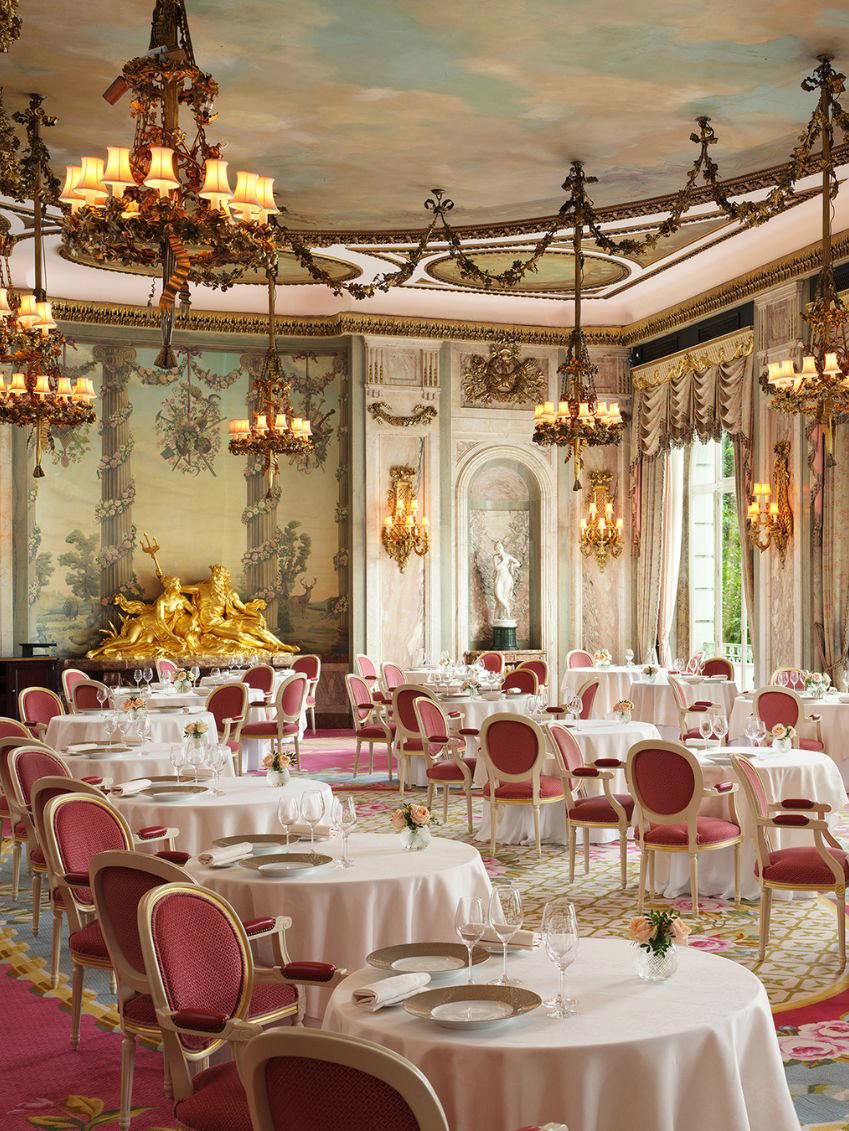
Intimate and cozy with exposed stone walls, wooden ceiling beams, stained glass windows, antique Louis XIII furnishings, and a sense of timeless French elegance; warm lighting creates a romantic, homey atmosphere despite the formal fine dining setting.