



A Michelin-starred institution on Avenue Franklin D. Roosevelt, Lasserre has anchored the 8th arrondissement's grand dining tradition for over 80 years. Ranked #215 on Opinionated About Dining's Classical Europe list (2024) and awarded a Les Grandes Tables du Monde distinction (2025), it operates Tuesday through Saturday evenings under chef Jean-Louis Nomicos, whose menu draws on both classical French technique and Mediterranean instinct.
Pearl is the En Primeur Club membership app — saves, bookings, and concierge access live there. Same editors, same standards.
- Address
- 17 Av. Franklin Delano Roosevelt, 75008 Paris, France
- Phone
- +33 1 43 59 02 13
- Website
- restaurant-lasserre.com
- Directions
- Get directions
 Saves & bookings on Pearl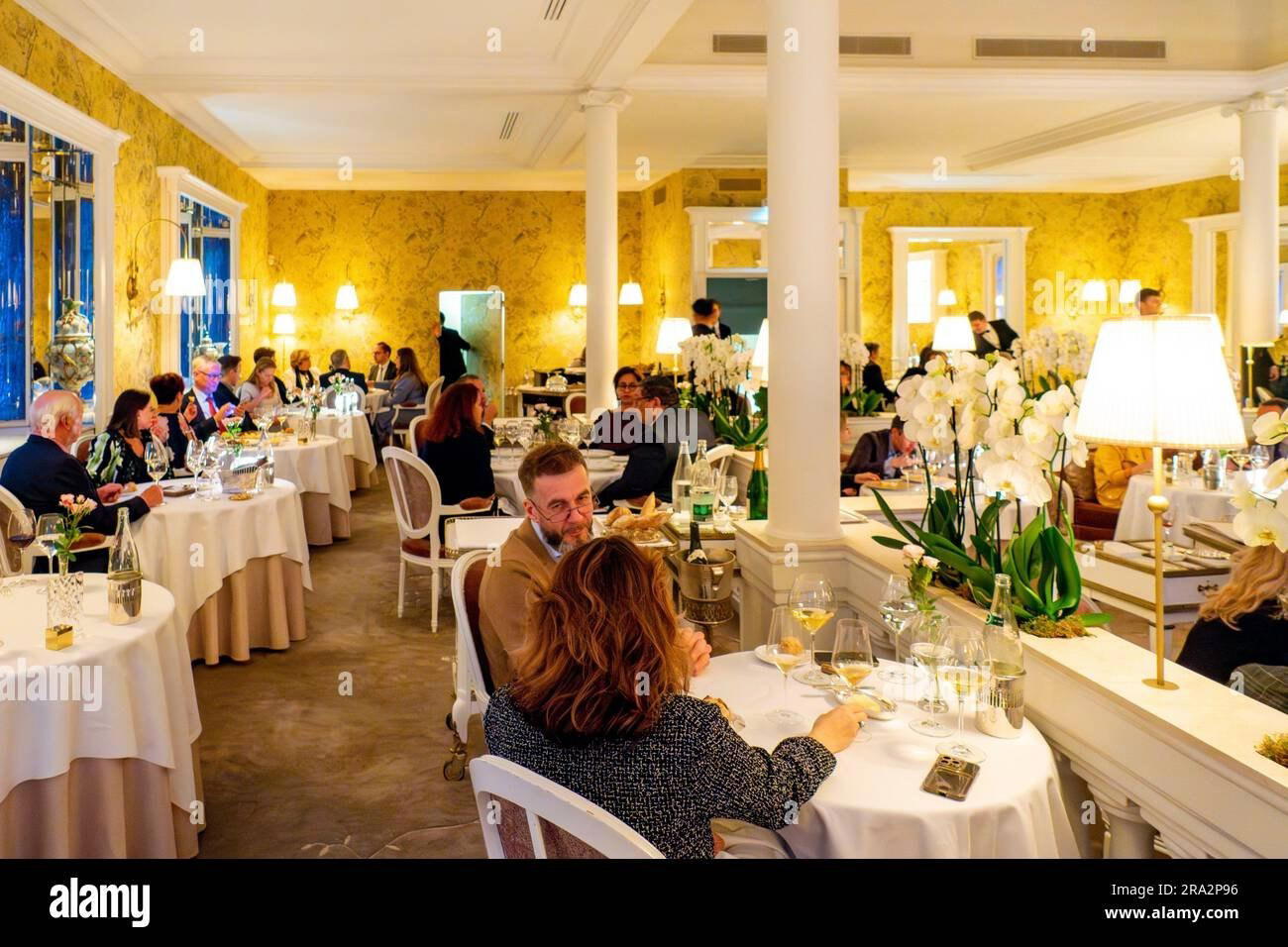
The Architecture of a Grand Dining Room
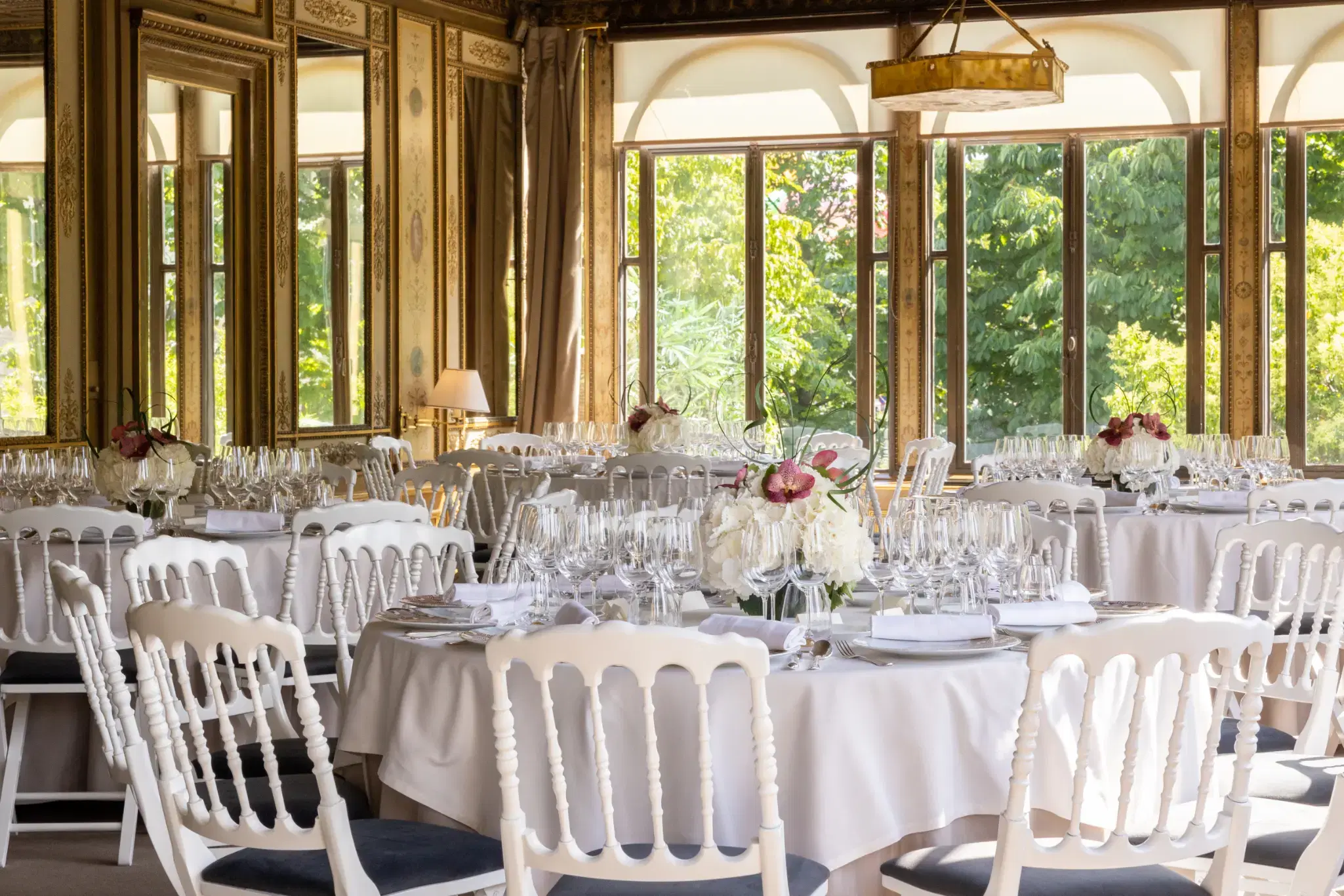
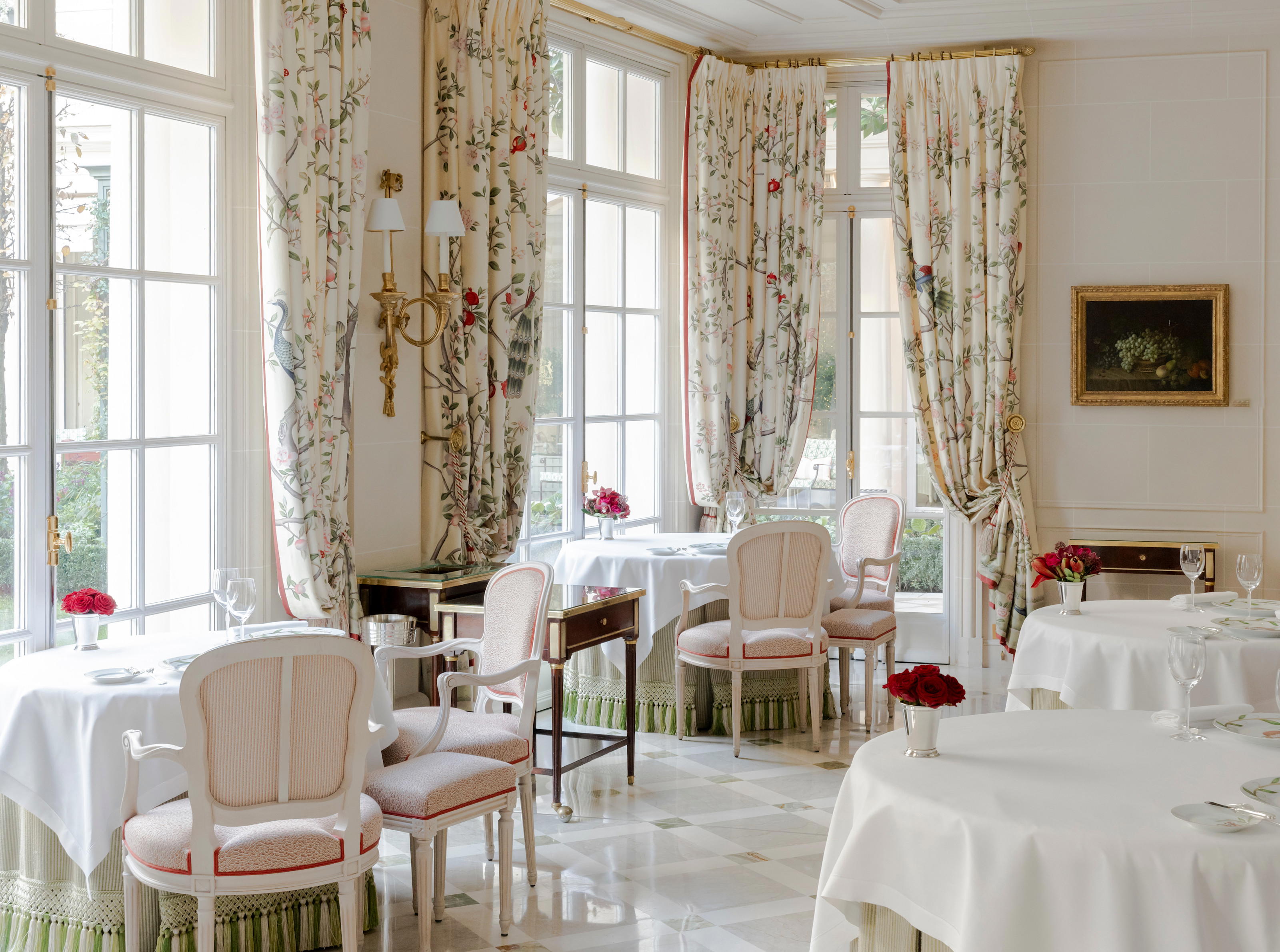
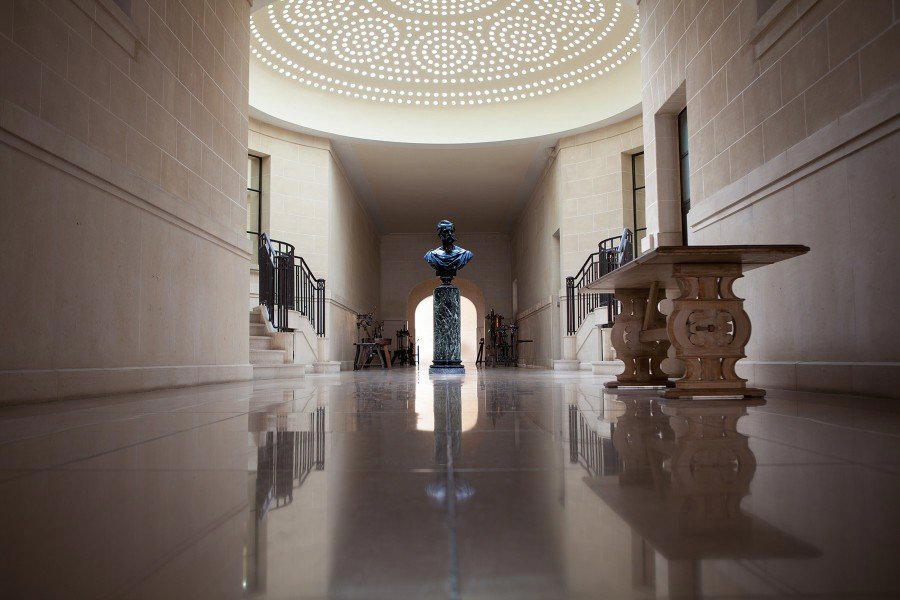
Lasserre is a one-Michelin-star French restaurant in Paris's 8th arrondissement, at 17 Avenue Franklin D. Roosevelt, with dinner service Tuesday through Saturday. Lasserre, in the Directoire-style mansion at 17 Avenue Franklin D. Roosevelt, belongs to that category without apology. The dining room reads as a deliberate accumulation: crystal chandeliers, Chinese porcelain, silver tableware, columns threaded with plants and orchids. Nothing here was chosen for minimalist effect. The effect is instead one of accumulated intention, the kind that takes decades to sediment into something that feels neither excessive nor studied.
The room's most discussed feature is structural: a retractable roof that opens according to season, flooding the tables with natural light on clear evenings and closing against the cold. This is not a theatrical gesture in the contemporary sense. The mechanism predates the current era of dining spectacle by generations, and its continued operation says something about the house's attitude toward its own inheritance, maintain what works, resist the renovation impulse that hollows out older rooms. Paris has many beautiful dining rooms. Relatively few have this kind of physical continuity with their original conception.
Where Lasserre Sits in the Paris Classic Tier
The 8th arrondissement has always held a distinct position in Paris fine dining, geographically close to the Champs-Élysées, associated with formality, institutional money, and the older guard of French haute cuisine. Within that geography, a small number of addresses sustain the grand dining format at the highest price tier. L'Ambroisie operates in the Marais at a comparable level of formality and price, though with a quieter address and a different kind of room gravity. Alléno Paris au Pavillon Ledoyen occupies the creative end of the spectrum nearby.
Lasserre's Michelin single star places it firmly in the upper bracket of classic French houses, not at the three-star tier of L'Ambroisie, but operating well above the entry level of the city's formal dining scene. The Les Grandes Tables du Monde award (2025) adds a second layer of institutional recognition: that organization's membership tends to align with houses that sustain service culture and room quality alongside culinary execution, rather than prioritizing pure kitchen innovation. For a diner choosing between Lasserre and the newer generation of creative €€€€ addresses, Arpège, for instance, the distinction is not one of quality tier but of intention. These are different kinds of dining experience with different comparable venues.
Houses like Auberge de l'Ill in Illhaeusern, Georges Blanc in Vonnas, and Les Prés d'Eugénie in Eugénie-les-Bains represent the same tradition of grand French restaurant-keeping: multi-decade operations in which the room, the cellar, and the table ritual carry as much weight as the current menu. Lasserre is the Paris representative of that cohort. Paul Bocuse's Auberge du Pont de Collonges in Collonges-au-Mont-d'Or is one famous iteration of the type. Troisgros in Ouches and Bras in Laguiole have evolved toward more personal creative visions. Lasserre, like Flocons de Sel in Megève and Mirazur in Menton, sustains a house identity that predates and outlasts any single chef's tenure.
The Cellar as Institution
At the classic grand dining level in Paris, the wine list is rarely incidental. In houses that have operated for multiple generations, the cellar often carries its own institutional history, vintages acquired decades before any current member of staff arrived, allocations maintained through long-standing négociant relationships, and a depth in Burgundy and Bordeaux that newer restaurants simply cannot replicate without either extraordinary capital or time. Lasserre's trajectory, from René Lasserre's founding through its current operation, spans a period in which some of France's most consequential vintages were laid down and, in some cases, are now approaching optimal drinking windows.
For a diner at this tier, the wine list functions as a parallel menu. The house's age and consistent positioning in the institutional tier of French dining suggest a cellar with genuine depth in the classical appellations: the grands crus of the Côte de Nuits, the premier crus of Meursault and Chassagne, the classified Médoc properties in mature vintages. At a €€€€ price point, bottle prices will be commensurate, but the access to properly aged stock justifies the comparison against younger operations where the same labels appear only in current releases.
The matching of cellar to kitchen is the more interesting question at Lasserre. Chef Jean-Louis Nomicos has introduced Mediterranean inflections alongside the classical French base, the Carabinero prawns, the Mediterranean-influenced prawn preparations alongside more Parisian-rooted dishes like the petits pois à la française, and the sommelier's task is to bridge a wine list shaped by decades of French grand cuisine tradition with a menu that has developed more coastal, southern range. Southern Rhône and Provence have genuine claim alongside Burgundy in that pairing context; how the list has evolved to reflect that shift is a question worth raising at the table.
The Kitchen's Current Register
The menu at Lasserre operates in the space between classical technique and Mediterranean instinct. The stuffed macaroni with black truffle, celery and duck foie gras presented in a light gratin sits in the older tradition of French grand cuisine pasta work, an elaborated format that gives the kitchen room to layer textures and fat registers. The squab preparation named for André Malraux, served with petits pois à la française, is a clear signal of the house's relationship with its own history: the dish carries a proper noun as a kind of internal monument. The Carabinero prawns prepared à la plancha with almond cream and peas with marigold reads from a different register entirely, coastal, lighter, with an ingredient (Carabinero) that belongs to Spanish and Southern French waters rather than the Parisian kitchen tradition.
That range is deliberate. In houses with this much heritage, a chef who simply maintains the archive produces something closer to a museum than a restaurant. Nomicos's Mediterranean thread keeps the kitchen oriented toward the present without requiring the house to rebuild its identity. The chocolate soufflé tart as a closing gesture is similarly calibrated: a soufflé is a test of kitchen discipline, and including one in the current menu is both a technical statement and a link to the formal dessert tradition that Lasserre has always sustained.
For comparison at the €€€€ tier on the Paris classic side, Relais Louis XIII offers a narrower classical focus; L'Assiette operates in a less formal register at a lower tier. Lasserre sits between those poles in terms of formality, and above them in terms of room scale and institutional ambition.
Planning a Visit
Lasserre operates Tuesday through Saturday, evenings only, with service from 7:00 PM to 9:30 PM. The house is closed Sunday and Monday. The address at 17 Avenue Franklin D. Roosevelt places the restaurant within close proximity of the Grand Palais and the eastern stretch of the Champs-Élysées, accessible by Metro from the Franklin D. Roosevelt station on lines 1 and 9.
Reservations: Advance booking required; Saturday availability is tightest. Hours: Tuesday–Saturday, 7:00 PM–9:30 PM; closed Sunday and Monday. Budget: €€€€. Awards: Michelin 1 Star (2024), Les Grandes Tables du Monde (2025), OAD Classical Europe #215 (2024).
Booking and Cost Snapshot
Comparable venues nearby, for context on price, style, and recognition.
| Venue | Cuisine | Price | Awards | Notes |
|---|---|---|---|---|
| LasserreThis venue — the venue you are viewing | French | $$$$ | Michelin 1 Star | Not listed |
| Alan Geaam | Not listed | $$$$ | Michelin 1 Star | Chaillot, French-Lebanese Fusion Fine Dining |
| AT | Rive Gauche, Modern Japandi Tasting Menu | $$$$ | Michelin 1 Star | Not listed |
| Sushi Shunei | Montmartre, Modern Japanese Omakase | $$$$ | Michelin 1 Star | Not listed |
| Don Juan II | Not listed | $$$$ | Michelin 1 Star | 16th arrondissement, Modern French Fine Dining |
| Ōrtensia | Not listed | $$$$ | Michelin 1 Star | 16th arrondissement, French-Japanese Fusion Haute Cuisine |
Recognition history
Dated appearances from independent guides and award organizations, with the underlying list record or original source where available.
Les Grandes Tables du Monde Member
Les Grandes Tables du Monde
Michelin 1 Star
Michelin
Gault & Millau Remarkable Restaurant
Gault & Millau
Michelin 1 Star
Michelin
Michelin 1 Star
Michelin
Opinionated About Dining Classical in Europe Ranked #215
Opinionated About Dining
Continue exploring
More in Paris
More from Chef Jean-Louis Nomicos
Browse all →
Restaurants in Paris
Browse all →
Bars in Paris
Browse all →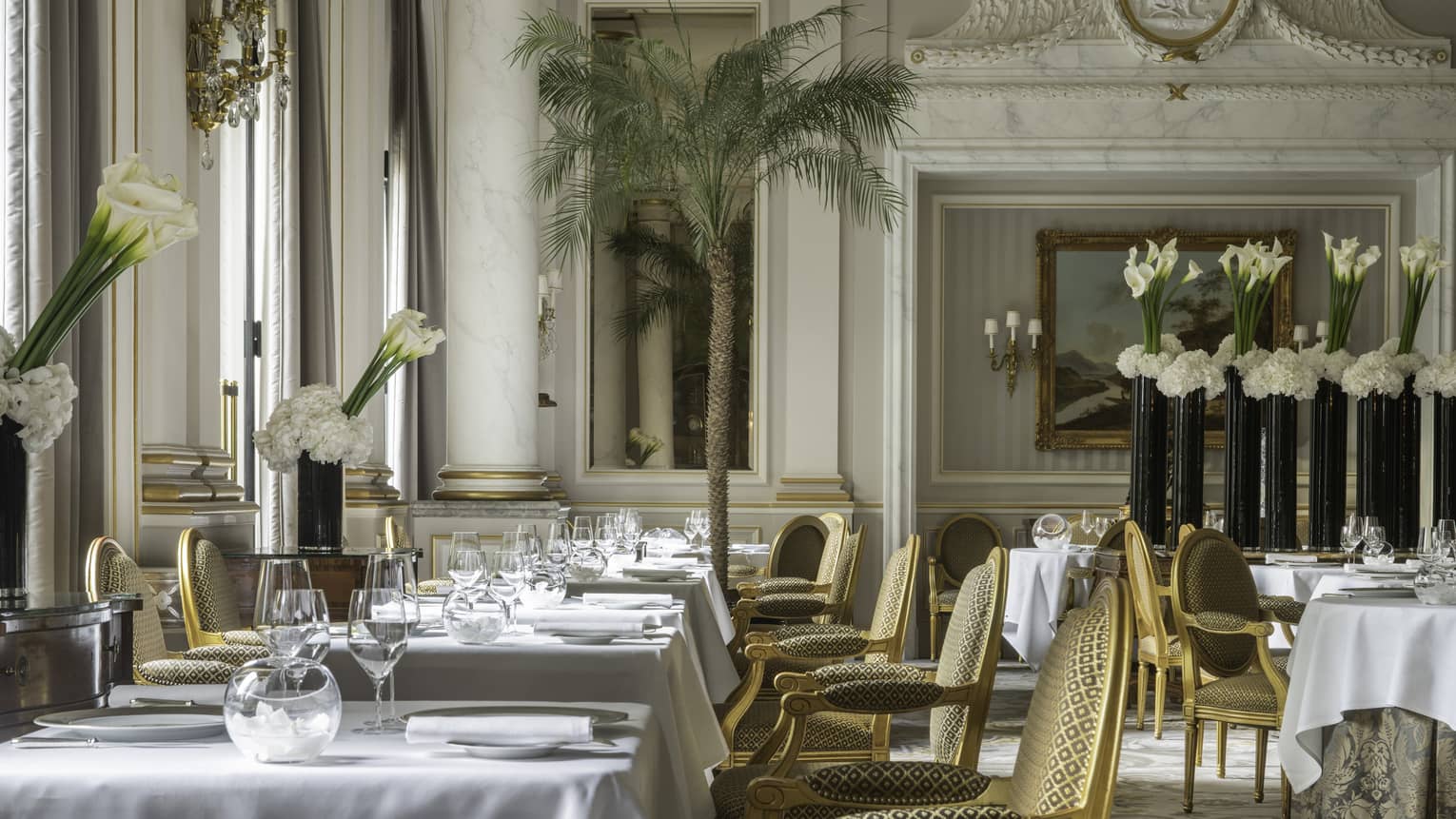
Hotels in Paris
Browse all →
At a Glance
- Romantic
- Classic
- Elegant
- Well Known
- Sophisticated
- Date Night
- Special Occasion
- Celebration
- Business Dinner
- Private Event
- Historic Building
- Private Dining
- Design Destination
- Standalone
Current opening hours
- Monday
- Closed
- Tuesday
- 7–9:30 PM
- Wednesday
- 7–9:30 PM
- Thursday
- 7–9:30 PM
- Friday
- 7–9:30 PM
- Saturday
- 7–9:30 PM
- Sunday
- Closed
Hours can change for holidays and private events. Last verified .
Refined and romantic, with a palace-like dining room, elegant dress expectations, music, light, and classic French fine-dining ceremony.