
Tabelog 100 #34
Our verdict
Ramen Go places Yamato’s ramen scene in the Kanagawa conversation rather than treating it as a suburb-only stop. Its Tabelog Ramen KANAGAWA 100 selection in 2025, compact 21-seat format, and low-ticket ramen pricing make it a serious local counter for diners tracking where regional bowls are gaining attention outside central Tokyo and Yokohama.

Pearl is the En Primeur Club membership app, where members save venues, book tables and use the concierge.
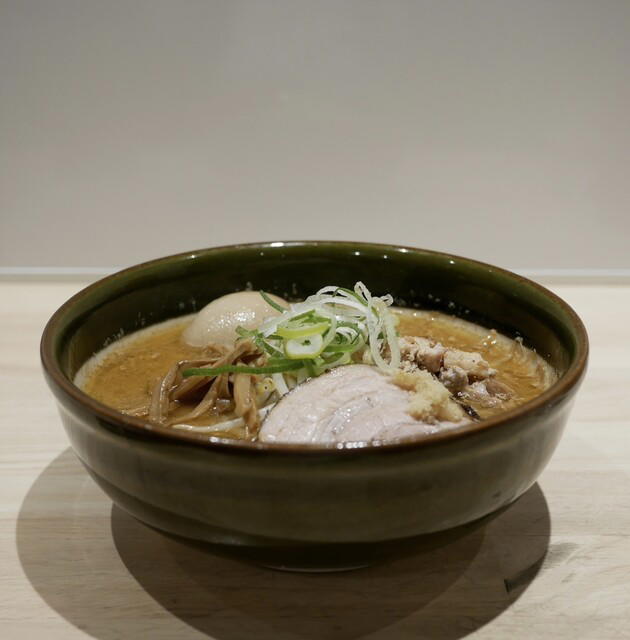
Approaching a ramen shop in Yamato is different from entering a central Tokyo counter built for destination dining. The cues are quieter: a casual format, a direct rhythm, and the everyday pace that defines daily ramen culture in Kanagawa. Ramen Go belongs to that grammar. It is not built around ceremony; it is built around concentration, heat, and the narrow window in which noodles, broth, fat, and seasoning line up properly.
Kanagawa ramen has always rewarded diners who look beyond Yokohama’s more visible addresses. The prefecture absorbs influences from Tokyo, coastal towns, commuter suburbs, and old shopping-street food culture, which means serious bowls often appear in places that do not read as dining districts at first glance. Yamato sits inside that pattern. For a broader read on the city’s dining map, see Our full Yamato restaurants guide, alongside nearby listings such as other Yamato dining rooms, Men Tei Tsumugi, Ethan Shokudo, and CINNAMON GARDEN.
Kanagawa ramen judged by sourcing discipline, not dining-room theatre
The useful way to read a ramen shop at this level is through ingredient discipline rather than decoration. Ramen compresses sourcing decisions into a single bowl: base structure, seasoning for definition, oils for aroma, noodles for texture, and toppings for balance. When a shop earns public attention in a ramen selection, the signal is not luxury. It is control over preparation and consistency at a format where diners often decide within minutes whether a bowl has clarity or clutter.
Ramen Go’s inclusion in Tabelog’s 2025 recognition, with a listed score of 3.80, gives it a public benchmark in a crowded category. That matters because ramen recognition tends to expose shops that can hold quality across normal service rather than impress through tasting-menu staging. In Yamato, that places the shop in a more serious bracket than the casual price and city setting might suggest.
The comparison inside the city is useful. Men Tei Tsumugi and Niboshi Raamen Neko Tora Tei sit in the same broad ramen conversation, while Ethan Shokudo and CINNAMON GARDEN point to Yamato’s wider everyday dining range. Ramen Go’s position is narrower: it asks to be judged as a ramen specialist, where the handling of core components matter more than a long menu or a designed room.
A focused shop format that keeps attention on the bowl
Ramen shops often impose discipline on both kitchen and diner. Ramen Go fits that focused format, keeping the experience close to the bowl without turning it into an omakase-style performance. That directness is common to serious ramen shops for a reason: noodles do not wait politely, broth temperature drops, and an overextended menu can blur what the kitchen is trying to express.
The atmosphere should be read through that practicality. This is a ramen shop rather than a venue framed around large-party hospitality language or the pacing of a formal restaurant. The format suits solo diners, ramen-focused pairs, and small groups who are comfortable with a casual, bowl-first setting. Yamato’s residential character also changes the tone. The room does not need the exportable drama of a tourist-facing ramen address because the local audience already understands the transaction: arrive, order, eat while the bowl is at its intended temperature, and move on.
Price also sharpens the editorial point. Ramen remains one of Japan’s great value formats because technique is hidden inside a casual ticket. In Yamato, that makes a recognized shop especially interesting: the cost of entry stays low while the quality signal rises. Ramen Go’s listed pricing is - JPY 999 - JPY 999, with the same budget range shown for both lunch and dinner, which makes the recognition less about spend and more about execution.
How to place it within a Yamato food day
Ramen Go works better as a focused stop than as the anchor for a long, multi-course evening. Build the plan around Yamato rather than forcing it into a Tokyo-style restaurant crawl. Diners pairing it with the area’s broader food options can use the Yamato restaurant guide for context, then look outward if the day stretches beyond ramen. Other dining in Yamato can frame the contrast without turning the bowl into a checklist stop: the point is to notice how Japanese casual formats can stay most compelling when they remain close to their everyday setting.
For travellers staying in Yamato, the smarter move is to treat ramen as one piece of the day rather than a full itinerary. The city’s hospitality and evening options can be checked through Our full Yamato hotels guide, Our full Yamato bars guide, Our full Yamato wineries guide, and Our full Yamato experiences guide. The point is not to inflate a ramen stop into a grand occasion. The value is sharper than that: a specialist bowl in a Kanagawa setting, carrying enough recognition to reward a deliberate detour without asking diners to dress it up as fine dining.
Frequently asked questions
Is Ramen Go good for families?
It can work for families that are comfortable with a casual ramen shop format. Ramen Go is in Yamato, so the experience is best understood as a focused local ramen stop rather than a long formal meal.
What should I expect atmosphere-wise at Ramen Go?
Expect a focused ramen shop rather than a long, formal meal. Its 2025 Tabelog recognition and listed 3.80 score point to a place built around the bowl, not dining-room theatre.
How much does it cost to eat at Ramen Go?
Pricing at Ramen Go is listed as - JPY 999 - JPY 999.
Where is Ramen Go located?
Yamato.
Is Ramen Go reservation-only?
The available venue details identify Ramen Go as a ramen shop in Yamato, but do not provide enough grounded information here to describe it as reservation-only.
Quick Comparison
Comparable venues by cuisine and price in the same metro.
| Venue | Cuisine | Price | Awards | Notes |
|---|---|---|---|---|
| 札幌ラーメン 郷This venue (the venue you are viewing) | Sapporo-style miso ramen | Not listed | Tabelog 100 #34 | Not listed |
| Niboshi Raamen Neko Tora Tei | Niboshi-focused ramen shop | $10–20 | Tabelog 100 #92 | / Yamato Sta., Tsuruma Sta., Sagami Otsuka Sta. |
| Men Tei Tsumugi | Ramen shop | $10–20 | Tabelog 100 #46 | Minami Rinkan |
| Umai Yo Yuchan Ramen | Rich Tonkotsu Ramen Shop | $10–20 | Tabelog 100 #45 | Yamato |
| China Soba Suzuki | Japanese Ramen | $1–10 | Tabelog 100 #70 | Sakuragaoka |
| Nakamizo | Authentic Sushi | $1–10 | Not listed | Chuo-Rinko |
Recognition history
Dated appearances from independent guides and award organizations, with the underlying list record or original source where available.
Tabelog 100 #34 · No. 34
Tabelog · Tabelog 100 - Ramen - KANAGAWA - 2025
Continue exploring
More in Yamato
Restaurants in Yamato
All restaurants in Yamato →




Bars in Yamato
Browse all →








Details
- Cozy
- Classic
- Solo
- Casual Hangout
- After Work
- Standalone
- Local Sourcing
- A La Carte
- Counter Dining
Casual and compact neighborhood ramen shop with a warm, no-frills atmosphere focused on steaming hot bowls, counter-style dining, and the classic feel of a Sapporo miso ramen-ya.