On Place Henri Mengin in Nancy, POTCHA STREET occupies a stretch of the city that sits at the edge of the historic centre, where the formality of the Art Nouveau quarter gives way to a more relaxed register. The address places it among a growing cluster of casual-to-mid-range openings reshaping how Nancy eats beyond its white-tablecloth heritage.
Pearl is the En Primeur Club membership app — saves, bookings, and concierge access live there. Same editors, same standards.
- Address
- Pl. Henri Mengin, 54000 Nancy, France
- Phone
- +33652443891
- Website
- instagram.com
- Directions
- Get directions
 Saves & bookings on Pearl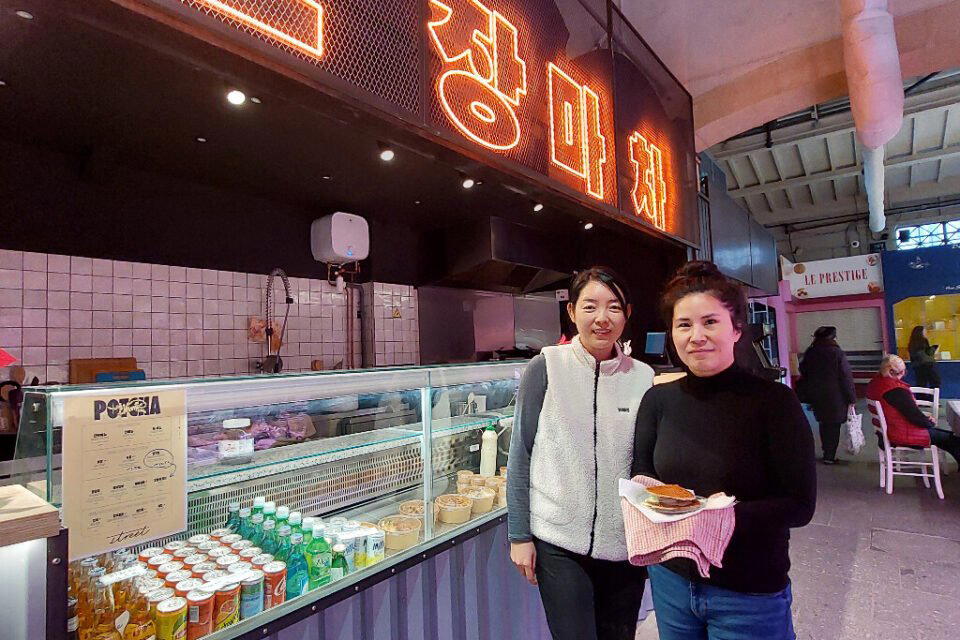
Street-Level Nancy: The Scene Around Place Henri Mengin
Nancy's dining identity has long been anchored by its Michelin-calibre addresses and the gravity of Place Stanislas, but the city's more interesting recent development sits further from the gilded squares. Place Henri Mengin and the streets radiating from it represent a different register: lower-key, neighbourhood-facing, and increasingly home to the kind of address that locals track before critics do. POTCHA STREET operates in this zone. La Maison dans le Parc or the refined casualness of Au Grand Sérieux is absent, and where the point is something closer to honest, daily eating.
That context matters when reading the address. Nancy's restaurant scene has stratified noticeably in recent years. At the leading, there are destination-grade tables that price and position against regional benchmarks. Further along the spectrum sit addresses like Bistrot Gros and Cadet, which operate in modern casual territory. POTCHA STREET's placement on Place Henri Mengin puts it in a neighbourhood-anchored bracket, physically and conceptually separate from the formal dining corridor. For anyone mapping where the city eats rather than where it performs, this part of Nancy is worth attention.
What the Name Signals: Reading the Format
POTCHA STREET is a Korean street-food address. What the name does signal is format intent: informal, counter-style or canteen-adjacent, built around a dish or a family of preparations that travel well from street context into a fixed address. Across French cities, this category has grown substantially. The model that emerged in Paris over the past decade, where a single-dish or narrow-menu format anchors a small room and justifies a queue, has filtered into provincial cities. Nancy, with its student population and increasingly mobile dining culture, is a plausible city for this format to find traction.
The street-food-to-fixed-address translation works well when the progression through a meal feels intentional rather than arbitrary. The strongest examples in this category, from ramen specialists to pho counters to bánh mì addresses with a room attached, build a sequence even within a constrained menu: something to start that prepares the palate, a central bowl or plate that carries most of the nutritional and flavour weight, and a closing element that resolves rather than just stops. Whether POTCHA STREET applies that logic is something the address will need to demonstrate on its own terms.
The Tasting Arc at a Street-Food Address
Multi-course progression model, familiar from tasting-menu restaurants at the level of Mirazur in Menton or Assiette Champenoise in Reims, exists in a compressed and less theorised form at street-food venues. There, the arc is often built into a single dish: a broth that opens savoury and deep, a central protein that delivers body and texture, aromatics that lift the mid-palate, and a finish that the diner controls through condiments and additions. It's a format that rewards attention even if it doesn't announce itself as a progression.
In the French Northeast, where Alsatian and Lorraine traditions have historically dominated regional cooking and where references like Auberge de l'Ill in Illhaeusern and Au Crocodile in Strasbourg define the upper register, the arrival of formats from further afield creates an interesting counter-pressure. The question isn't whether Southeast Asian or street-influenced cooking can exist here; it has existed in French cities for decades. The question is whether a specific address has refined its version to the point where the meal has shape and intention, not just convenience.
For comparison, the progression model in its most disciplined form appears at addresses like AM par Alexandre Mazzia in Marseille, where each course functions as a distinct movement. At street-food scale, the expectation is different but the underlying discipline is the same: each element should do something specific. A good bowl of something at the restaurant should earn its place on the table, not simply fill it.
Nancy's Mid-Range Dining Tier: Where This Address Sits
The comparison set in Nancy is useful for calibrating expectations. Bastion represents one approach to the city's mid-range; Bistrot Gros another. Both operate with visible editorial intent. The restaurant, based on its placement and name, likely competes less with these and more with the informal end of the market, where the decision is fast and the format is legible in under thirty seconds of looking at a menu board.
That bracket in Nancy has grown since 2019, tracking a wider French provincial shift toward shorter menus, lower price points, and formats imported from urban street-food culture. The addresses that succeed in this tier tend to do so through product quality at a specific node, a broth, a protein preparation, a sauce base, rather than through breadth. Restraint in menu scope is generally a trust signal at this level: it suggests the kitchen knows what it's doing and has chosen to do that thing well.
For anyone building a wider picture of where Nancy's dining sits regionally, At the national level, addresses like Flocons de Sel in Megève and Bras in Laguiole define what the country's top tier looks like; at the other end of the spectrum, the restaurant represents the city's more accessible, daily-eating dimension, and that dimension matters for understanding Nancy's hospitality character in full.
Planning a Visit: What to Know
Public data for the restaurant is sparse. The address on Place Henri Mengin is confirmed. The regular hours are Monday closed; Tuesday 11 AM to 4 PM; Wednesday through Saturday 11 AM to 6:30 PM; Sunday closed. The neighbourhood is accessible from the centre of Nancy on foot, and the square itself gives the address a distinct physical context, more open than a side-street location, easier to find.
Given the format signals, this is likely a lunch or early-evening address rather than a late-sitting destination. Arriving with a specific dish in mind, once the menu is accessible, is one efficient approach. Walk-ins are welcome. For context on how this style of planning compares to Nancy's more formal addresses, La Maison dans le Parc and Alléno Paris au Pavillon Ledoyen represent the opposite end of the booking spectrum, where planning weeks ahead is standard practice.
Where the Accolades Land
Comparable venues nearby, for context on price, style, and recognition.
| Venue | Cuisine | Price | Notes |
|---|---|---|---|
| POTCHA STREETThis venue — the venue you are viewing | Korean Street Food | $ | Not listed |
| Au Grand Sérieux | Traditional French Bistro | $$ | Centre-ville |
| Vins et Tartines | French Tartine Bistro & Wine Cave | $$ | centre-ville |
| LA MIAN JI RAMEN | Authentic Chinese Ramen & Hand-Pulled Noodles | $$ | Nancy |
| Le bouche à oreille | French Cheese-Focused Bistro | $$ | rue des Carmes |
| Les Frères Marchand | Traditional French Lorraine & Alsatian Brasserie | $$ | vieille ville |
Continue exploring
More in Nancy
Restaurants in Nancy
Browse all →

At a Glance
- Lively
- Trendy
- Casual Hangout
- Open Kitchen
Current opening hours
- Monday
- Closed
- Tuesday
- 11 AM–4 PM
- Wednesday
- 11 AM–6:30 PM
- Thursday
- 11 AM–6:30 PM
- Friday
- 11 AM–6:30 PM
- Saturday
- 11 AM–6:30 PM
- Sunday
- Closed
Hours can change for holidays and private events. Last verified .
Casual market stall evoking lively Korean night street atmosphere.