Pondok Desa Traditional Restoran Batu sits in the Junrejo district of Batu City, East Java, where the cool highland air and agricultural surroundings set the context for traditional Indonesian cooking rooted in local produce. The restaurant draws on the region's farming heritage, placing it within a dining tradition that prioritises proximity between field and plate. For those exploring Batu beyond its orchards and theme parks, it offers a grounded counterpoint to the city's more commercial food scene.
Pearl is the En Primeur Club membership app — saves, bookings, and concierge access live there. Same editors, same standards.
- Address
- Jl. Ir. Soekarno No.112, Beji, Kec. Junrejo, Kota Batu, Jawa Timur 65236, Indonesia
- Phone
- +623415107000
- Website
- pondokdesa.com
- Directions
- Get directions
 Saves & bookings on Pearl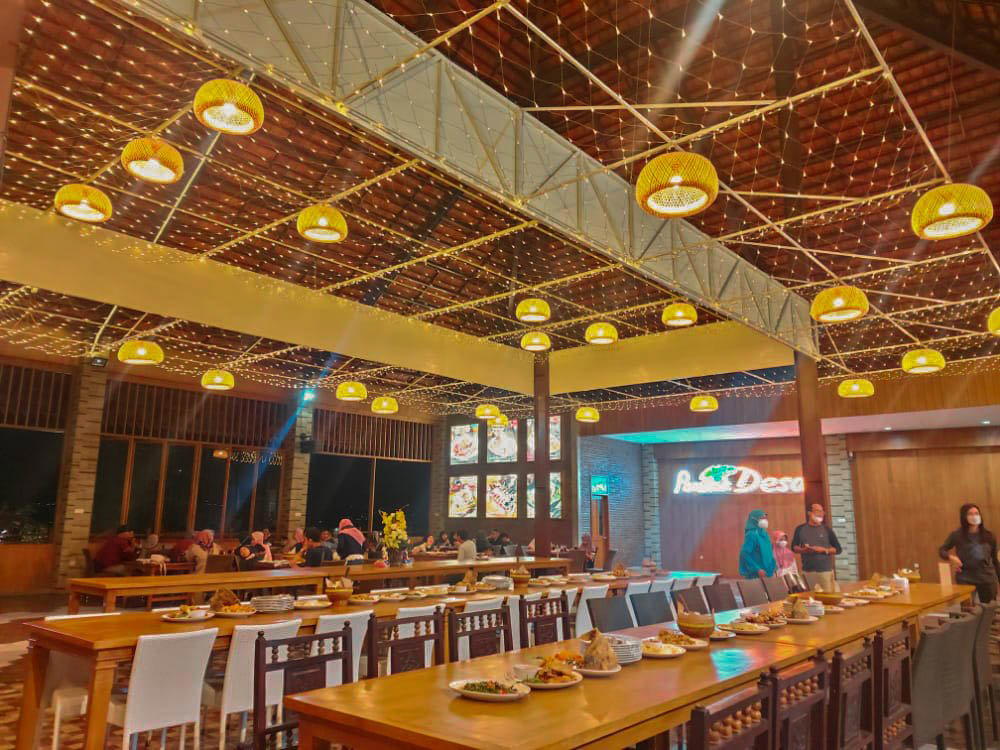
Where the Malang Highlands Shape What Ends Up on the Plate
Batu City sits at roughly 700 to 1,200 metres above sea level in the Brantas river basin, flanked by the volcanic peaks of Arjuno, Welirang, and Panderman. That elevation matters for anyone eating here. The surrounding district of Junrejo, where Pondok Desa Traditional Restoran Batu is addressed along Jl. Ir. Soekarno, is agricultural land: apple orchards, vegetable plots, dairy farms, and small-scale herb cultivation that supply not only the city's markets but also its restaurants. In a region like this, the distance between soil and serving dish is measured in kilometres rather than supply-chain logistics.
That proximity is the defining characteristic of traditional warung and restoran culture in the East Javanese highlands. Unlike the farm-to-table rhetoric that urban restaurants in Jakarta or Bali deploy as marketing positioning, in Batu it is simply how food has always worked. Producers are neighbours. Ingredients arrive based on what the season and the surrounding slopes yield.
Traditional Indonesian Cooking in an Agricultural Context
The category of "traditional restoran" in Java covers considerable ground, from warung-style rice plate service through to more elaborate Javanese set meals built around slow-cooked proteins, fermented soy preparations, and layered spice pastes. What unites them is an ingredient logic that reflects the local agricultural cycle. East Java's highlands produce some of Indonesia's most reliable tempeh and tofu from local soybean cultivation, vegetables such as kangkung, bayam, and labu that thrive in cooler temperatures, and chilies whose heat profile differs from the coastal varieties that dominate Surabayan cooking.
This stands in contrast to the contemporary Indonesian dining movement visible in places like Locavore NXT in Ubud, where indigenous ingredient sourcing is framed as an explicit culinary philosophy and backed by formal research and supplier networks. In Batu's traditional restoran sector, sourcing is less a stated agenda than an inherited practice. The vegetables come from the slopes because they always have. The cooking methods reflect how those ingredients behave, not how they photograph.
Comparison with Jakarta's more technique-driven restaurants is equally instructive. August in Jakarta and Kita in Kecamatan Menteng work within a capital-city framework where sourcing is documented, narrativised, and often certified. In Batu, the equivalent assurance comes from geography: the land is simply too close for the supply chain to become abstract.
The Setting in Junrejo
The Junrejo subdistrict sits on Batu's eastern edge, closer to the lower agricultural belt than to the city's commercial core around Alun-Alun Batu. Approaching along Jl. Ir. Soekarno, the built environment shifts from the resort and leisure infrastructure of central Batu toward quieter residential and farming plots. It is the kind of setting where a traditional restoran reads as continuous with its surroundings rather than placed within them for effect. The term "pondok desa" (village shelter or village hut) is a recurring naming convention in Javanese food culture, signalling an intentional connection to kampung-style hospitality: communal, informal, and oriented toward shared plates rather than individual plating.
For travellers accustomed to the design-led warungs that have proliferated in Bali's Canggu and Seminyak corridors, or the polished Indonesian dining rooms visible at venues like Bikini Restaurant in Badung, the vernacular restoran format in a city like Batu operates on different terms. The room, the service rhythm, and the menu logic are shaped by local custom rather than visitor expectation. That is either its appeal or its limitation, depending on what a diner is looking for.
Batu in the Broader East Java Dining Picture
East Java's food identity is often reduced to its most exported formats: rawon (black beef soup), rujak cingur (mixed salad with fermented shrimp paste), and the various soto variants that anchor Surabayan street food. The highland version of that tradition is quieter and more vegetable-forward, shaped by cooler temperatures and a farming economy that produces different proteins and greens than the coastal lowlands. Traditional restaurants in Batu tend to reflect this regional specificity, offering dishes calibrated to the altitude rather than approximations of the coast.
That regional logic makes a useful point of comparison with other Indonesian cities where traditional cooking has been formalised into a destination-dining proposition. Gudeg Yu Djum in Yogyakarta represents one model: a single dish, slow-cooked jackfruit, carried across generations as both food and cultural institution. Batu's traditional restoran sector has not produced that kind of singular landmark, but it operates from the same premise, that durable cooking is especially locally legible. For Indonesian dining across a wider geographic range, venues like Kunyit in Bandung and Jungle Fish in Gianyar offer instructive contrasts in how local ingredient culture translates into a restaurant format.
Planning a Visit
Pondok Desa Traditional Restoran Batu is located at Jl. Ir. Soekarno No.112, Beji, Kec. Junrejo, Kota Batu, Jawa Timur 65236. The Junrejo address places it a short drive from central Batu, accessible by private vehicle or ojek from the city centre. Batu is itself approximately 15 kilometres west of Malang, making it a feasible addition to any East Java itinerary anchored in Malang. The restaurant is walk-in friendly and open daily from 10 AM to 10 PM, with a casual dress code.
A Quick Peer Check
Comparable venues nearby, for context on price, style, and recognition.
| Venue | Cuisine | Price | Notes |
|---|---|---|---|
| Pondok Desa Traditional Restoran BatuThis venue — the venue you are viewing | Traditional Indonesian | $$ | Not listed |
| Ipo | Indonesian Warung | $ | Tanakawu |
| Made's Warung | Traditional Indonesian Warung | $$ | Denpasar |
| Panorama Restaurant | Modern Indonesian Fine Dining | $$$ | Sangalangi |
| Babi Guling Pak Dobiel | Traditional Balinese Roasted Suckling Pig (Babi Guling) | $ | Nusa Dua, Benoa, South Kuta |
| Gindaco | Japanese Takoyaki & Okonomiyaki | $ | Menteng |
Continue exploring
More in Batu City


At a Glance
- Rustic
- Scenic
- Cozy
- Family
- Casual Hangout
- Open Kitchen
Current opening hours
- Monday
- 10 AM–10 PM
- Tuesday
- 10 AM–10 PM
- Wednesday
- 10 AM–10 PM
- Thursday
- 10 AM–10 PM
- Friday
- 10 AM–10 PM
- Saturday
- 10 AM–10 PM
- Sunday
- 10 AM–10 PM
Hours can change for holidays and private events. Last verified .
Relaxed and santai atmosphere with indoor and outdoor seating options amid a scenic pond setting.