Our verdict
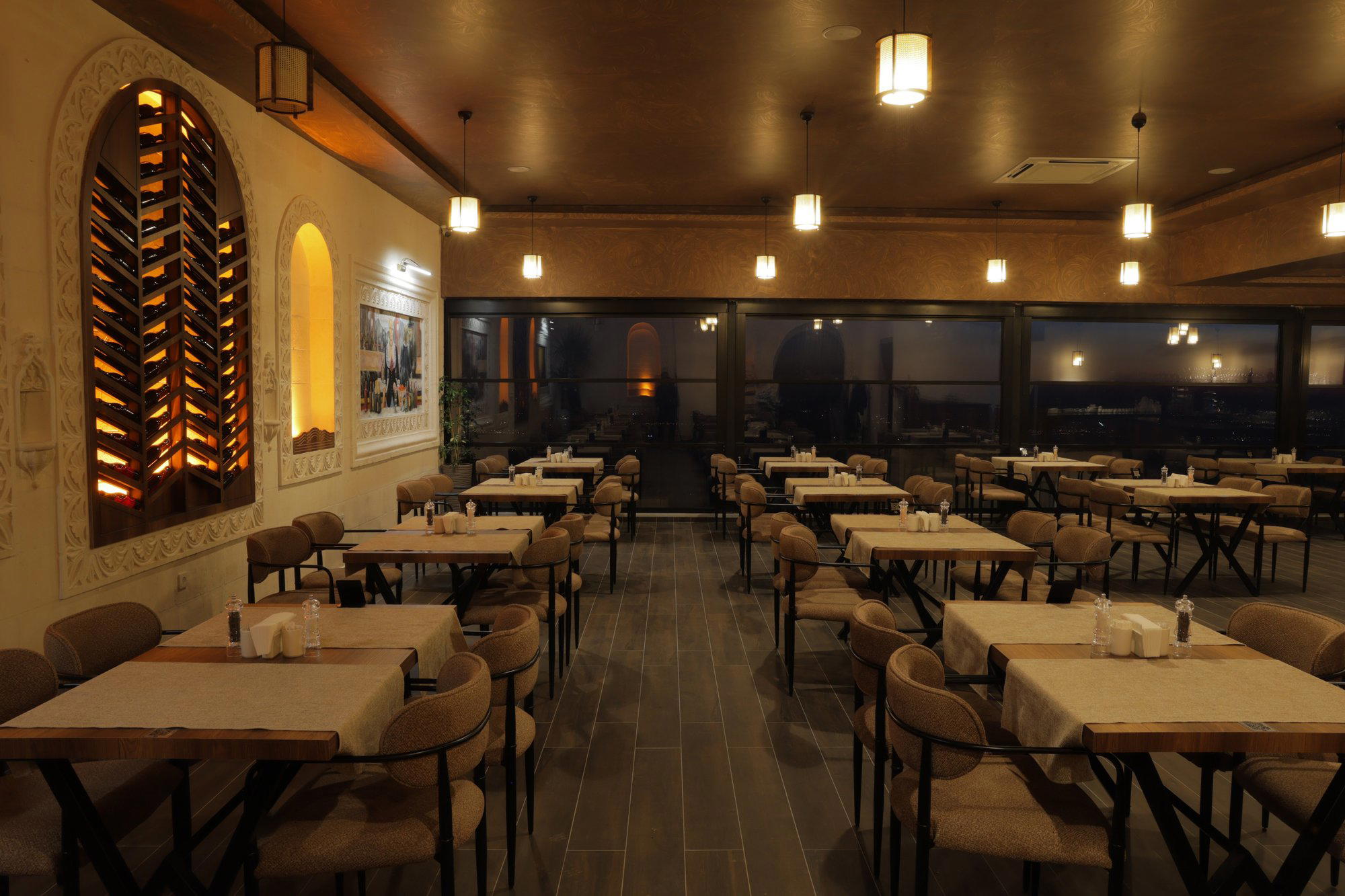
In Artuklu, southeastern Turkey's most historically layered district, Piyal Wine House and Italian Restaurant occupies a quiet address on Soner Sokak where a wine-forward program meets Italian kitchen principles. It is an unusual pairing for this part of Anatolia, where the culinary default runs toward kebab and lahmacun rather than pasta and Barolo. For travelers passing through Mardin province, it represents a deliberate change of register.

Pearl is the En Primeur Club membership app — saves, bookings, and concierge access live there. Same editors, same standards.
The menu
What to order
- Three-mushroom pizza
- Al dente pasta
Italian Cooking in Southeastern Anatolia: An Unlikely but Considered Pairing
Artuklu sits at the edge of Mardin, one of the most historically significant cities in southeastern Turkey, where Assyrian, Arabic, and Kurdish culinary traditions have layered over centuries of continuous settlement. The dominant food grammar here is ancient and deeply local: stuffed grape leaves, slow-cooked lamb, bulgur preparations, and flatbreads pulled from wood-fired ovens. Against that backdrop, a wine house running an Italian program is not a random import. It signals a deliberate appetite among a certain Artuklu diner and traveler for a different kind of evening, one built around the vine rather than the tea glass. Piyal Wine House and Italian Restaurant, addressed at Şar, 220 Soner Sokak, occupies that niche in the local dining scene.
Turkey's Italian restaurant category is concentrated almost entirely in Istanbul's Beyoğlu, Beşiktaş, and Kadıköy quarters, or in Aegean resort towns where European tourist traffic justifies the format. Finding a wine-anchored Italian operation in Artuklu, a district whose culinary gravity pulls firmly toward southeastern Anatolian tradition, makes Piyal a genuinely uncommon presence for this latitude. It does not attempt to replicate the high-end modern Turkish programs at places like Turk Fatih Tutak in Istanbul or the Aegean-sourced contemporary menus at Maçakızı in Bodrum. Its frame of reference is Italian, and within that frame, the question of ingredient sourcing becomes the defining one.
Where the Ingredients Come From, and Why That Question Matters Here
Italian cooking at its most serious is a cuisine of provenance. Correct sourcing is not a marketing position but a structural requirement: the fat content and curing method of the pork determines the character of the pasta sauce; the acidity of the tomato determines whether the dish is bright or flat; the milk culture and aging vessel of the cheese determines everything that follows. A competent Italian kitchen operating outside Italy faces a specific logistical challenge that is sharper in southeastern Turkey than in almost any other geography: the regional supply chain does not run toward Italian pantry staples as a matter of course.
What Artuklu does offer, however, is extraordinary raw material of a different kind. The Mardin plateau produces some of Turkey's most characterful olive oil, with groves that have been cultivated since the Byzantine period. Stone fruit, pomegranate, and a range of legumes grow across the Mesopotamian plain below. Sheep and goat dairy from the region carry flavors shaped by semi-arid grazing land and traditional cheesemaking methods that predate modern standardization. A kitchen that thinks carefully about sourcing in Artuklu has access to ingredients that carry genuine regional identity, even if they sit outside the conventional Italian pantry.
The question worth asking of any Italian restaurant in this part of Turkey is how it positions itself between strict Italian orthodoxy and the available local supply. The most interesting answer, in a place with as much culinary heritage as Artuklu, is not rigid adherence to imported Italian products, but a considered calibration between Italian technique and Anatolian raw material. That calibration, when executed well, produces food that is more interesting than either tradition alone. For a broader sense of how Turkish restaurants are currently thinking about sourcing and tradition, Asitane in Fatih and Hiç Lokanta in Urla represent two of the more rigorous domestic examples, each anchored to specific historical or agricultural source material.
The Wine Program in Context
Turkey's domestic wine industry has developed considerably over the past two decades, with serious producers working in Thrace, the Aegean, and Cappadocia. Varietals including Öküzgözü and Boğazkere from eastern Anatolia produce wines that sit comfortably alongside Italian mid-weight reds in structural terms, carrying the tannin and dark fruit profile that works against red meat and aged cheese. A wine house in Artuklu that sources from Turkish producers, particularly those working in the eastern Anatolian appellation areas, is not compromising on the wine experience. It is drawing on a regional supply that is geographically coherent with the restaurant's location and increasingly credible in international terms.
The wine-house designation matters because it sets a particular expectation: the list is the point of departure, and food is organized around it rather than the other way around. That is a different operating logic from a conventional restaurant that happens to serve wine, and it shapes how a meal should be approached. Consider ordering from the wine list first, then building the food order to match, which is the natural rhythm for a program of this kind. For comparison, Kritikos Meyhane in Mudanya illustrates how a Turkish establishment can organize an evening around the glass rather than the plate in the meyhane tradition, which is the closest domestic structural analogue.
Artuklu and the Broader Dining Context
Travelers arriving in Artuklu primarily to see Mardin's old city, its Syrian Orthodox monasteries, and the Zinciriye Madrasa will find a restaurant scene that skews heavily toward regional Anatolian cooking, which is the correct instinct for most meals in a place with this much culinary heritage. Kısmet Etliekmek ve Lahmacun Salonu in Karaman and Dürümzade in Beyoglu are benchmarks for the flatbread and kebab tradition that runs across this part of Turkey. There is no strategic argument for choosing Italian food in Artuklu over the regional default on most nights.
Where Piyal makes sense is the specific kind of evening when a traveler or local diner wants a wine-led meal in a quieter register, without the communal noise and grilled meat focus of the surrounding options. It occupies a gap in the local offering rather than competing directly with the regional specialists. Our full Artuklu restaurants guide maps the broader scene for those working out how to distribute meals across a stay.
For context on what Italy-adjacent technique looks like at the highest level of execution, Le Bernardin in New York City and Atomix in New York City represent the tier at which European-derived fine dining intersects with disciplined sourcing philosophy, though both operate at price points and infrastructure levels that bear no direct comparison to Artuklu. The reference is useful for calibrating expectations about what rigorous ingredient sourcing looks like as a program rather than a claim. Closer to home, Narımor in Izmir shows how a Turkish kitchen can build a credible contemporary program anchored to Aegean sourcing, which is perhaps the most relevant domestic comparison in terms of ambition relative to local context.
Planning a Visit
Piyal Wine House and Italian Restaurant is located at Şar, 220 Soner Sokak in Artuklu. Given the limited publicly available operational data including hours, booking method, and current pricing, direct contact with the restaurant before visiting is advisable, particularly for travelers organizing their Mardin itinerary around specific dining evenings. The address suggests a neighborhood setting within the Şar quarter rather than a high-traffic commercial strip, which is consistent with the wine-house format, where a degree of intentionality in getting there is part of the experience. Other Turkey-based venues worth cross-referencing for a broader picture of where the country's dining culture is moving include Kartepe Organic Foods in Kartepe, Bayramoğlu Döner in Beykoz, Konya Kebap Evi in Selcuklu, Lokanta Göktürk in Eyupsultan, Ciğerci Mahmut in Adana, Kocak Baklava in Gaziantep, and Casa Lavanda in Sile, each of which illustrates a distinct register of Turkish dining at the regional level.
Frequently asked questions
Is Piyal Wine House & Italian Restaurant child-friendly?
The restaurant's focus on wine and Italian cooking suggests a table-service format oriented toward adult diners, but nothing in the available record explicitly restricts younger guests. Families visiting Mardin's old city from Artuklu may find it a practical dining option depending on their children's ages. Contacting the venue directly before visiting is advisable given the limited publicly circulated operational detail.
Is Piyal Wine House & Italian Restaurant formal or casual?
No dress code is documented for Piyal Wine House. Italian restaurants in this price and regional category typically run casual to relaxed, but Artuklu's proximity to Mardin's heritage tourism circuit means the crowd often skews toward culturally curious visitors rather than a purely local neighbourhood crowd. The wine-house framing suggests more deliberate dining than a trattoria-style drop-in.
Why does Artuklu have an Italian restaurant, and what makes Piyal Wine House relevant to the broader Mardin visit?
Artuklu functions as the administrative and lower-city companion to Mardin's elevated old town, and its restaurant scene reflects the area's growing infrastructure around heritage tourism. Piyal Wine House sits at Şar, 220 Soner Sokak, offering a format — Italian cooking paired with a wine program — that differs structurally from the regional Assyrian and Kurdish tables that dominate the area. For travelers spending multiple days exploring the Zinciriye Madrasa and the Syrian Orthodox monasteries, it represents a deliberate change of register rather than a geographical curiosity.
What should I eat at Piyal Wine House & Italian Restaurant?
Given the Italian focus in a region where Assyrian, Arabic, and Kurdish culinary traditions dominate the local supply chain, ingredient sourcing is likely to shape what the kitchen actually produces season to season. Asking staff on arrival what is driving the menu that day will yield more reliable guidance than any printed description.
How do I find Piyal Wine House & Italian Restaurant?
Piyal Wine House & Italian Restaurant is located at Şar, 220 Soner Sk No, Artuklu.
How hard is it to get a table at Piyal Wine House & Italian Restaurant?
No reservation data or capacity figures are publicly available for Piyal Wine House at Şar, 220 Soner Sokak, Artuklu. The restaurant operates in a city where peak visitor demand tracks closely with Mardin's heritage tourism season, typically spring and autumn. Booking ahead during those windows is sensible; the venue's limited online presence means direct contact in advance is the most practical approach.
How It Stacks Up
Comparable venues nearby, for context on price, style, and recognition.
| Venue | Cuisine | Price | Notes |
|---|---|---|---|
| Piyal Wine House & Italian RestaurantThis venue — the venue you are viewing | Italian Wine House | Not listed | Not listed |
| Carluccio's | Italian Airport Dining | $20–30 | Uskudar |
| Kuyum Pide Salonu | Traditional Turkish Pide | $10–20 | Konak |
| Kofteci Huseyin 1958 | Traditional Turkish Kofte | $10–20 | Beyoglu |
| Metanet Katmer | Traditional Gaziantep Katmer | $1–10 | Suyabatmaz |
| Karakoy Gulluoglu | Traditional Turkish Baklava and Sweets | Not listed | Karakoy |
Piyal Wine House & Italian Restaurant
Featured Guides
Continue exploring
More in Artuklu
Restaurants in Artuklu
All restaurants in Artuklu →
Piyal Wine House & Italian Restaurant
The wine
- Wine program
- Curated wine list
- Extensive wine list
Details
- Elegant
- Cozy
- Date Night
- Special Occasion
- Live Music
- Terrace
- Extensive Wine List
- Street Scene
- A La Carte
- Wine
Current opening hours
- Monday
- Closed
- Tuesday
- 3 PM–12 AM
- Wednesday
- 3 PM–12 AM
- Thursday
- 3 PM–12 AM
- Friday
- 3 PM–12 AM
- Saturday
- 3 PM–12 AM
- Sunday
- 3 PM–12 AM
Hours can change for holidays and private events. Last verified .
Warm and intimate atmosphere reflecting Mediterranean spirit with live piano music.