Piquin occupies a address in Lyon's 3rd arrondissement, a district where the city's appetite for serious, mid-market dining has quietly concentrated over the past decade. The restaurant sits within a generation of Lyon tables that balance technical ambition with neighbourhood accessibility, placing it in a different register from the grand brasseries of Presqu'île while remaining rooted in the city's deep culinary grammar.
Pearl is the En Primeur Club membership app — saves, bookings, and concierge access live there. Same editors, same standards.
- Address
- 16 Rue d'Essling, 69003 Lyon, France
- Phone
- +33472329848
- Website
- piquin.fr
- Directions
- Get directions
 Saves & bookings on Pearl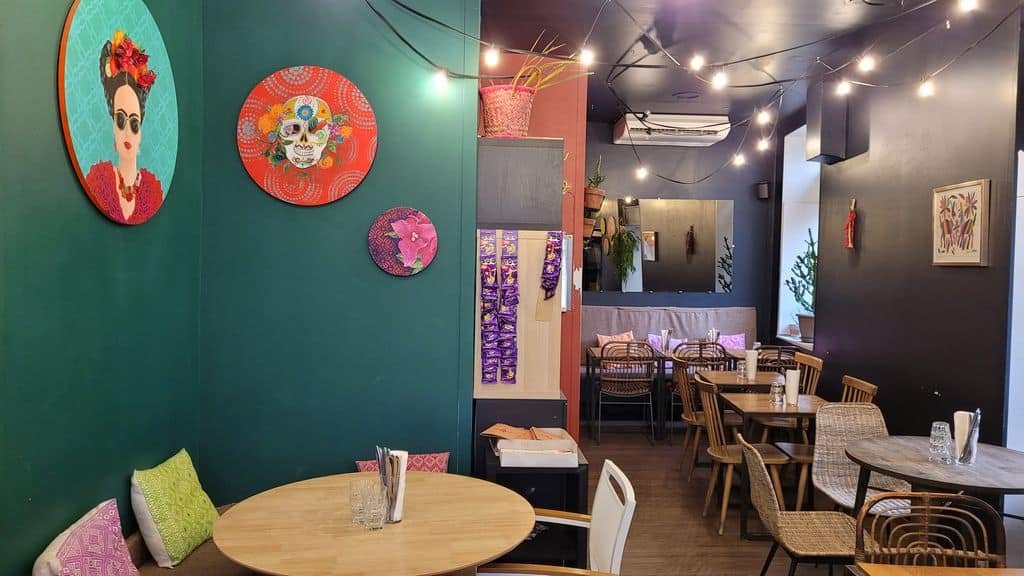
Where Lyon's Dining Ritual Takes a Quieter Form
The 3rd arrondissement is not where tourists arrive first. That tends to happen further west, around the Presqu'île's bouchon corridors and the Place Bellecour axis. But Lyon's dining culture has always distributed itself across the city's fabric, and the streets around the Rue d'Essling in the 3rd carry that tradition in a less celebrated register. Piquin sits on that street, in a district where the lunch hour still holds weight and where reservations are recommended rather than last-minute.
Lyon's relationship with the meal as ritual is older and more codified than in most French cities. This is, after all, a city where Paul Bocuse's long-running influence at Paul Bocuse - L'Auberge du Pont de Collonges in Collonges-au-Mont-d'Or set a template for ceremony that trickled down through generations of kitchens. The ritual here is not confined to three-star rooms. It lives in the pacing of a midday service, in the expectation of a cheese course, in the quiet authority of a wine list that leans Rhône and Burgundy without announcing itself.
The Grammar of the Lyon Table
Understanding where Piquin fits requires some sense of how Lyon's restaurant tiers have arranged themselves. At the formal apex sit the well-documented names: La Mère Brazier, the city's most historically significant address, and Le Neuvième Art, which has built a contemporary French identity with creative ambition and corresponding price points. A middle tier has emerged around restaurants such as Burgundy by Matthieu, where modern cuisine operates at €€€ rather than €€€€, and Takao Takano, where a Japanese-trained sensibility has found purchase in a city that rewards precision. Piquin occupies a position within or adjacent to this middle register, in a neighbourhood that attracts diners looking for a focused meal without the full apparatus of a special-occasion room.
The Lyon meal, at this tier, tends to follow a particular rhythm. Arrival is prompt, because service windows are tighter than in Paris. The amuse-bouche, if present, is functional rather than theatrical. The menu structure respects classical divisions without necessarily adhering to them rigidly. Wine is poured by someone who knows the list rather than recites it. What distinguishes the better addresses in this bracket is not spectacle but calibration: the sense that every element has been considered in proportion to every other.
The 3rd and What It Signals About Neighbourhood Dining
Lyon's 3rd arrondissement has developed a quiet critical mass of considered dining over the past decade. The Part-Dieu area to the north brings a business lunch density, but the streets closer to the Rhône's left bank carry a different character: more residential, with a local clientele that returns rather than discovers. Restaurants in this zone tend to earn loyalty through consistency rather than novelty, and their menus reflect what is available in the morning markets at Les Halles Paul Bocuse, roughly ten minutes on foot.
This seasonal dependency is worth noting as a practical matter. Lyon's restaurant culture at the independent level is tied closely to the rhythm of the Rhône-Alpes seasons. Spring brings asparagus and morels from the surrounding hills. Autumn shifts toward game, ceps, and the first chestnuts from the Ardèche. A visit in either window tends to give a clearer reading of what a kitchen can do than a summer trip, when the produce calendar is both abundant and less distinctive.
For comparative context across France's serious mid-market dining tier, it is worth understanding what sets Lyon's version apart from Alsatian equivalents such as Au Crocodile in Strasbourg, or from the Champagne corridor around Assiette Champenoise in Reims. Lyon's tables at this level tend to foreground the product over the technique, which is partly a cultural inheritance from the mères lyonnaises tradition, and partly a function of proximity to particularly productive agricultural land in France.
Placing Piquin in the Wider French Conversation
France's upper-tier dining has consolidated around a set of addresses that operate as reference points regardless of geography: Mirazur in Menton, Flocons de Sel in Megève, Bras in Laguiole, Alléno Paris au Pavillon Ledoyen, and Troisgros - Le Bois sans Feuilles in Ouches, the last of which sits close enough to Lyon to have exerted a gravitational influence on the region's kitchens for decades. International comparisons are also useful: the discipline found at Le Bernardin in New York City or the tasting-menu rigour of Atomix illustrates how different cities have developed their own idioms for the formal meal. Lyon's version remains particularly product-forward of these traditions, which makes the 3rd arrondissement's quieter restaurants a useful entry point into that ethos without the formality of the city's starred tier.
Creative addresses such as Au 14 Février show how the city's younger generation of chefs is engaging with classical technique through a more personal lens, and the Alsatian tradition at Auberge de l'Ill in Illhaeusern provides a useful counterpoint in terms of how regional French dining embeds itself into a specific landscape and history. AM par Alexandre Mazzia in Marseille represents the more expressive, high-concept end of the French provincial dining conversation, which usefully marks the distance between Lyon's restrained product focus and the Mediterranean south's more confrontational approach to the tasting menu format.
Know Before You Go
Address: 16 Rue d'Essling, 69003 Lyon, France
Neighbourhood: 3rd arrondissement, left bank of the Rhône
Cuisine: Authentic Mexican Street Food
Price range: About $20 per person
Booking: Reservations are recommended
Leading season: Spring (April to June) for asparagus and morels; autumn (September to November) for game and fungi from the Rhône-Alpes region
Getting there: The 3rd arrondissement is served by Lyon's Part-Dieu metro hub (Lines A and B); the Rue d'Essling area is walkable from the Rhône riverbanks
Peers Worth Knowing
Comparable venues nearby, for context on price, style, and recognition.
| Venue | Cuisine | Price | Notes |
|---|---|---|---|
| PiquinThis venue — the venue you are viewing | Authentic Mexican Street Food | $$ | Not listed |
| Le Petit Carron | Seasonal French Bistro | $$ | Quartier Voltaire Part-Dieu |
| Giuseppe | Italian Pizza and Pasta | $$ | Quartier Parc Duquesne |
| Sampa | Brazilian Fusion | $$ | Quartier Bellecour Carnot |
| Bistrot Thélème | French Bistro | $$ | Quartier Croix-Rousse Centre |
| Oto Oto | Traditional Japanese Izakaya | $$ | Quartier Guillotière |
Continue exploring
More in Lyon
Restaurants in Lyon
Browse all →
Bars in Lyon
Browse all →
Hotels in Lyon
Browse all →
At a Glance
- Lively
- Trendy
- Casual Hangout
- Late Night
- Open Kitchen
- Craft Cocktails
- Local Sourcing
Current opening hours
- Monday
- 12–2:30 PM, 7–11:30 PM
- Tuesday
- 12–2:30 PM, 7–11:30 PM
- Wednesday
- 12–2:30 PM, 7–11:30 PM
- Thursday
- 12–2:30 PM, 7–11:30 PM
- Friday
- 12–2:30 PM, 7–11:30 PM
- Saturday
- Closed
- Sunday
- Closed
Hours can change for holidays and private events. Last verified .
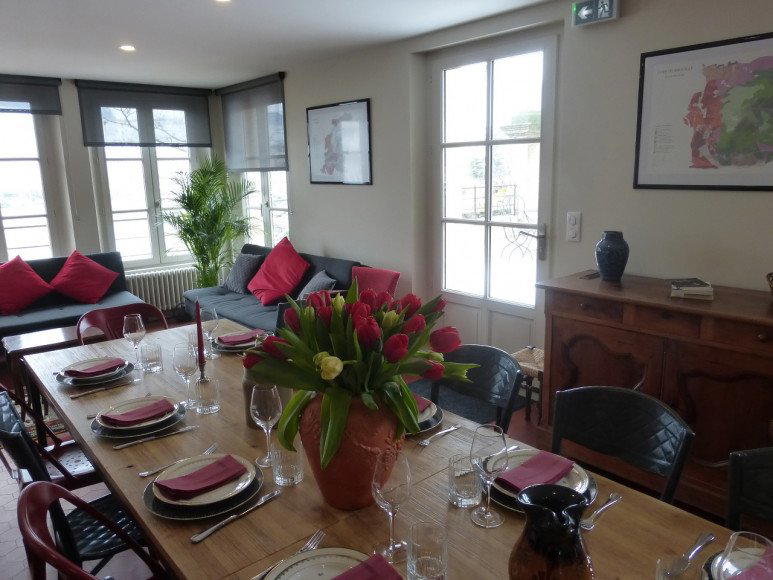
Warm, lively, and inviting atmosphere that transports diners to Mexico City.