Peruvian Taste
Our verdict
Peruvian Taste brings the cooking traditions of Lima to Charlestown's Arlington Avenue, offering a format that sits apart from the neighborhood's Italian and seafood-led dining scene. The menu draws on Peru's layered culinary inheritance, from ceviche technique to the Chinese and Japanese influences that define novoandina cooking. For a neighborhood with limited South American representation, it fills a specific gap.

Pearl is the En Primeur Club membership app — saves, bookings, and concierge access live there. Same editors, same standards.
- Address
- 78 Arlington Ave, Charlestown, MA 02129
- Phone
- (857) 289-7425
- Hours
- Mon–Thu 10 AM–9 PMFri–Sat 10 AM–10 PMSun 10 AM–9 PM
- Directions
- Get directions
- Booking
- Book on OpenTable
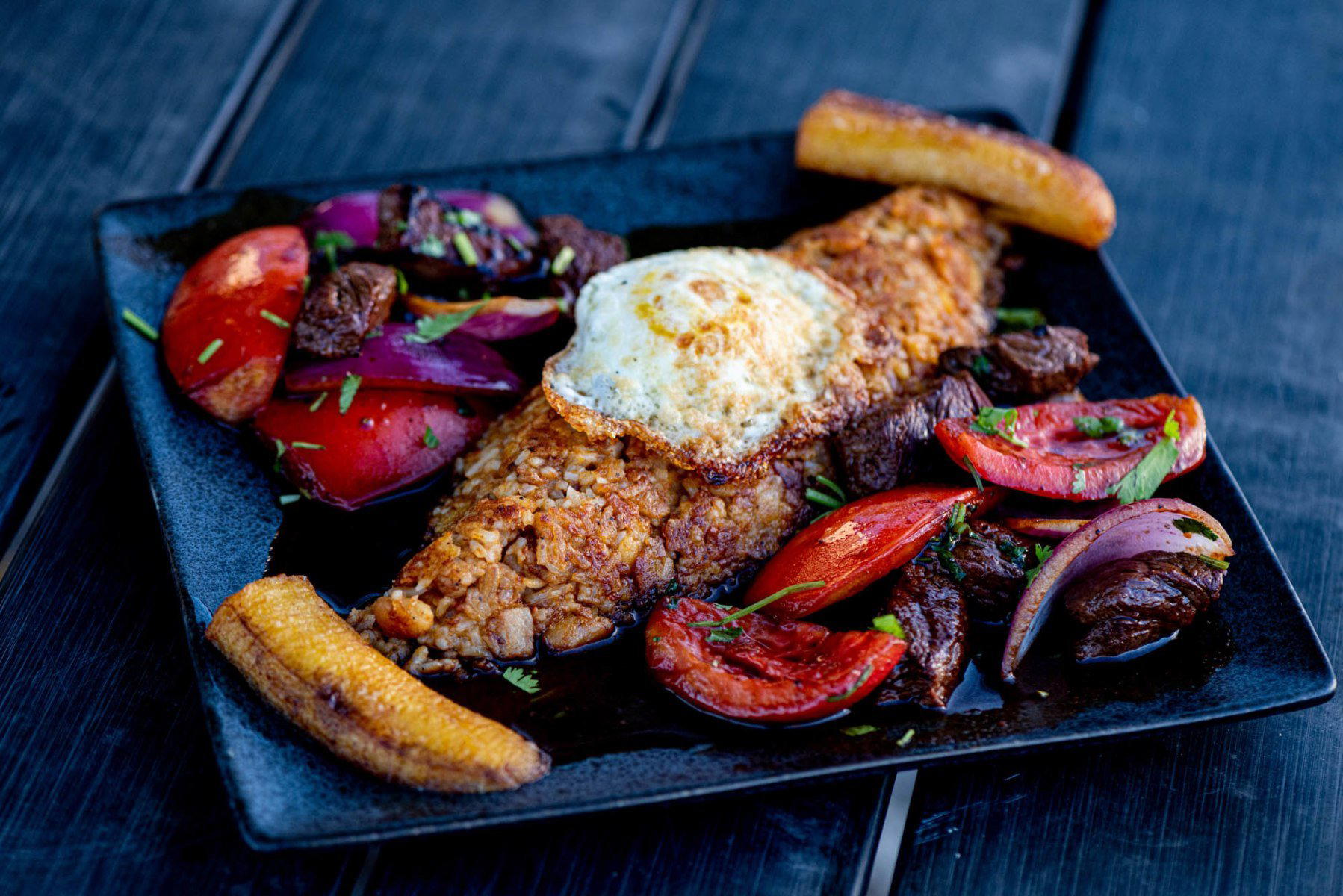
The menu
What to order
- Lomo Saltado
- Ceviche Mixto
- Arroz Chaufa
South American Cooking in a Neighborhood That Skews Italian and Seafood
Charlestown's dining scene clusters around two gravitational centers: the waterfront seafood houses and the red-sauce Italian trattorias that have anchored the neighborhood for decades. Pier 6 and Legal Oysteria anchor the waterfront end; Paolo's Trattoria and Monument Restaurant and Tavern hold the neighborhood's more residential blocks. Against that backdrop, Peruvian Taste at 78 Arlington Avenue represents something Boston's inner neighborhoods rarely offer: a kitchen rooted in Lima's pluralist cooking tradition, operating in a zip code where South American cuisine has almost no other presence.
That absence matters because Peruvian cooking is not a minor regional variation on a broader Latin American theme. It is a fully developed culinary tradition with its own internal architecture, shaped by Indigenous Andean technique, Spanish colonial influence, and successive waves of Chinese and Japanese immigration that arrived in the nineteenth and early twentieth centuries. The result is a cuisine that treats acid, heat, and starch with a precision that differs structurally from Mexican or Caribbean cooking, and that produces dishes, particularly raw fish preparations and rice-based plates, which owe as much to East Asian sensibility as to anything Iberian. For Boston diners who know Peruvian food primarily through the high-end novoandina restaurants of New York or Miami, a neighborhood-scale version on Arlington Avenue in Charlestown is a different proposition entirely.
What the Menu Architecture Reveals
The editorial angle most useful for reading a restaurant like Peruvian Taste is not the chef's biography or the room's aesthetic — it is how the menu is structured and what that structure signals about the kitchen's ambitions and reference points. Peruvian menus, even at the neighborhood level, tend to organize themselves around a handful of categorical commitments that reveal training lineage and culinary self-understanding. The presence and quality of ceviche, for instance, tells you whether the kitchen treats acid as a finishing note or as a primary cooking medium. The handling of aji amarillo — the bright, fruity Peruvian chile that appears in everything from leche de tigre to causa rellena, indicates whether heat is being dialed back for a non-Peruvian audience or deployed at the register the dish was designed for.
Similarly, the rice and stir-fry section known as chifa, the Peruvian-Chinese hybrid tradition that produced dishes like arroz con leche and lomo saltado, is either present as a token gesture or as a genuine commitment to one of Lima's most distinctive culinary exports. Lomo saltado in particular, the wok-fried beef dish that uses soy sauce, tomatoes, and french fries in a single pan, is a useful diagnostic: a kitchen that executes it correctly is working with high heat and tight timing in a way that most Latin American restaurants in New England simply do not attempt. The same applies to tiradito, the sashimi-adjacent raw fish preparation that arrived in Lima via the Japanese nikkei community and that requires a different knife discipline than ceviche.
What the address and format suggest is a kitchen positioned to serve the full range of that tradition rather than a simplified export version, a distinction that matters for anyone planning a visit with specific Peruvian dishes in mind.
Charlestown's Dining Position in the Broader Boston Context
Charlestown occupies an interesting tier in Boston's restaurant geography. It is not the South End, where ambitious independent restaurants cluster with density, nor is it Cambridge's Inman Square, where immigrant-rooted cooking traditions have maintained long institutional presence. It is a walkable neighborhood with a loyal residential base and a dining scene that has grown around that base rather than around destination traffic. Lucky Tiger represents the cocktail-bar end of that scene; the Italian and seafood anchors represent the volume end.
Peruvian Taste sits in neither of those categories. Its closest comparison set, at least in culinary tradition, is not local, it is the Peruvian restaurants that have developed in cities with larger Peruvian-American communities, from New York's Jackson Heights to the South American dining corridors of northern New Jersey. Boston's Peruvian population is smaller and more dispersed, which means a restaurant operating in this tradition in Charlestown is working without the natural anchor of a surrounding community to set baseline expectations. That context cuts both ways: it positions the kitchen as the primary source of the cuisine's authenticity signals in a neighborhood where most diners are arriving without prior reference points, but it also means the restaurant is not competing with a dozen similar kitchens two blocks away.
For a broader comparative view of how Lima's cooking tradition performs at the highest levels of American fine dining, the gap between a neighborhood Peruvian kitchen and the upper reaches of the category is instructive. Restaurants like Le Bernardin in New York City or Providence in Los Angeles operate with entirely different resources and at entirely different price points, but the technical demands of high-acid, precision-cut raw fish preparations are not scale-dependent. A kitchen that handles tiradito correctly at the neighborhood level is doing something genuinely difficult. The same applies to the fire management required for a properly executed lomo saltado, a dish that Lazy Bear in San Francisco and the teams behind places like Alinea in Chicago would recognize as technically demanding in its own register. You can also see how culinary ambition plays out across different formats by looking at Single Thread Farm in Healdsburg, The French Laundry in Napa, Blue Hill at Stone Barns in Tarrytown, Atomix in New York City, Addison in San Diego, The Inn at Little Washington, Emeril's in New Orleans, and 8 1/2 Otto e Mezzo Bombana in Hong Kong.
Planning a Visit
Peruvian Taste is located at 78 Arlington Avenue in Charlestown, MA 02129, on the residential slope of the neighborhood above the waterfront. For a fuller picture of where Peruvian Taste sits within Charlestown's wider dining offer, our full Charlestown restaurants guide covers the neighborhood by category and price tier.
Frequently asked questions
Where is Peruvian Taste located?
Peruvian Taste is located at 78 Arlington Ave, Charlestown, MA 02129, Charlestown.
Is Peruvian Taste the only Peruvian restaurant in the Charlestown area of Boston?
Charlestown's dining scene concentrates on waterfront seafood and Italian-American cooking, making a dedicated Peruvian kitchen a relative rarity in this specific neighborhood. Boston has a small number of Peruvian restaurants distributed across the metro, with most clustered in East Boston and Dorchester where larger Latin American communities are established. That geographic gap gives Peruvian Taste at 78 Arlington Avenue a distinct position in the local dining map for residents of Charlestown and the adjacent North End.
What do regulars order at Peruvian Taste?
Without a confirmed printed menu, the clearest guide is the cuisine category itself: Peruvian cooking in this register typically anchors on ceviche, lomo saltado, and aji-based sauces. At 78 Arlington Avenue, the residential Charlestown setting suggests a neighborhood-frequency crowd rather than a destination-dining one, which usually means the kitchen's most-repeated dishes are its most refined. Ask the staff directly on arrival — that question almost always surfaces what the kitchen does with confidence.
How far ahead should I plan for Peruvian Taste?
No reservation data is confirmed for Peruvian Taste, so same-day or next-day availability cannot be ruled out. Charlestown dining at this address sits on a residential slope with limited walk-in foot traffic compared to the waterfront, which typically reduces pressure on tables.
Reputation First
Comparable venues nearby, for context on price, style, and recognition.
| Venue | Cuisine | Price | Notes |
|---|---|---|---|
| Peruvian TasteThis venue — the venue you are viewing | Peruvian with Chifa Fusion | $20–30 | Not listed |
| Tradesman - Charlestown | American Pizza Bar | $20–30 | Hood Park |
| Prima | Modern Italian Steakhouse | $30–50 | Charlestown |
| Pier 6 | New England Seafood | Not listed | Charlestown |
| Monument Restaurant & Tavern | American Gastropub | $30–50 | Charlestown |
| Sunnyside Cafe | All-Day American Brunch | $20–30 | Charlestown |
Continue exploring
More in Charlestown
Restaurants in Charlestown
Browse all →
Bars in Charlestown
Browse all →
Hotels in Charlestown
Browse all →
Wineries in Charlestown
Browse all →
Details
- Cozy
- Family
- Casual Hangout
- Standalone
- Local Sourcing
- A La Carte
Current opening hours
- Monday
- 10 AM–9 PM
- Tuesday
- 10 AM–9 PM
- Wednesday
- 10 AM–9 PM
- Thursday
- 10 AM–9 PM
- Friday
- 10 AM–10 PM
- Saturday
- 10 AM–10 PM
- Sunday
- 10 AM–9 PM
Hours can change for holidays and private events. Last verified .
Energetic and comforting casual atmosphere in a small 18-seat space tucked away in an industrial area.