On Glenferrie Road in Hawthorn, Penny for Pound occupies the tier of Melbourne cafe-bakeries where the physical space does as much editorial work as what comes out of the kitchen. Compared to the stripped-back minimalism that defines much of the inner-east cafe scene, it offers a considered spatial identity that rewards a slower visit. Plan around the morning peak for the best read of what the room and the counter are doing.

Pearl is the En Primeur Club membership app — saves, bookings, and concierge access live there. Same editors, same standards.
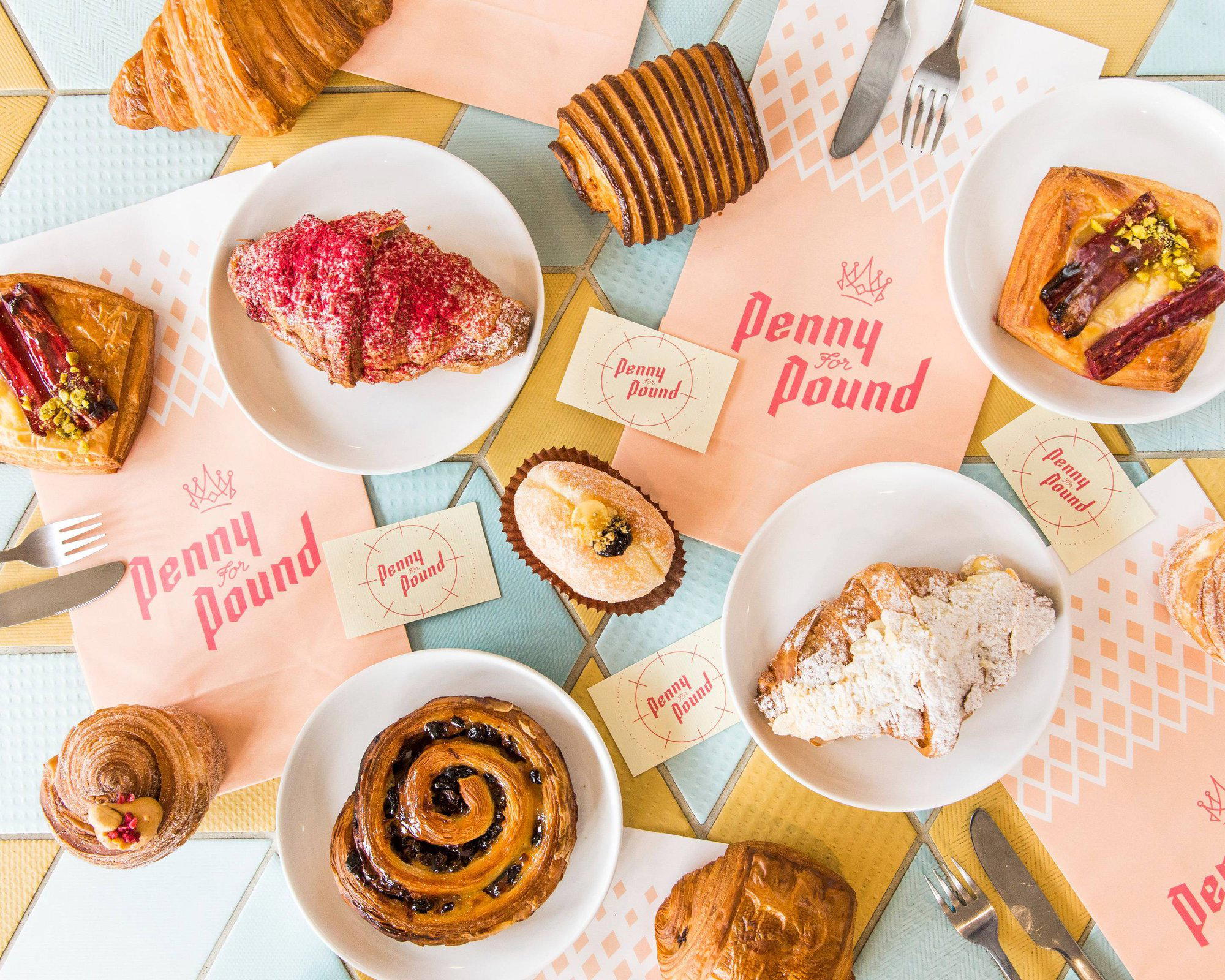
The Glenferrie Road Cafe Tier: What the Room Tells You First
Melbourne's inner-east cafe culture has spent the past decade sorting itself into legible tiers. At street level, Glenferrie Road in Hawthorn runs through a suburb that has always maintained a slightly more composed register than, say, Fitzroy or Collingwood — the foot traffic is residential and habitual rather than destination-driven, and the cafes that hold their ground here tend to do so through consistency and spatial confidence rather than novelty. Penny for Pound sits in that pattern. It is a bakery-cafe operating in a neighbourhood where the room itself functions as a signal: what it looks like, how it manages flow, where natural light falls, and how the counter is arranged tell you more about the kitchen's priorities than any menu copy.
That logic applies broadly across the better cafe-bakeries in Melbourne's middle-ring suburbs. The ones that endure are rarely the ones with the most elaborate fitouts; they are the ones where the space has been thought through as an experience of sequence — entry, counter, seating, light. The physical container either supports a slower, more deliberate visit, or it doesn't. At this category tier, the architecture of the room is the first editorial statement the venue makes, and it shapes everything that follows. Venues like Barry Cafe in Northcote operate on a similar principle: the spatial tone sets the expectation before a single order is placed.
How Bakery-Cafes Compete on Space in Melbourne's East
The shift in how Melbourne's serious bakery-cafes compete has moved away from purely menu-led differentiation. A decade ago, the conversation was almost entirely about the coffee program, origin, roaster relationship, extraction method. That conversation hasn't disappeared, but it has been joined by a more considered spatial discourse. The question is now whether the room supports the kind of visit the kitchen is trying to enable. A pastry counter backed by poor sightlines and cramped seating works against even a technically accomplished kitchen. A well-lit, well-paced space that lets the baked goods present themselves does the opposite.
Hawthorn's cafe geography makes this dynamic legible. Glenferrie Road functions as a main-street corridor with enough residential density to sustain regulars, but not so much tourist pressure that venues need to optimise for throughput over experience. That creates conditions where a bakery-cafe can afford to invest in the slower logic of the space rather than chasing table turns. The result, at its finest, is a room that reads more like a neighbourhood institution than a scaled-up hospitality operation, closer in register to the deliberate spatial thinking you see at Bar Carolina in South Yarra than to the high-volume, minimal-dwell-time format that defines strip-mall cafe culture.
The Counter as Editorial Object
In bakery-cafes, the counter is the primary architectural event. It is where the kitchen's output is first read, where the decision-making happens, and where the space's spatial logic is either confirmed or contradicted. A counter that is well-lit, legibly organised, and scaled to the room's footfall pattern signals operational confidence. One that is cluttered, poorly positioned, or undersized relative to the morning peak signals a room that hasn't been thought through to the same depth as its menu.
This matters particularly in the bakery tier, where the product is visual before it is tasted. The croissant architecture, the lamination visible through the glass, the colour development on a loaf, these are the sensory signals that justify a slightly longer queue or a slightly higher price point than the flat-white-and-banana-bread tier immediately below. Melbourne's more accomplished bakery operations have understood this for some time: the counter is not incidental to the offer, it is the offer, spatially expressed. The same principle applies at the fine-dining end of the Melbourne spectrum, venues like Attica and Flower Drum invest heavily in room architecture as a frame for what the kitchen produces, even if the category and price point are entirely different.
Hawthorn's Positioning in the Broader Melbourne Cafe Map
Hawthorn doesn't generate the same level of cafe-world attention as Fitzroy, Brunswick, or Prahran. That is partly a function of demographics, it is a suburb that trends older and more established, with less of the creative-industry foot traffic that drives trend-led hospitality, and partly a function of geography. Glenferrie Road is a shopping strip with genuine local character, but it doesn't draw the same volume of interstate or international visitors who help seed reputational momentum for venues in the inner north or inner south.
The practical consequence is that a bakery-cafe operating well on Glenferrie Road is doing so on the strength of its regulars and its neighbourhood word-of-mouth rather than on social media virality or destination-diner spillover. That is, if anything, a more honest test of quality. It is the same dynamic that sustains long-running institutions across Melbourne's middle suburbs, places that don't need a queue around the block to prove their relevance because their relevance is expressed through daily occupancy and return rate. For visitors to Melbourne mapping the city's cafe geography, Hawthorn sits outside the obvious circuit of 48h Pizza e Gnocchi Bar territory or the late-night energy of venues like Above Board, but it repays a detour for exactly that reason: the pace is different, the room is readable, and the visit is less mediated by scene pressure.
Planning a Visit: What to Know Before You Go
Bakery-cafes operating at this tier in Melbourne typically run their strongest counter between opening and mid-morning, laminated pastries in particular move fast, and the selection at 10am rarely resembles the selection at 8am. Arriving during the morning peak on a weekend is the fullest read of what the kitchen is doing; mid-week mornings offer the same product with less competition for space and a slower pace in the room. Penny for Pound is on Glenferrie Road in Hawthorn, accessible by tram from the CBD. For visitors already tracking Melbourne's broader dining geography, the suburb pairs naturally with a wider inner-east itinerary that might include a longer evening at 7 Alfred or a meal at one of the city's more formal addresses. For the full picture of where Melbourne's restaurants sit relative to each other, the EP Club Melbourne guide maps the city's dining tiers from neighbourhood cafes through to destination restaurants with regional reach, including Brae in Birregurra for those extending their trip into Victoria's west. Comparable day-visit logic applies if you are cross-referencing against interstate cafe benchmarks like bills in Bondi Beach or the neighbourhood-anchored format of Bayly's Bistro in Kirribilli.
The Minimal Set
Comparable venues nearby, for context on price, style, and recognition.
| Venue | Cuisine | Price | Notes |
|---|---|---|---|
| Penny for PoundThis venue — the venue you are viewing | Hawthorn, Artisan Bakery & Cafe | $ | Not listed |
| CIRCL Wine House | Not listed | $$$ | Melbourne, Modern European with Scandinavian influences |
| Ladro | Not listed | $$ | Fitzroy, Italian Wood-Fired Pizza & Pasta |
| Brico | Not listed | $$$ | Carlton North, European-inspired Small Plates |
| Il Caminetto | Pizza | Not listed | Not listed |
| Sama | Fairfield, Modern Lebanese | $$ | Not listed |
Continue exploring
More in Melbourne
Restaurants in Melbourne
Browse all →
Bars in Melbourne
Browse all →
Hotels in Melbourne
Browse all →



At a Glance
- Trendy
- Cozy
- Brunch
- Casual Hangout
- Standalone
Bright and casual bakery atmosphere well-suited for weekend pastry traditions.