Pampín Bar


Michelin Plate · Macarfi 7.6 Food Rating
Our verdict
A Michelin Plate-recognised spot in Santiago de Compostela's historic quarter, Pampín Bar earns its following through traditional Galician home cooking served around a large central communal table. Empanadas, escabeches, stews, and freshly caught fish define a menu the kitchen calls 'cocina de barrio' — neighbourhood food done without pretension, at mid-range prices that match the honest format.

Pearl is the En Primeur Club membership app — saves, bookings, and concierge access live there. Same editors, same standards.
- Address
- Ruela das Fontiñas 4 (Barrio de, Rúa de San Pedro, 15703 Santiago de Compostela, A Coruña, Spain
- Phone
- +34 981 11 67 84
- Website
- pampinbar.com
- Directions
- Get directions
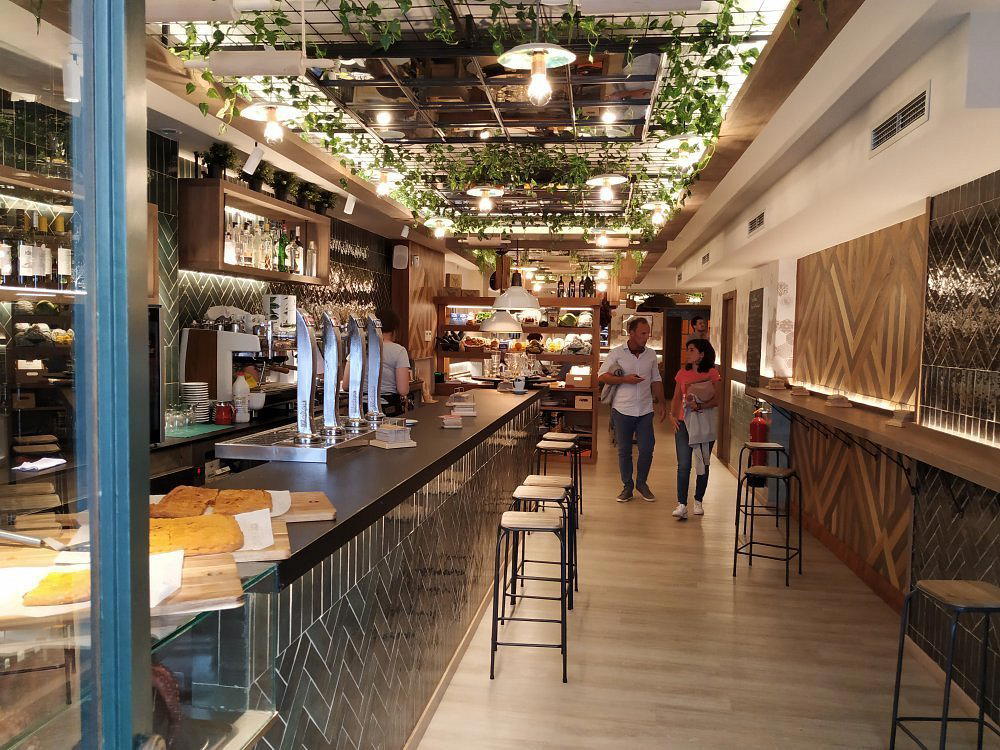
The Neighbourhood Table at the Heart of San Pedro
Santiago de Compostela's dining scene fractures along a familiar fault line: the high-concept contemporary restaurants clustered near the cathedral — including A Tafona (Contemporary) and A Maceta (Fusion) — and, several blocks away in the older residential quarters, something quieter and considerably less photographed. Pampín Bar belongs to this second category. Located on Ruela das Fontiñas 4 in the Barrio de San Pedro, the address alone signals a deliberate step away from the main pilgrimage circuit and into streets where the city's residents actually eat.
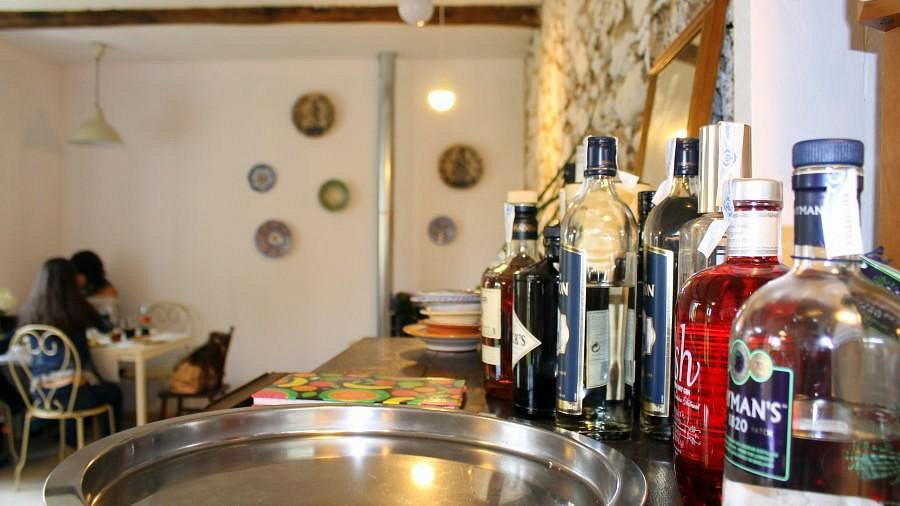
The exterior offers no visual cues about what lies within, which is precisely the point. What the kitchen describes as cocina de barrio, neighbourhood cooking, is a philosophy as much as a menu category, and the room has been designed to match it: bare concrete walls, retro detailing, and a large communal table at the centre that encourages the kind of shared-plate eating the cuisine is built around. The Michelin Plate recognition in both 2024 and 2025 confirms that the cooking meets a documented standard, placing Pampín Bar in a tier that earns critical attention without moving toward the multi-course theatrical register of a starred room.
Lunch and Dinner: Same Kitchen, Different Rhythm
In Galicia, as across much of northern Spain, the gap between midday and evening service is substantial, not just in timing but in character. Lunch remains the primary meal of the day for locals, and restaurants operating at the €€ price point tend to serve their most concentrated, labour-intensive cooking during that window. At Pampín Bar, the logic extends to the format itself: the communal table, the emphasis on sharing dishes, and a menu weighted toward slow preparations like stews and escabeches all lend themselves to the longer, more conversational pace of a Galician lunch.
Dinner in restaurants of this type reads differently. The room quietens toward a smaller, more local crowd; the shared-table format either becomes more intimate or more solitary depending on the evening. For visitors working against a pilgrimage itinerary or a tight afternoon schedule, the lunch service is where the full logic of the format becomes legible. Arriving hungry at midday and ordering across several categories, an empanada to start, a fish course from whatever came in that morning, a stew to anchor the centre of the table, is the pattern the kitchen appears designed to support.
This daytime emphasis also connects Pampín Bar to a broader tradition in Galician cooking. The region's cocinas de barrio, once the neighbourhood eating houses that served working-class lunches to locals, have largely contracted or converted into tourist-facing operations in cities like Santiago. The ones that maintain the original rhythm, the communal format, and the focus on daily-catch fish and made-that-morning empanadas occupy a smaller, more specific niche. At the €€ price tier, Pampín Bar sits closer to Abastos 2.0 - Barra (Farm to Table-Tapas) than to the upper end of the city's restaurant roster, but the Michelin recognition signals a level of execution that distinguishes it from the merely adequate.
What's on the Table
The menu operates within a tight, well-defined range: homemade empanadas, escabeches (a vinegar-marinated preservation technique with deep roots in Galician and wider Iberian cooking), stews, and freshly caught fish. Each category reflects a different dimension of traditional Galician home cooking, the empanada as portable everyday food, the escabeche as a technique for extending fresh ingredients while adding acidity and depth, the stew as a long-cooked centrepiece, and the fish as the daily variable that connects the kitchen to local waters.
The escabeche focus is worth noting as a marker of intention. In contemporary Spanish restaurants, escabeche has become fashionable in modernised, deconstructed forms, present on tasting menus at places like Aponiente in El Puerto de Santa María and treated as a reference point in the repertoire of kitchens such as Arzak in San Sebastián. Pampín Bar uses it in its original domestic register: as a preservation and flavour method, not a technique to be displayed. That distinction separates it from the more technically self-conscious mid-range restaurants nearby, including A Viaxe (Fusion), and places it in a different conversation altogether.
For context across the city's mid-range tier, A Horta d'Obradoiro and Abastos 2.0 - Barra (Farm to Table-Tapas) both operate at comparable price points with their own distinct editorial angles.
The Room and What It Signals
The interior design choice of bare concrete combined with a communal central table is common enough in contemporary casual dining that it risks reading as generic. Here, paired with the retro detailing and the deliberate focus on cocina de barrio, it functions differently: as a visual argument that the food is the point. This is not a room designed to be documented.
The communal table format also shapes the social logic of a meal here. Solo diners, couples, and small groups share the same central space, which tends to generate the kind of incidental conversation that formal table arrangements prevent. For a venue framing itself around neighbourhood cooking, this is structural consistency rather than a stylistic gesture.
Planning a Visit
Pampín Bar sits in the €€ price range, placing it at a level where a full meal with wine lands comfortably below the threshold of Santiago's higher-ambition restaurants. The address, Ruela das Fontiñas 4 in the San Pedro quarter, sits outside the immediate cathedral zone, which keeps the room more local in character during peak pilgrimage season. Lunch service is the session to prioritise, both for the full range of the kitchen's slow-cooked preparations and for the rhythm that neighbourhood cooking in Galicia is built around.
For broader planning across the city, our full Santiago de Compostela restaurants guide maps the full range from market-counter eating to multi-starred rooms. Accommodation context is in our Santiago de Compostela hotels guide, and for those spending time in the city beyond meals, our Santiago de Compostela experiences guide, bars guide, and wineries guide cover the rest. For comparison with how traditional regional cooking operates in other European contexts, Fahr in Künten-Sulz and Gannerhof in Innervillgraten offer useful reference points from the German-speaking Alpine tradition.
Frequently asked questions
What price level is Pampín Bar?
Pricing at Pampín Bar is listed as €€.
How far ahead should I plan for Pampín Bar?
Pampín Bar sits in the €€ price tier, which in Santiago de Compostela typically means higher foot traffic than the higher-spend restaurants near the cathedral. The Barrio de San Pedro location draws both locals and pilgrims completing the Camino, so demand peaks sharply during the main pilgrimage season. Booking at least a few days ahead during summer and holy years is a reasonable precaution.
What do critics highlight about Pampín Bar?
Michelin awarded Pampín Bar a Plate in both 2024 and 2025, pointing to the traditional home-cooking format and the communal table arrangement as the room's defining features. The recognition singles out the cocina de barrio framing — neighbourhood cooking rooted in preservation techniques like escabeche, stews, and local fish — rather than any modernist ambition. The concrete interior and shared central table read, in Michelin's framing, as deliberate rather than incidental.
Credentials Lens
| Venue | Cuisine | Price | Awards | Notes |
|---|---|---|---|---|
| Pampín BarThis venue — the venue you are viewing | Traditional Galician Tavern | $30–50 | Michelin Plate · Macarfi 7.6 Food Rating | Not listed |
| Abastos 2.0 - Mesas | Modern Galician Market Cuisine | $50–100 | Michelin Bib Gourmand | Not listed |
| Casa Marcelo | Modern Galician-Japanese Fusion Tasting Menu | $100–150 | 1 Michelin Star · Macarfi 8.8 Food Rating | Not listed |
| A Tafona | Modern Galician Fine Dining | $50–100 | 1 Michelin Star · Guía Repsol 3 Soles | Contemporary |
| A Maceta | Galician Fusion with Asian Touches | $30–50 | Michelin Plate · Macarfi 7.8 Food Rating | Not listed |
| Abastos 2.0 - Barra | Modern Galician Seafood Tapas | $30–50 | Michelin Plate · Macarfi 8 Food Rating | Not listed |
Recognition history
Dated appearances from independent guides and award organizations, with the underlying list record or original source where available.
Michelin Plate
Michelin
Macarfi 7.6 Food Rating
Macarfi
Full recognition history (4 entries)
Michelin Plate
Michelin
Michelin Plate
Michelin
Continue exploring
More in Santiago de Compostela
Restaurants in Santiago de Compostela
Browse all →
Bars in Santiago de Compostela
Browse all →
Hotels in Santiago de Compostela
Browse all →

Pampín Bar
The wine
- Wine program
- Curated wine list
- Extensive wine list
Details
- Cozy
- Intimate
- Classic
- Casual Hangout
- Group Dining
- Historic Building
- Extensive Wine List
- Small Plates
- A La Carte
- Vegetarian Friendly
Cozy and intimate with bare concrete decor, exposed beams, few tables, and a warm, traditional tavern atmosphere.