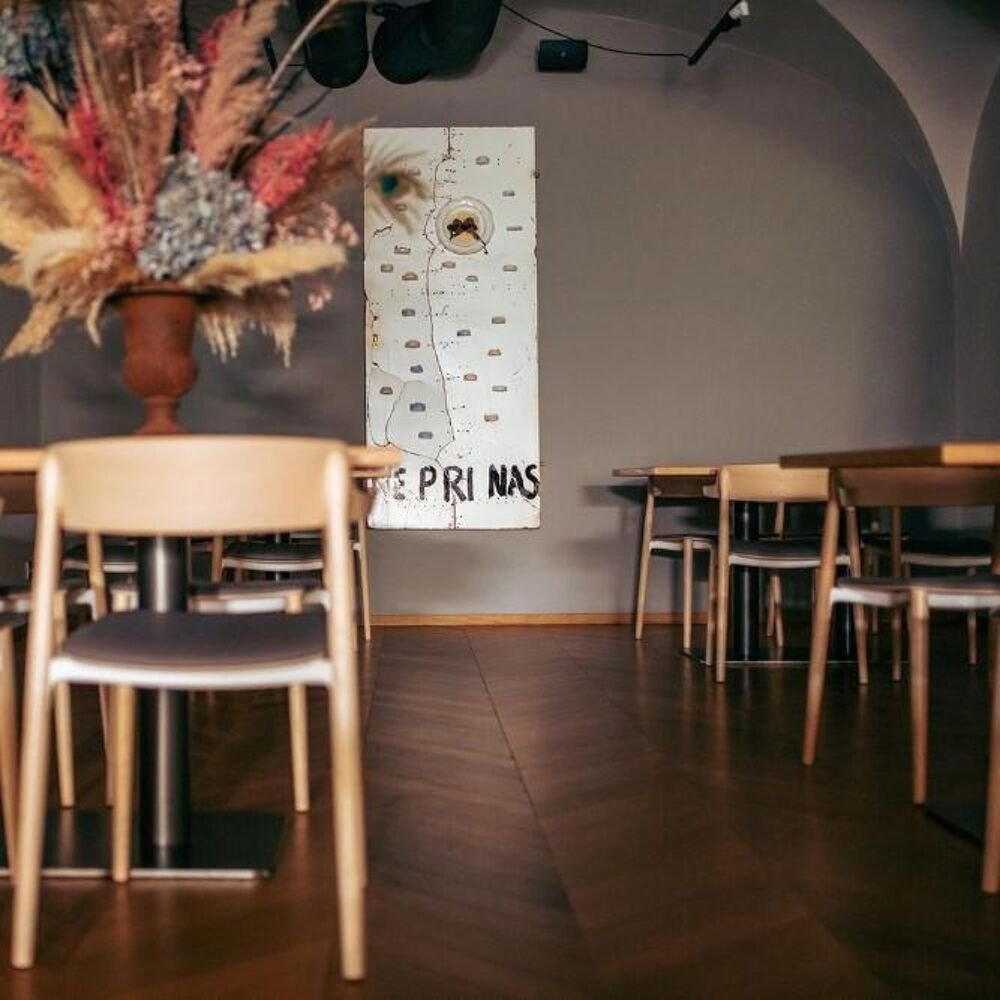
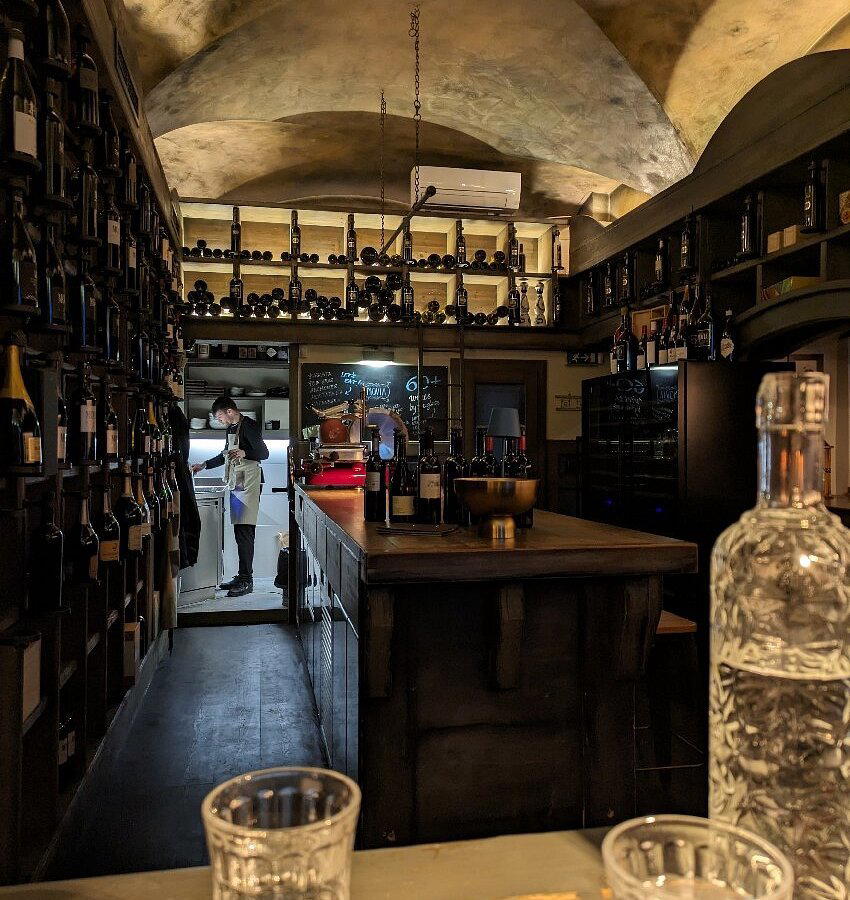
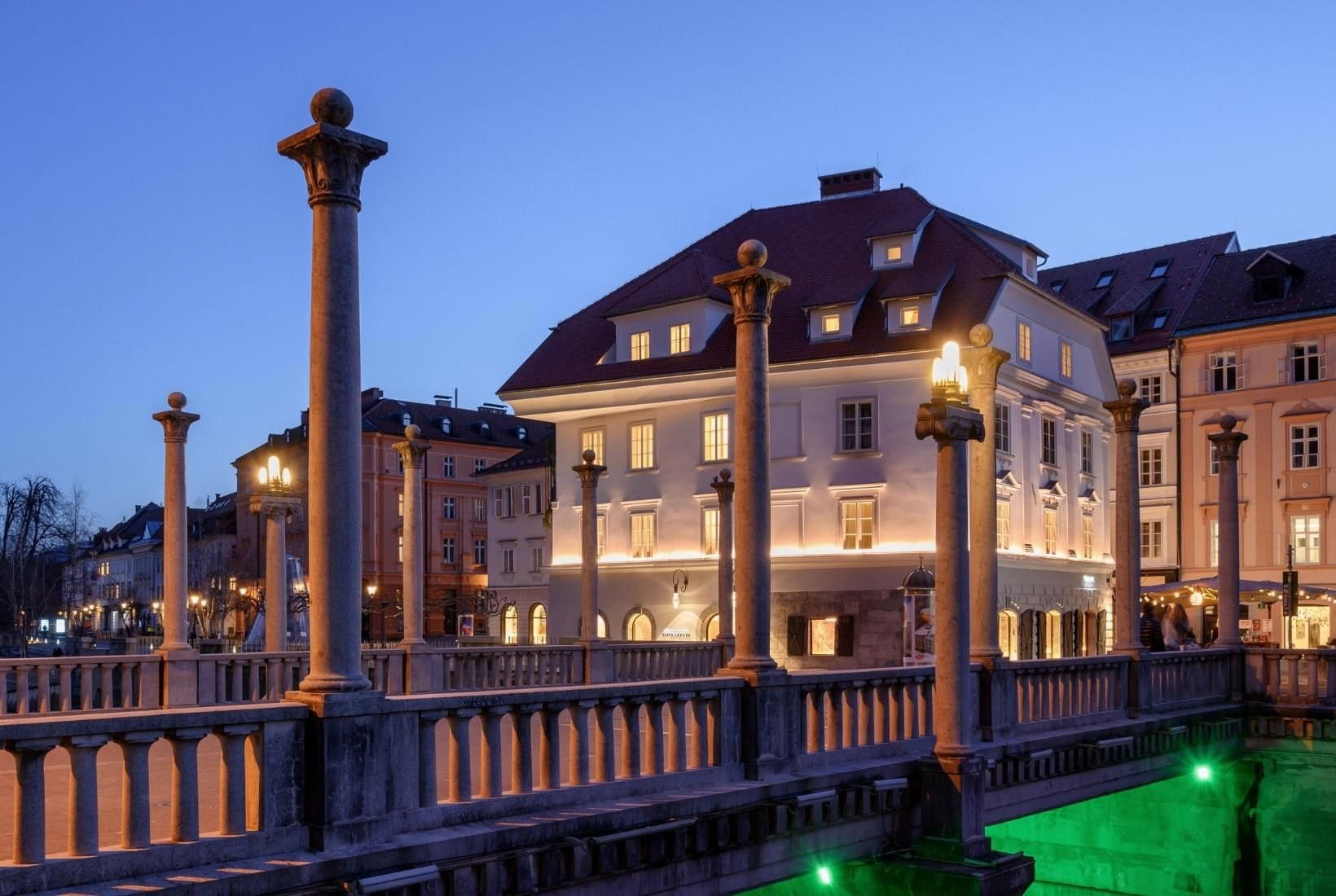
Špajza occupies a centuries-old townhouse on Gornji trg, one of Ljubljana's oldest residential streets in the Castle Hill quarter. The room's stone walls, timber details, and compressed scale place it firmly within the city's tradition of intimate, neighbourhood-anchored dining. For visitors moving through Ljubljana's Old Town restaurant circuit, it represents the more settled, historically grounded end of the spectrum.
Pearl is the En Primeur Club membership app — saves, bookings, and concierge access live there. Same editors, same standards.
- Address
- Gornji trg 28, 1000 Ljubljana, Slovenia
- Phone
- +38614253094
- Website
- spajza-restaurant.si
- Directions
- Get directions
 Saves & bookings on Pearl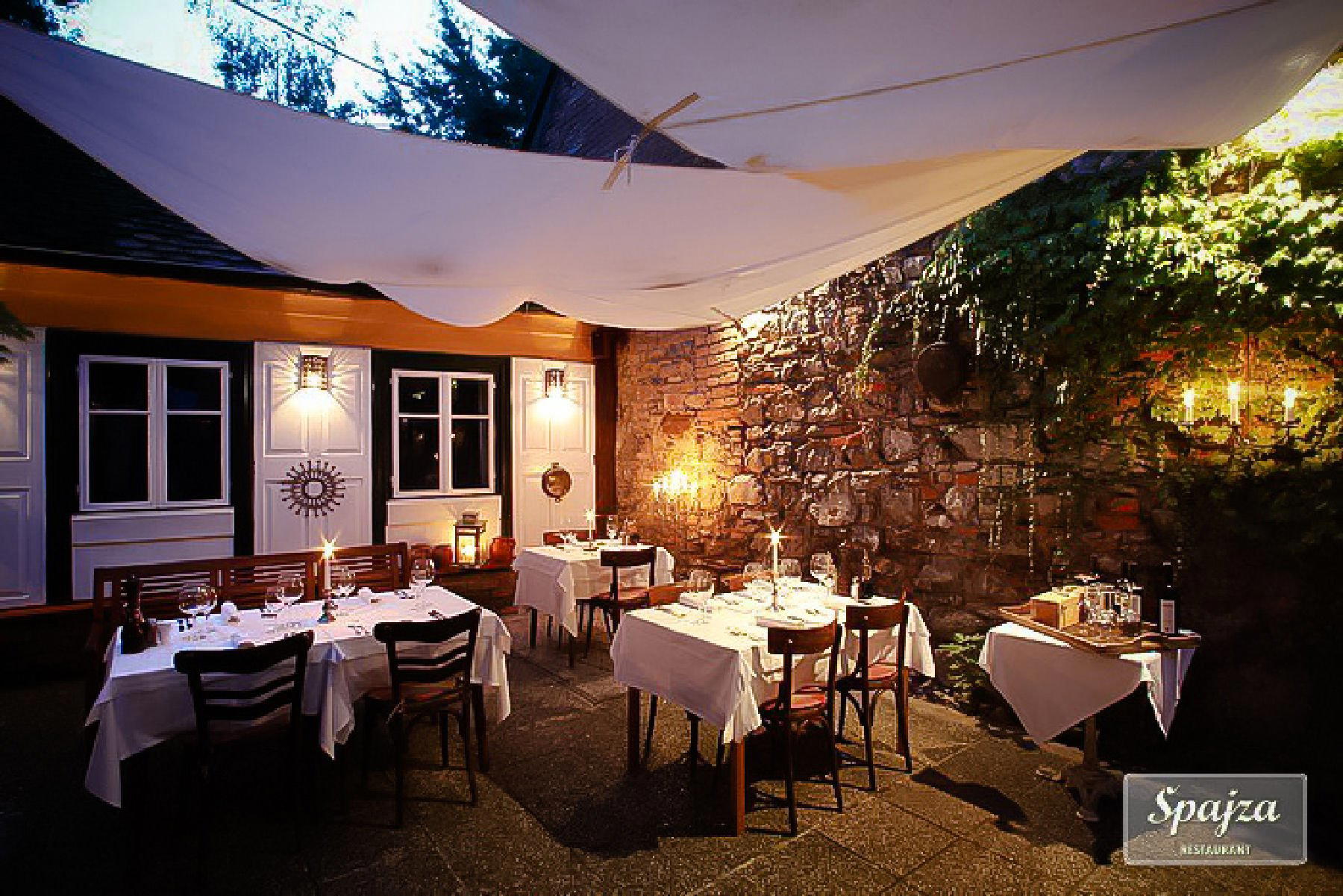
Stone Walls and a Street That Predate the Republic
Gornji trg runs along the lower slope of Ljubljana Castle, and it remains one of the few streets in the city where the built fabric has changed less than the politics around it. The buildings here are compact, mostly Baroque or earlier, pressed close to the pavement with low doorways and interior volumes that feel like they were shaped by people who measured rooms in candlelight. Špajza sits at number 28, and the physical container it occupies does most of the introductory work before a dish arrives. Exposed stone walls, ceiling beams, and the kind of proportions that emerge from centuries of domestic use rather than designed hospitality give the room a density that contemporary interiors rarely achieve, regardless of budget or intent.
That spatial character places Špajza in a particular tier of Ljubljana dining. The city's newer restaurant generation, represented by venues like AFTR and Allegria, tends toward cleaner architectural lines, open kitchens, and a visual vocabulary borrowed from Western European bistro design. Špajza's interior belongs to an older logic: the room was not built for the restaurant, the restaurant was fitted into the room. That distinction matters for how the experience reads. Acoustics, table spacing, light levels, and the relationship between interior and street all behave differently when the architecture precedes the hospitality concept rather than being commissioned for it.
Where the Old Town Restaurant Map Places It
Ljubljana's dining options in the Castle Hill and Old Town corridor now span a wide range of price points and formats. At one end, Restavracija Strelec operates from inside the castle itself, with a modern Slovenian tasting format and a price tier that reflects its position and ambition. At the accessible end, Altrokè and Abi Falafel serve the neighbourhood's daily-use foot traffic at a single-euro price point. Špajza occupies a middle register in both price and register, closer to the unhurried, full-service tradition of the Central European gostilna than to either extreme.
That gostilna lineage is worth understanding contextually. Across Slovenia, the gostilna format, a full-service restaurant combining local produce, traditional preparation methods, and a room designed for extended meals rather than rapid turnover, has been the dominant mode of quality dining for generations. Places like Gostilna Pri Lojzetu in Vipava and Gostilna Mlinar in Idrija represent that format at its most refined outside the capital. Špajza draws on the same underlying hospitality grammar while operating in an urban setting where the clientele skews toward visitors and professional residents rather than the rural community tables those venues serve.
The Room as the Proposition
The design argument for Špajza is one the building makes independently. Stone construction in Ljubljana's Old Town frequently dates to the medieval or early modern period, and interiors that have survived with their structural character intact rather than being extensively renovated are increasingly rare as commercial pressures encourage landlords to strip and modernise. A room with original or near-original masonry at table level reads differently from one where heritage detailing has been applied retrospectively as decoration. The compression of the space, typically a feature of urban domestic buildings from this period, creates an intimacy that larger, purpose-built restaurant rooms cannot replicate through layout alone.
For visitors arriving from dining cultures where spatial generosity and acoustic separation are the default markers of a premium room, Špajza's proportions can require recalibration. The closer table spacing and lower ceilings are functions of the building type, not a hospitality oversight. They also create a particular social atmosphere: conversations carry, the room feels occupied even at partial capacity, and the boundary between your table and the experience of the room as a whole is more permeable than in a large contemporary dining space.
Ljubljana in the Context of Slovenian Fine Dining
Špajza's position in the capital needs to be read against what Slovenia's broader dining scene has achieved in recent years. Hiša Franko in Kobarid has placed Slovenian cuisine on the international map with consistent 50 Best recognition. Hiša Denk in Zgornja Kungota, Hiša Linhart in Radovljica, Grič in Šentjošt nad Horjulom, Pavus in Lasko, and Milka in Kranjska Gora represent a regional fine dining tier that has attracted sustained critical attention. Dam in Nova Gorica and Gostišče Karavla 297 in Trzic extend the picture further across the country's diverse microclimates and ingredient traditions.
Within Ljubljana specifically, that regional quality argument has been slower to consolidate at the capital's address level than in the countryside, partly because urban land costs and tourist pricing pressure create different incentive structures than those operating in a village setting with a destination-driven clientele. Špajza's Old Town address puts it squarely in the tourist-adjacent category, which has implications for both pricing and the consistency of the clientele throughout the year. Visitors to Ljubljana who want to understand the city's dining character more fully should treat the full Ljubljana restaurants guide as the reference point for where Špajza sits relative to the full local spread, from fast-casual to tasting-menu formats.
Planning a Visit
Gornji trg is accessible on foot from Ljubljana's main pedestrian zone in under ten minutes, passing through the Old Town's narrowing lanes toward the castle base. The street is quieter than the riverfront, which makes arrival feel less congested in the warmer months when outdoor seating fills the more central squares. Špajza accepts reservations, and its regular hours are Monday through Friday from 5 to 11 PM, Saturday from 12 to 11 PM, and Sunday from 12 to 10 PM.
A Pricing-First Comparison
Comparable venues nearby, for context on price, style, and recognition.
| Venue | Cuisine | Price | Notes |
|---|---|---|---|
| Špajza RestaurantThis venue — the venue you are viewing | Not listed | $$$ | Not listed |
| Restavracija Harfa | Vič, Modern Mediterranean Slovenian | $$$ | Not listed |
| Restaurant Manna | Not listed | $$$ | Trnovo, Slovenian-Mediterranean Fine Dining |
| Švicarija | Tivoli, Traditional Slovenian Bistro | $$ | Not listed |
| Saraj Restavracija | Not listed | $$ | Ljubljana, Bosnian Grill & Balkan Cuisine |
| Maxim | Not listed | $$$$ | City Centre, Modern European with Slovenian & Mediterranean Influences |
Continue exploring
More in Ljubljana
Restaurants in Ljubljana
Browse all →
Bars in Ljubljana
Browse all →
At a Glance
- Cozy
- Romantic
- Intimate
- Elegant
- Classic
- Date Night
- Special Occasion
- Business Dinner
- Celebration
- Garden
- Terrace
- Historic Building
- Private Dining
- Extensive Wine List
- Local Sourcing
- Farm To Table
- Garden
Current opening hours
- Monday
- 5–11 PM
- Tuesday
- 5–11 PM
- Wednesday
- 5–11 PM
- Thursday
- 5–11 PM
- Friday
- 5–11 PM
- Saturday
- 12–11 PM
- Sunday
- 12–10 PM
Hours can change for holidays and private events. Last verified .
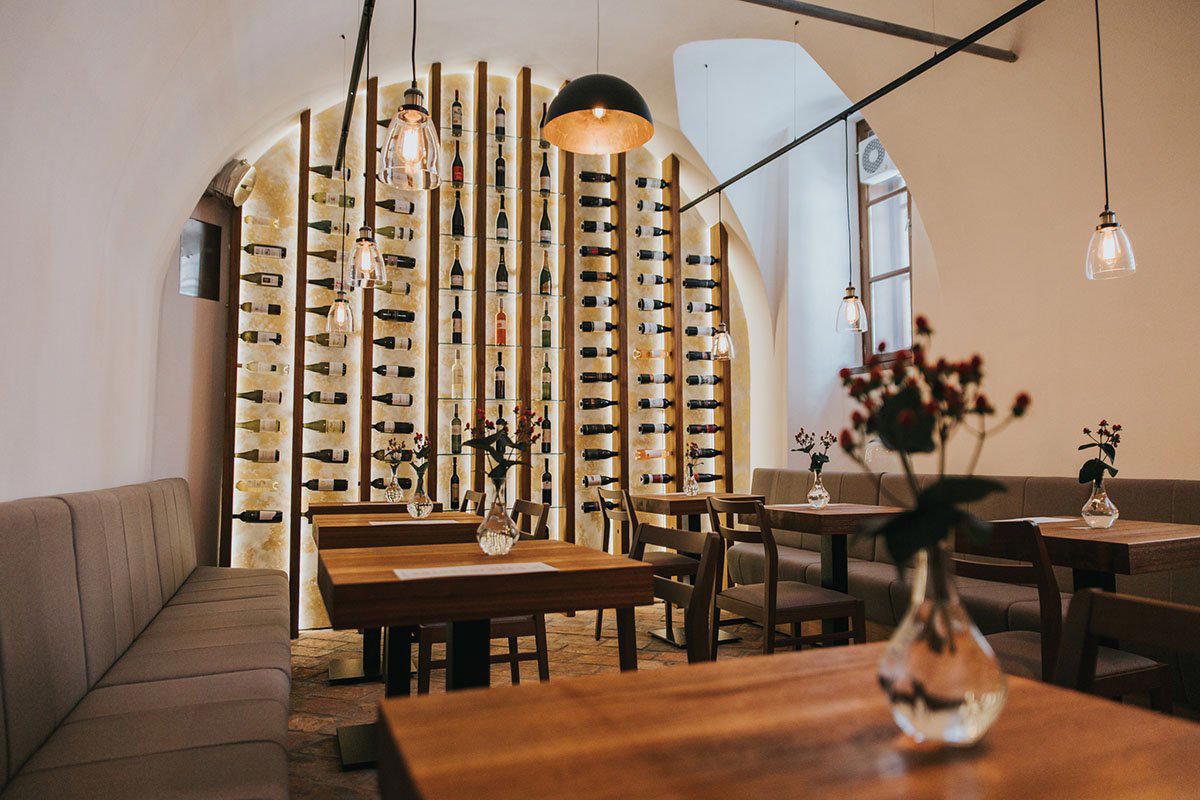
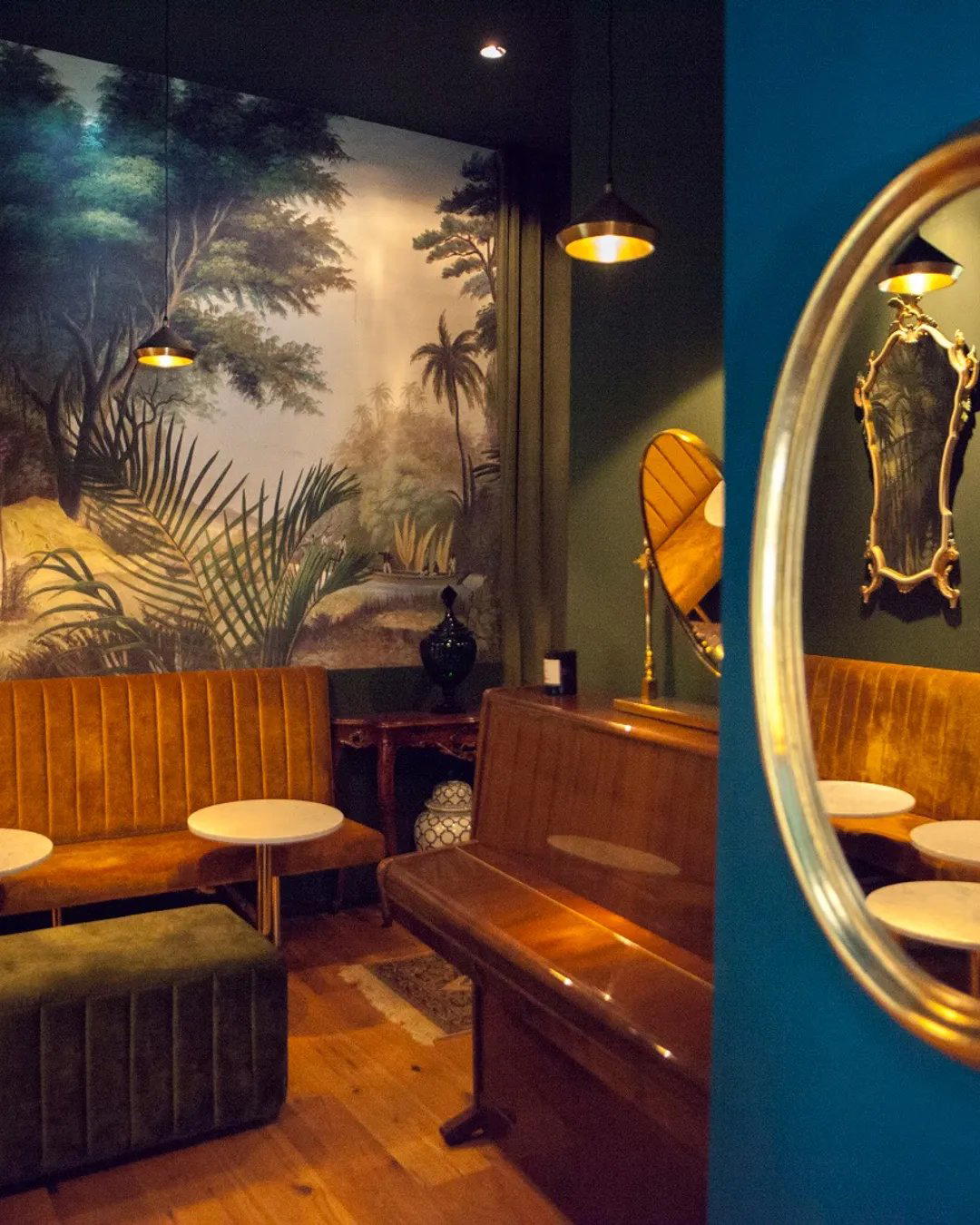
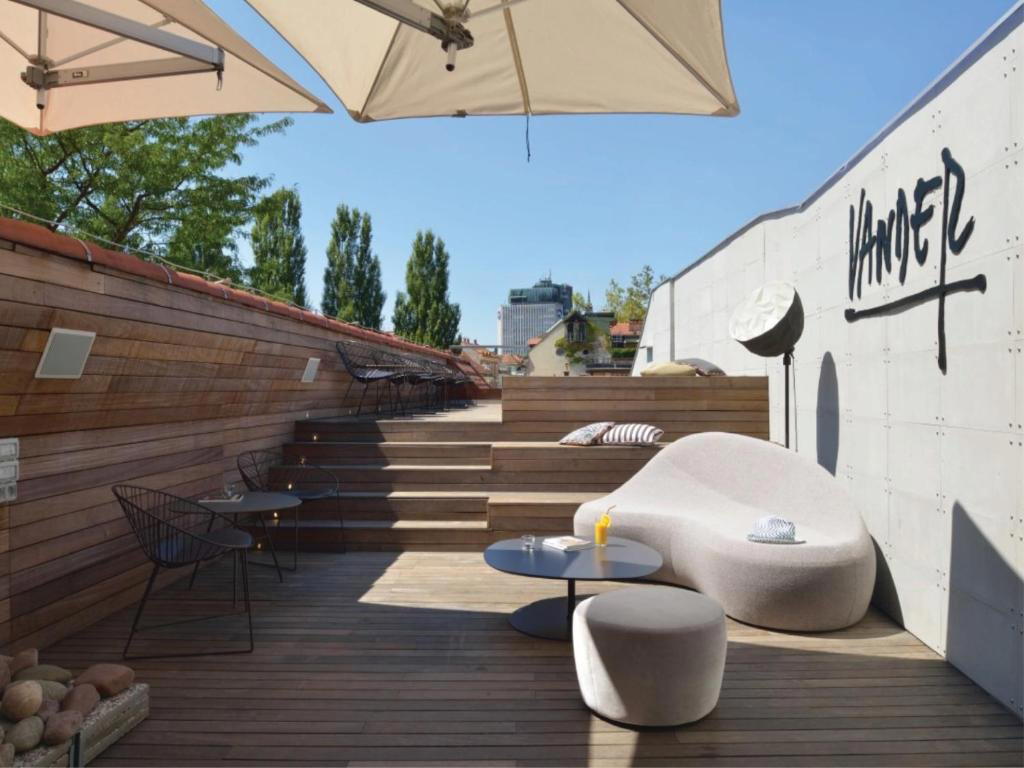
Warm and cozy with multiple small dining rooms featuring low timber beams and understated elegant decor, opening onto a serene L-shaped garden terrace with trees and white sails for sun protection.