Osteria Tarantino
An Italian osteria on De Waterkant's cobbled Waterkant Street, Osteria Tarantino brings southern Italian cooking traditions into one of Cape Town's most characterful neighbourhoods. The address places it steps from the Bo-Kaap border and the V&A Waterfront corridor, making it a practical anchor for both afternoon and evening dining. It operates in a Cape Town scene that increasingly rewards specificity of regional cuisine over generic European menus.
Pearl is the En Primeur Club membership app — saves, bookings, and concierge access live there. Same editors, same standards.
- Address
- 125A Waterkant St, De Waterkant, Cape Town, 8001, South Africa
- Phone
- +27765051771
- Website
- m.facebook.com
- Directions
- Get directions
 Saves & bookings on Pearl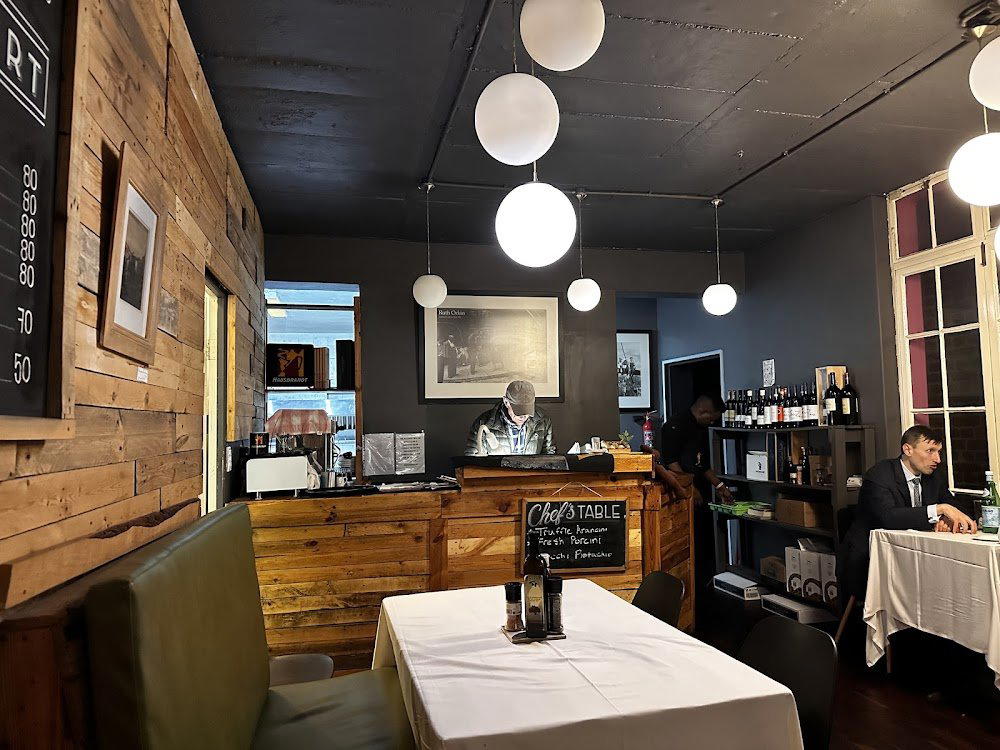
Where De Waterkant Meets the Deep South of Italy
Waterkant Street moves at a different pace from the V&A; Waterfront's polished retail energy a few minutes' walk away. The low-rise, painted facades of De Waterkant give the street a compressed, village-scale intimacy that Cape Town's Atlantic Seaboard rarely delivers. Arriving at 125A, you are in a neighbourhood that has cycled through warehouse, creative district, and residential phases without losing its physical texture. That texture, the narrow footpath, the proximity of neighbouring buildings, the quality of afternoon light falling across the street, is the first thing Osteria Tarantino sets itself against. Inside, the register shifts: a southern Italian osteria format prioritises material directness over theatre, and that alignment between neighbourhood grain and interior approach gives the address a coherence that more deliberately designed venues sometimes miss.
Southern Italian Cooking in a City Built on Cape Malay and Braai
Cape Town's restaurant identity has been built, over the past two decades, on a particular conversation between indigenous ingredients, Cape Malay spice traditions, and the high-technique South African fine dining represented by venues like The Test Kitchen, La Colombe, and Fyn. Italian cooking, when it appears in that context, tends to either compromise toward a mid-market fusion or lean fully into its own regional logic. Osteria Tarantino takes the latter position. The osteria format, as a category, is defined by what it withholds: it is not a ristorante, not a trattoria in the modern sense, and not a contemporary Italian concept. It is a format historically associated with simple, direct cooking from specific regions, served in rooms that do not try to impress. In the southern Italian tradition Tarantino references, that means Puglia and its surrounding provinces: dishes built on legumes, cured meats, handmade pasta, and olive oil of character rather than delicacy.
That specificity matters in Cape Town's current dining moment. The city's better-resourced dining scene, anchored by Michelin-recognised operators and Salsify at the Roundhouse's coastal fine dining, has expanded the range of what serious eating here looks like. Regional Italian, done without concession to local adaptation, sits within that expanded range but targets a different appetite: the reader who wants depth of tradition over spectacle of technique.
The Atmosphere as Argument
The osteria format is a commitment to a particular kind of sensory proposition. The sounds in a well-run osteria are kitchen sounds and conversation, not background music carefully selected to reinforce a brand identity. The smells are olive oil in a pan, herbs, and bread. The light tends to be warmer and lower than the clinical brightness of a contemporary fine dining room. These are not accidents of budget; they are the aesthetic position of a format that has existed for centuries in southern Italy and that carries accumulated cultural meaning when transplanted. In De Waterkant, a neighbourhood with its own layered history and a resident population that includes Cape Town's creative and design community, that kind of material authenticity reads as a statement of position rather than a default.
For comparison, the Cape Town dining scene's most discussed addresses in the fine dining tier, including 95 at Parks, operate with a deliberate theatricality. The osteria register is the opposite: it expects the food and the room to do the work without augmentation. That contrast is part of what makes Osteria Tarantino worth tracking in a city where the editorial conversation tends to concentrate on the haute end of the local spectrum.
Situating Tarantino in Cape Town and the Wider Western Cape
De Waterkant is not Cape Town's most prominent dining address. The city's food geography runs from the V&A; Waterfront's high-footfall dining to the Southern Suburbs' fine dining corridor, with De Waterkant occupying a middle register: walkable from the city centre, dense with hospitality, but without the singular destination gravity of Constantia or Franschhoek. That positioning suits the osteria format. The Winelands produce particularly discussed regional restaurant experiences outside the city itself, from Le Quartier Français in Franschhoek to Bread & Wine Vineyard Restaurant in Stellenbosch, and the West Coast delivers its own register through venues like Wolfgat in Paternoster. Within the city itself, an Italian osteria on Waterkant Street occupies a niche that the dominant narratives of Cape Town dining do not typically foreground, which is precisely the kind of specificity that rewards the reader looking beyond the headline tier.
Across South Africa more broadly, the Italian restaurant category divides between large-format, tourist-facing trattorie and smaller, more serious operators. Urban dining in Johannesburg, anchored by venues in Sandton such as Foundry, follows a different logic from Cape Town's neighbourhood-scale approach. The osteria is a format that travels well when it stays disciplined, and the address on Waterkant Street suggests a venue that has made that choice.
Planning a Visit
Waterkant Street is accessible on foot from the V&A; Waterfront in under ten minutes and from the Cape Town CBD in roughly the same time depending on your starting point in the city centre. De Waterkant's compact layout means parking is constrained; arriving by rideshare is the practical choice for evening visits when the neighbourhood's hospitality cluster draws significant foot traffic. For readers building a broader Western Cape itinerary, the restaurant fits naturally into a Cape Town urban day that includes the Bo-Kaap or a morning at the Waterfront before moving to the Winelands the following day.
Peers You’d Cross-Shop
Comparable venues nearby, for context on price, style, and recognition.
| Venue | Cuisine | Price | Notes |
|---|---|---|---|
| Osteria TarantinoThis venue — the venue you are viewing | Authentic Italian Osteria | $$ | Not listed |
| Lievita | Authentic Neapolitan Pizza & Pasta | $$ | Schotschekloof |
| Burrata | Modern Neapolitan Italian | $$$ | Woodstock |
| Chapman’s Peak Hotel | Cape Town Seafood | $$ | Hout Bay |
| Love Thy Neighbour | Authentic Greek Meze | $$ | Bo-Kaap |
| Arthur’s Mini Super | Quirky Neighborhood Cafe | $$ | Bantry Bay |
Continue exploring
More in Cape Town
Restaurants in Cape Town
Browse all →
Bars in Cape Town
Browse all →
Hotels in Cape Town
Browse all →
At a Glance
- Cozy
- Intimate
- Rustic
- Classic
- Date Night
- Casual Hangout
Current opening hours
- Monday
- 1–10 PM
- Tuesday
- 1–10 PM
- Wednesday
- 1–10 PM
- Thursday
- 1–10 PM
- Friday
- 1–10 PM
- Saturday
- 1–10 PM
- Sunday
- Closed
Hours can change for holidays and private events. Last verified .
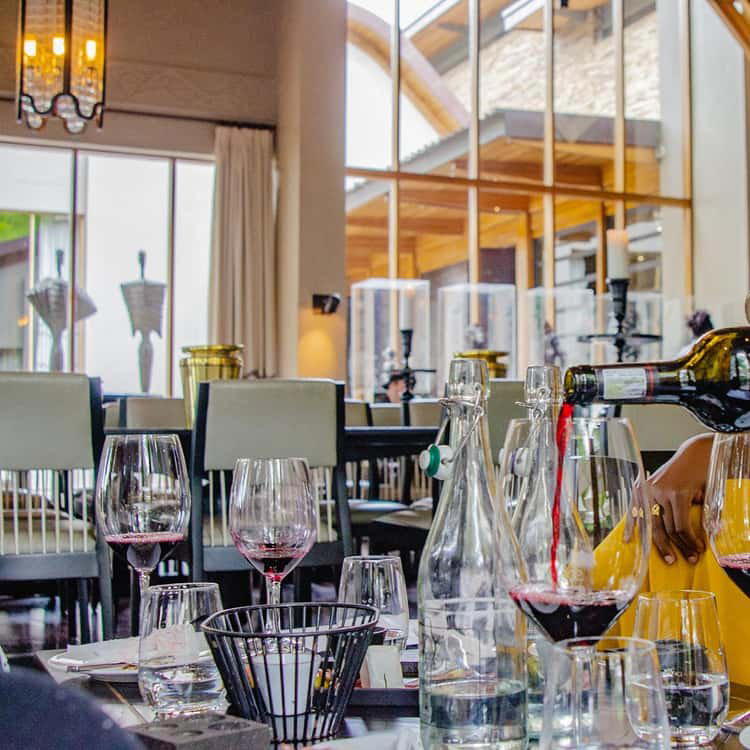
Warm and homely with brick-lined walls, wooden tables, yellow and charcoal decor, cozy fireplace for winter, and friendly family-like service.