Osteria Applausi
A neighborhood Italian osteria on Old Greenwich's Sound Beach Avenue, Osteria Applausi operates in a Connecticut town where proximity to Long Island Sound shapes what lands on the plate. The room reads as a place for regulars rather than occasions, sitting comfortably in the tier of community-anchored Italian dining that has defined southwestern Connecticut for decades. Pair it with a look at our broader Old Greenwich dining coverage for context.
Pearl is the En Primeur Club membership app — saves, bookings, and concierge access live there. Same editors, same standards.
- Address
- 199 Sound Beach Ave, Old Greenwich, CT 06870
- Phone
- +12036374447
- Website
- osteriaapplausi.com
- Directions
- Get directions
 Saves & bookings on Pearl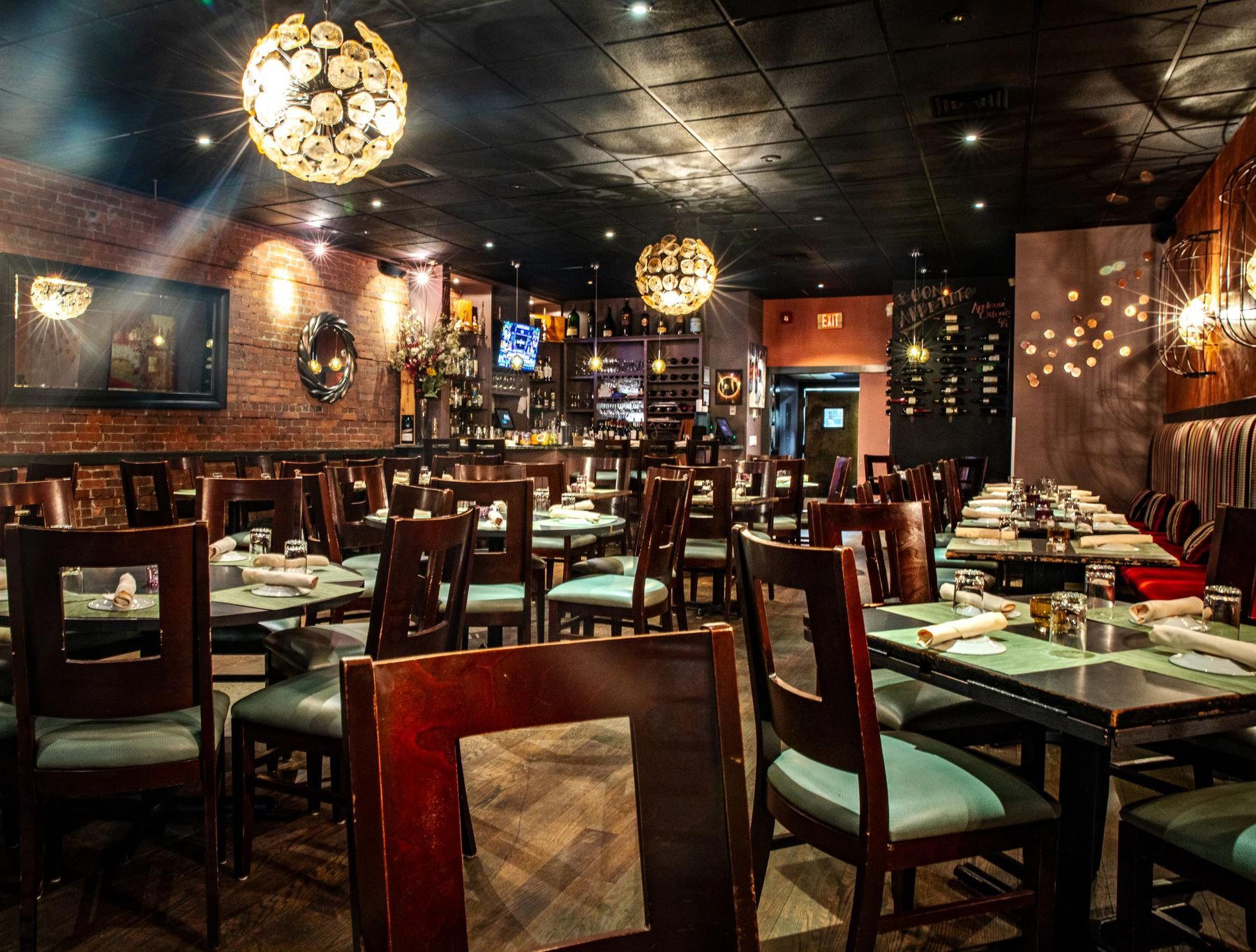
Sound Beach Avenue and the Italian Table
Old Greenwich occupies a particular position in southwestern Connecticut's dining order: close enough to Manhattan to attract serious kitchens, but settled enough that the restaurants defining its character tend to outlast trends. Sound Beach Avenue, where Osteria Applausi sits at number 199, is the kind of street that rewards walking slowly. The storefronts are low, the pace is residential, and the restaurants along it generally answer to neighbors before they answer to critics. That context matters when reading what an osteria format means here, because the word carries specific weight. An osteria, in the Italian tradition, is not a ristorante with ambitions toward ceremony. It is a room where the food is honest and the sourcing is assumed to be close and seasonal. Whether Osteria Applausi holds to that logic is the question worth asking.
For a wider map of where this restaurant sits among Old Greenwich's options, the full Old Greenwich restaurants guide provides the competitive framing. Among Italian options in the immediate area, RéNapoli draws a useful comparison: a Neapolitan-focused kitchen on the same general stretch that has built its identity around wood-fired bread and southern Italian regionalism. The two restaurants address different registers of the Italian dining tradition, and knowing both helps position either correctly.
The Ingredient Logic Behind the Osteria Format
Osteria cooking, when practiced with fidelity, is ingredient-forward by design. The format descends from a tradition where the kitchen's job was to not obscure what the farm or the fisherman delivered that morning. In practice, this means shorter menus, dishes that change with the season, and a skepticism toward complexity for its own sake. The northeastern United States gives kitchens working in this tradition something useful: a coastal supply chain that runs from the Connecticut shoreline through Long Island Sound and into the broader North Atlantic, alongside a seasonal produce calendar that produces genuinely good tomatoes, corn, and greens in summer and forces kitchens toward root vegetables and preserved flavors in winter.
That seasonal pressure is part of what distinguishes osteria-style kitchens from Italian-American restaurants that operate on a fixed, year-round menu built around imported shelf-stable ingredients. The difference is not always visible on a printed menu, but it shows up in the texture of a sauce, the weight of a pasta, and whether the vegetable on the plate tastes like it was harvested in the same week it was served. Restaurants that commit to that logic tend to develop a regulars' following precisely because the menu shifts, and because repeat visits reveal the kitchen's relationship to its supply rather than just its execution of a fixed repertoire.
This is the frame that matters for understanding the osteria category nationally. At Blue Hill at Stone Barns in Tarrytown, the farm-to-table commitment is foregrounded to the point of being the restaurant's primary identity. At Single Thread Farm in Healdsburg, the ingredient sourcing is documented with a precision that has earned the kitchen national recognition. Most neighborhood Italian restaurants operate at a less explicit register than either of those, but the underlying logic, that the sourcing shapes the cooking, holds across the tier.
Placing Osteria Applausi in Its Competitive Set
Connecticut's Fairfield County has a dense Italian dining market, one of the more competitive in the Northeast outside of New York City's five boroughs. The towns along the I-95 corridor, Greenwich, Stamford, Darien, Westport, have all absorbed significant Italian-American dining investment over decades, and the result is a market where differentiation requires either regional specificity, ingredient commitment, or both. An osteria that leans into the format's founding logic, seasonal and local sourcing, restrained preparation, wine-forward hospitality, sits in a different competitive tier than the large-format red-sauce institutions that have served the area since the mid-twentieth century.
The national Italian fine dining conversation has moved toward regional specificity and producer-focused sourcing. At 8½ Otto e Mezzo Bombana in Hong Kong, Italian cooking is positioned as a precision discipline where provenance of ingredients is as discussed as technique. At Frasca Food and Wine in Boulder, the Friulian focus is narrow enough to function as a study in a single Italian region's food and wine tradition. Neighborhood Italian restaurants in Connecticut are not operating at those reference points, but the direction of travel in the broader conversation, toward specificity, toward sourcing, toward restraint, does filter down into what diners expect from a kitchen calling itself an osteria.
For context on what serious ingredient-driven American restaurants look like across the country, the range is wide: Lazy Bear in San Francisco and Alinea in Chicago represent the high-format, multi-course end of the sourcing-led spectrum. Bacchanalia in Atlanta and Brutø in Denver have built regional reputations on similar commitments at a more accessible price register. Le Bernardin in New York City remains the benchmark for coastal ingredient sourcing in the American fine dining context, while Providence in Los Angeles makes the case that seafood-forward menus can achieve the same depth. What connects the category is the primacy of what arrives at the kitchen door.
Planning a Visit
Osteria Applausi is located at 199 Sound Beach Ave in Old Greenwich, CT 06870. The address places it within walking distance of the Old Greenwich Metro-North station on the New Haven Line, which makes a dinner visit from Manhattan or Stamford logistically direct: the train deposits visitors a short walk from the restaurant, removing the parking calculus that complicates most Fairfield County dining. Sound Beach Avenue itself is a commercial strip built around foot traffic, and arriving on foot or by train fits the neighborhood's character better than arriving by car. For current hours, reservation availability, and menu details, direct contact with the restaurant is the appropriate channel, as no online booking or phone data is publicly confirmed at this time.
Continue exploring
More in Old Greenwich
Restaurants in Old Greenwich
Browse all →
Bars in Old Greenwich
Browse all →


Hotels in Old Greenwich
Browse all →







At a Glance
- Elegant
- Sophisticated
- Cozy
- Date Night
- Special Occasion
- Open Kitchen
- Extensive Wine List
Current opening hours
- Monday
- 5–9 PM
- Tuesday
- 5–9 PM
- Wednesday
- 5–9 PM
- Thursday
- 5–9 PM
- Friday
- 5–10 PM
- Saturday
- 5–10 PM
- Sunday
- 5–9 PM
Hours can change for holidays and private events. Last verified .
Beautifully appointed dining room with elegant, sophisticated Tuscan vibes and an inviting atmosphere.
Know Before You Go
- Getting there
- 199 Sound Beach Ave, Old Greenwich, CT 06870