Skip to Main Content
← Collection
Dallas, United States

Olōyō (Molino Olōyō)

LocationDallas, United States

<h2>Where Masa Meets the Texas Pantry</h2><p>The address for Olōyō (Molino Olōyō) may be sparse in the public record, but the concept it represents is anything but ambiguous. In a Dallas dining scene that has grown increasingly comfortable with fine-dining Mexican — a category long underfunded relative to the city's appetite for steakhouses and Italian — Olōyō arrives at the intersection of two serious traditions: the ancient Mexican craft of nixtamalization and the seasonal produce culture that Texas farms have been quietly building for decades. The molino format, centered on a working mill and the daily production of masa from dried corn, is not a trend imported from New York or Los Angeles. It is one of the oldest food production systems in the Americas, and its appearance in a Dallas restaurant context speaks to how much the city's culinary ambitions have shifted.</p><h2>The Masa Tradition, Taken Seriously</h2><p>Street food in Mexico has always been inseparable from the quality of its masa. The taco, the tostada, the sope, the tlayuda , each depends on masa made daily from corn that has been soaked in an alkaline solution, stone-ground, and shaped by practiced hands. When that foundation is right, the tortilla carries flavor on its own: faintly mineral, slightly sour, with a texture that holds without going limp. When it is made from commercial instant masa, as most American Mexican restaurants still rely on, the platform becomes neutral at leading and cardboard-adjacent at worst. The molino model , a restaurant built around its own mill, treating corn as a primary ingredient rather than a commodity input , closes that gap in a way that changes every dish that depends on it. Olōyō's name and format signal an explicit commitment to that tradition, placing it in a small national peer set of corn-focused restaurants that treat tortilla production as seriously as any European kitchen treats bread.</p><h2>Dallas and the Elevation of Mexican Dining</h2><p>Dallas has a longer history with Mexican cuisine than most American cities its size, shaped by proximity to the border, a large Mexican-American population, and decades of Tex-Mex culture that runs deep in the local identity. What has changed in recent years is the willingness of the fine-dining tier to engage with that tradition honestly rather than Europeanizing it. Fearing's at the Ranchman's level brought Southwestern idiom into white-tablecloth territory years ago. But the newer generation of Dallas Mexican restaurants is operating differently , not borrowing Mexican ingredients to dress up French technique, but treating Mexican culinary logic, including masa, mole, and fermentation, as the intellectual framework around which a serious restaurant is built. Olōyō belongs to that generation, and the molino at its center is both a functional kitchen tool and an editorial statement about where the kitchen's priorities lie.</p><p>For reference, the Dallas fine-dining tier spans a wide range: [Tatsu Dallas (Japanese)](https://www.enprimeurclub.com/restaurants/tatsu-dallas-dallas-restaurant) and [Tei-An](https://www.enprimeurclub.com/restaurants/tatsu-dallas-dallas-restaurant) anchor the Japanese end at the leading price bracket, while [Lucia](https://www.enprimeurclub.com/restaurants/mamani-dallas-restaurant) holds a comparable position in Italian. A restaurant like Olōyō, if priced consistently with its peer format nationally, would occupy similar territory , though specific pricing is not confirmed in available data and should be verified directly before booking. What is clear is that molino-format restaurants in other cities , most notably in Los Angeles and Mexico City , have consistently commanded tasting-menu or à la carte prices that reflect the labor intensity of daily masa production and the premium sourcing of heirloom corn varieties.</p><h2>Texas Produce as the Second Pillar</h2><p>The cuisine is classified as Modern Mexican with a seasonal, Texas-produce orientation, which is a more consequential pairing than it might initially appear. Texas agriculture includes Gulf Coast seafood, Hill Country game, Rio Grande Valley citrus, and a growing network of small farms supplying urban restaurants with specialty produce that did not exist in commercial quantities a decade ago. A Mexican kitchen working with that specific pantry , rather than defaulting to imports , produces something geographically grounded in a way that neither purely traditional Mexican nor generic farm-to-table cooking achieves. The taco, in that context, becomes a vehicle for dual specificity: the corn in the tortilla traced to a named variety or region, the filling sourced from a named Texas producer. That kind of provenance, applied to a street food format, is what separates a molino restaurant from a Mexican restaurant that happens to have good tortillas.</p><h2>How Olōyō Sits in Its Peer Set</h2><p>Nationally, the closest conceptual comparisons are restaurants like Nixta Taqueria in Austin and Mírame in Los Angeles , operations where masa craft and ingredient sourcing share equal billing with cooking technique. At the highest end of the broader fine-dining spectrum, restaurants like [Le Bernardin in New York City](https://www.enprimeurclub.com/restaurants/le-bernardin) or [Alinea in Chicago](https://www.enprimeurclub.com/restaurants/alinea) demonstrate what full commitment to a primary ingredient and technique looks like across two or three Michelin stars. Olōyō applies that same logic , primary ingredient discipline, technique-forward execution , to a Mexican culinary framework in a Texas context. Within Dallas specifically, [Mamani](https://www.enprimeurclub.com/restaurants/mamani-dallas-restaurant) and [Avra Dallas](https://www.enprimeurclub.com/restaurants/avra-dallas-dallas-restaurant) represent the Mediterranean end of the city's upscale non-steakhouse dining; [Babel](https://www.enprimeurclub.com/restaurants/babel-dallas-restaurant) and [Al Biernat's](https://www.enprimeurclub.com/restaurants/al-biernats-dallas-restaurant) occupy different niches at the leading of the market. Olōyō's molino identity gives it a differentiated position that does not directly compete with any of them.</p><h2>Planning Your Visit</h2><p>Specific booking details, hours, and contact information for Olōyō are not confirmed in available data at the time of writing; the restaurant's address and reservation method should be verified through a direct search or a current dining platform before planning. Given that molino-format restaurants in comparable cities typically run at limited capacity , the production of fresh masa daily does not scale easily , booking ahead is advisable. Dallas restaurants at this tier and format often fill weekend slots two to three weeks in advance, particularly once word-of-mouth within the food community reaches critical mass. For a fuller picture of where Olōyō sits within Dallas dining, [our full Dallas restaurants guide](https://www.enprimeurclub.com/restaurants/dallas) covers the broader field, and [our full Dallas experiences guide](https://www.enprimeurclub.com/experiences/dallas) maps other premium options in the city. If you are building a broader Dallas itinerary, [our full Dallas hotels guide](https://www.enprimeurclub.com/hotels/dallas), [our full Dallas bars guide](https://www.enprimeurclub.com/bars/dallas), and [our full Dallas wineries guide](https://www.enprimeurclub.com/wineries/dallas) provide the supporting infrastructure.</p><h2>Frequently Asked Questions</h2><dl><dt><strong>What dish is Olōyō (Molino Olōyō) famous for?</strong></dt><dd>Olōyō's identity is built on masa production from its in-house mill, which means the tortilla-based formats , tacos, tostadas, and related preparations , are the conceptual core of the menu. The restaurant's Modern Mexican classification with a seasonal Texas-produce angle suggests that fillings and toppings shift with what is available from regional suppliers. Specific signature dishes are not confirmed in available data and should be verified directly with the restaurant.</dd><dt><strong>Should I book Olōyō (Molino Olōyō) in advance?</strong></dt><dd>Molino-format restaurants operate at constrained capacity by nature , daily masa production limits how many covers a kitchen can realistically serve. In comparable cities, restaurants of this format and positioning tend to fill quickly once recognized by the local food community. If Olōyō is on your Dallas itinerary, booking as far ahead as possible is the lower-risk approach, particularly for weekend dining. Confirm current reservation availability through the restaurant's booking channel directly.</dd><dt><strong>What makes Olōyō (Molino Olōyō) worth seeking out?</strong></dt><dd>The combination of a working in-house mill (molino) and a seasonal Texas-produce orientation is not replicated elsewhere in Dallas at the time of writing. For diners who care about ingredient provenance and culinary craft at the foundational level , where the corn comes from, how it is processed, what it tastes like before anything is added , the molino format delivers a specificity that standard Mexican restaurants, however well-executed, do not. The cuisine type positions it in a small national peer set of corn-serious restaurants, which in itself is a meaningful editorial credential.</dd><dt><strong>Is Olōyō (Molino Olōyō) worth the price?</strong></dt><dd>Pricing for Olōyō is not confirmed in available data. However, nationally, molino-format restaurants that produce masa from heirloom corn in-house and source ingredients from named regional producers operate at prices that reflect both the labor and the sourcing cost. Within Dallas, comparable fine-dining Mexican experiences represent a market gap , which is part of what makes a restaurant of this format notable in the city. Verify current pricing directly before booking.</dd><dt><strong>What does the name "Molino" in Olōyō (Molino Olōyō) actually mean for the dining experience?</strong></dt><dd>A molino is a traditional Mexican corn mill where dried kernels are ground after nixtamalization , the alkaline cooking process that unlocks the nutritional profile and flavor of corn and is foundational to Mexican cuisine. In a restaurant context, the molino designation signals that masa is produced in-house daily rather than sourced from commercial suppliers. This has a direct impact on every dish that uses tortillas, sopes, or other masa-based formats, since the corn variety, grind texture, and freshness are controlled by the kitchen rather than an outside manufacturer. It is a meaningful operational commitment that separates Olōyō from the broader field of Mexican restaurants in Dallas and in the United States generally.</dd></dl>

Olōyō (Molino Olōyō) restaurant in Dallas, United States
About

Where Masa Meets the Texas Pantry

The address for Olōyō (Molino Olōyō) may be sparse in the public record, but the concept it represents is anything but ambiguous. In a Dallas dining scene that has grown increasingly comfortable with fine-dining Mexican — a category long underfunded relative to the city's appetite for steakhouses and Italian — Olōyō arrives at the intersection of two serious traditions: the ancient Mexican craft of nixtamalization and the seasonal produce culture that Texas farms have been quietly building for decades. The molino format, centered on a working mill and the daily production of masa from dried corn, is not a trend imported from New York or Los Angeles. It is one of the oldest food production systems in the Americas, and its appearance in a Dallas restaurant context speaks to how much the city's culinary ambitions have shifted.

The Masa Tradition, Taken Seriously

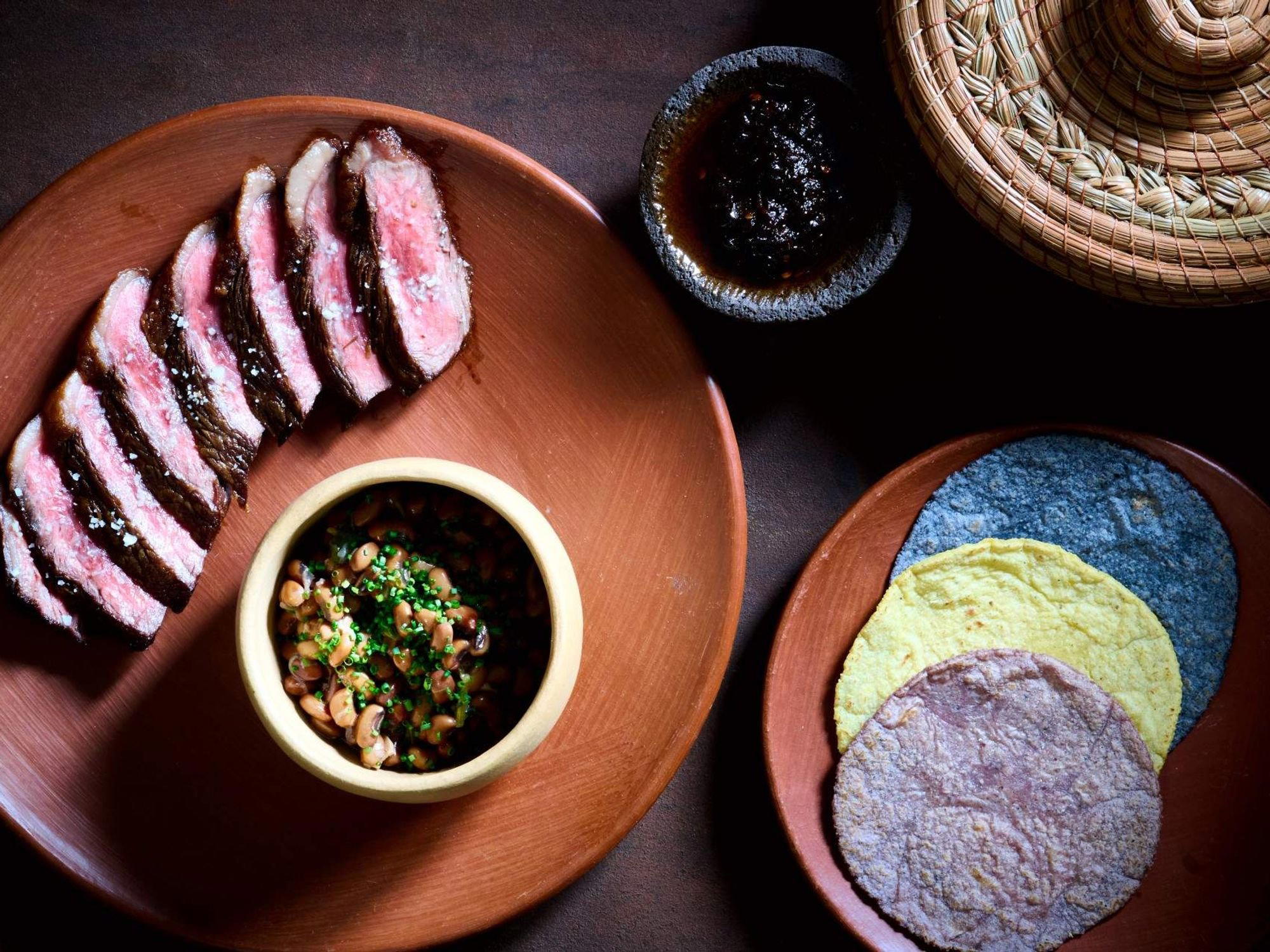
Street food in Mexico has always been inseparable from the quality of its masa. The taco, the tostada, the sope, the tlayuda , each depends on masa made daily from corn that has been soaked in an alkaline solution, stone-ground, and shaped by practiced hands. When that foundation is right, the tortilla carries flavor on its own: faintly mineral, slightly sour, with a texture that holds without going limp. When it is made from commercial instant masa, as most American Mexican restaurants still rely on, the platform becomes neutral at leading and cardboard-adjacent at worst. The molino model , a restaurant built around its own mill, treating corn as a primary ingredient rather than a commodity input , closes that gap in a way that changes every dish that depends on it. Olōyō's name and format signal an explicit commitment to that tradition, placing it in a small national peer set of corn-focused restaurants that treat tortilla production as seriously as any European kitchen treats bread.

Dallas and the Elevation of Mexican Dining

Dallas has a longer history with Mexican cuisine than most American cities its size, shaped by proximity to the border, a large Mexican-American population, and decades of Tex-Mex culture that runs deep in the local identity. What has changed in recent years is the willingness of the fine-dining tier to engage with that tradition honestly rather than Europeanizing it. Fearing's at the Ranchman's level brought Southwestern idiom into white-tablecloth territory years ago. But the newer generation of Dallas Mexican restaurants is operating differently , not borrowing Mexican ingredients to dress up French technique, but treating Mexican culinary logic, including masa, mole, and fermentation, as the intellectual framework around which a serious restaurant is built. Olōyō belongs to that generation, and the molino at its center is both a functional kitchen tool and an editorial statement about where the kitchen's priorities lie.

For reference, the Dallas fine-dining tier spans a wide range: Tatsu Dallas (Japanese) and Tei-An anchor the Japanese end at the leading price bracket, while Lucia holds a comparable position in Italian. A restaurant like Olōyō, if priced consistently with its peer format nationally, would occupy similar territory , though specific pricing is not confirmed in available data and should be verified directly before booking. What is clear is that molino-format restaurants in other cities , most notably in Los Angeles and Mexico City , have consistently commanded tasting-menu or à la carte prices that reflect the labor intensity of daily masa production and the premium sourcing of heirloom corn varieties.

Texas Produce as the Second Pillar

The cuisine is classified as Modern Mexican with a seasonal, Texas-produce orientation, which is a more consequential pairing than it might initially appear. Texas agriculture includes Gulf Coast seafood, Hill Country game, Rio Grande Valley citrus, and a growing network of small farms supplying urban restaurants with specialty produce that did not exist in commercial quantities a decade ago. A Mexican kitchen working with that specific pantry , rather than defaulting to imports , produces something geographically grounded in a way that neither purely traditional Mexican nor generic farm-to-table cooking achieves. The taco, in that context, becomes a vehicle for dual specificity: the corn in the tortilla traced to a named variety or region, the filling sourced from a named Texas producer. That kind of provenance, applied to a street food format, is what separates a molino restaurant from a Mexican restaurant that happens to have good tortillas.

How Olōyō Sits in Its Peer Set

Nationally, the closest conceptual comparisons are restaurants like Nixta Taqueria in Austin and Mírame in Los Angeles , operations where masa craft and ingredient sourcing share equal billing with cooking technique. At the highest end of the broader fine-dining spectrum, restaurants like Le Bernardin in New York City or Alinea in Chicago demonstrate what full commitment to a primary ingredient and technique looks like across two or three Michelin stars. Olōyō applies that same logic , primary ingredient discipline, technique-forward execution , to a Mexican culinary framework in a Texas context. Within Dallas specifically, Mamani and Avra Dallas represent the Mediterranean end of the city's upscale non-steakhouse dining; Babel and Al Biernat's occupy different niches at the leading of the market. Olōyō's molino identity gives it a differentiated position that does not directly compete with any of them.

Planning Your Visit

Specific booking details, hours, and contact information for Olōyō are not confirmed in available data at the time of writing; the restaurant's address and reservation method should be verified through a direct search or a current dining platform before planning. Given that molino-format restaurants in comparable cities typically run at limited capacity , the production of fresh masa daily does not scale easily , booking ahead is advisable. Dallas restaurants at this tier and format often fill weekend slots two to three weeks in advance, particularly once word-of-mouth within the food community reaches critical mass. For a fuller picture of where Olōyō sits within Dallas dining, our full Dallas restaurants guide covers the broader field, and our full Dallas experiences guide maps other premium options in the city. If you are building a broader Dallas itinerary, our full Dallas hotels guide, our full Dallas bars guide, and our full Dallas wineries guide provide the supporting infrastructure.

Frequently Asked Questions

What dish is Olōyō (Molino Olōyō) famous for?
Olōyō's identity is built on masa production from its in-house mill, which means the tortilla-based formats , tacos, tostadas, and related preparations , are the conceptual core of the menu. The restaurant's Modern Mexican classification with a seasonal Texas-produce angle suggests that fillings and toppings shift with what is available from regional suppliers. Specific signature dishes are not confirmed in available data and should be verified directly with the restaurant.
Should I book Olōyō (Molino Olōyō) in advance?
Molino-format restaurants operate at constrained capacity by nature , daily masa production limits how many covers a kitchen can realistically serve. In comparable cities, restaurants of this format and positioning tend to fill quickly once recognized by the local food community. If Olōyō is on your Dallas itinerary, booking as far ahead as possible is the lower-risk approach, particularly for weekend dining. Confirm current reservation availability through the restaurant's booking channel directly.
What makes Olōyō (Molino Olōyō) worth seeking out?
The combination of a working in-house mill (molino) and a seasonal Texas-produce orientation is not replicated elsewhere in Dallas at the time of writing. For diners who care about ingredient provenance and culinary craft at the foundational level , where the corn comes from, how it is processed, what it tastes like before anything is added , the molino format delivers a specificity that standard Mexican restaurants, however well-executed, do not. The cuisine type positions it in a small national peer set of corn-serious restaurants, which in itself is a meaningful editorial credential.
Is Olōyō (Molino Olōyō) worth the price?
Pricing for Olōyō is not confirmed in available data. However, nationally, molino-format restaurants that produce masa from heirloom corn in-house and source ingredients from named regional producers operate at prices that reflect both the labor and the sourcing cost. Within Dallas, comparable fine-dining Mexican experiences represent a market gap , which is part of what makes a restaurant of this format notable in the city. Verify current pricing directly before booking.
What does the name "Molino" in Olōyō (Molino Olōyō) actually mean for the dining experience?
A molino is a traditional Mexican corn mill where dried kernels are ground after nixtamalization , the alkaline cooking process that unlocks the nutritional profile and flavor of corn and is foundational to Mexican cuisine. In a restaurant context, the molino designation signals that masa is produced in-house daily rather than sourced from commercial suppliers. This has a direct impact on every dish that uses tortillas, sopes, or other masa-based formats, since the corn variety, grind texture, and freshness are controlled by the kitchen rather than an outside manufacturer. It is a meaningful operational commitment that separates Olōyō from the broader field of Mexican restaurants in Dallas and in the United States generally.

Accolades, Compared

A compact peer snapshot based on similar venues we track.

Collector Access

Need a table?

Our members enjoy priority alerts and concierge-led booking support for the world's most difficult tables.

Get Exclusive Access