Olmsted

Olmsted on Vanderbilt Avenue sits within Brooklyn's maturing produce-forward dining scene, where Blue Hill-trained chefs Greg and Jenny have built a room around seasonal vegetables without committing to full plant-based doctrine. The garden backdrop signals intent before a dish arrives. Among Prospect Heights restaurants, it occupies a distinct position: serious technique applied to ingredients most kitchens treat as supporting cast.
- Address
- Vanderbilt Ave. 659, 11238 Brooklyn, NY, United States
- Website
- olmstednyc.com
- Directions
- Get directions
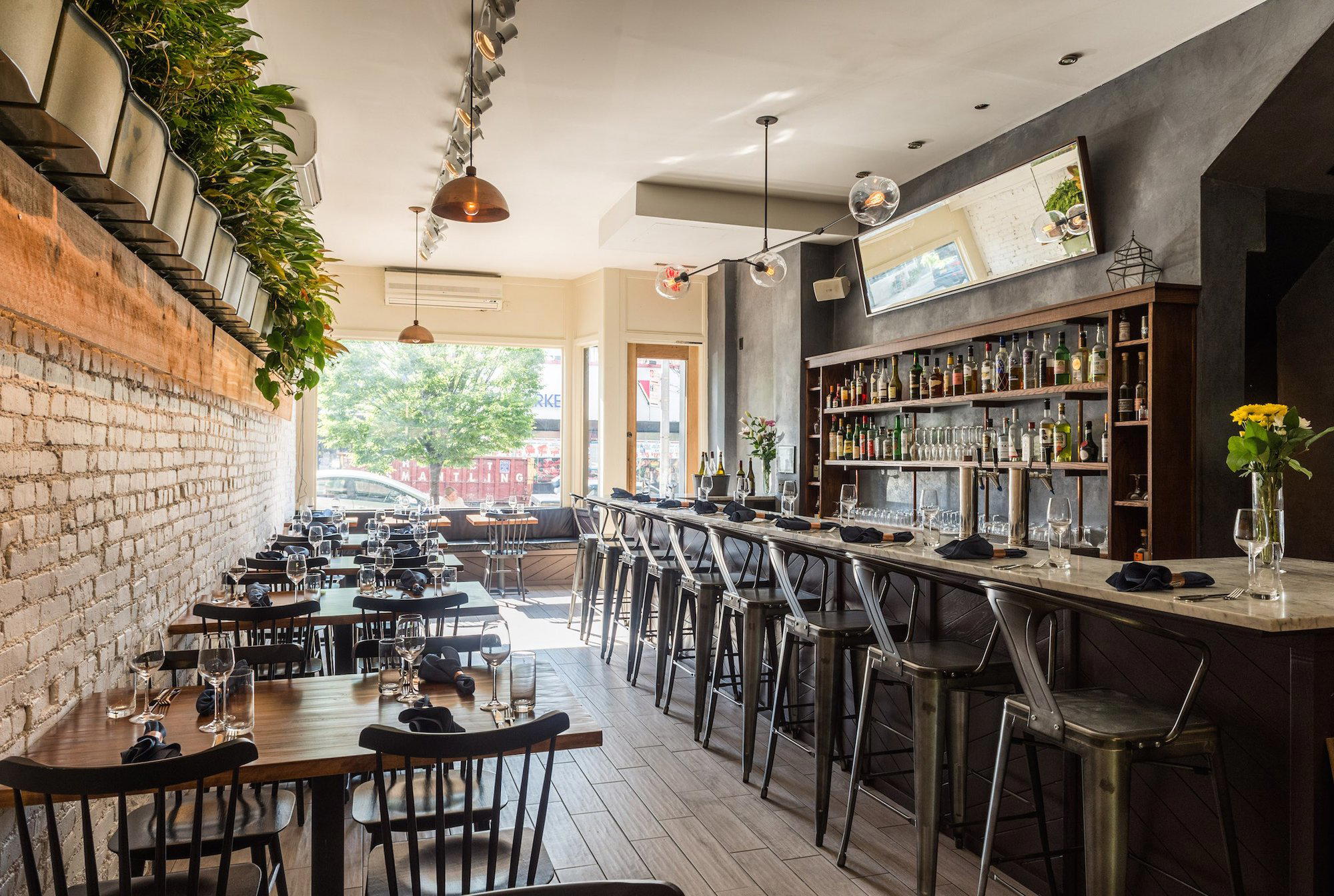
Where Vanderbilt Avenue's Produce-Forward Scene Peaks
Prospect Heights has developed one of Brooklyn's more coherent dining identities over the past decade: neighbourhood spots serious enough to draw from Manhattan without the self-conscious formality that makes Manhattan dining feel like an occasion rather than a meal. Olmsted, at 659 Vanderbilt Avenue, fits that profile precisely. The garden visible from the street does real signalling work here. In a borough where outdoor space is often decorative, this one reads as an extension of the kitchen's sourcing logic rather than a real estate amenity. The garden shifts noticeably across the year, which is part of the point.
The Blue Hill Thread and What It Means for the Plate
American fine dining has a recognisable lineage around vegetable-forward cooking, and Blue Hill at Stone Barns sits near stronger examples from that family tree. It trained a generation of chefs in the discipline of treating produce as the structural centre of a plate rather than the frame around protein. Chefs Greg and Jenny both came through that tradition, which positions Olmsted within a specific and demanding comparable set. Comparable kitchens with similar pedigree, including operations like Single Thread Farm in Healdsburg and the farm-to-table ambitions of The French Laundry in Napa, share the underlying philosophy that ingredient provenance is a culinary argument, not a marketing position.
What separates Olmsted from more doctrinaire plant-based restaurants is the lack of ideological rigidity. The kitchen is not 100% plant-based, and that choice is itself a statement about technique over categorisation. Vegetables occupy the main role not because the menu prohibits everything else, but because the cooking is good enough that they earn it. That distinction matters for regulars who have grown tired of restaurants that use ethical positioning as a substitute for skill.
The Seasonal Colour Logic
Seasonal cooking at this level is not simply about swapping ingredients when the calendar turns. It requires the kitchen to rebuild its flavour architecture multiple times a year, which is considerably harder than maintaining a stable menu with minor adjustments. The dishes at Olmsted are noted for reflecting seasonal colours in a way that suggests the visual language of the plate is considered alongside its flavour logic. For diners who return more than once, this means each visit offers a materially different experience rather than a familiar script with new ingredient names swapped in.
This approach places Olmsted in productive comparison with technically ambitious programmes elsewhere. Lazy Bear in San Francisco operates on a similar seasonal rebuild logic. Alinea in Chicago takes this further into structural reinvention. Olmsted sits at a more accessible register than either, which is part of its appeal to a Brooklyn clientele that prefers depth without ceremony.
The Regulars' Contract
The dining culture that has formed around Olmsted is worth examining as a category signal. Restaurants that attract returning visitors rather than one-time destination diners tend to build that loyalty through consistency of a specific kind: not identical plates every visit, but a reliable sense of what the kitchen values and how it thinks. Regulars at produce-forward rooms like this one are typically tracking the garden output as much as the menu. They know which weeks bring particular alliums, which months shift the kitchen toward roots and preserved items, and which transitional moments in the growing season produce interesting cooking.
That form of loyalty is structurally different from what drives repeat visits at, say, Le Bernardin in New York City, where the draw is a perfected and relatively stable format. At Olmsted, the implicit contract with regulars is that the kitchen will keep moving, and that returning visitors are being rewarded with access to the kitchen's current thinking rather than a rehearsed performance. The garden is the clearest physical expression of that contract.
Olmsted Inside Brooklyn's Broader Dining Picture
Brooklyn's restaurant scene has matured past the point where quality requires a Manhattan reference. The borough now contains enough serious cooking across enough different formats that any useful map of New York dining has to account for it independently. Within that picture, Vanderbilt Avenue has consolidated a cluster of restaurants with distinct identities and real ambitions. Olmsted sits at the produce-forward, technique-serious end of that cluster. Other Vanderbilt-area kitchens worth placing in context include 6 Restaurant and Border Town, which approaches the neighbourhood from a northern Mexican, tortilleria-focused angle. Bad Cholesterol operates as a pop-up pizza team in the same borough, and Barker Cafeteria holds the daytime sandwich end of the market. Bong rounds out a neighbourhood picture that rewards visitors who look beyond the obvious anchors.
Internationally, comparisons to Olmsted's produce-led ambition can be drawn to 8½ Otto e Mezzo Bombana in Hong Kong and Alain Ducasse at Louis XV in Monte Carlo for the broader tradition of treating ingredient sourcing as the foundation of fine dining, though all three operate in different registers. Emeril's in New Orleans offers a point of contrast in how American fine dining has handled the local-sourcing impulse across different regions.
Planning a Visit
Olmsted is at 659 Vanderbilt Avenue, Brooklyn, NY 11238, in Prospect Heights. Booking ahead is essential, particularly for weekend sittings or any visit timed to a specific seasonal moment in the garden. The neighbourhood is accessible by subway, with multiple lines running through the surrounding area. Visitors combining dinner here with Brooklyn exploration will find the surrounding blocks reward the time spent on either side of a meal.
The Quick Read
Comparable venues nearby, for context on price, style, and recognition.
| Venue | Cuisine | Price | Notes |
|---|---|---|---|
| OlmstedThis venue — the venue you are viewing | Not listed | $$$ | Not listed |
| Confidant | Sunset Park, New American | $$$ | Not listed |
| The Grove Lantern | Not listed | $$$ | Downtown Brooklyn, Farm-to-Table American Café |
| Barker Cafeteria | Bed-Stuy, Housemade Sandwiches & Soups | $$ | Not listed |
| Third Time's the Charm | Red Hook, Sourdough Pizza | $$ | Not listed |
| River Café | DUMBO, Classic American Fine Dining | $$$$ | Not listed |
Recognition history
Dated appearances from independent guides and award organizations, with the underlying list record or original source where available.
We're Smart World 2 Radishes
We're Smart World
Continue exploring
More in Brooklyn
Restaurants in Brooklyn
Browse all →
Bars in Brooklyn
Browse all →
Hotels in Brooklyn
Browse all →





At a Glance
- Trendy
- Intimate
- Cozy
- Elegant
- Date Night
- Special Occasion
- Celebration
- Open Kitchen
- Garden
- Chefs Counter
- Craft Cocktails
- Extensive Wine List
- Farm To Table
- Local Sourcing
- Organic
- Zero Waste
- Garden
Warm and inviting with string lights overhead, cushioned benches in the garden, and a living wall of plants; intimate open kitchen visible from dining area; transforms from working farm by day to trendy hangout by night.