Old Bushmills Distillery
The Old Bushmills Distillery in County Antrim has been producing Irish whiskey on the same site since at least 1608, making it one of the longest-continuously-licensed distilling operations in the world. Tours move through working production floors, warehouses holding maturing casks, and a tasting room where the connection between local water, grain, and spirit becomes concrete. It is less a heritage attraction than an active argument for place-based production.
 Discover on Pearl
Pearl is the En Primeur Club membership app — saves, bookings, and concierge access live there. Same editors, same standards.
Where the Water Comes From
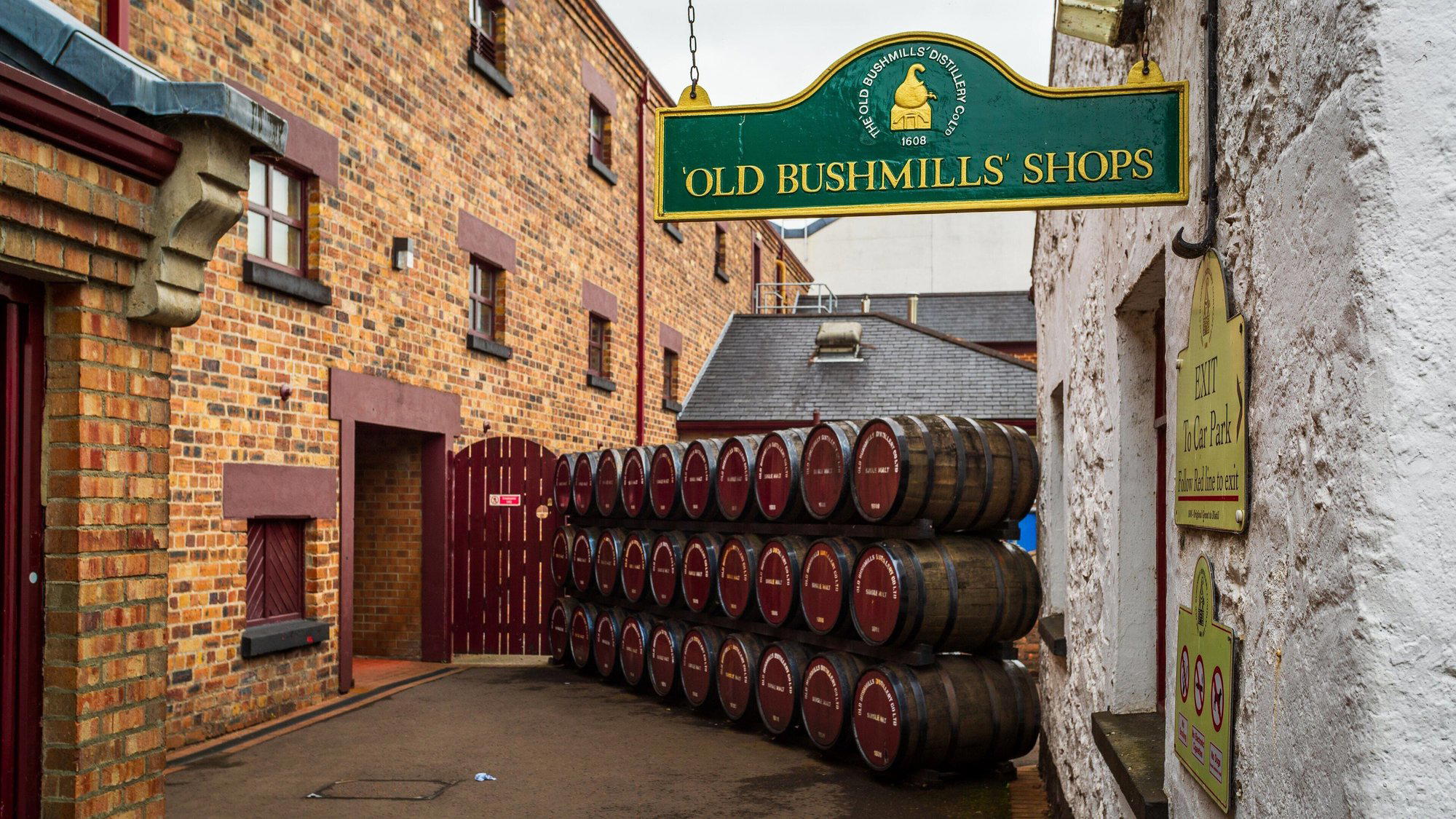
The road into Bushmills from the Giant's Causeway drops through a range of basalt and bog before arriving at a cluster of white-washed buildings that have been processing grain and water into whiskey since the early seventeenth century. The St. Columb's Rill, a tributary of the River Bush, supplies the distillery's water, and that provenance is not incidental. In Irish whiskey production, the character of local water has shaped regional house styles in ways that parallel how terroir is discussed in wine. The Bush valley's soft, limestone-filtered water is low in minerals and high in clarity, qualities that carry through into the lighter, triple-distilled spirit for which Bushmills is associated. Walking the site, the sound of the river is audible from the courtyard, which is a rare thing for a distillery of this scale and history.
A Working Distillery, Not a Museum Set
Irish whiskey tourism has bifurcated sharply over the past decade. A wave of urban visitor centres, most of them in Dublin, offer polished brand experiences in converted Georgian buildings, heavy on narrative and light on active production. The Old Bushmills Distillery sits at the other end of that spectrum. Tours proceed through operational mash tuns, pot stills, and maturing warehouses where casks are actually aging on-site rather than being stored off in a regional facility. The smell of warm wort from the mash house is genuine, not piped in. This distinction matters to visitors who have done the Dublin circuit and found it wanting in substance.
The pot still room is where the production argument becomes visual. Bushmills uses copper pot stills for distillation, triple-distilling across pot and column stills, a method that defines the lighter Irish style in contrast to the heavier pot still character common in expressions from Midleton or the peated output from Scottish distilleries. Understanding that process in a working context, rather than through a display, is what makes the Bushmills visit function differently from heritage tourism elsewhere. For context on how distillery-adjacent fine dining has evolved in Scotland, The Glenturret Lalique in Crieff shows what happens when a working whisky site commits fully to hospitality at the level of a fine dining destination.
The Licensing Claim and What It Actually Means
The distillery's 1608 date, derived from a royal licence granted by King James I to the area around the River Bush, is frequently cited and occasionally contested by historians who distinguish between the licence and the establishment of the current site. What is verifiable is that commercial distilling has been documented at this address since the late eighteenth century, making it one of the oldest continuously operating whiskey production sites in Ireland, licensed or otherwise. The claim functions more as a statement of regional lineage than a precise founding date, and the distillery's marketing has generally leaned into that framing without overstating it. Ireland's whiskey industry largely collapsed in the twentieth century due to a combination of Prohibition, trade wars, and competition from blended Scotch, and Bushmills was one of the few sites to maintain continuous production through those contractions, which gives the heritage argument genuine weight regardless of the precise founding year.
Grain, Water, and the Northern Antrim Argument
Editorial angle on ingredient sourcing is worth pressing here, because it distinguishes Bushmills from the many Irish whiskey brands that produce at large centralised facilities and build distinct brand identities around marketing rather than place. Bushmills sources grain and draws water in a specific geographic pocket of County Antrim, and the distillate is matured on-site in a climate that is consistently cool and damp from Atlantic exposure. Cask interaction in that environment proceeds differently than in warmer, drier continental climates, contributing to the relatively gentle, fruit-forward character that defines the house style. The contrast is directly comparable to how single-estate wine production, as practised at the top tier of Burgundy or in the narrowest appellations of Champagne, produces different outcomes than large-volume blending operations drawing from multiple sources. For those interested in how sourcing arguments translate to the plate rather than the glass, L'Enclume in Cartmel makes a similar case for hyper-local provenance in a Cumbrian context, and Ynyshir Hall in Machynlleth applies comparable rigour to Welsh produce.
Planning a Visit
Bushmills village sits roughly a mile from the Giant's Causeway, which draws the majority of regional tourist traffic and means the distillery benefits from substantial footfall without being located inside the Causeway's immediate attraction radius. The combination visit, Causeway in the morning and distillery in the afternoon, is the standard itinerary for the area, and it works logistically because both sites are accessible by the narrow-gauge Causeway railway in warmer months. The distillery runs tours on a regular schedule across the working week, with the format covering production floors, warehouses, and a tasting conclusion. Visitors who want more depth than the standard tour can ask about premium tasting options, which vary seasonally, though confirming current availability directly with the distillery before arriving is the correct approach given that tour formats change. The wider Bushmills area is covered in our full Bushmills restaurants guide, which maps the surrounding food and drink context for those building a longer itinerary in County Antrim.
For travellers building a broader tour around food and drink destinations with genuine production credentials, comparison venues across the UK offer useful reference points. Moor Hall in Aughton, Restaurant Sat Bains in Nottingham, and Midsummer House in Cambridge each represent regional anchors where provenance arguments are taken seriously at the table. At the other end of the geographic scale, Le Bernardin in New York City and Atomix in New York City demonstrate how sourcing disciplines translate across culinary traditions. Closer to Bushmills in the premium British context, CORE by Clare Smyth in London, Waterside Inn in Bray, Le Manoir aux Quat'Saisons in Oxford, Gidleigh Park in Chagford, Hand and Flowers in Marlow, hide and fox in Saltwood, Opheem in Birmingham, Restaurant Andrew Fairlie in Auchterarder, and 33 The Homend in Ledbury each represent the tier of destination dining that rewards building an itinerary around a specific region rather than a single address.
In Context: Similar Options
Comparable venues nearby, for context on price, style, and recognition.
| Venue | Cuisine | Price | Awards | Notes |
|---|---|---|---|---|
| Old Bushmills DistilleryThis venue — the venue you are viewing | British Comfort Food | $$ | , | |
| Oliver's Fish & Chips | Traditional British Fish & Chips | $$ | , | Chalk Farm |
| Junior's Cafe & Deli | British Cafe & Deli | $$ | , | Whitstable |
| Bread & Meat | Modern British Roast Meat Sandwiches & Poutine | $$ | , | City Centre |
| The Tilbury Inn | Modern British Gastropub | $$ | , | Datchworth |
| The Cafe in the Park | Sustainable British Cafe | $$ | , | Rickmansworth Aquadrome |
Continue exploring
More in Bushmills
Wineries in Bushmills
Browse all →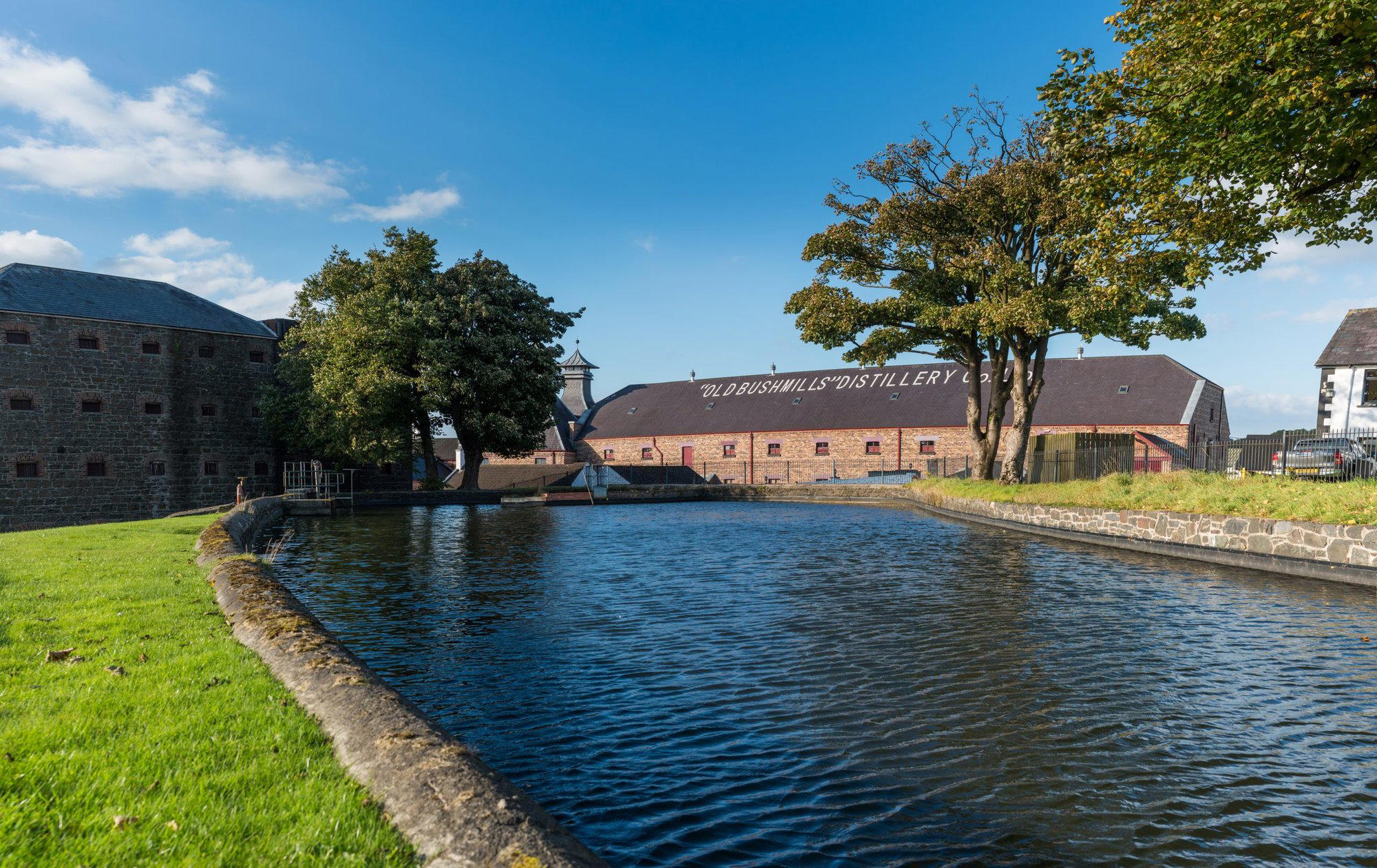
At a Glance
- Historic
- Cozy
- Rustic
- Classic
- Casual Hangout
- Historic Building
- Beer Program
- Local Sourcing
- Garden
Casual cafe/bar atmosphere that can get busy with tour groups.