Ohyama Ramen sits in the heart of Whistler Village at 4000 Whistler Way, offering Japanese ramen in a mountain resort town better known for steakhouses and fine dining. In a dining scene weighted toward Canadian and continental fare, it occupies a distinct niche: a bowl-focused counter in a ski destination where hearty, warming food has obvious logic. A practical stop for post-slope recovery with Japanese culinary roots.
Pearl is the En Primeur Club membership app — saves, bookings, and concierge access live there. Same editors, same standards.
- Address
- 4000 Whistler Way #204, Whistler, BC V8E 1H8, Canada
- Phone
- +1 604-962-6253
- Website
- ohyamaramen.com
- Directions
- Get directions
 Saves & bookings on Pearl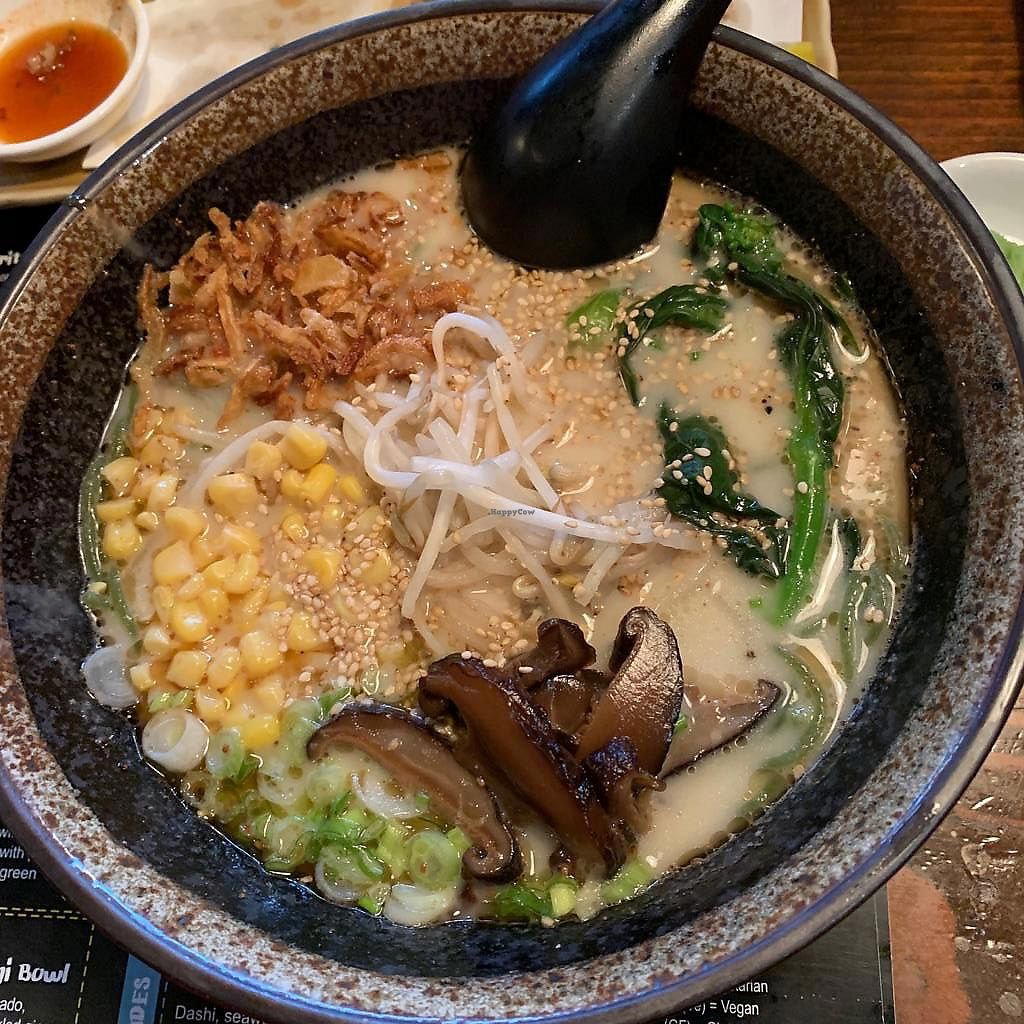
Ramen in the Mountains: What Ohyama Signals About Whistler's Dining Range
Whistler's restaurant scene has long been anchored by high-end Canadian and continental dining: the white-tablecloth confidence of Araxi, the theatrics of Bearfoot Bistro (Canadian), the precision of Alta Bistro. But resort towns with serious year-round populations develop layers, and ramen is one of the more telling ones. The presence of a dedicated ramen counter in Whistler Village reflects something real about how mountain resort dining has matured: guests increasingly want options that don't require a reservation window or a four-course commitment. A bowl of ramen, served hot after a full day on the hill, answers a specific need that a steakhouse does not.
Ohyama Ramen occupies unit 204 at 4000 Whistler Way, a commercial address inside the Village. That positioning matters in a resort context: accessible, immediate, with the kind of practical utility that a ski town demands of its mid-tier dining options.
The Cultural Weight of Ramen as a Format
Ramen's global expansion over the past two decades has been one of the more dramatic shifts in how Japanese food culture travels. What began as a working-class staple in postwar Japan, cheap, filling, regionally distinct, has fractured into a format that now commands serious critical attention in cities from New York to Vancouver. The broth-forward approach, the care given to noodle texture and tare ratios, and the regional variation between Sapporo-style miso, Hakata-style tonkotsu, and Tokyo-style shoyu have given ramen the kind of depth that rewards both casual and specialist eaters.
For Canadian diners, ramen arrived as part of a broader wave of Japanese food culture that accelerated through Vancouver in particular, given the city's significant Japanese-Canadian community and proximity to Japan. British Columbia has developed a richer Japanese dining ecosystem than most of inland Canada, a context that makes a Whistler ramen counter less surprising than it might appear. The mountain resort sits within a two-hour drive of Vancouver, and its visitor base skews toward a West Coast demographic that treats ramen as an ordinary weeknight option. The cultural groundwork was already laid before a bowl arrived in the ski village.
This is worth noting when placing Ohyama Ramen in its peer context. It is not operating in the same tier as Araxi or Alta Bistro, nor is it competing with the grill-heavy comfort of Buffalo Bill's or the Mediterranean warmth of Caramba Restaurant. It sits in a different register entirely: casual, cuisine-specific, format-driven. In Canadian dining terms, that kind of specialisation at the casual end of the market is increasingly valued, the same logic that makes dedicated izakayas or pho shops work in cities applies here.
What the Format Delivers
A ramen shop's core proposition is disciplined simplicity. Unlike the broad menus that characterise many resort restaurants, a counter focused on ramen operates within a narrow set of commitments: the quality of the broth, the calibre of the noodles, the restraint or generosity of the toppings. These are not interchangeable decisions. A well-executed tonkotsu requires hours of bone simmering; a miso tare has regional specificity tied to paste origin and fermentation time. The format demands daily repetition and consistency in a way that broad-menu casual dining does not.
For a ski resort visitor, this is meaningful. Post-slope eating has its own logic: caloric density, warmth, speed. Ramen satisfies all three.
Where Ohyama Sits in Canada's Wider Dining Story
Canada's most discussed dining right now operates at the fine-dining end: the tasting-menu ambition of Alo in Toronto, the terroir-driven depth of Tanière³ in Quebec City, the produce-led precision of AnnaLena in Vancouver. Institutions like Jérôme Ferrer - Europea in Montreal and destination-format operations like Eigensinn Farm in Singhampton define one end of the national conversation. At the other end, and no less important to how a food culture actually functions, are the cuisine-specific counters and casual specialists that make daily eating in a place legible and locally grounded.
Ramen in a ski village is part of that second story. It reflects the same internationalisation of Canadian palates that has made Japanese, Korean, and Southeast Asian formats routine in major cities, and gradually routine in resort towns that draw visitors from those cities. Compared to the tradition-heavy French-Canadian dining preserved at places like Aux Anciens Canadiens in Quebec, or the wine-country precision of Restaurant Pearl Morissette in Lincoln, Ohyama Ramen represents a different axis of Canadian food culture: the imported format, well-established, now expected rather than novel.
Planning Your Visit
The restaurant is located at 4000 Whistler Way, unit 204, in Whistler Village, within walking distance of both the Whistler and Blackcomb gondola bases, making it a practical option before or after time on the mountain. Given the casual, counter-service format typical of ramen shops, walk-in dining is generally the norm rather than advance booking, though peak season weekends (winter and summer both draw significant resort traffic) can compress availability in smaller venues. For current hours, seasonal closures, and any dietary accommodation queries, reaching out directly to the venue ahead of your visit is the practical approach. For broader orientation across the resort's dining options, the full Whistler restaurants guide covers the range from fine dining to casual formats across the village.
Price and Recognition
Comparable venues nearby, for context on price, style, and recognition.
| Venue | Cuisine | Price | Notes |
|---|---|---|---|
| Ohyama RamenThis venue — the venue you are viewing | Not listed | $$ | Not listed |
| Elements Urban Tapas Parlour | Whistler Village, Urban Tapas | $$ | Not listed |
| Splitz Grill | Village, Flame-Grilled Burgers | $$ | Not listed |
| WILD BLUE | American | Not listed | Not listed |
| Sidecut Steakhouse | Steakhouse | Not listed | Not listed |
| Crêpe Montagne | Not listed | $$ | Whistler Village, Authentic French Crêperie |

At a Glance
- Cozy
- Casual Hangout
- Standalone
- Sake Program
Current opening hours
- Monday
- 11 AM–10 PM
- Tuesday
- 11 AM–10 PM
- Wednesday
- 11 AM–10 PM
- Thursday
- 11 AM–10 PM
- Friday
- 11 AM–10 PM
- Saturday
- 11 AM–10 PM
- Sunday
- 11 AM–10 PM
Hours can change for holidays and private events. Last verified .
Cozy tucked-away spot with comforting Japanese flavors ideal for warming up on chilly evenings.