Noz 17



1 Michelin Star · Star Wine List
Our verdict
A Michelin-starred omakase counter in Chelsea, Noz 17 is the downtown sibling of the Upper East Side original, with a seven-seat cypress bar and a procession of nigiri and otsumami that Opinionated About Dining ranked 38th in North America in 2024. Chef Junichi Matsuzaki's free-wheeling sequence keeps the format unpredictable in the best sense: product-driven, technically precise, and quietly serious about Japanese sushi tradition on New York terms.

Pearl is the En Primeur Club membership app, where members save venues, book tables and use the concierge.
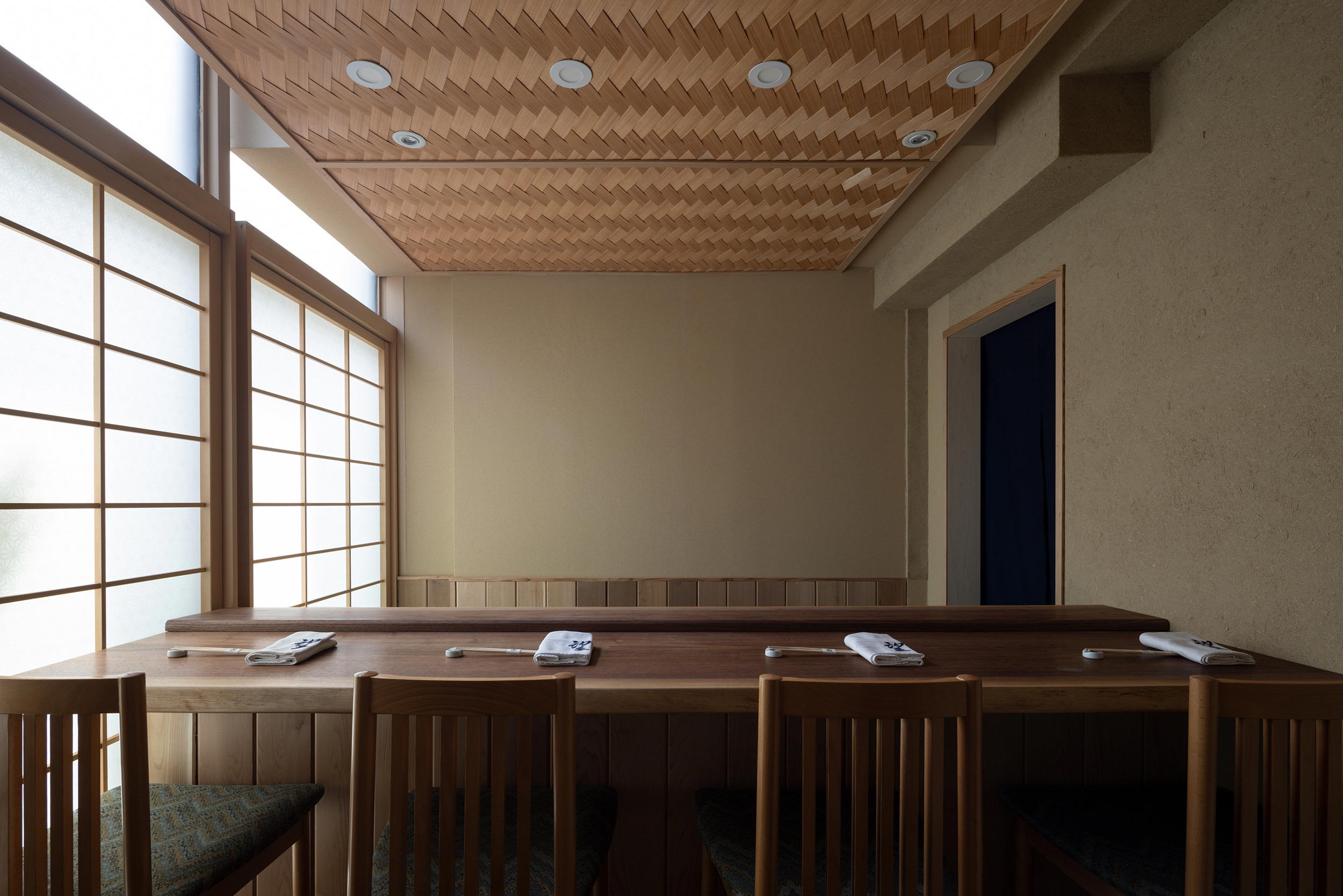
Where Downtown New York Meets Edomae Discipline
The Chelsea address is the first surprise. When New York's premium omakase counters began consolidating their reputations in the 2010s, most planted flags in the Upper East Side or Midtown, neighbourhoods where the price-point and the clientele were already aligned. The arrival of a serious sushi counter on West 17th Street reflected a broader shift: the downtown dining scene had matured enough to sustain the commitments that omakase demands, namely reservation depth, alcohol spend, and a guest willing to surrender the menu entirely to the chef.
Noz 17 opened as the downtown sibling of Noz on Park, the Upper East Side original that established Chef Junichi Matsuzaki's reputation in the city. The relationship between the two rooms is instructive. In Tokyo, the lineage of a sushi counter, who trained the chef, which house their technique descends from, functions as a form of provenance as legible as a wine's appellation. New York has increasingly adopted this logic. The Noz name carries a traceable identity: a commitment to edomae technique, where fish is cured, aged, and rested rather than simply sliced and served raw. That approach requires time and restraint, two things a seven-seat counter makes possible in ways a forty-cover dining room does not.
The Edomae Tradition in a New York Context
Edomae sushi, the style that emerged in 19th-century Tokyo (then Edo), was originally fast food: vinegared rice pressed with local seafood, sold from street stalls along the bay. The techniques that survive into fine dining, kombu curing, nikiri brushing, controlled aging of fish, were practical responses to a pre-refrigeration world. What makes the format compelling at the high end today is that those same techniques, when applied with precision, produce flavours and textures that raw, unmanipulated fish cannot replicate. A kombu-cured flounder reads differently on the palate than its uncured counterpart. The nikiri glaze, a reduction of soy and mirin, ties fish and rice in a way that no additional soy dipping achieves.
New York's leading omakase tier has divided into two broad camps: counters that lean heavily into theatrical luxury, sourcing from Japan's prestige auction markets and pricing accordingly, and counters that prioritise technical discipline over spectacle. Venues like Shota Omakase occupy the same premium bracket, while Masa sits at the ceiling of the theatrical luxury segment. Noz 17 occupies the discipline camp. The OAD ranking history supports this reading: ranked 63rd in North America in 2023, climbing to 38th in 2024 and 42nd in 2025, a trajectory that reflects sustained critical attention rather than a single breakthrough moment.
The Seven-Seat Counter
Counter capacity is one of the most consequential decisions a sushi restaurant makes. At seven seats, Noz 17 operates at the scale where a single chef can maintain eye contact with every guest, calibrate the pace of service in real time, and adjust the sequence based on what is eating well that evening. This is not a production line with a chef at the end. It is a format in which the room's intimacy is structural, not decorative.
The cypress counter itself carries meaning. Hinoki cypress, with its pale grain and faint medicinal scent, is the traditional material for high-end Japanese sushi bars, chosen for hygiene and the way it ages. The wood and the calibrated lighting work together to produce what OAD's review describes as a serene setting, a word that captures something real about how the leading omakase counters function: they remove ambient noise, visual distraction, and menu decision-making so that attention narrows to the plate and the hand behind it.
The sequence at Noz 17 follows the classical omakase arc: otsumami (small composed bites), sashimi, and then the nigiri procession. OAD's published assessment singles out a slice of scored white cuttlefish and a demitasse of snapper bone broth as exemplary of the kitchen's approach to product and preparation. Both details point toward a kitchen operating in the edomae tradition without treating it as a constraint: the cuttlefish scoring is technical craft applied to texture management, while the bone broth between courses is a palate discipline borrowed from kaiseki logic.
How Noz 17 Sits in New York's $$$$ Dining Tier
At the $$$$ price point, New York offers a wide range of formats and culinary traditions. Le Bernardin defines the French fine-dining end of the seafood spectrum with a tasting menu architecture very different from omakase's chef-led spontaneity. Atomix brings Korean precision and narrative structure to the same price tier. Eleven Madison Park operates its plant-based tasting menu in the grand-room tradition. What separates omakase from these formats is the degree to which the guest's experience is shaped by real-time chef decision-making rather than a printed menu designed weeks in advance.
The Michelin star awarded in 2024 places Noz 17 in the company of restaurants across the city's cuisines, but within the Japanese category specifically, a single Michelin star in New York carries a clear competitive signal. It means the room is being measured against a global standard for product quality, technique, and consistency, not simply against other neighbourhood sushi bars. The OAD placement in the North America top 50 adds a second layer of critical validation from a guide with deep specialist knowledge of Japanese cuisine.
For guests building a New York dining itinerary across the $$$$ tier, the category contrast matters. An evening at Noz 17 does not duplicate the experience of Bar Miller or the other ambitious rooms in the downtown orbit. The omakase format demands a different kind of presence from the guest: no menu to review, no ordering decisions to debate. The chef's sequence is the plan, and part of the evening's interest lies in following it.
Beyond New York, the same commitment to chef-led format and product discipline can be found at other serious American restaurants, though in very different culinary registers. Lazy Bear in San Francisco, Alinea in Chicago, and Providence in Los Angeles each operate tasting menus where the kitchen controls the sequence entirely, a structural parallel that crosses cuisines. Internationally, 8 1/2 Otto e Mezzo Bombana in Hong Kong and Alain Ducasse at Louis XV in Monte Carlo represent the same tier of disciplined, credential-backed fine dining in very different traditions.
The Wine Program and Star Wine List Recognition
Noz 17's inclusion on Star Wine List with a White Star designation, published in November 2024, signals a beverage program that has been evaluated against specialist wine criteria. For an omakase format, the wine list is structurally secondary to sake and Japanese whisky pairings, but the recognition suggests the room is equipped for guests who arrive with wine preferences. At this price tier, the beverage pairing often accounts for a substantial portion of the final bill, and the quality of that pairing shapes the overall experience as much as the food sequence.
Know Before You Go
Address: 458 W 17th St, New York, NY 10011
Neighbourhood: Chelsea, Manhattan
Open: Monday, Thursday, Friday, Saturday 5 PM–11 PM. Closed Wednesday and Sunday.
Format: Omakase counter, seven seats
Price tier: $$$$
Awards: Michelin 1 Star (2024); OAD North America Top 50 (#38 in 2024, #42 in 2025); Star Wine List White Star (2024)
Booking: Reservations required. Given the seven-seat capacity, lead time is advisable, particularly for Thursday and Friday evenings.
Explore more: Our full New York City restaurants guide | Hotels | Bars | Experiences
Frequently asked questions
What dish is Noz 17 famous for?
Noz 17 does not anchor its reputation to a single signature dish, which is consistent with the omakase format: the sequence changes with the season and the chef's sourcing. That said, OAD's critical write-up highlights two preparations that exemplify the kitchen's approach. The first is a finely scored white cuttlefish, cut so that it yields immediately on the palate, a technique that requires precision both in the knife work and the timing of service. The second is a demitasse of snapper bone broth served alongside, which functions as a palate transition rather than a course in its own right. Both preparations reflect Chef Junichi Matsuzaki's grounding in edomae tradition: the interest is in the treatment of the product, not in dramatic plating or supplementary ingredients. For guests seeking context before booking, the otsumami, sashimi, and nigiri procession is the full arc of the meal, and the nigiri section is where the fish aging and nikiri application that define the house style are most directly experienced. Guests planning a broader New York dining itinerary can also reference The French Laundry in Napa, Single Thread Farm in Healdsburg, and Emeril's in New Orleans for a sense of how chef-driven tasting formats differ across American culinary traditions.
Side-by-Side Snapshot
| Venue | Cuisine | Price | Awards | Notes |
|---|---|---|---|---|
| Noz 17This venue (the venue you are viewing) | Edomae-style Omakase | $150–200 | 1 Michelin Star · Star Wine List | Not listed |
| Le Bernardin | French Seafood Fine Dining | $300–500 | 3 Michelin Stars · World's 50 Best #13 | French, Seafood |
| Atomix | Modern Korean Tasting Menu | $300–500 | 2 Michelin Stars · World's 50 Best #7 | Modern Korean, Korean |
| Masa | Seasonal Hokkaido Tempura Omakase | $150–200 | Tabelog 100 #34 | Sushi, Japanese |
| Per Se | French Fine Dining Tasting Menu | $300–500 | 3 Michelin Stars · World's 50 Best #40 | French, Contemporary |
| Eleven Madison Park | Contemporary Plant-Based Fine Dining | $300–500 | 3 Michelin Stars · World's 50 Best #4 | French, Vegan |
Recognition history
Dated appearances from independent guides and award organizations, with the underlying list record or original source where available.
Michelin 1 Star
Michelin
Star Wine List
Star Wine List
Opinionated About Dining Top Restaurants in North America Ranked #45
Opinionated About Dining
Full recognition history (7 entries)
Opinionated About Dining Top Restaurants in North America Ranked #42
Opinionated About Dining
Michelin 1 Star
Michelin
Opinionated About Dining Top Restaurants in North America Ranked #38
Opinionated About Dining
Opinionated About Dining Top Restaurants in North America Ranked #63
Opinionated About Dining
Continue exploring
More in New York City
Restaurants in New York City
All restaurants in New York City →
Bars in New York City
All bars in New York City →




Details
- Intimate
- Elegant
- Sophisticated
- Modern
- Date Night
- Special Occasion
- Chefs Counter
- Sake Program
- Omakase
- Tasting Menu
- Counter Dining
Current opening hours
- Monday
- 5–11 PM
- Tuesday
- 5–11 PM
- Wednesday
- 5–11 PM
- Thursday
- 5–11 PM
- Friday
- 5–11 PM
- Saturday
- 5–11 PM
- Sunday
- Closed
Hours can change for holidays and private events. Hours as of .
Serene and intimate with a cypress counter, abundant wood, and gently calibrated lighting creating a quiet, polished atmosphere reminiscent of Tokyo sushi bars.