




Michelin Plate · Guía Repsol 1 Sol · Macarfi 7.9 Food Rating
Our verdict
On Calle de Recoletos in Madrid's Salamanca district, Noi brings southern Italian cooking to one of the city's most polished dining neighbourhoods. Chef Luigi Troiano, from Puglia, works across two rooms styled in 1970s Italian pop, the verde room for à la carte, the Rioja room for tasting menus, earning a Michelin Plate and a place in the Opinionated About Dining Casual Europe rankings for 2025.

Pearl is the En Primeur Club membership app, where members save venues, book tables and use the concierge.
The menu
What to order
- La Parmigiana
- Spaghetti alla Pummarola
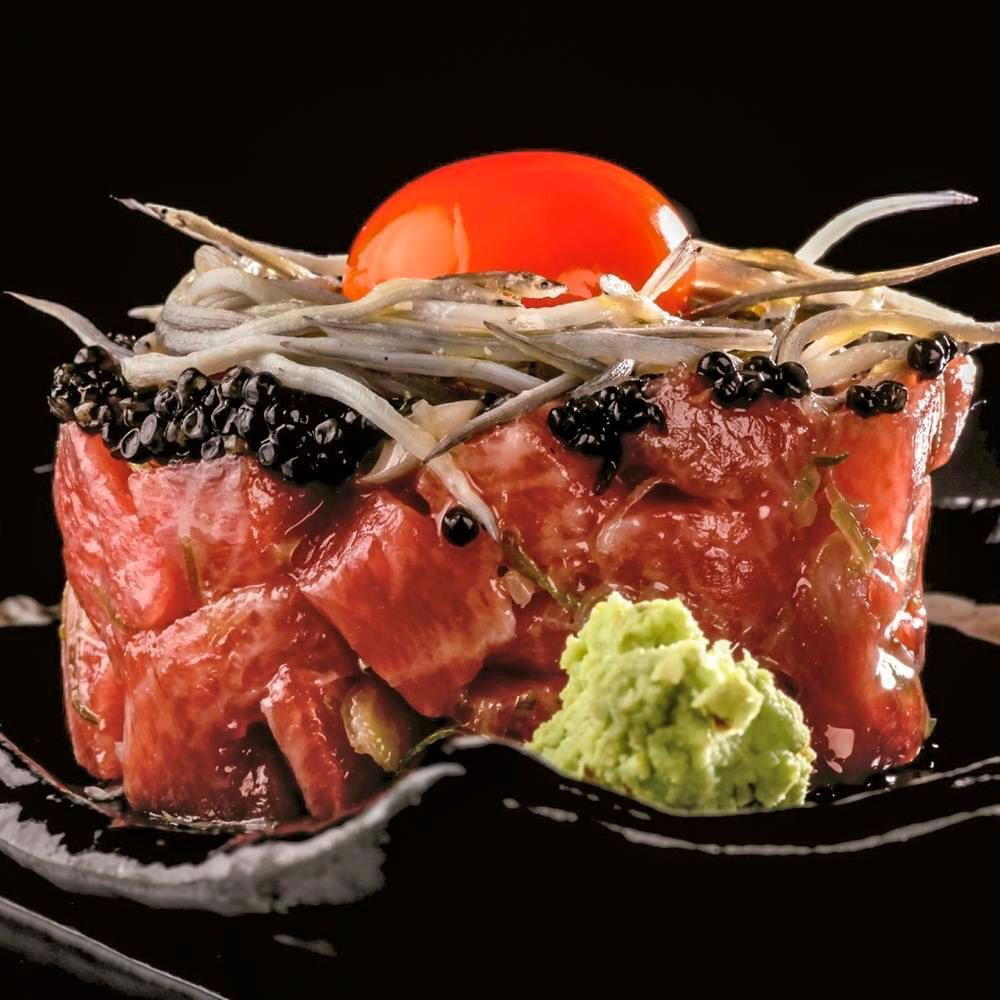
- Tonno Tonnato
Salamanca's Italian Quarter, One Restaurant at a Time
Madrid's Salamanca district operates as the city's most consistently upmarket dining corridor. The neighbourhood runs on old money and new ambition in roughly equal measure: wide avenues, dress codes observed without prompting, and a restaurant density that rewards comparison shopping. Within this frame, Italian cooking has carved a specific niche. Where the broader Madrid scene pulls hard toward Basque influence, venues like DiverXO and Coque define the city's avant-garde end, Italian-rooted tables in Salamanca tend to position themselves as the refined alternative: fewer theatrical elements, more precision in sourcing and preparation. Noi Madrid, on Calle de Recoletos, sits squarely in that tier.
The address matters. Recoletos runs parallel to the Paseo del Prado and feeds directly into the neighbourhood's gallery and hotel corridor, placing the restaurant within easy reach of the city's cultural institutions and its most established hotel stock. For visitors building a Madrid itinerary around both culture and serious eating, the location is a practical argument in itself. For residents, it signals where the restaurant positions itself in the city's social hierarchy: not the converted warehouse, not the rooftop terrace, but the ground-floor room with considered interiors and a dining room that expects you to arrive dressed accordingly.
The Room Before the Plate
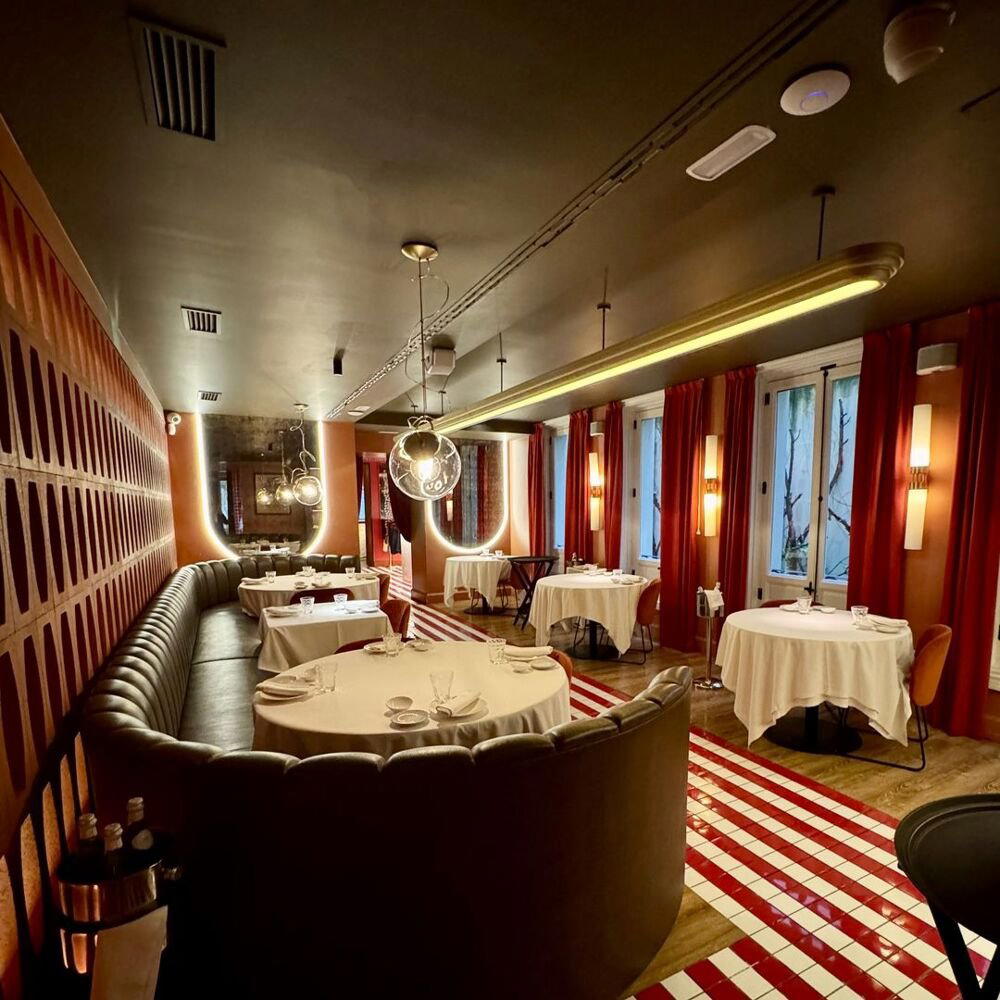
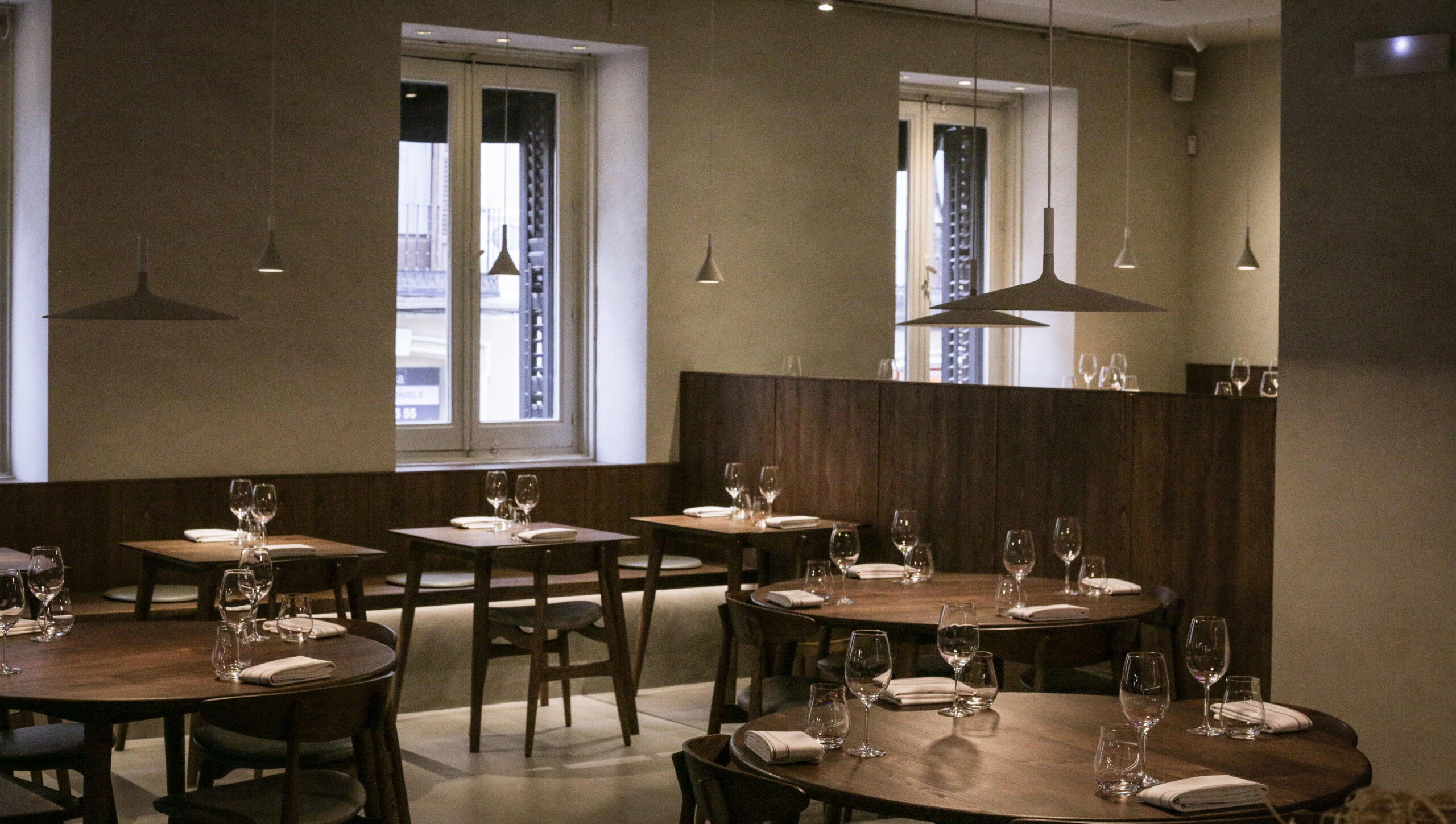
The interior at Noi is built around a specific reference point: Italian design of the 1970s, what the restaurant describes as "Italian pop" style. This is a deliberate framing choice that separates the space from the generic modern Italian restaurant aesthetic, marble, exposed brick, pendant lighting, that has become shorthand for the category across Europe. The 1970s Italian design moment was about colour confidence, sculptural furniture forms, and a certain cultural optimism that translated into bold spatial decisions. That reference, applied to a formal dining room in Salamanca, produces something that reads as both period-specific and contemporary.
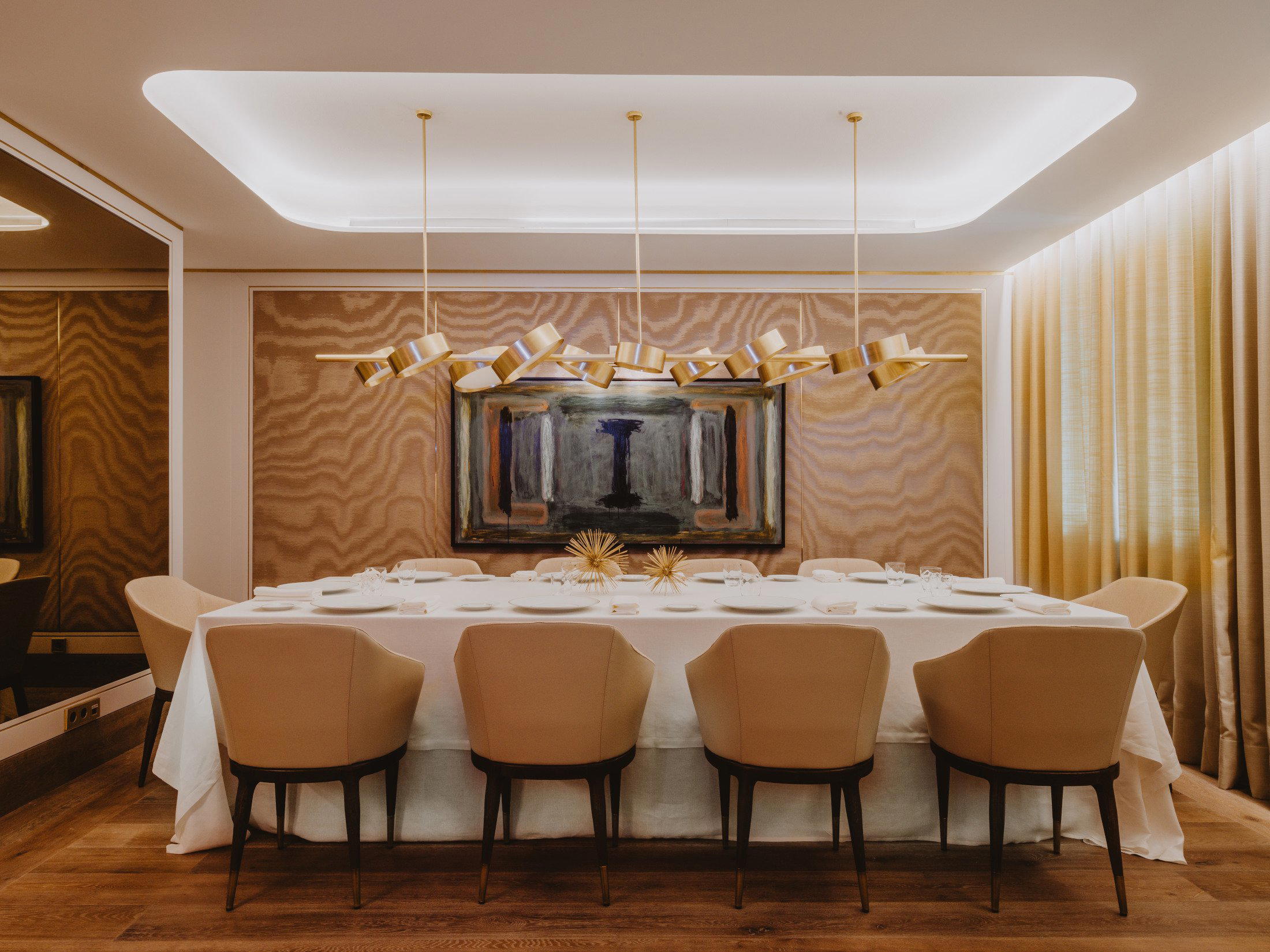
Restaurant divides into two distinct rooms with different functions. The verde (green) room operates as the à la carte space, its palette setting a particular visual register for informal or flexible dining. The Rioja room is reserved for set menus, a spatial arrangement that does something operationally useful: it separates different dining rhythms without forcing them to coexist in the same atmosphere. Guests choosing the tasting menu format get a room calibrated to that pace; à la carte diners aren't surrounded by the heightened formality of a multi-course progression. Few restaurants at this price point in Madrid make that distinction so clearly in physical terms.
Puglia as Starting Point, Not Destination
Southern Italian cooking has historically been underrepresented in Spain's premium dining tier. The Spanish appetite for Italian food runs deep, pasta and pizza are woven into the casual dining fabric of every major city, but the specifically southern Italian register, with its emphasis on olive oil over butter, legumes alongside fresh pasta, and a preserved-vegetable tradition that reflects Arab and Greek influence, rarely makes it into formal restaurant contexts. Chef Luigi Troiano, from Puglia, works from that less-charted territory.
Puglia sits at the southern tip of Italy's Adriatic coast, a region whose cooking is shaped by proximity to the sea, a particularly dense olive-growing tradition, and a vegetable culture that produces some of Italy's most technically demanding preparations. The region's pasta work alone, orecchiette, cavatelli, strascinate, requires a precision that doesn't translate easily into high-volume restaurant production. At Noi, the menu moves between regional Italian touchstones and contemporary treatments, with the Pasta tasting menu isolating that discipline as its own format. The From South to North menu traces a broader Italian geography, using dishes like tuna tonnato, parmigiana, caponata siciliana, and linguine alle vongole as waypoints in an argument about Italian regional diversity. The names confirm sourcing logic: these are preparations tied to specific places, not generic Italian-restaurant staples.
This approach places Noi in a small peer group within Madrid's dining scene. The city's most-discussed creative tables, DSTAgE, Deessa, and Paco Roncero, work in a Modern Spanish idiom, and their reference points are Iberian. An Italian restaurant making a rigorous, region-specific case for its cuisine sits in a different competitive conversation, closer to what dedicated Italian counters do in Tokyo or London than to the Madrid fine-dining mainstream.
Awards and Recognition in Context
Noi holds a Michelin Plate designation for 2025, which in the Michelin vocabulary signals a kitchen producing food of consistent quality that hasn't yet crossed into star territory. The Plate is often misread as a consolation category, but it functions more accurately as a quality floor: in a city where Madrid's starred tables include the three-star DiverXO and serious creative programs across multiple tiers, Plate recognition still places Noi inside the city's formally acknowledged dining tier.
The Opinionated About Dining Casual Europe ranking for 2025, at position 589, provides a different kind of signal. OAD's Casual list aggregates opinion from a dining community that skews toward habitual restaurant-goers rather than critics, making the ranking a measure of repeat desirability rather than single-visit spectacle. A position in that list for a southern Italian specialist in Madrid suggests a guest base that returns, which is a stronger operational signal than a first-visit rating.
For comparative context, Italy's most ambitious expressions of regional cuisine have found their most celebrated form at tables like Aponiente (which applies similar regional-discipline logic to Andalusian seafood) or at benchmark creative restaurants across Spain such as Arzak, El Celler de Can Roca, Quique Dacosta, Azurmendi, and Disfrutar. Noi doesn't compete at that trophy-dinner tier, but its recognition pattern indicates a restaurant that has earned standing among knowledgeable Madrid diners, not merely among tourists seeking an Italian option near the Prado.
Choosing Your Format
The menu structure at Noi asks guests to make a decision before they arrive: à la carte in the verde room, or one of two set formats in the Rioja room. The Pasta menu isolates pasta as a dedicated tasting discipline, which is a specific editorial choice by the kitchen: it argues that pasta merits the same focused treatment that other restaurants give to cheese or wine, and it positions Pugliese pasta craft as the anchor of the experience. The From South to North menu is the broader argument, using multiple Italian regions as chapters in a longer meal.
For a first visit, the set menu format gives a more complete reading of what the kitchen is doing. À la carte is the better option for guests with dietary constraints or those who want to isolate specific dishes rather than follow the kitchen's prescribed sequence. The room separation means neither choice compromises the other.
Service runs Tuesday through Saturday for both lunch (1:30–3:45 pm) and dinner (8:30–10:45 pm). The restaurant is closed Sunday and Monday, following the rhythm of many of Madrid's more serious kitchens, which use those days for sourcing and prep rather than covers.
Know Before You Go
- Address: C. de Recoletos, 6, Salamanca, 28001 Madrid
- Price range: €€€
- Lunch service: Tuesday–Saturday, 1:30–3:45 pm
- Dinner service: Tuesday–Saturday, 8:30–10:45 pm
- Closed: Sunday and Monday
- Chef: Luigi Troiano (Puglia, southern Italy)
- Awards: Michelin Plate 2025; OAD Casual Europe #589 (2025)
- Rooms: Verde room (à la carte); Rioja room (set menus)
- Set menu formats: Pasta (pasta-focused tasting); From South to North (multi-region tasting)
Planning Around Noi
Salamanca sits within easy reach of Madrid's museum corridor and the city's most established hotel addresses. For a fuller picture of where Noi fits within Madrid's broader dining and hospitality offer, the EP Club guides cover the city's restaurants, bars, hotels, wineries, and experiences in depth.
- Our full Madrid restaurants guide
- Our full Madrid hotels guide
- Our full Madrid bars guide
- Our full Madrid wineries guide
- Our full Madrid experiences guide
For those extending beyond Madrid, Spain's broader fine-dining tier runs from the Basque Country through Catalonia and down the Mediterranean coast, with tables like Arzak and Disfrutar anchoring each end of that corridor. Internationally, the Italian-Japanese fusion register that Noi's awards data references in its Hong Kong namesake finds its most technically demanding form at counters like Atomix or Le Bernardin in New York, where cross-cultural precision cooking has established its own critical vocabulary.
Frequently asked questions
What should I order at Noi?
The kitchen's clearest argument for its own cooking sits in the set menu formats rather than the à la carte selection. The Pasta menu, available in the Rioja room, presents Pugliese and broader southern Italian pasta craft as a tasting format, which is where Chef Troiano's regional training is most concentrated. The From South to North menu uses a wider Italian regional frame, with confirmed dishes including tuna tonnato, parmigiana, caponata siciliana, and linguine alle vongole. For guests who want to understand what distinguishes Noi from the Italian-restaurant mainstream in Madrid, either set format will make that case more fully than individual dishes selected à la carte. The verde room's à la carte format is better suited to guests who know the menu and want to return to specific preparations rather than follow the full sequence.
Cuisine Context
A quick peer reference to anchor this venue in its category.
| Venue | Cuisine | Price | Awards | Notes |
|---|---|---|---|---|
| NoiThis venue (the venue you are viewing) | Modern Italian Fine Dining | $50–100 | Michelin Plate · Guía Repsol 1 Sol | Not listed |
| DiverXO | Avant-Garde Spanish Tasting Menu | $300–500 | 3 Michelin Stars · World's 50 Best #4 | Progressive - Asian, Creative |
| Deessa | Modern Valencian Fine Dining | $150–200 | 2 Michelin Stars · La Liste Top Restaurants | Modern Spanish, Creative |
| Smoked Room | Modern Japanese Fire Omakase | $200–300 | 2 Michelin Stars · La Liste Top Restaurants | Progressive Asador, Contemporary |
| Coque | Modern Spanish Fine Dining | $300–500 | 2 Michelin Stars · La Liste Top Restaurants | Spanish, Creative |
| Paco Roncero | Avant-Garde Spanish Fine Dining | $150–200 | 2 Michelin Stars · La Liste Top Restaurants | Creative |
Recognition history
Dated appearances from independent guides and award organizations, with the underlying list record or original source where available.
Michelin Plate
Michelin
Guía Repsol 1 Sol
Guía Repsol
Macarfi 7.9 Food Rating
Macarfi
Opinionated About Dining Casual in Europe Recommended
Opinionated About Dining
Forbes Recommended
Forbes
Full recognition history (11 entries)
Opinionated About Dining Top Restaurants in Asia Ranked #146
Opinionated About Dining
Michelin Plate
Michelin
Opinionated About Dining Casual in Europe Ranked #589
Opinionated About Dining
Michelin Plate
Michelin
Opinionated About Dining Top Restaurants in Asia Ranked #168
Opinionated About Dining
Opinionated About Dining Top Restaurants in Asia Highly Recommended
Opinionated About Dining

Continue exploring
More in Madrid
Restaurants in Madrid
All restaurants in Madrid →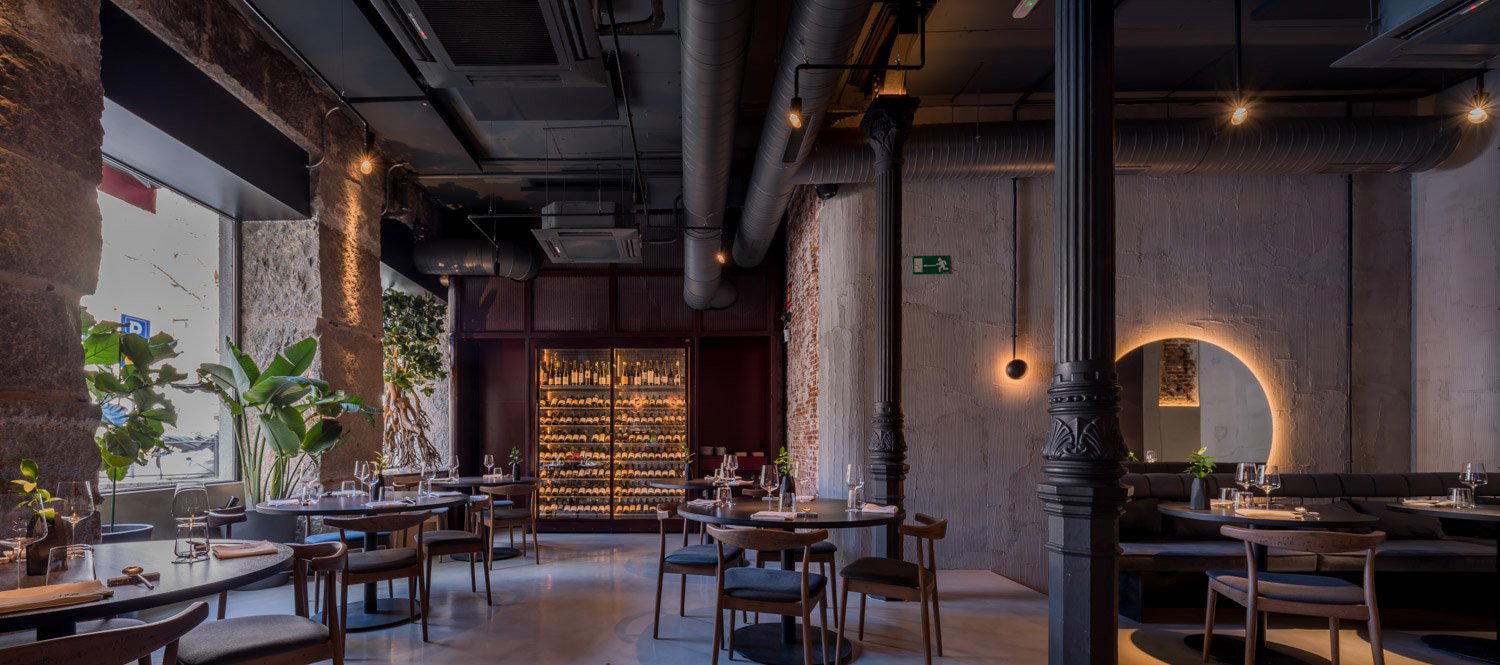
Bars in Madrid
All bars in Madrid →




Details
- Elegant
- Sophisticated
- Romantic
- Intimate
- Modern
- Date Night
- Special Occasion
- Business Dinner
- Open Kitchen
- Extensive Wine List
- A La Carte
- Set Menu
- Small Plates
Current opening hours
- Monday
- Closed
- Tuesday
- 1:30–3:45 PM, 7–10:45 PM
- Wednesday
- 1:30–3:45 PM, 7–10:45 PM
- Thursday
- 1:30–3:45 PM, 7–10:45 PM
- Friday
- 1:30–3:45 PM, 7–10:45 PM
- Saturday
- 1–3:45 PM, 7–10:45 PM
- Sunday
- Closed
Hours can change for holidays and private events. Hours as of .
Elegant 1970s Italian pop interior with green and red walls, warm lighting, noble materials, and a sober yet captivating staging.