
Nobu by the Beach


<h2>Sun, Salt Air, and Japanese Technique on the Arabian Gulf</h2><p>The approach to Nobu by the Beach sets the scene before a single plate arrives. Atlantis The Royal rises behind you, a Forbes Travel Guide Five-Star property whose ambitions are legible in every surface detail, while ahead the Arabian Gulf catches the afternoon light with the kind of clarity that makes Dubai's poolside hours feel genuinely cinematic. The restaurant occupies a position that few dining formats manage: a full-service kitchen operating at the intersection of genuine culinary craft and the social rhythm of a luxury beach club.</p><p>That combination is harder to execute than it appears. Across the wider luxury hotel dining circuit, from <a href="https://www.enprimeurclub.com/restaurants/le-bernardin">Le Bernardin in New York City</a> to <a href="https://www.enprimeurclub.com/restaurants/alain-ducasse-louis-xv-monte-carlo-restaurant">Alain Ducasse at Louis XV in Monte Carlo</a>, the tension between formal technique and relaxed setting is a recurring challenge. Nobu as a global operation has spent decades resolving that tension through a consistent kitchen philosophy, and the Dubai beach outpost applies that logic to an environment where the dress code and the daylight are both part of the meal.</p><h2>Japanese Foundations in a Gulf Context</h2><p>The Nobu method, developed across properties from Los Angeles to Tokyo to London, is built on a specific editorial principle: Japanese technique applied to non-Japanese ingredients, with Peruvian-influenced acidity acting as the connective tissue. The signature expressions of that approach, dishes like black cod with miso and yellowtail with jalapeño, have been refined over decades of global replication to the point where consistency across sites is itself a kind of credential. At <a href="https://www.enprimeurclub.com/restaurants/8-12-otto-e-mezzo-bombana-hong-kong-restaurant">8 1/2 Otto e Mezzo Bombana in Hong Kong</a>, Italian technique absorbs the influence of local produce and market proximity. Nobu operates on a parallel logic: a core technique set, transplanted and adapted to whatever local sourcing and clientele demand.</p><p>In Dubai, that means the kitchen operates within a hospitality environment already defined by imported excellence. The city's fine dining tier, which includes <a href="https://www.enprimeurclub.com/restaurants/trsind-studio-dubai-restaurant">Trèsind Studio</a> for progressive Indian, <a href="https://www.enprimeurclub.com/restaurants/fzn-by-bjrn-frantzn-dubai-restaurant">FZN by Björn Frantzén</a> for Scandinavian-rooted modern cuisine, and <a href="https://www.enprimeurclub.com/restaurants/row-on-45-dubai-restaurant">Row on 45</a> for creative contemporary formats, is substantially composed of kitchens that bring established international approaches into a Gulf context. Nobu sits inside that pattern but at a different register: its international framework predates Dubai's fine dining boom, and its presence at Atlantis The Royal positions it as an anchor tenant rather than a specialist newcomer.</p><p>The World of Fine Wine award for the Middle East and Africa region, recognising Nobu Dubai, signals that the wine and beverage program meets a bar set against regional peers, not just the internal Nobu standard. That matters in a city where beverage programs at hotel restaurants carry significant weight and where competition from <a href="https://www.enprimeurclub.com/restaurants/11-woodfire-dubai-restaurant">11 Woodfire</a> and <a href="https://www.enprimeurclub.com/restaurants/moonrise-dubai-restaurant">moonrise</a> continues to sharpen expectations.</p><h2>The Beach Club as Dining Format</h2><p>Dubai's luxury poolside dining format has matured considerably. What began as hotel food served to sunbathers has, at the leading end of the market, become a distinct category with its own kitchen ambitions. The setting at Nobu by the Beach asks the kitchen to perform across a wider service window than a conventional dinner-only restaurant, covering the social hours from late morning through to the evening. That range is typical of how Atlantis The Royal structures its dining floor across multiple outlets, giving each venue a defined atmospheric identity within the broader resort logic.</p><p>The poolside format also changes the compositional demands on the menu. Lighter, acid-forward preparations, a Nobu hallmark in any case, translate better under direct sunlight than heavier European-style tasting courses. The Peruvian influence in the kitchen's DNA, the citrus, the chilli heat, the clean protein preparations, suits the Gulf climate in a way that is structural rather than coincidental. Comparable beach-adjacent luxury restaurants elsewhere, at properties operating at the level of <a href="https://www.enprimeurclub.com/restaurants/lazy-bear">Lazy Bear in San Francisco</a> or <a href="https://www.enprimeurclub.com/restaurants/alinea">Alinea in Chicago</a>, are insulated indoor formats by necessity. Dubai's climate, for a substantial portion of the year, allows the outdoor luxury dining experience to function as a primary rather than secondary product.</p><h2>Regional Positioning and Peer Set</h2><p>Within the Middle East, Nobu Dubai sits in a competitive set defined more by hotel affiliation and international brand equity than by neighbourhood dining culture. The city's restaurant geography rewards those who understand the hotel-restaurant relationship: many of the highest-performing kitchens in Dubai are hotel-anchored, and the property context shapes the clientele as much as the menu does. A comparison to <a href="https://www.enprimeurclub.com/restaurants/erth-abu-dhabi-restaurant">Erth in Abu Dhabi</a> illustrates the range of approaches operating in the region: Erth draws on Gulf heritage cuisine as its primary reference, while Nobu operates from a globally standardised platform that reads as luxury through familiarity and consistency rather than local specificity.</p><p>That is not a critique. Dubai's dining identity has always been partly constructed from imported frameworks executed at high volume and high standard. The question worth asking of any international brand operating here is whether the local execution meets the standard set elsewhere. The World of Fine Wine regional recognition suggests the beverage program does. For the kitchen, the Nobu system's documented consistency across global sites provides its own form of quality assurance. Comparable international restaurant groups operating in similarly demanding hotel contexts, such as <a href="https://www.enprimeurclub.com/restaurants/emerils-new-orleans-restaurant">Emeril's in New Orleans</a> or <a href="https://www.enprimeurclub.com/restaurants/allno-paris-au-pavillon-ledoyen-paris-restaurant">Alléno Paris au Pavillon Ledoyen</a>, each move through the relationship between brand identity and site-specific execution in their own way. Nobu's answer has been replicable technical standards applied with local service and atmosphere layered on leading.</p><h2>Planning Your Visit</h2><p>Nobu by the Beach is located within Atlantis The Royal on Crescent Road, Palm Jumeirah, accessible by taxi or ride-share from central Dubai in approximately 30 to 40 minutes depending on traffic. The beach club format means the experience differs significantly depending on time of day and season. Dubai's cooler months, October through April, are when outdoor dining performs at its leading and when the poolside atmosphere reaches its intended register. Summer months bring extreme heat that shifts the practical calculus, and visiting in the midday heat of July or August changes the experience substantially. For busy periods and weekend lunch sessions, booking well in advance is the practical approach; the Atlantis The Royal property operates at high occupancy, and Nobu's profile draws both hotel guests and destination diners. Those exploring the full range of Dubai's dining circuit will find context in <a href="https://www.enprimeurclub.com/restaurants/dubai">our full Dubai restaurants guide</a>, alongside recommendations for <a href="https://www.enprimeurclub.com/bars/dubai">bars</a>, <a href="https://www.enprimeurclub.com/hotels/dubai">hotels</a>, <a href="https://www.enprimeurclub.com/wineries/dubai">wineries</a>, and <a href="https://www.enprimeurclub.com/experiences/dubai">experiences</a> across the city.</p><h2>Frequently Asked Questions</h2><dl><dt><strong>What should I eat at Nobu by the Beach?</strong></dt><dd>The kitchen operates within the established Nobu framework of Japanese technique with Peruvian-influenced acidity. The dishes that have defined the brand globally, including black cod with miso and yellowtail with jalapeño, represent the clearest expression of what the kitchen does and why it has sustained recognition, including the World of Fine Wine regional award for the Middle East and Africa. The beach setting makes lighter, acid-forward preparations the natural choice over heavier composed courses.</dd><dt><strong>How far ahead should I plan for Nobu by the Beach?</strong></dt><dd>Atlantis The Royal is one of Dubai's highest-profile resort properties, and Nobu operates as one of its anchor dining outlets. For weekend lunches and the peak October-to-April season, reserving at least two to three weeks ahead is a reasonable working assumption. For specific dates during major Dubai events or public holidays, earlier is more reliable. The property's combination of hotel-guest demand and destination dining traffic keeps occupancy high through the cooler months.</dd><dt><strong>What is the defining dish or idea at Nobu by the Beach?</strong></dt><dd>The defining idea is the intersection of Japanese precision and Peruvian acidity, applied in a setting where the Gulf climate and a luxury beach format shape how the food is received. The World of Fine Wine regional recognition for the Middle East and Africa adds a beverage dimension to that picture. Across the Nobu global network, the kitchen's ability to maintain technical standards while adapting to site-specific atmosphere is the consistent throughline, and the Dubai beach format tests that adaptability in a specific and demanding direction.</dd></dl>

Sun, Salt Air, and Japanese Technique on the Arabian Gulf
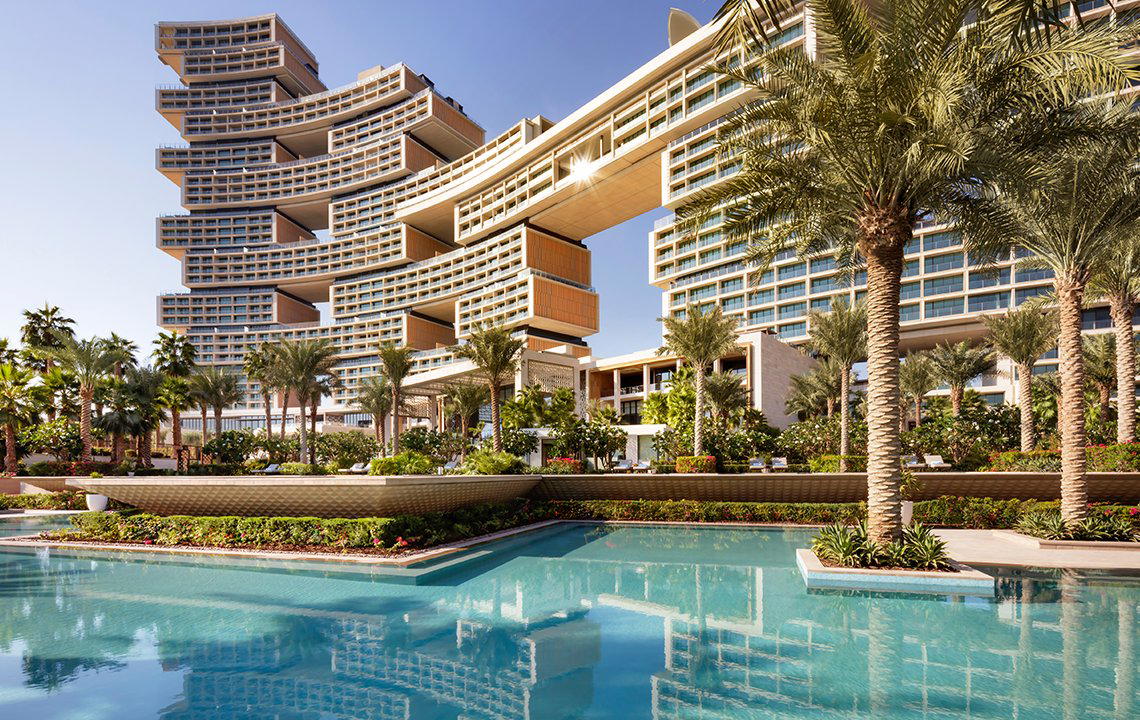
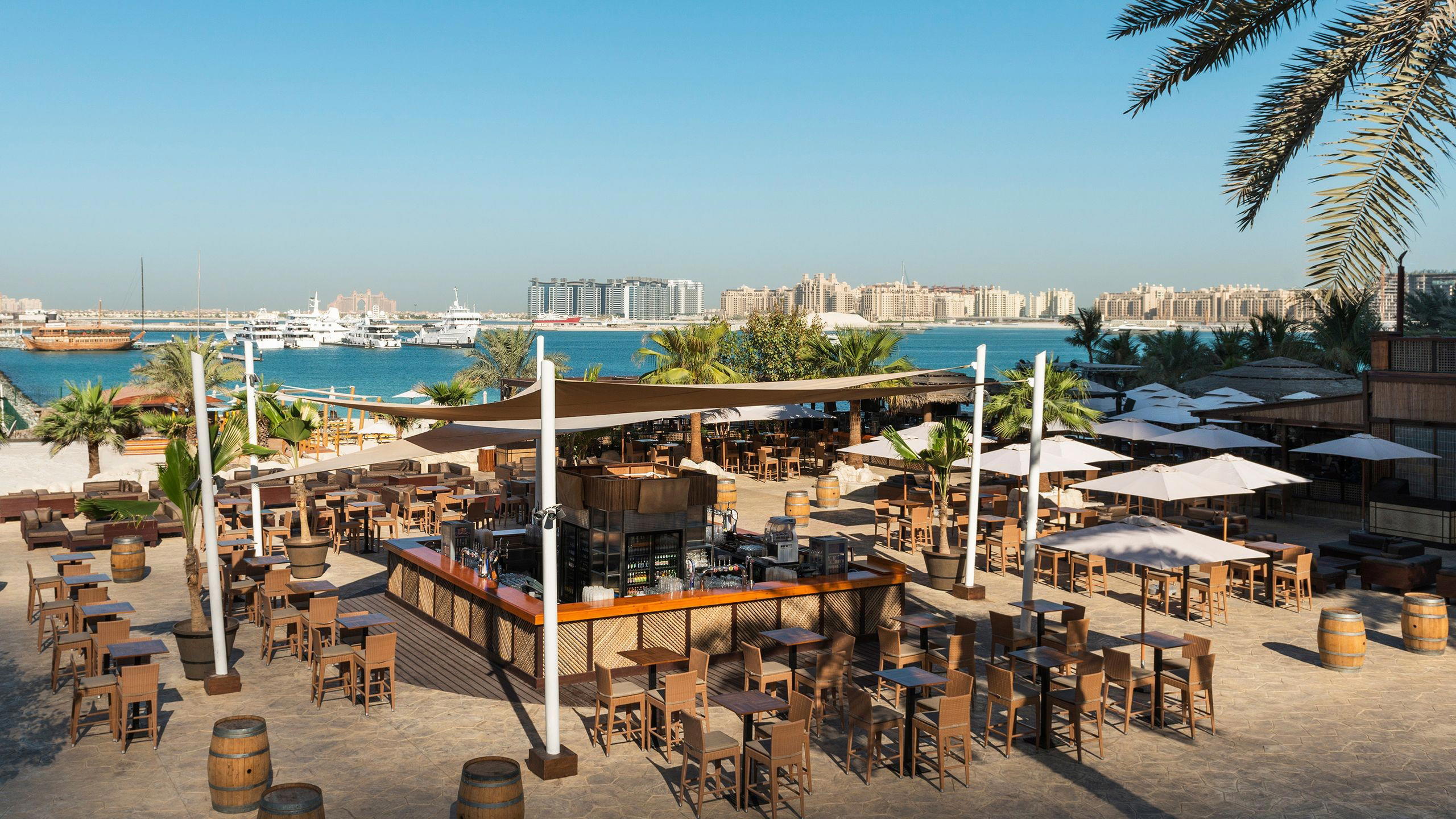
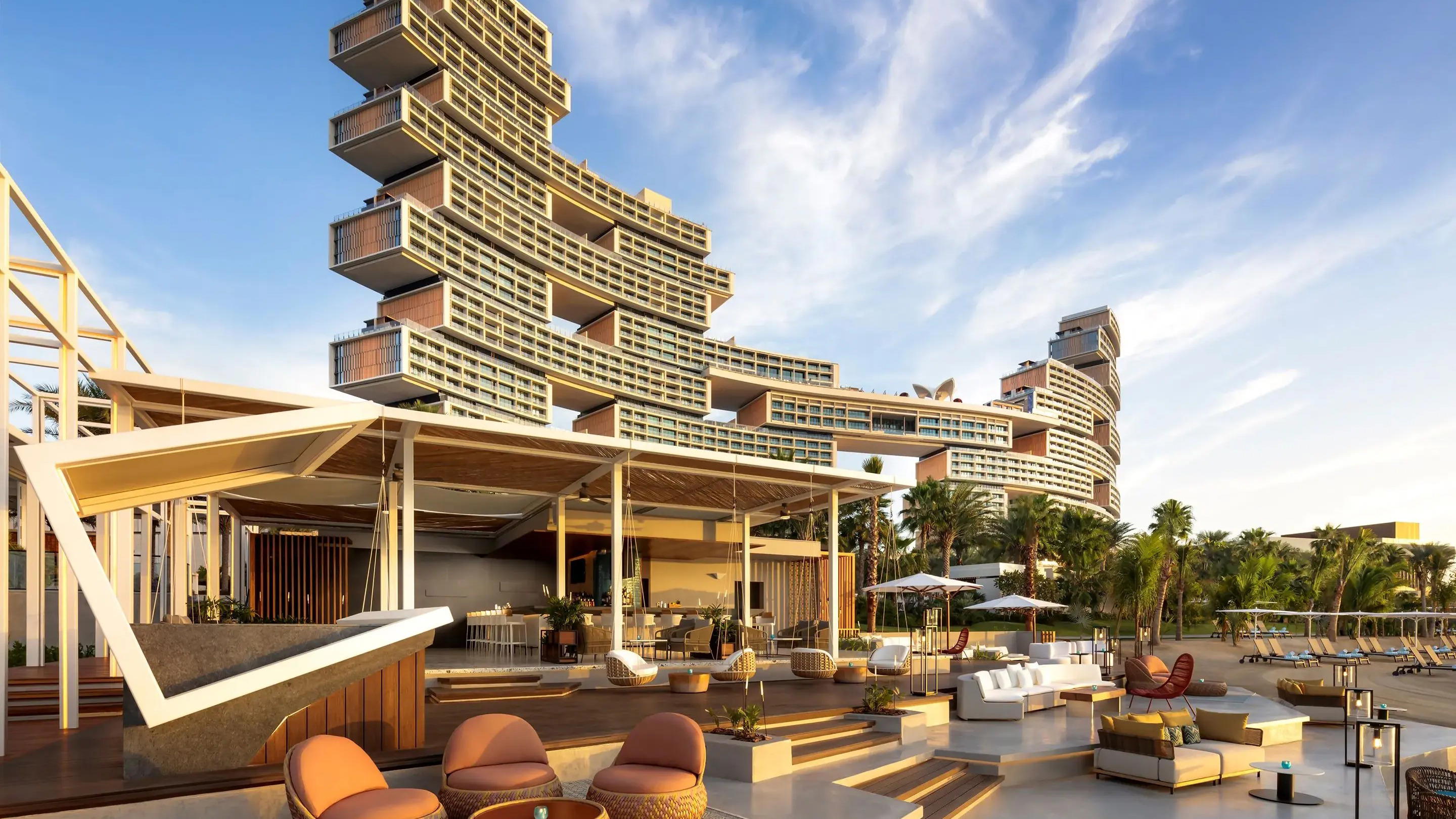
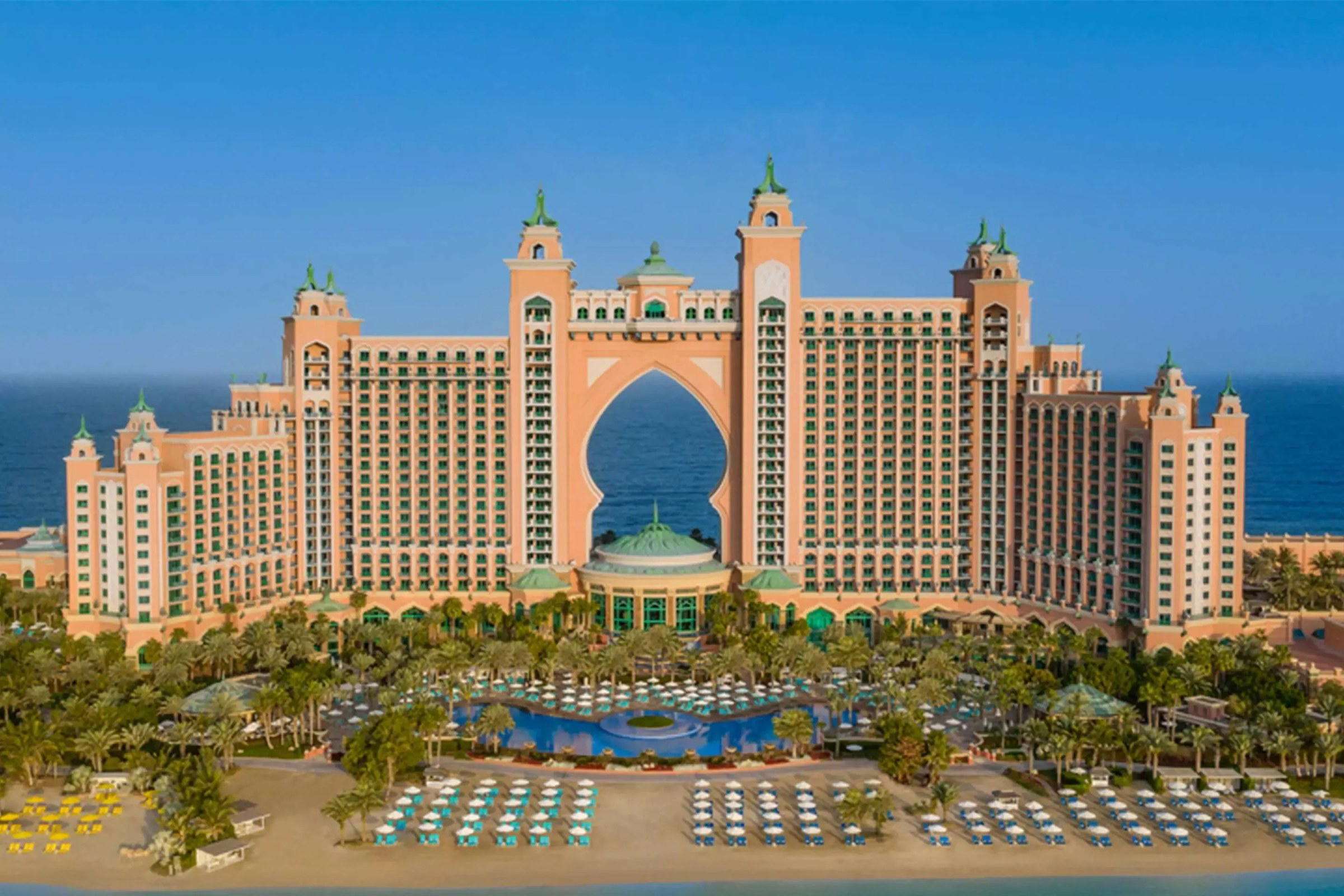
The approach to Nobu by the Beach sets the scene before a single plate arrives. Atlantis The Royal rises behind you, a Forbes Travel Guide Five-Star property whose ambitions are legible in every surface detail, while ahead the Arabian Gulf catches the afternoon light with the kind of clarity that makes Dubai's poolside hours feel genuinely cinematic. The restaurant occupies a position that few dining formats manage: a full-service kitchen operating at the intersection of genuine culinary craft and the social rhythm of a luxury beach club.
That combination is harder to execute than it appears. Across the wider luxury hotel dining circuit, from Le Bernardin in New York City to Alain Ducasse at Louis XV in Monte Carlo, the tension between formal technique and relaxed setting is a recurring challenge. Nobu as a global operation has spent decades resolving that tension through a consistent kitchen philosophy, and the Dubai beach outpost applies that logic to an environment where the dress code and the daylight are both part of the meal.
Japanese Foundations in a Gulf Context
The Nobu method, developed across properties from Los Angeles to Tokyo to London, is built on a specific editorial principle: Japanese technique applied to non-Japanese ingredients, with Peruvian-influenced acidity acting as the connective tissue. The signature expressions of that approach, dishes like black cod with miso and yellowtail with jalapeño, have been refined over decades of global replication to the point where consistency across sites is itself a kind of credential. At 8 1/2 Otto e Mezzo Bombana in Hong Kong, Italian technique absorbs the influence of local produce and market proximity. Nobu operates on a parallel logic: a core technique set, transplanted and adapted to whatever local sourcing and clientele demand.
In Dubai, that means the kitchen operates within a hospitality environment already defined by imported excellence. The city's fine dining tier, which includes Trèsind Studio for progressive Indian, FZN by Björn Frantzén for Scandinavian-rooted modern cuisine, and Row on 45 for creative contemporary formats, is substantially composed of kitchens that bring established international approaches into a Gulf context. Nobu sits inside that pattern but at a different register: its international framework predates Dubai's fine dining boom, and its presence at Atlantis The Royal positions it as an anchor tenant rather than a specialist newcomer.
The World of Fine Wine award for the Middle East and Africa region, recognising Nobu Dubai, signals that the wine and beverage program meets a bar set against regional peers, not just the internal Nobu standard. That matters in a city where beverage programs at hotel restaurants carry significant weight and where competition from 11 Woodfire and moonrise continues to sharpen expectations.
The Beach Club as Dining Format
Dubai's luxury poolside dining format has matured considerably. What began as hotel food served to sunbathers has, at the leading end of the market, become a distinct category with its own kitchen ambitions. The setting at Nobu by the Beach asks the kitchen to perform across a wider service window than a conventional dinner-only restaurant, covering the social hours from late morning through to the evening. That range is typical of how Atlantis The Royal structures its dining floor across multiple outlets, giving each venue a defined atmospheric identity within the broader resort logic.
The poolside format also changes the compositional demands on the menu. Lighter, acid-forward preparations, a Nobu hallmark in any case, translate better under direct sunlight than heavier European-style tasting courses. The Peruvian influence in the kitchen's DNA, the citrus, the chilli heat, the clean protein preparations, suits the Gulf climate in a way that is structural rather than coincidental. Comparable beach-adjacent luxury restaurants elsewhere, at properties operating at the level of Lazy Bear in San Francisco or Alinea in Chicago, are insulated indoor formats by necessity. Dubai's climate, for a substantial portion of the year, allows the outdoor luxury dining experience to function as a primary rather than secondary product.
Regional Positioning and Peer Set
Within the Middle East, Nobu Dubai sits in a competitive set defined more by hotel affiliation and international brand equity than by neighbourhood dining culture. The city's restaurant geography rewards those who understand the hotel-restaurant relationship: many of the highest-performing kitchens in Dubai are hotel-anchored, and the property context shapes the clientele as much as the menu does. A comparison to Erth in Abu Dhabi illustrates the range of approaches operating in the region: Erth draws on Gulf heritage cuisine as its primary reference, while Nobu operates from a globally standardised platform that reads as luxury through familiarity and consistency rather than local specificity.
That is not a critique. Dubai's dining identity has always been partly constructed from imported frameworks executed at high volume and high standard. The question worth asking of any international brand operating here is whether the local execution meets the standard set elsewhere. The World of Fine Wine regional recognition suggests the beverage program does. For the kitchen, the Nobu system's documented consistency across global sites provides its own form of quality assurance. Comparable international restaurant groups operating in similarly demanding hotel contexts, such as Emeril's in New Orleans or Alléno Paris au Pavillon Ledoyen, each move through the relationship between brand identity and site-specific execution in their own way. Nobu's answer has been replicable technical standards applied with local service and atmosphere layered on leading.
Planning Your Visit
Nobu by the Beach is located within Atlantis The Royal on Crescent Road, Palm Jumeirah, accessible by taxi or ride-share from central Dubai in approximately 30 to 40 minutes depending on traffic. The beach club format means the experience differs significantly depending on time of day and season. Dubai's cooler months, October through April, are when outdoor dining performs at its leading and when the poolside atmosphere reaches its intended register. Summer months bring extreme heat that shifts the practical calculus, and visiting in the midday heat of July or August changes the experience substantially. For busy periods and weekend lunch sessions, booking well in advance is the practical approach; the Atlantis The Royal property operates at high occupancy, and Nobu's profile draws both hotel guests and destination diners. Those exploring the full range of Dubai's dining circuit will find context in our full Dubai restaurants guide, alongside recommendations for bars, hotels, wineries, and experiences across the city.
Frequently Asked Questions
- What should I eat at Nobu by the Beach?
- The kitchen operates within the established Nobu framework of Japanese technique with Peruvian-influenced acidity. The dishes that have defined the brand globally, including black cod with miso and yellowtail with jalapeño, represent the clearest expression of what the kitchen does and why it has sustained recognition, including the World of Fine Wine regional award for the Middle East and Africa. The beach setting makes lighter, acid-forward preparations the natural choice over heavier composed courses.
- How far ahead should I plan for Nobu by the Beach?
- Atlantis The Royal is one of Dubai's highest-profile resort properties, and Nobu operates as one of its anchor dining outlets. For weekend lunches and the peak October-to-April season, reserving at least two to three weeks ahead is a reasonable working assumption. For specific dates during major Dubai events or public holidays, earlier is more reliable. The property's combination of hotel-guest demand and destination dining traffic keeps occupancy high through the cooler months.
- What is the defining dish or idea at Nobu by the Beach?
- The defining idea is the intersection of Japanese precision and Peruvian acidity, applied in a setting where the Gulf climate and a luxury beach format shape how the food is received. The World of Fine Wine regional recognition for the Middle East and Africa adds a beverage dimension to that picture. Across the Nobu global network, the kitchen's ability to maintain technical standards while adapting to site-specific atmosphere is the consistent throughline, and the Dubai beach format tests that adaptability in a specific and demanding direction.
At-a-Glance Comparison
A small comparison set for context, based on the venues we track.
| Venue | Cuisine | Price | Awards | Notes |
|---|---|---|---|---|
| Nobu by the Beach | While there are plenty of upscale restaurants and bars at Forbes Travel Guide Fi… | This venue | ||
| 11 Woodfire | Modern Cuisine | $$$ | Michelin 1 Star | Modern Cuisine, $$$ |
| Avatara Restaurant | Indian | $$$$ | Michelin 1 Star | Indian, $$$$ |
| Al Mahara | Seafood | $$$$ | World's 50 Best | Seafood, $$$$ |
| Zuma | Japanese - Asian, Japanese, Japanese Contemporary | $$$ | World's 50 Best | Japanese - Asian, Japanese, Japanese Contemporary, $$$ |
| At.Mosphere Burj Khalifa | Modern European | $$$$ | Modern European, $$$$ |
Need a table?
Our members enjoy priority alerts and concierge-led booking support for the world's most difficult tables.
Get Exclusive Access