Michelin Plate · Falstaff Restaurant - 92 Falstaff Points
Our verdict
NIKKEI NINE occupies a corner of Hamburg's Neuer Jungfernstieg with a Michelin Plate in both 2024 and 2025, placing it among the city's recognised Japanese addresses. The kitchen works at the €€€ tier, a price point that sits between Hamburg's entry-level Japanese spots and its four-star hotel dining rooms.6 across nearly a thousand reviews points to consistent execution rather than occasional brilliance.

Pearl is the En Primeur Club membership app — saves, bookings, and concierge access live there. Same editors, same standards.
The menu
What to order
- Wagyu tartare
- Black cod
- Ceviche
- Sushi
- Tempura prawns
Live Fire, Still Water: Japanese Counter Cooking on the Alster
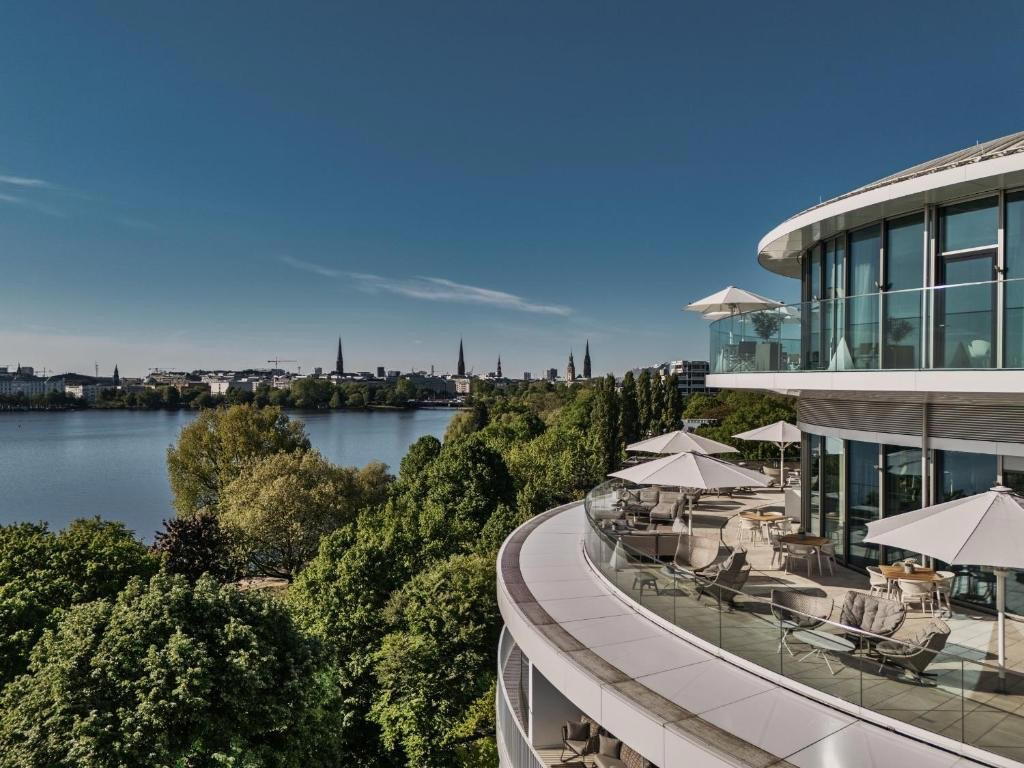
Hamburg's inner-city dining corridor along Neuer Jungfernstieg runs between the Alster lakefront and the city's most concentrated cluster of hotel dining rooms and fine addresses. It is a stretch where theatre tends to be architectural rather than culinary, where the room does the work and the kitchen plays a supporting role. NIKKEI NINE operates against that pattern. The draw here is preparation made visible, cooking staged at counter level where heat, timing, and technique are part of what the guest experiences rather than something concealed behind a pass.
That format places NIKKEI NINE inside a wider movement in European Japanese dining. Across Germany's major cities, the more serious Japanese addresses have moved away from the conventional dining-room arrangement and toward formats where the gap between cook and guest is deliberately narrowed. Teppanyaki sits at one end of that spectrum: the flat iron surface, the open flame, and the proximity of the chef create a register that is closer to performance than service. The leading versions of this format in Europe use that proximity to communicate precision, not spectacle. The question for any address in this tier is which side of that line it occupies.
Where NIKKEI NINE Sits in Hamburg's Japanese Scene
Hamburg supports a Japanese dining scene that runs from conveyor-belt lunch spots to multi-course omakase counters, with enough depth in between to occupy a considered visitor for several evenings. At the recognised tier, Zipang operates as the city's most established Japanese reference point, with a format and reputation built over many years. NIKKEI NINE enters the conversation at the €€€ price tier, which in Hamburg places it below the four-star hotel dining rooms such as Restaurant Haerlin and creative-format rooms like The Table Kevin Fehling or bianc, and roughly level with the city's other mid-to-upper casual dining addresses.
The Michelin Plate awarded in both 2024 and 2025 is not a star, but it is a signal worth reading correctly. The Plate designation indicates that Michelin's inspectors found cooking that is consistently good — fresh ingredients, proper technique, sound preparation — without the additional markers of creativity or distinctiveness that would push a restaurant toward starred consideration. For a teppanyaki-led format, that is an appropriate recognition. The style rewards execution and timing over conceptual ambition, and a Plate across consecutive years indicates that the kitchen is not coasting.
Compared to Germany's starred Japanese addresses, the gap is measurable. Properties like JAN in Munich or multi-starred European kitchens such as Schwarzwaldstube in Baiersbronn and Aqua in Wolfsburg operate in a different register of both ambition and price.
The Teppanyaki Format: What the Counter Actually Means
In Japan, teppanyaki as a formal dining style is distinct from its export version. The European adaptation has often leaned into the entertainment dimension, the knife work, the onion volcano, the shrimp that lands in a chef's hat, at the cost of the underlying cooking quality. The better European teppanyaki rooms have reversed that priority: the performance is still present, but it serves the food rather than replacing it. The flat iron surface at high heat is genuinely one of the more precise cooking tools in a kitchen, capable of rapid searing and exact temperature control when operated correctly.
What counter-side cooking offers the guest that a conventional dining room cannot is accountability. The distance between what the chef does and what arrives on the plate collapses. Timing errors, over-reduction, the wrong resting period: all of it is visible. That visibility raises the stakes for the kitchen and, for a guest who is paying attention, makes for a more engaged meal. It also means the experience differs table by table and visit by visit in ways that a kitchen working behind a closed pass would not.
Japanese counter dining at the higher end of the market, as practiced at addresses like Myojaku in Tokyo or Azabu Kadowaki, operates on a similar principle of enforced transparency, even if the format is omakase rather than teppanyaki. The counter is a commitment on both sides.
Hamburg's Broader Dining Context
Hamburg does not carry the same density of starred Japanese restaurants as London or Paris, but it is a city that takes its dining seriously. The local dining culture has absorbed significant investment in both creative European formats and in non-European cuisines at recognisable quality levels. 100/200 Kitchen represents one end of that creative ambition. Addresses further afield in the German market, such as Vendôme in Bergisch Gladbach, ES:SENZ in Grassau, and CODA Dessert Dining in Berlin, illustrate how broadly the country's serious dining scene is distributed.
Within Hamburg specifically, the Japanese dining tier sits inside a broader competitive set that rewards consistency and clear identity over novelty. A Michelin Plate held across consecutive years in a city with limited starred Japanese competition suggests NIKKEI NINE has established a stable position rather than chasing territory it hasn't yet claimed.
Planning Your Visit
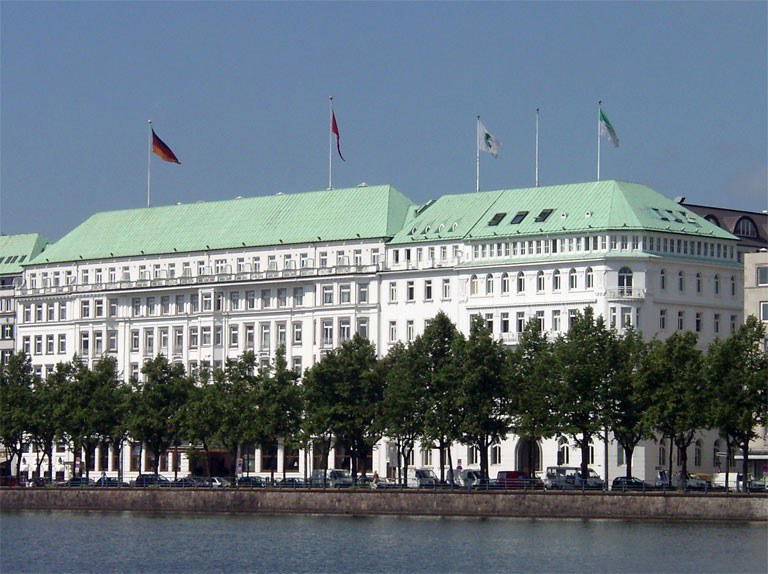
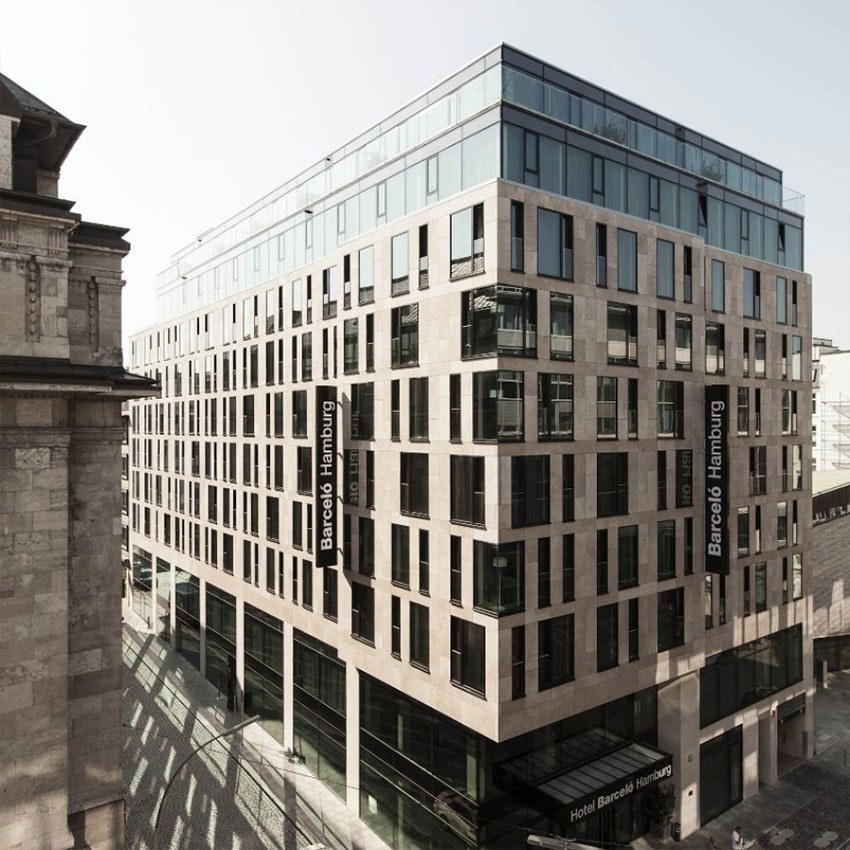
NIKKEI NINE is located at Neuer Jungfernstieg 9–14 in Hamburg's 20354 postal district, directly on the Alster lakefront in the city centre. The address is accessible on foot from Hamburg's main S-Bahn and U-Bahn interchange at Jungfernstieg station, making it among the more direct central dining addresses in the city. The €€€ price tier puts it in the range where a full evening per person, with drinks, lands in the mid-to-upper bracket of Hamburg's non-starred dining market, expect figures comparable to other recognised city-centre addresses in the same tier.
For visitors building a broader Hamburg itinerary, our full Hamburg restaurants guide covers the city's dining scene across formats and price points. Our Hamburg hotels guide, bars guide, wineries guide, and experiences guide provide the surrounding context for a full visit.
Frequently asked questions
What is the atmosphere like at NIKKEI NINE?
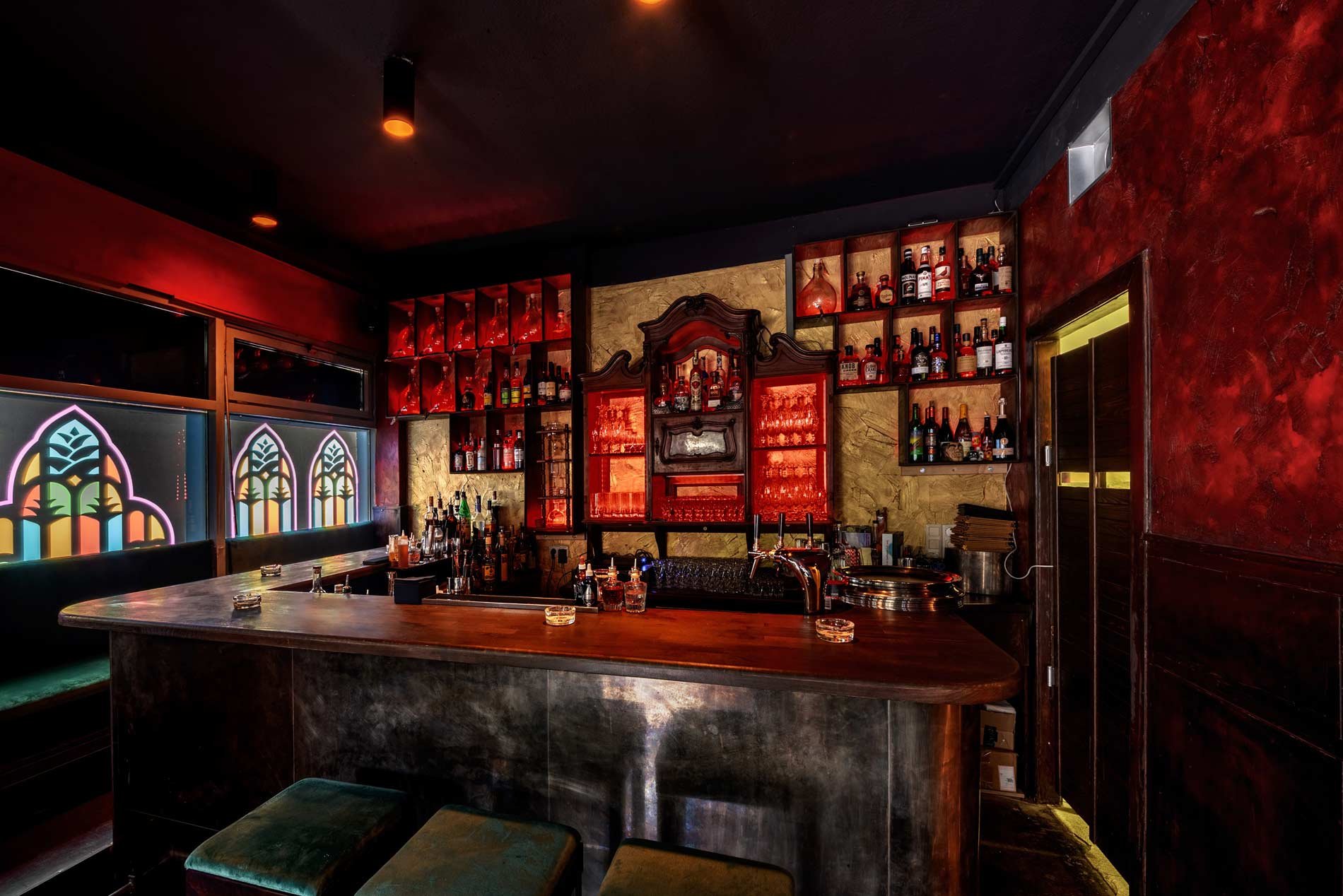
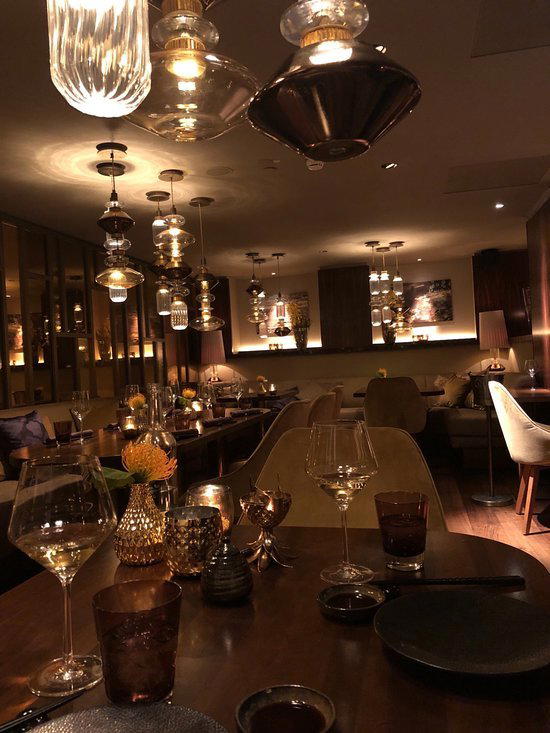
NIKKEI NINE occupies a counter-format setting on Neuer Jungfernstieg, the Alster lakefront strip that houses Hamburg's most concentrated run of hotel dining. The teppanyaki format creates an inherently focused room: guests face the cooking surface, so the atmosphere is built around the cooking itself rather than ambient noise or crowd energy. Michelin Plate recognition in both 2024 and 2025 points to a kitchen operating at a level that warrants serious attention.
What's the pricing like at NIKKEI NINE?
Pricing at NIKKEI NINE is listed as €€€.
What distinctions does NIKKEI NINE have?
NIKKEI NINE has received recognition including: Michelin Plate (2025); Michelin Plate (2024).
What do regulars order at NIKKEI NINE?
NIKKEI NINE's Japanese cuisine at the €€€ price point positions it as a destination for teppanyaki courses rather than à la carte grazing. The teppanyaki format means the counter sequence — proteins and vegetables prepared live on the iron plate — is the core of what the kitchen does.
Credentials Lens
A quick peer reference to anchor this venue in its category.
| Venue | Cuisine | Price | Awards | Notes |
|---|---|---|---|---|
| NIKKEI NINEThis venue — the venue you are viewing | Japanese-Peruvian Nikkei Fusion | Not listed | Michelin Plate · Falstaff Restaurant - 92 Falstaff Points | Not listed |
| The Table Kevin Fehling | Avant-Garde Fusion Fine Dining | $200–300 | 3 Michelin Stars · La Liste Top Restaurants | Creative |
| bianc | Modern Mediterranean Fine Dining | $200–300 | 2 Michelin Stars · La Liste Top Restaurants | Modern Mediterranean, Mediterranean Cuisine |
| Lakeside | Modern European Fine Dining | $200–300 | 2 Michelin Stars · La Liste Top Restaurants | German Lakeside |
| Landhaus Scherrer | Michelin-Starred North German Fine Dining | $150–200 | 1 Michelin Star · Star Wine List | Modern European, Classic Cuisine |
| Heimatjuwel | Modern Regional German Vegetarian Fine Dining | Not listed | 1 Michelin Star · We're Smart World 3 Radishes | German, Creative |
Recognition history
Dated appearances from independent guides and award organizations, with the underlying list record or original source where available.
Michelin Plate
Michelin
Falstaff Restaurant - 92 Falstaff Points
Falstaff
Full recognition history (3 entries)
Michelin Plate
Michelin