On Rangoon Road in Farrer Park, Ng Ah Sio Pork Ribs Soup Eating House represents one of Singapore's most enduring bak kut teh institutions. The address has become a reference point for the peppery, Teochew-style broth that defines the dish in this city, drawing queues of locals and deliberate visitors alike. It belongs to a category of hawker-heritage dining that no amount of fine-dining expansion has displaced from Singaporean food culture.
Pearl is the En Primeur Club membership app — saves, bookings, and concierge access live there. Same editors, same standards.
- Address
- 208 Rangoon Rd, Hong Building, Singapore 218453
- Phone
- +65 6291 4537
- Website
- ngahsio.com
- Directions
- Get directions
 Saves & bookings on Pearl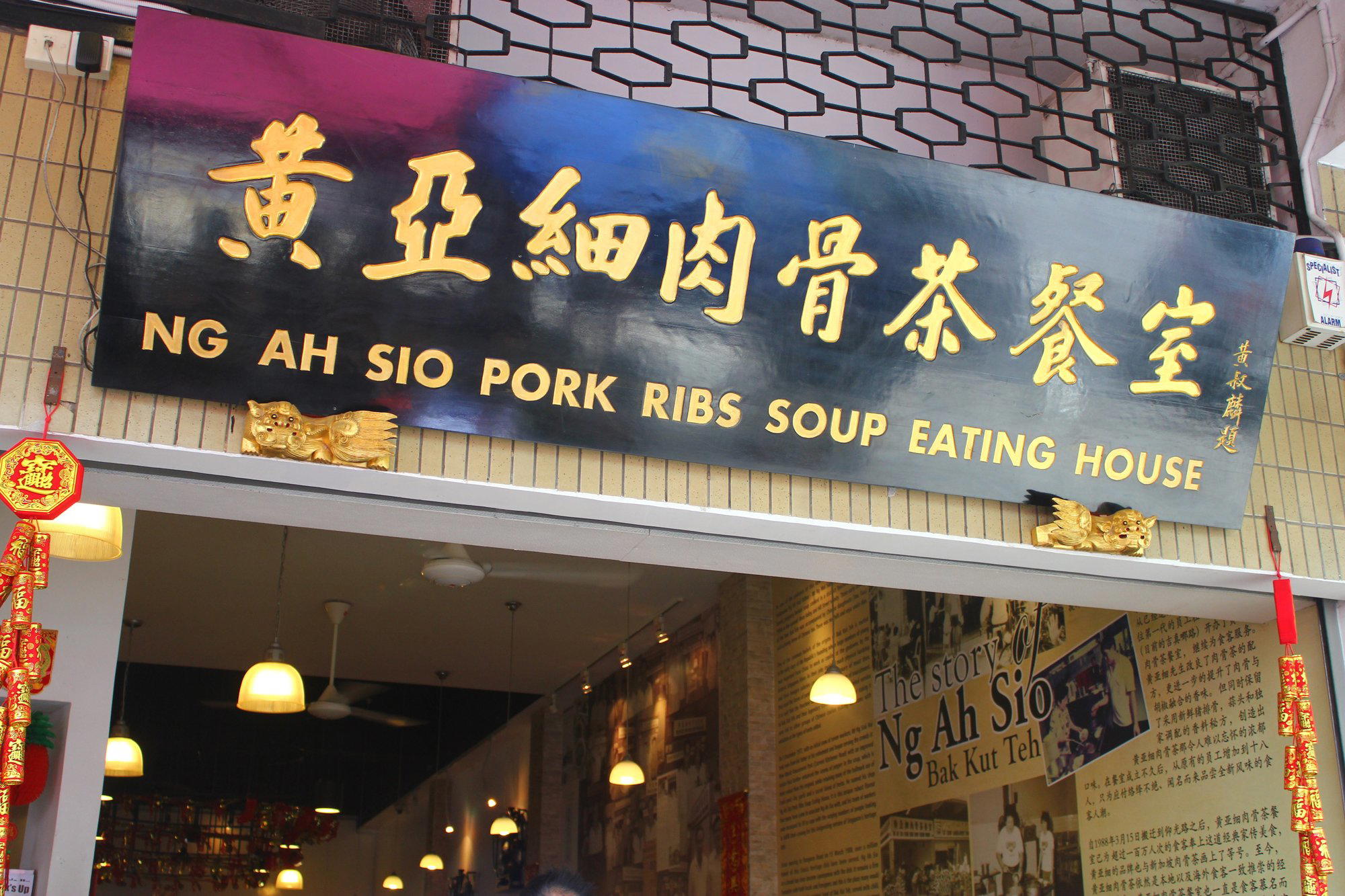
Steam, Pepper, and the Morning Ritual on Rangoon Road
Arrive early enough and Rangoon Road has a particular quality to it: delivery vehicles double-parked, the smell of pork and white pepper already settling into the corridor air before the shophouse shutters are fully raised. Singapore's bak kut teh tradition belongs to the working morning as much as it belongs to any cuisine category, and Ng Ah Sio Pork Ribs Soup Eating House occupies that tradition with the kind of casual authority that comes from decades of repetition at the same address. The Hong Building shopfront on Rangoon Road is not arranged to impress. Laminate tables, metal chopstick holders, ceramic soup bowls stacked behind the counter, the visual register is functional, and that is precisely the point. The room communicates seriousness about what it produces rather than about how it is perceived.
Bak Kut Teh and the Teochew Argument
Singapore's bak kut teh divides along a fault line that runs between the Teochew and Hokkien traditions. The Hokkien version, more common in Malaysia, tends toward a darker, herb-heavy broth built on soy sauce, dong gui, and five-spice. The Teochew version, which Singapore has largely claimed as its own, is a paler, clear-ish liquid whose heat and savour come almost entirely from white pepper and garlic, with pork ribs providing the body and fat that make the broth feel substantial despite its translucent appearance. Ng Ah Sio is a named practitioner of the Teochew approach, and the reputation of the address rests on how far that pepper intensity is pushed. In a city where the dish has been replicated at scale across hawker centres and food courts, establishments that maintain a strong positional commitment to the original peppery formula occupy a distinct tier within the category.
The broader Singapore dining scene has moved in contradictory directions simultaneously. On one side, tasting-menu restaurants like Zén and Odette compete at a global level, while French institutions like Les Amis anchor the city's European fine-dining heritage. On the other, places like Ng Ah Sio demonstrate that the hawker and eating house register has retained its own prestige economy, one measured in queue length and generational loyalty rather than Michelin stars or critics' scores. These two worlds coexist in Singapore more comfortably than in almost any other city of comparable wealth.
The Sensory Architecture of the Bowl
The experience of eating bak kut teh at an address like this is built on a sequence of sensory cues that repeat with each visit and form the basis of its appeal. The bowl arrives hot, and the steam carries white pepper forward immediately, not as background heat but as the dominant aromatic signal. The broth itself, in the Teochew style, is clear enough to see the ribs resting below the surface. Pork ribs at this register should release from the bone under moderate pressure; the ratio of collagen to lean meat in a well-maintained pot produces a broth with a noticeable body, what cooks describe as mouth feel derived from gelatin rather than added starch or fat. Alongside the soup, the standard accompaniments, braised tofu, salted vegetables, braised peanuts, and youtiao (Chinese dough fritters for dipping), complete the meal's structure. Tea is served as a palate cleanser, an integral part of the ritual rather than an afterthought.
That sensory repetition is part of what defines this category of eating house. Unlike restaurants where menus evolve seasonally or chefs express individual creativity across changing formats, bak kut teh institutions derive their credibility from consistency. The bowl you receive on your fifth visit should be indistinguishable from the one on your first. For diners more accustomed to the seasonal variation at somewhere like Jaan by Kirk Westaway or the ingredient-led progression at Meta, this constancy reads as craft of a different kind.
Farrer Park and the Eating House Geography
Rangoon Road sits in the Farrer Park and Little India fringe, a corridor that has historically concentrated some of Singapore's most direct, unfussy eating. The neighbourhood's food culture leans toward the functional, places that have been doing the same thing for a long time and built their following without design interventions or branding exercises. Ng Ah Sio fits that geography. The surrounding streets contain coffee shops, Indian Muslim eateries, and older provision stores operating on the same logic: a specific thing, done consistently, for a specific audience that returns on that basis.
Singapore's dining geography distributes this kind of address unevenly. The central districts, Orchard, Marina Bay, the CBD, concentrate fine-dining formats of the kind found at Béni in Orchard or Imperial Treasure Fine Chinese Cuisine in Downtown Core. Heritage eating houses that operate with this degree of category focus are more likely to survive in residential and mixed-use corridors where rents have not yet enforced the economic logic of high-volume or high-margin formats. The Rangoon Road address reflects that distribution.
Other eating house formats across the city follow comparable patterns: Fu He Delights in Rochor and KTMW chicken rice tea-cafe in Bedok operate in the same heritage-register mode, each anchored to a specific dish and a neighbourhood identity that predates the city's current fine-dining expansion. Further afield, 大巴窑93茶粿 in Kallang and Asian Twist by 365 Food in Queenstown reflect how this eating-house logic distributes itself across Singapore's residential districts.
Planning Your Visit
Bak kut teh is traditionally a breakfast and early lunch dish, and Ng Ah Sio at 208 Rangoon Road operates on that schedule. Arriving before 10am generally means shorter waits; the late-morning rush, when office workers and weekend visitors overlap, is when queue times lengthen. The format is walk-in. No reservation infrastructure exists at this category of establishment, the queue is the booking system, and it moves at the speed of the kitchen's output. Dress informally. Payment at eating houses of this type is typically cash-dominant, though Singapore's broader shift toward digital payment has reached many such establishments.
Recognition, Side-by-Side
Comparable venues nearby, for context on price, style, and recognition.
| Venue | Cuisine | Price | Awards | Notes |
|---|---|---|---|---|
| Ng Ah Sio Pork Ribs Soup Eating HouseThis venue — the venue you are viewing | Teochew Bak Kut Teh | $ | Not listed | Not listed |
| Hawker Chan Liao Fan | Hong Kong Soya Sauce Chicken Rice & Noodle | $ | Not listed | Chinatown |
| Ah Tei Hainanese Chicken | Hainanese Chicken Rice | $ | Not listed | Chinatown |
| Kampong Chicken Eating House | Traditional Hainanese Kampong Chicken Rice | $ | Not listed | TIONG BAHRU |
| Clan 7™ | Modern Cantonese Chinese | $$ | Not listed | LORONG CHUAN |
| Shanyuan Teochew Kway Teow Mian | Teochew Kway Teow Mian | $ | Michelin Plate | BALESTIER |
Continue exploring
More in Singapore
Restaurants in Singapore
Browse all →
Bars in Singapore
Browse all →
At a Glance
- Classic
- Well Known
- Family
- Casual Hangout
- Historic Building
Current opening hours
- Monday
- 9 AM–9 PM
- Tuesday
- 9 AM–9 PM
- Wednesday
- 9 AM–9 PM
- Thursday
- 9 AM–9 PM
- Friday
- 9 AM–9 PM
- Saturday
- 9 AM–9 PM
- Sunday
- 9 AM–9 PM
Hours can change for holidays and private events. Last verified .
Casual, no air-conditioning, hot and lively atmosphere with efficient table service.