A Chinatown institution at 148 E Pender Street, New Town Bakery has anchored Vancouver's East Pender corridor for decades, drawing regulars for its dim sum staples, barbecue items, and baked goods in a no-frills room that prioritizes consistency over occasion. The crowd skews neighbourhood, multi-generational, and repeat, the kind of clientele that signals a place earns its keep on quality rather than novelty.
Pearl is the En Primeur Club membership app — saves, bookings, and concierge access live there. Same editors, same standards.
- Address
- 148 E Pender St, Vancouver, BC V6A 1T3, Canada
- Phone
- +1 604 689 7835
- Website
- newtownbakery.ca
- Directions
- Get directions
 Saves & bookings on Pearl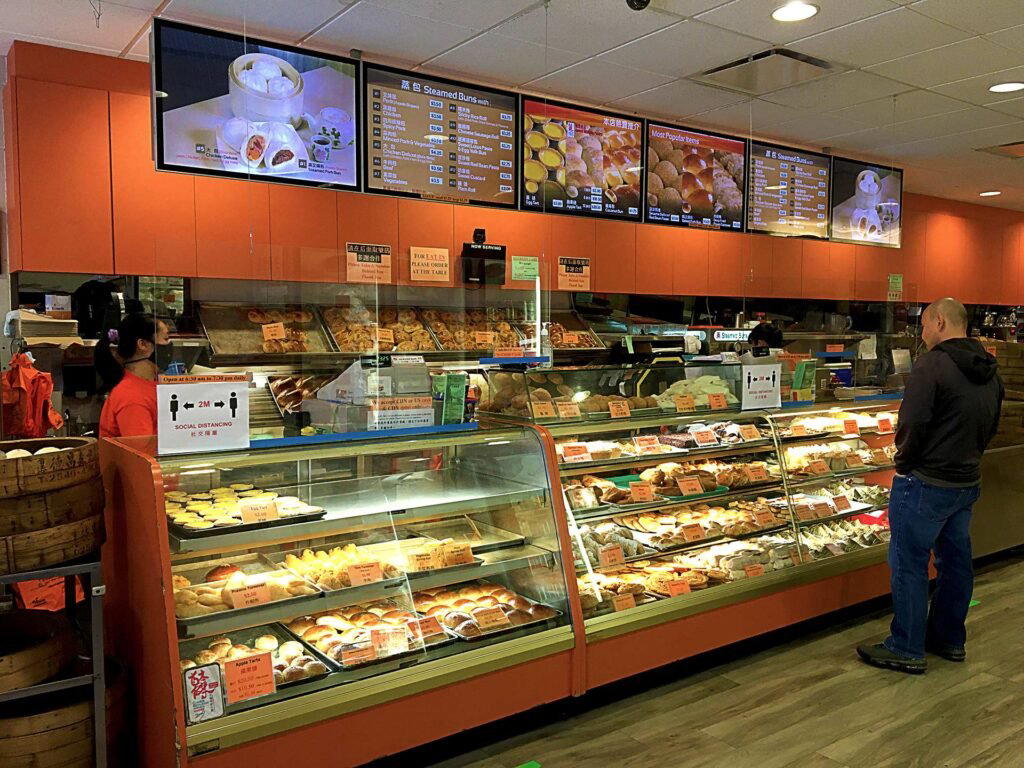
What Chinatown Regulars Know That Newcomers Don't
East Pender Street in Vancouver's Chinatown has always sorted itself into two categories: the places visitors photograph and the places neighbourhood residents actually eat. New Town Bakery & Restaurant is a Chinese & Filipino Bakery Cafe in Vancouver, BC, at 148 E Pender St, with. The room is spare, the signage is functional, and there is no detectable effort to court a demographic that arrived via Instagram. That absence of performance is precisely the point, and precisely why the same faces keep showing up.
Vancouver's Chinatown has contracted significantly since its mid-twentieth-century peak, but the blocks around East Pender and Gore still hold a working concentration of Cantonese-rooted food businesses that operate on repeat-customer logic rather than tourist throughput. New Town sits within that ecosystem, drawing from a clientele that has calibrated its expectations across years rather than reviews. In a city where the broader dining conversation increasingly gravitates toward the tasting-menu format at places like Kissa Tanto or the contemporary fine-dining register of AnnaLena, a counter-oriented bakery and restaurant operating on Chinatown norms occupies a different tier entirely, one where value is measured by familiarity and portion rather than by craft narrative.
The Room and the Rhythm
The physical environment at New Town is a stripped-back version of the classic Hong Kong-style cha chaan teng, the hybrid café-diner format that proliferated across Southeast Asia and later followed diaspora communities into North American Chinatowns. These spaces were never designed for lingering atmosphere, they were designed for fast rotation, reliable food, and a kind of low-key social contract between staff and regulars who know what they want before they sit down. Fluorescent lighting, laminate tables, and the sound of a busy pass are part of the format's identity, not a deficit.
That context matters when assessing what New Town is doing. Across Canada, bakery-restaurant hybrids with Cantonese roots occupy a specific niche between full-service dim sum houses and fast-order takeout windows. The baked goods draw separately from the restaurant trade, with customers stopping in for counter items without sitting down at all. This dual-traffic model is common in the format; the bakery portion often functions as the anchor that builds daily habit, while the restaurant section serves the longer midday meal.
What Keeps Regulars Returning
In Cantonese-rooted establishments of this type, the unwritten menu matters as much as the printed one. Regulars develop preferences for timing, knowing when the egg tarts come out freshest or which hours the kitchen is running at full pace. This accumulated local knowledge is what separates a neighbourhood institution from a destination restaurant. Destination restaurants ask you to submit to their schedule; neighbourhood institutions adapt, within limits, to yours.
The category of food that New Town represents has a deep history in Vancouver that predates the city's current reputation as a Pacific Rim dining hub. Waves of Cantonese immigration in the late nineteenth and twentieth centuries built the foundational infrastructure of the Chinatown food economy, and places like New Town are among the direct inheritors of that tradition. For regulars, eating there is simply where the food is consistent and the prices fit a neighbourhood budget.
By contrast, the higher-end Chinese dining that Vancouver now attracts critical attention for operates in a completely different register. New Town is the opposite of an event. It is the background infrastructure of daily eating, which is a more demanding test of consistency than any special occasion can apply.
Vancouver's Chinatown in Broader Context
The neighbourhood context is worth holding alongside the venue. Vancouver's Chinatown has faced sustained pressure from development, shifting demographics, and the gradual departure of longtime residents, trends that have reduced the density of food businesses that once made the area self-sustaining. What remains is a smaller, tighter core of operators whose longevity is itself a form of evidence. A business that has held its address on East Pender across decades has, by definition, maintained sufficient repeat trade to survive lease cycles, ownership transitions, and the considerable competition from Richmond, where much of Vancouver's Cantonese restaurant activity has migrated since the 1990s.
That migration is material context. Richmond's Aberdeen Centre corridor and its surrounding blocks now host a concentration of Cantonese, Shanghainese, and Hong Kong-style restaurants that rivals anything in the original Chinatown. Operators who have stayed in East Vancouver's Chinatown have made a different calculation, one that depends on neighbourhood loyalty, lower price points, and a customer base that has not followed the migration. New Town's continued presence on Pender places it within that cohort.
For travellers building a broader picture of Canadian dining, Vancouver's Chinatown operations represent a distinct strand of the country's food culture, different in character from the French-rooted tasting-menu tradition visible at places like Tanière³ in Quebec City or the hyper-local sourcing logic at Eigensinn Farm in Singhampton. Canada's dining identity is built from exactly this kind of plurality, immigrant-founded neighbourhood institutions operating on their own internal logic alongside the fine-dining tier.
Planning Your Visit
New Town Bakery and Restaurant is located at 148 E Pender Street in Vancouver's Chinatown. The format suits drop-in visits, and the rhythm of the room assumes a degree of self-direction from the diner. For baked goods specifically, earlier in the day generally means better selection. The price register is low, which aligns it with the neighbourhood-institution category. Dress code expectations are casual. Those looking for comparable casual quality in Victoria might reference Cafe Brio as a point of contrast in a different format.
A Pricing-First Comparison
Comparable venues nearby, for context on price, style, and recognition.
| Venue | Cuisine | Price | Notes |
|---|---|---|---|
| New Town Bakery & RestaurantThis venue — the venue you are viewing | Not listed | $ | Not listed |
| Legendary Noodle House | West End, Lanzhou Hand-Pulled Noodles | $$ | Not listed |
| Go Fish | Fairview, Fresh Local Seafood Shack | $ | Not listed |
| Bestie | Chinatown, German Currywurst | $ | Not listed |
| Mr. Shawarma Georgia location | Not listed | $ | Coal Harbor, Authentic Middle Eastern Shawarma |
| Sun Sui Wah | Riley Park, Cantonese Seafood & Dim Sum | $$ | Not listed |
Continue exploring
More in Vancouver
Restaurants in Vancouver
Browse all →
Bars in Vancouver
Browse all →

At a Glance
- Classic
- Cozy
- Casual Hangout
- Brunch
- Family
- Historic Building
Current opening hours
- Monday
- 6:30 AM–7:30 PM
- Tuesday
- 6:30 AM–7:30 PM
- Wednesday
- 6:30 AM–7:30 PM
- Thursday
- 6:30 AM–7:30 PM
- Friday
- 6:30 AM–7:30 PM
- Saturday
- 6:30 AM–7:30 PM
- Sunday
- 6:30 AM–7:30 PM
Hours can change for holidays and private events. Last verified .
Busy, loud atmosphere typical of a traditional Hong Kong-style cafe with a bustling bakery counter.