New Taj Mahal
Our verdict
On North High Street in Columbus's University District, New Taj Mahal sits within a stretch of restaurants that reflects the neighborhood's appetite for subcontinental cooking at an accessible price point. The address at 2361 N High St places it among a dense cluster of independent dining options that draw students, faculty, and longtime residents in roughly equal measure. For Columbus diners tracking Indian cuisine across the city, it serves as a neighborhood fixture rather than a destination import.

Pearl is the En Primeur Club membership app — saves, bookings, and concierge access live there. Same editors, same standards.
- Address
- 2361 N High St, Columbus, OH 43202
- Phone
- (614) 421-2323
- Hours
- Daily 10 AM–12 AM
- Website
- newtajmahalcolumbus.com
- Directions
- Get directions
- Booking
- Book on OpenTable
The menu
What to order
- Chicken tikka masala
- Paneer masala
North High Street and the Architecture of Everyday Indian Dining
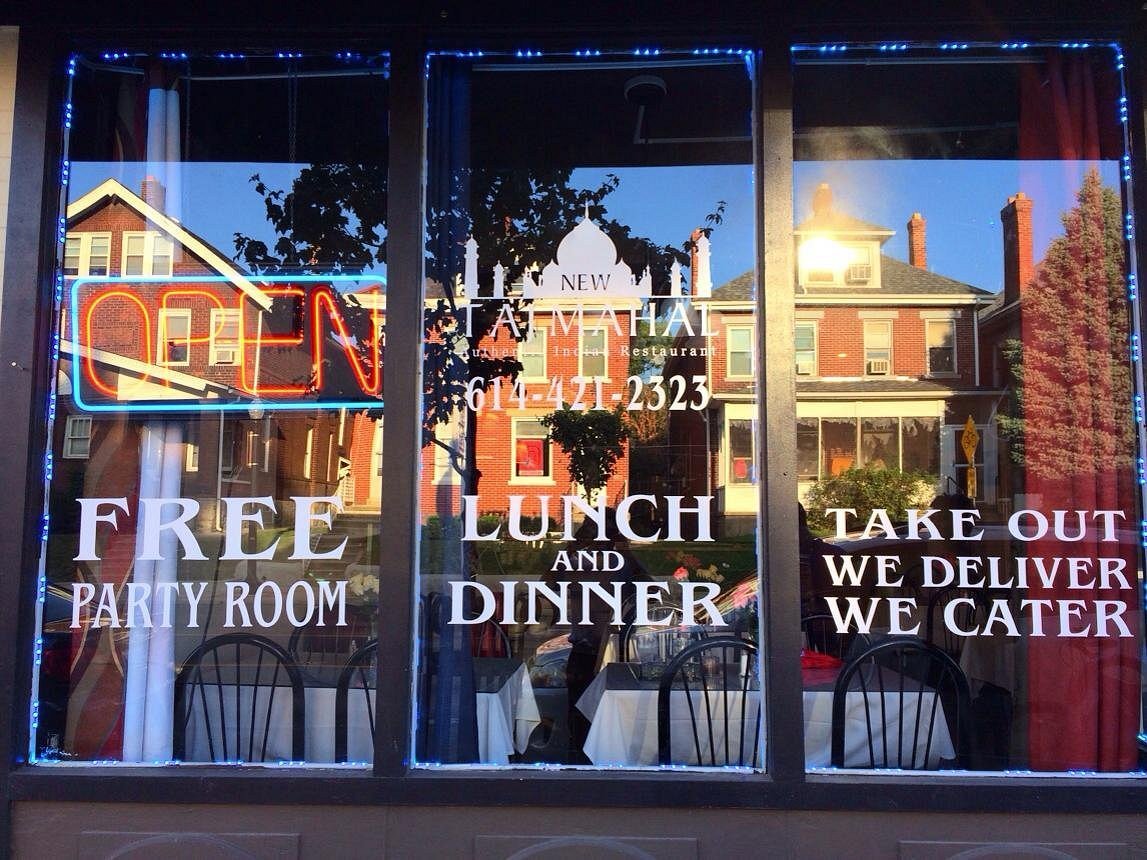
The University District corridor along North High Street operates on different rules than the polished dining rooms you find in Short North or Dublin. Here, the storefronts are narrower, the signage is functional rather than designed, and the restaurants that survive do so on repetition: regulars who return weekly, students who treat the block as a second pantry, and faculty who have memorized the lunch hours. New Taj Mahal at 2361 N High St sits inside that logic. The address places it in one of Columbus's most walkable dining corridors, where foot traffic rather than destination bookings tends to dictate a restaurant's rhythm.
That model, the neighborhood Indian restaurant anchored by proximity and consistency, is actually one of the more durable formats in American urban dining. Unlike the tasting-menu tier represented by venues such as Alinea in Chicago or Le Bernardin in New York City, where the experience is choreographed and the seat count is deliberately limited, the neighborhood subcontinental restaurant operates on volume and familiarity. The measure of quality here is not whether a dish surprises you on first encounter, but whether it holds up across the twentieth visit.
The Sensory Register of a Subcontinental Kitchen
Indian restaurant kitchens communicate before you read the menu. The smell of tempering spices, cumin and mustard seed hitting hot oil, reaches the entrance well ahead of any visual cue. It is one of the more immediate sensory signatures in any dining tradition, and it functions as a kind of implicit promise about what follows. Restaurants that get the tempering right, where the spices bloom without burning, tend to get the rest of the cooking right too. That aromatics-first experience is part of what makes subcontinental dining in a compact neighborhood room feel different from formats where the kitchen is sealed behind a wall of glass.
The broader Columbus Indian dining scene has developed enough depth over the past decade that diners can now meaningfully compare styles and regional approaches across the city. Venues like Agni represent one strand of that development, while the North High Street corridor represents another: higher accessibility, lower price friction, and a format built around daily use rather than occasion dining. Both have their place in a city that has become increasingly serious about its food options.
University District as a Dining Environment
The University District has historically functioned as Columbus's most diverse eating corridor by cuisine type, a product of the Ohio State University population and the international student and faculty communities that have shaped the neighborhood's commercial character over decades. Restaurants here tend to be casual in format, independently owned, and priced to match student budgets. That price dynamic creates a specific kind of cooking discipline: kitchens cannot afford waste, sourcing has to be tight, and the menu needs to convert foot traffic efficiently.
That operational reality has produced some of Columbus's most honest cooking. When a restaurant cannot rely on event-night markups or destination-dining premiums, it tends to cook to its own standards rather than to a performance. The neighborhood comparison set for New Taj Mahal includes other High Street independents, not the occasion-dining tier represented by Alqueria or the more design-forward rooms you find in Short North venues like ['plas] and 2110.
Where New Taj Mahal Sits in the Columbus Indian Dining Tier
Columbus's Indian restaurant options now span several distinct tiers. At the leading end, restaurants are beginning to engage with the kind of regional specificity and sourcing transparency that has defined the better subcontinental cooking in cities like New York and Chicago. In the middle tier, established family-run operations compete on a combination of recipe depth and service consistency. At the neighborhood level, proximity and price remain the primary variables.
New Taj Mahal occupies that third tier by address and format, which is not a diminishment but a description. The neighborhood Indian restaurant is the format through which most American diners first develop a working vocabulary for subcontinental cuisine: the difference between a tarka dal and a dal makhani, the heat gradient between vindaloo and korma, the way bread varies from kulcha to paratha. That educational function has real value in a city that is still building its fluency with the cuisine. Restaurants like this are where that fluency gets built, visit by visit.
For diners who have moved beyond the basics and want to benchmark the broader range of what serious Indian kitchens can do, the contrast with high-investment operations elsewhere is instructive. Venues such as Atomix in New York City, while not Indian in cuisine, represent the kind of conceptual ambition and tasting-format discipline that is increasingly influencing how American diners think about non-European fine dining. Similarly, the farm-anchored sourcing approach at Blue Hill at Stone Barns in Tarrytown or Single Thread Farm in Healdsburg has raised expectations for ingredient transparency at every price point. Those expectations are beginning to filter down to the neighborhood tier, too.
Getting There and Planning Your Visit
The address at 2361 N High St is walkable from the Ohio State University campus and accessible by the High Street bus corridor, which makes it a practical option for diners without cars. North High Street parking is available in the surrounding blocks but fills quickly during Ohio State events, so the on-foot or transit approach is generally the more reliable one. Given the informal format and neighborhood-restaurant model, the practical assumption is that walk-ins are the standard mode of entry rather than advance reservations, though the venue's specific booking policy is not formally documented. Diners planning a first visit during peak hours, Friday and Saturday evenings in particular, should account for the possibility of a short wait at the door.
For context on how this address compares to other Columbus dining options at different price points and ambition levels, the full Columbus restaurants guide covers venues from neighborhood staples to the more formal rooms at Agave & Rye Grandview and beyond. Those planning a broader Columbus dining itinerary may also want to cross-reference the destination-tier operations that set the national benchmark: The French Laundry in Napa, Providence in Los Angeles, Lazy Bear in San Francisco, Addison in San Diego, The Inn at Little Washington, and Emeril's in New Orleans offer useful contrast points for understanding how the industry has evolved across different cities and formats. And for international reference, 8 1/2 Otto e Mezzo Bombana (Hong Kong) illustrates how a European culinary tradition transplants to a major Asian dining city, a parallel worth considering when thinking about how subcontinental cuisine travels and adapts in American contexts.
Frequently asked questions
Where do I go for New Taj Mahal?
New Taj Mahal is located at 2361 N High St, Columbus, OH 43202, Columbus.
Is New Taj Mahal a good option for dining near Ohio State University's campus?
The address at 2361 N High St places New Taj Mahal directly on the High Street bus corridor and within walking distance of the Ohio State University campus, making it one of the more accessible Indian dining options in the University District. The North High Street corridor has historically been Columbus's most diverse eating corridor by cuisine type, a function of the OSU student population and the neighbourhood's decades-long role as a dining destination.
What dish is New Taj Mahal famous for?
What is consistent with Indian restaurants of this type in Columbus's University District is a menu anchored around subcontinental staples — curries, biryanis, and tandoor preparations. Checking the current menu directly at 2361 N High St is the most accurate way to confirm featured dishes.
Do they take walk-ins at New Taj Mahal?
University District corridors in Columbus generally operate on a walk-in basis for mid-range Indian restaurants, given the student-heavy foot traffic from Ohio State. Visiting during off-peak hours — before the lunch or dinner rush — is typically the practical approach in this stretch of North High Street.
Awards and Standing
Comparable venues nearby, for context on price, style, and recognition.
| Venue | Cuisine | Price | Awards | Notes |
|---|---|---|---|---|
| New Taj MahalThis venue — the venue you are viewing | Authentic Northern & Southern Indian | $20–30 | Not listed | Not listed |
| Bodega | American Gastropub | $20–30 | Not listed | Short North Arts District |
| Littleton's Market Restaurant & Cafe | American Gastropub with Seafood Focus | $20–30 | Not listed | Olentangy West |
| Law Bird | Creative Cocktail Bar | $20–30 | James Beard Award Semi Finalist | Brewery District |
| Molly Woo's | Pan-Asian Bistro | $30–50 | Not listed | Polaris Fashion Place |
| Service Bar at Middle West Spirits Distillery | Contemporary American with Asian Influences | $30–50 | Not listed | Short North |