Nai Ngieb

Michelin Bib Gourmand
Our verdict
A Michelin Bib Gourmand recipient for 2024 and 2025, Nai Ngieb in Salaya draws noodle soup devotees with handmade fish balls crafted from mackerel, yellowtail amberjack, and wolf herring — no MSG, all tradition. At single-baht pricing, it represents the clearest value argument in Nakhon Pathom's casual dining scene. The tom yum broth and fish noodle options give the menu real range beyond a single signature.

Pearl is the En Primeur Club membership app — saves, bookings, and concierge access live there. Same editors, same standards.
- Address
- 125 21 Salaya, Phutthamonthon District, Nakhon Pathom 73170, Thailand
- Phone
- +66 93 346 6888
- Hours
- Daily 7 AM–5:30 PM
- Website
- naingieb.com
- Directions
- Get directions
Where the Broth Does the Talking
In the low-rise commercial stretches of Salaya, where Phutthamonthon District bleeds into everyday provincial life, the queue forms before the tables fill. This is the visual grammar of serious Thai noodle shops: no reservations, no printed menus pushed under your nose by a host, just the smell of simmering stock and the sound of metal ladles against deep pots. Nai Ngieb occupies that familiar register — a shophouse-format eatery at the single-baht price tier — and has done so with enough consistency to earn back-to-back Michelin Bib Gourmand recognition in 2024 and 2025.
The Bib Gourmand designation matters here precisely because of what it signals at this price point. Michelin's inspectors award it to places delivering notably good food for the money, and at the ฿ tier, where a full bowl lands well under the cost of a coffee at a Bangkok hotel lobby, the bar for that designation is set against a very competitive field of street-level Thai cooking. Holding it two years running in a province not dominated by Michelin coverage places Nai Ngieb in a small, distinct category.
The Fish Ball Tradition Behind the Bowl
Handmade fish balls are one of the more technically demanding elements of Thai noodle culture to get right at volume. The standard shortcut, commercial fish paste with extenders and MSG, produces a product that is soft, uniform, and largely forgettable. The traditional method, working from whole fish and controlling texture through hand-pounding or grinding, produces a ball with a characteristic bounce and a flavour that carries the fish rather than masking it.
At Nai Ngieb, the fish balls are made from three fish: mackerel, yellowtail amberjack, and wolf herring. Each brings a different fat content and texture profile to the blend, which is why the resulting balls have the tight, elastic quality, the bounce the Michelin entry specifically references, that separates house-made from factory-made. The absence of MSG is noted in the award citation, which at this price tier is a meaningful choice: it shifts flavour responsibility entirely to the stock and the ingredient quality. Across Thailand's noodle canon, from the boat noodle stalls of Ayutthaya to the kuay tiew reua vendors of Bangkok's canals, this kind of ingredient-forward discipline at low price points is what sustains a shop's reputation decade after decade. For broader context on how that tradition plays out across regional Thai noodle culture, the work being done at places like A Bing Bao Shan Mian in Hangzhou and A Kun Mian in Taichung shows how seriously the wider Asian noodle category takes process at the affordable end.
The Menu Logic: Range Within a Tight Format
The menu at Nai Ngieb holds to the disciplined economy of a specialist noodle shop. Two items from the award citation are worth parsing for what they tell you about the kitchen's range. The tom yum soup, aromatic, sour, and herbaceous, occupies a different flavour register than a clear broth, which means the fish balls can be tested against two distinct liquid environments rather than one. Choosing between them is a reasonable way to assess how well the fish ball itself, rather than the soup, is carrying the experience.
The fish noodle option, noted specifically for its compatibility with low-carb preferences, is structurally interesting: it suggests the kitchen either omits standard glass or rice noodles on request or uses a fish-based noodle that doubles as protein. Either way, it extends the menu's reach beyond a conventional noodle bowl without requiring the kitchen to operate a broader format. For a ฿-tier shop in Salaya, that is a practical range that serves a wider cross-section of regulars.
Nakhon Pathom's Value Dining Context
Nakhon Pathom's dining scene does not attract the same editorial density as Chiang Mai or Bangkok, which means its best-value kitchens often operate without the amplification those cities generate. The province has produced Michelin-recognised cooking at accessible prices, Nai Ngieb being the clearest current example, alongside a wider set of affordable Thai operators including Banrimbung and Krua Jay Sim at the ฿฿ tier, and Nai Ho Chicken Rice operating in the same single-baht bracket as Nai Ngieb. The noodle category specifically has a local peer in Plaew, which allows visitors to run a direct comparison within the province.
For those approaching from Bangkok, Nakhon Pathom sits roughly 56 kilometres west of the capital and is accessible by rail and road, making Salaya a feasible day-trip destination rather than an overnight commitment. The address at 125/21 Salaya, Phutthamonthon District, places the shop within the Salaya township that anchors this part of the province. Given the price tier and shophouse format, the practical advice is to arrive with cash and arrive without tight time constraints: popular noodle shops of this type do not rush service, and the experience is calibrated to lingering over a bowl rather than turning tables quickly.
Elsewhere in Thailand's Michelin-recognised casual register, the contrast is instructive. Sorn in Bangkok operates at the starred end of the Southern Thai spectrum; AKKEE in Pak Kret and PRU in Phuket represent different premium positions. Nai Ngieb's value argument is not about competing with those tiers, it is about demonstrating that the Bib Gourmand category carries genuine weight at the lower end of the price scale, where the margin for error is narrower and the discipline required is arguably greater. Across the broader region, Aeeen in Chiang Mai and Agave in Ubon Ratchathani show how regional Thai cities outside the capital sustain serious food culture at provincial scale; The Spa in Lamai Beach rounds out the picture of how dining quality distributes across Thai geographies.
For a fuller picture of where Nai Ngieb sits within the province's eating options, see our full Nakhon Pathom restaurants guide, or explore the wider city through hotels, bars, wineries, and experiences in Nakhon Pathom. The Loong Loy Pa Lan entry also warrants attention for anyone building a longer eating itinerary in the area.
Planning Your Visit
Nai Ngieb operates at the ฿ price tier, meaning a bowl with fish balls should register well below 100 baht. No booking infrastructure applies at this format, arrival, queue, and table are the process. The shop is located at 125/21 Salaya, Phutthamonthon District, Nakhon Pathom 73170. Hours and contact details are not published centrally; the standard approach for shophouse noodle shops in this tier is a morning-to-early-afternoon window, with popular items selling out before closing. Arriving early reduces the risk of a shorter menu. Cash is the working assumption.
Frequently asked questions
Is Nai Ngieb okay with children?
Yes — at ฿ pricing in a casual shophouse format, Nai Ngieb fits comfortably into a family outing. The noodle-shop setting in Salaya draws a neighbourhood crowd, and the menu of fish ball soups and noodles is accessible for all ages. No booking is required, so turning up with children presents no logistical hurdle.
Is Nai Ngieb better for a quiet night or a lively one?
Neither, precisely — Nai Ngieb is a daytime noodle shop operating at ฿ pricing in a low-key commercial strip in Salaya, not an evening venue. The shophouse format is built for quick, focused bowls rather than lingering. Come for a morning or midday meal and set your expectations accordingly.
What distinctions does Nai Ngieb have?
Nai Ngieb has received recognition including: One of the best eateries in the area for noodle soup lovers, where the bouncy, MSG-free fish balls are made the traditional way from mackerel, yellowtail amberjack and wolf herring. The tom yum soup stands out; and the fish noodles are perf….
What's the best thing to order at Nai Ngieb?
The Michelin Bib Gourmand citation (2024 and 2025) singles out the tom yum soup as the standout bowl, alongside the handmade fish balls made from mackerel, yellowtail amberjack, and wolf herring. Diners avoiding carbohydrates should note that the fish noodles are cited as compatible with any soup base — a practical option within the shop's tight, specialist menu.
Credentials Lens
| Venue | Cuisine | Price | Awards | Notes |
|---|---|---|---|---|
| Nai NgiebThis venue — the venue you are viewing | Thai Fish Ball Noodle Soup | $1–10 | Michelin Bib Gourmand | Not listed |
| Krua Jay Sim | Regional Thai | $10–20 | Michelin Bib Gourmand | Thai, ฿฿ |
| Nai Ho Chicken Rice | Thai Chicken Rice | $1–10 | Michelin Plate | Small eats, ฿ |
| Plaew | Modern Thai Tasting Menu | Not listed | Michelin Bib Gourmand | Noodles, ฿ |
| Somchai Go Tae (Bang Len) | Thai-Chinese Five-Spice Duck | $1–10 | Michelin Plate | Thai-Chinese, ฿฿ |
| Banrimbung | Family-Style Thai Seafood | $10–20 | Michelin Plate | Thai, ฿฿ |
Recognition history
Dated appearances from independent guides and award organizations, with the underlying list record or original source where available.
Michelin Bib Gourmand
Michelin
Full recognition history (3 entries)
Michelin Bib Gourmand
Michelin
Michelin Bib Gourmand
Michelin
Continue exploring
More in Nakhon Pathom
Restaurants in Nakhon Pathom
Browse all →
Bars in Nakhon Pathom
Browse all →
Details
- Cozy
- Rustic
- Casual Hangout
- Open Kitchen
- Local Sourcing
- A La Carte
Current opening hours
- Monday
- 7 AM–5:30 PM
- Tuesday
- 7 AM–5:30 PM
- Wednesday
- 7 AM–5:30 PM
- Thursday
- 7 AM–5:30 PM
- Friday
- 7 AM–5:30 PM
- Saturday
- 7 AM–5:30 PM
- Sunday
- 7 AM–5:30 PM
Hours can change for holidays and private events. Last verified .
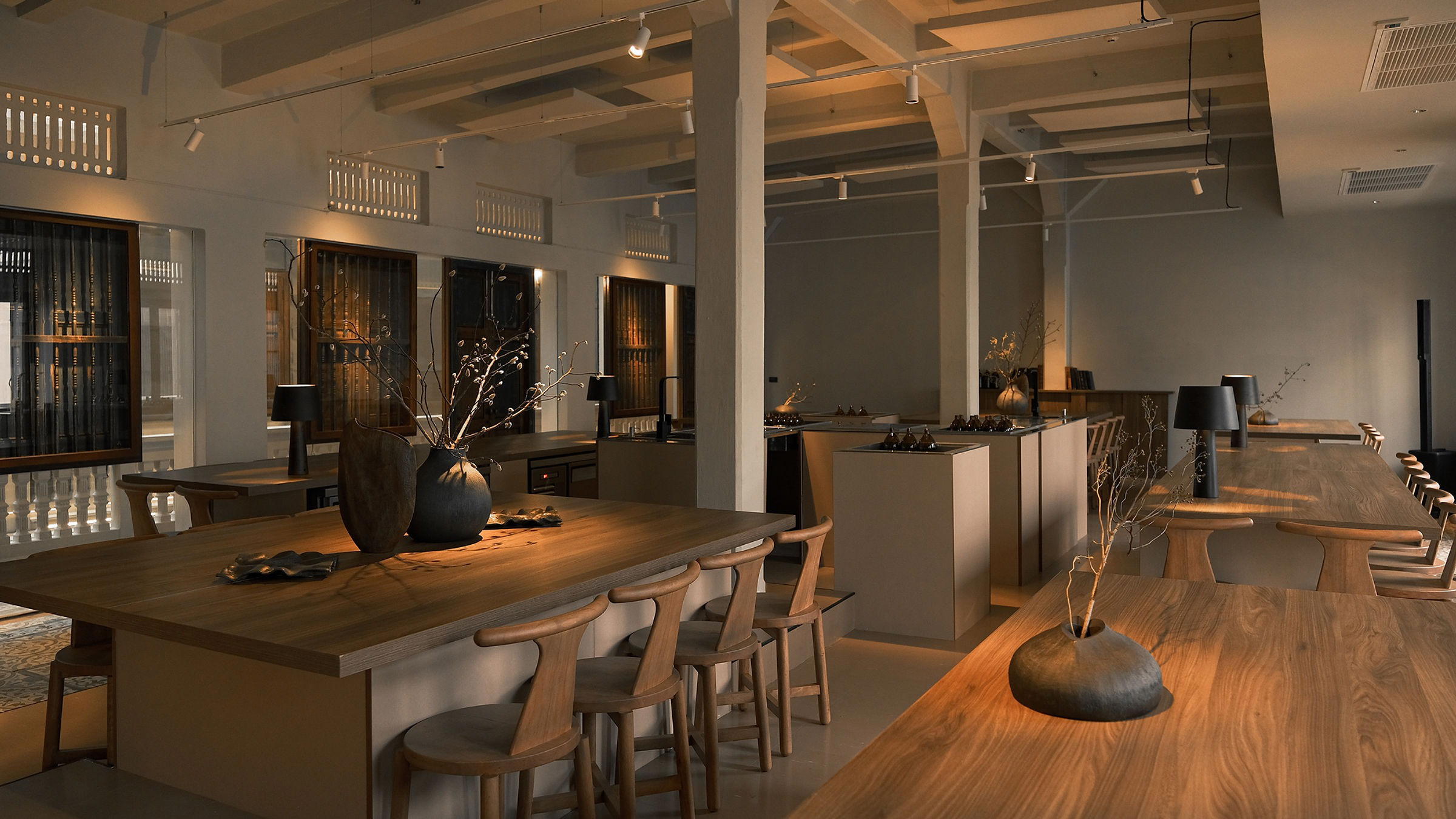
Practical and refreshed indoor air-conditioned dining area with clean lines, tiled floors, functional warm lighting, and casual outdoor street-eating section.