NADU Regional Indian




Michelin Bib Gourmand · James Beard Award Semi Finalist · Eater Best New Restaurants
Our verdict
NADU Regional Indian in Chicago presents contemporary Regional Indian cuisine, guided by Michelin Star Chef Sujan Sarkar. Must-try plates include Hyderabadi Biryani, a fiery Kerala curry, and the Tutti Frutti Cassata dessert. The restaurant emphasizes sharing plates and a $55 four-course tasting menu that traverses coastal south and bold northern flavors. Recognized by the MICHELIN Guide for "Good cooking" in 2025, NADU pairs authentic techniques with locally sourced ingredients and a warm, inviting atmosphere. Expect bright spices, layered aromatics, and textural contrasts that make each course vivid and memorable.

Pearl is the En Primeur Club membership app — saves, bookings, and concierge access live there. Same editors, same standards.
The menu
What to order
- Kerala beef roast
- Pork ribs
- Crab milagu fry
- Dosa
Regional Indian Cooking in Lincoln Park
Lincoln Avenue in Lincoln Park has long been one of Chicago's more eclectic dining corridors, where neighborhood bistros share blocks with ambitious destination restaurants. The arrival of NADU Regional Indian at 2518 N Lincoln Ave adds a different register to that mix: a contemporary Indian restaurant that takes regional specificity seriously, at a moment when the broader American dining scene is finally moving past the generic curry-house format that dominated for decades.
Indian cuisine is, of course, not one cuisine at all. It is a collection of dozens of distinct regional traditions, each shaped by coastline, climate, religion, and trade history. The coastal south built its flavor language around coconut, tamarind, curry leaf, and dried chili. The north developed richer, dairy-forward preparations. These are not variations on a theme; they are separate vocabularies. What NADU attempts, and what Resy recognized when it placed the restaurant on its 2025 Best of the Hit List, is to hold several of those vocabularies in the same dining room and let them coexist without flattening them into a single generic register.
The Sarkar Factor in Chicago's Indian Dining Scene
Context matters here. NADU comes from Chef Sujan Sarkar, who holds a Michelin star through his restaurant Indienne, also in Chicago. That credential places NADU inside a specific competitive tier: this is not a neighborhood convenience spot, but a restaurant with the kind of backing, sourcing discipline, and kitchen organization that follows from a Michelin-recognized operation. Chicago's broader fine-dining scene, represented by restaurants like Alinea, Smyth, Oriole, and Next Restaurant, operates with a high baseline expectation for technique and sourcing. NADU enters that ecosystem carrying Sarkar's established credibility.
The distinction between NADU and Indienne is one of register rather than quality. Where Indienne operates in a more formal fine-dining mode, NADU is organized around the shared-table format that suits regional Indian cooking far more naturally. The food is designed for the table, not for the individual plate, which is both more culturally authentic and more socially engaging as a dining structure. Kasama, Chicago's Filipino tasting counter, represents a parallel move in Asian cuisine: a chef using Michelin-level technique to frame a regional tradition that deserves that kind of attention.
The Menu and Its Cultural Architecture
The menu at NADU is structured to move between the coastal south and the bolder north, giving the kitchen range without sacrificing coherence. Among the non-vegetarian preparations, the meen gassi is a useful index dish: walleye cooked in a coconut and tamarind curry with dried chilies, turmeric, and curry leaves. That combination, coconut oil as the fat base, tamarind for acid, curry leaf for the aromatic signature, is Mangalorean in its roots, a tradition from the Karnataka coast where fish and shellfish curries carry that distinctive sour-spiced depth. Using walleye, a Midwestern freshwater fish, rather than the sea fish that would appear in coastal Karnataka, is a deliberate adaptation to local sourcing without abandoning the flavor logic of the original.
On the vegetarian side, the vegetable moilee represents a different regional tradition: a lighter, more fragrant coconut curry from the Kerala coast, where the objective is a delicate sauce rather than the denser, spiced preparations associated with the north. Served alongside ghee bhat or naan, it operates as the kind of dish that rewards eating with bread rather than cutlery. The ghee bhat, rice cooked with clarified butter, is itself a South Indian staple that anchors the meal in a specific culinary geography. The apricot dessert, though less region-specific in concept, completes the sharing format in a way that allows the table to land softly after a meal structured around bold spiced sauces.
Atmosphere and Format
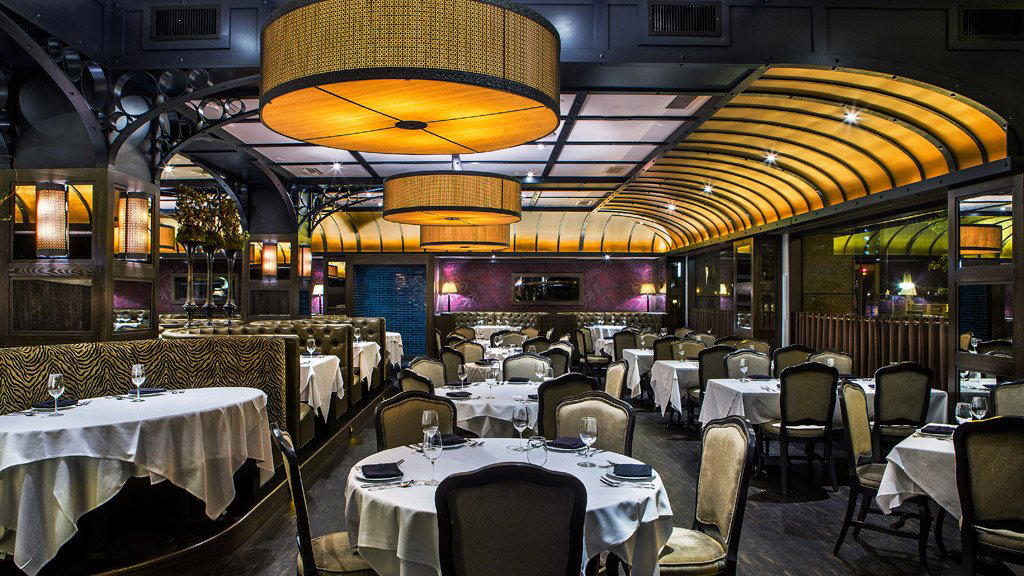
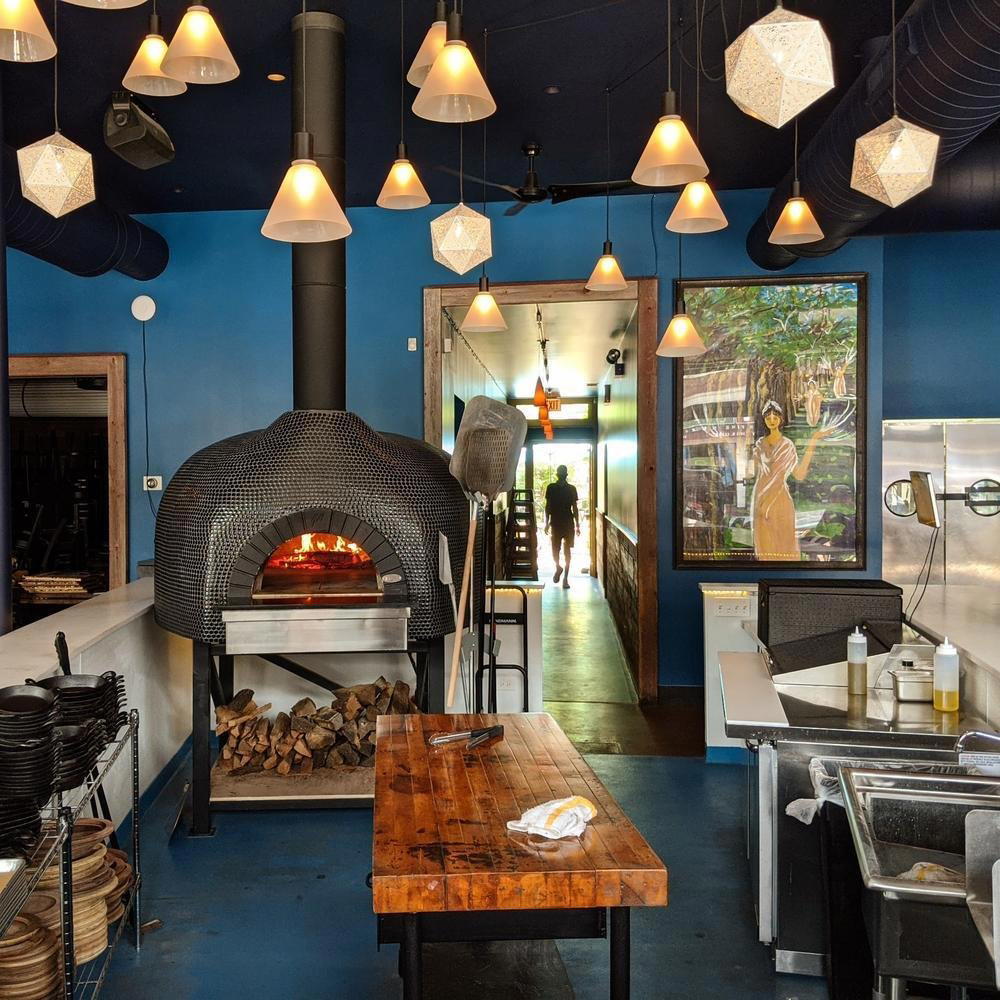
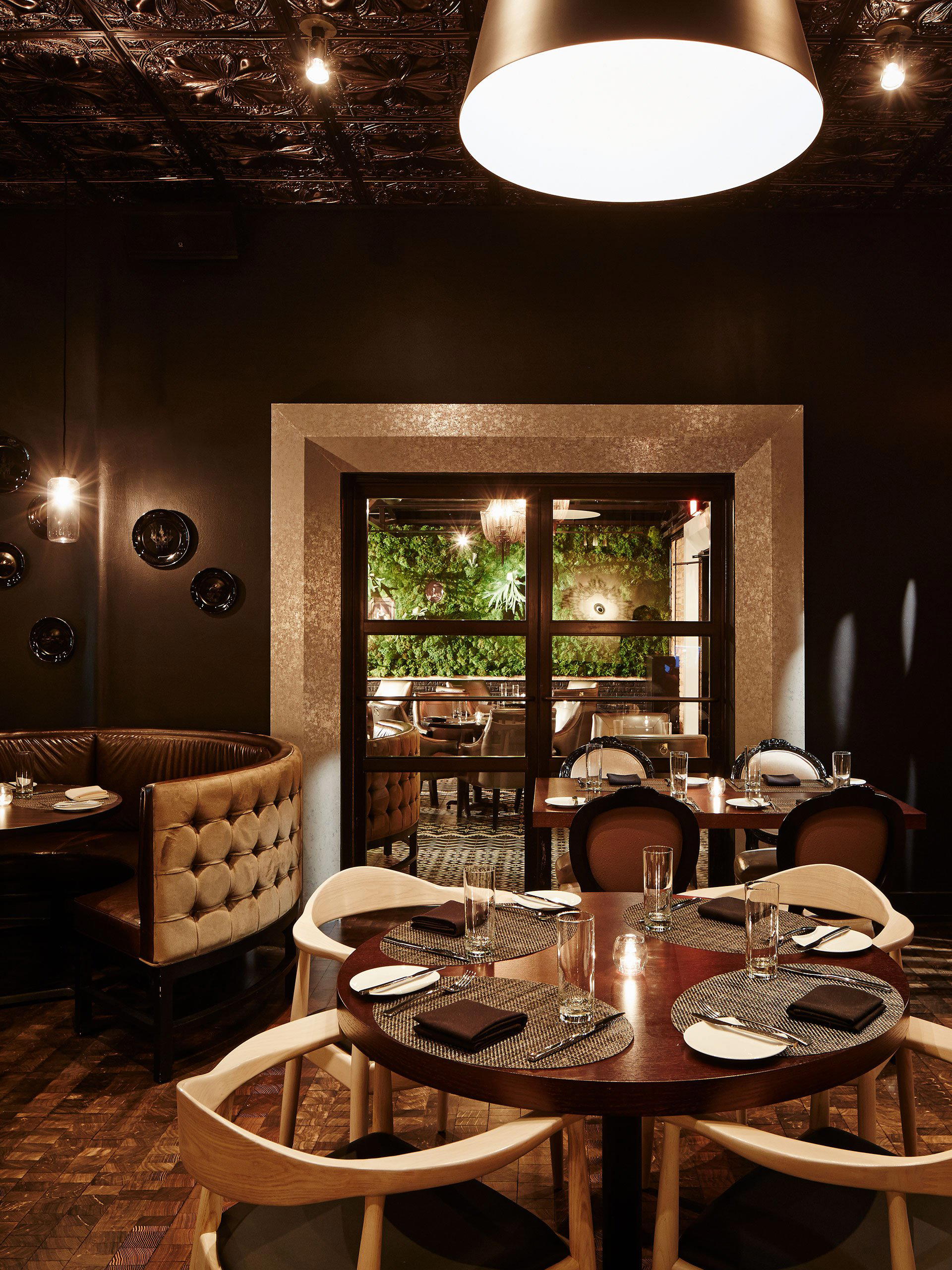
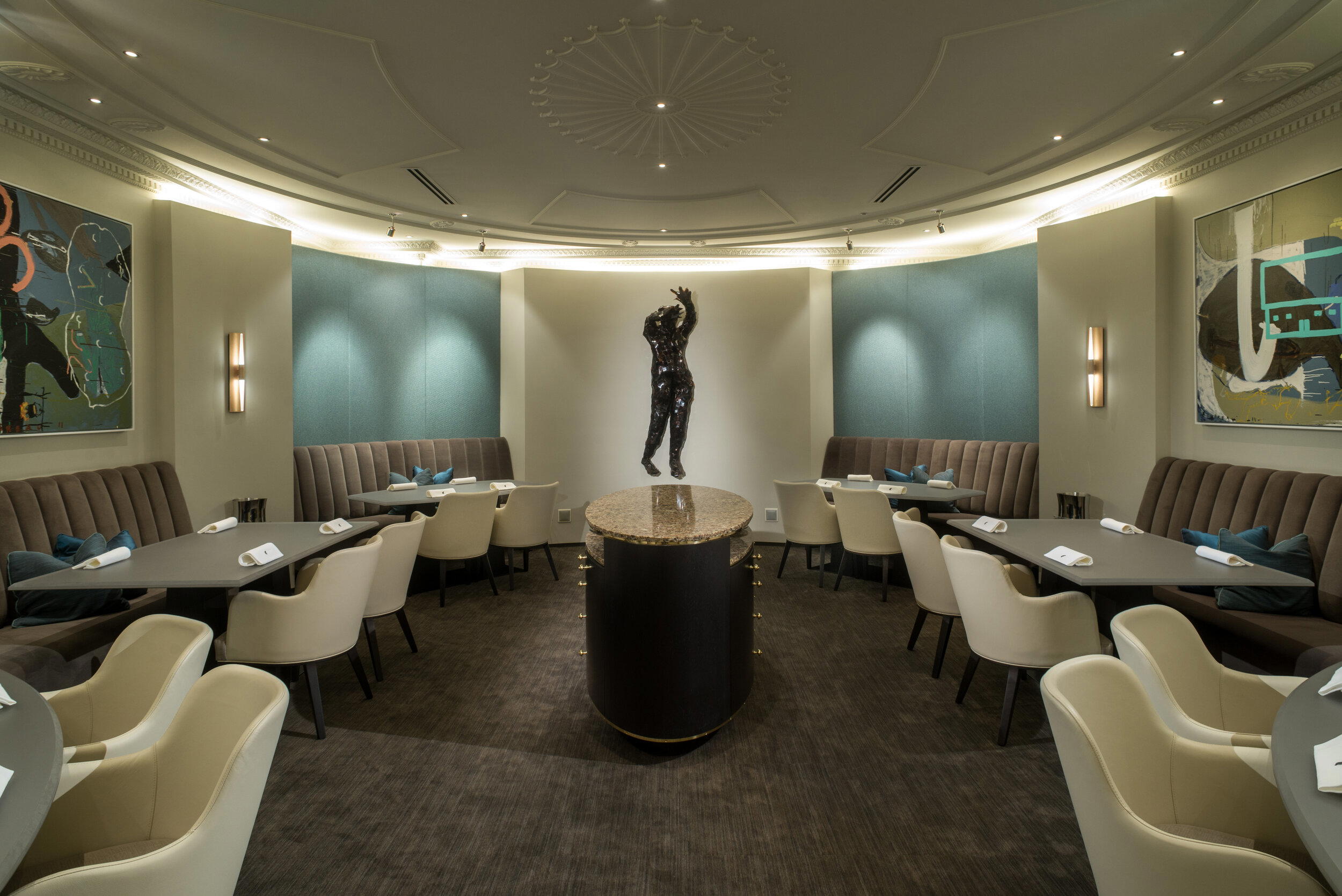
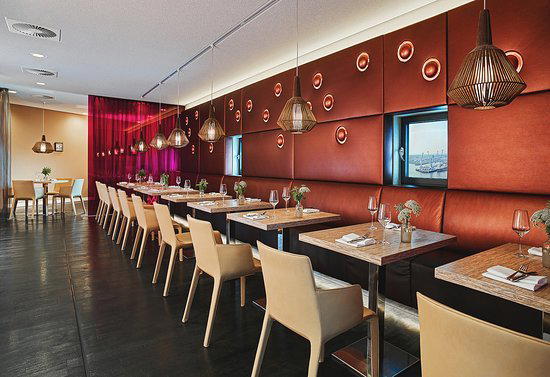
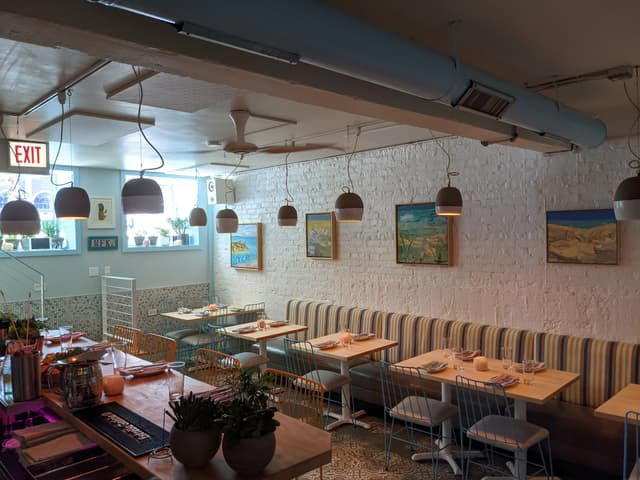
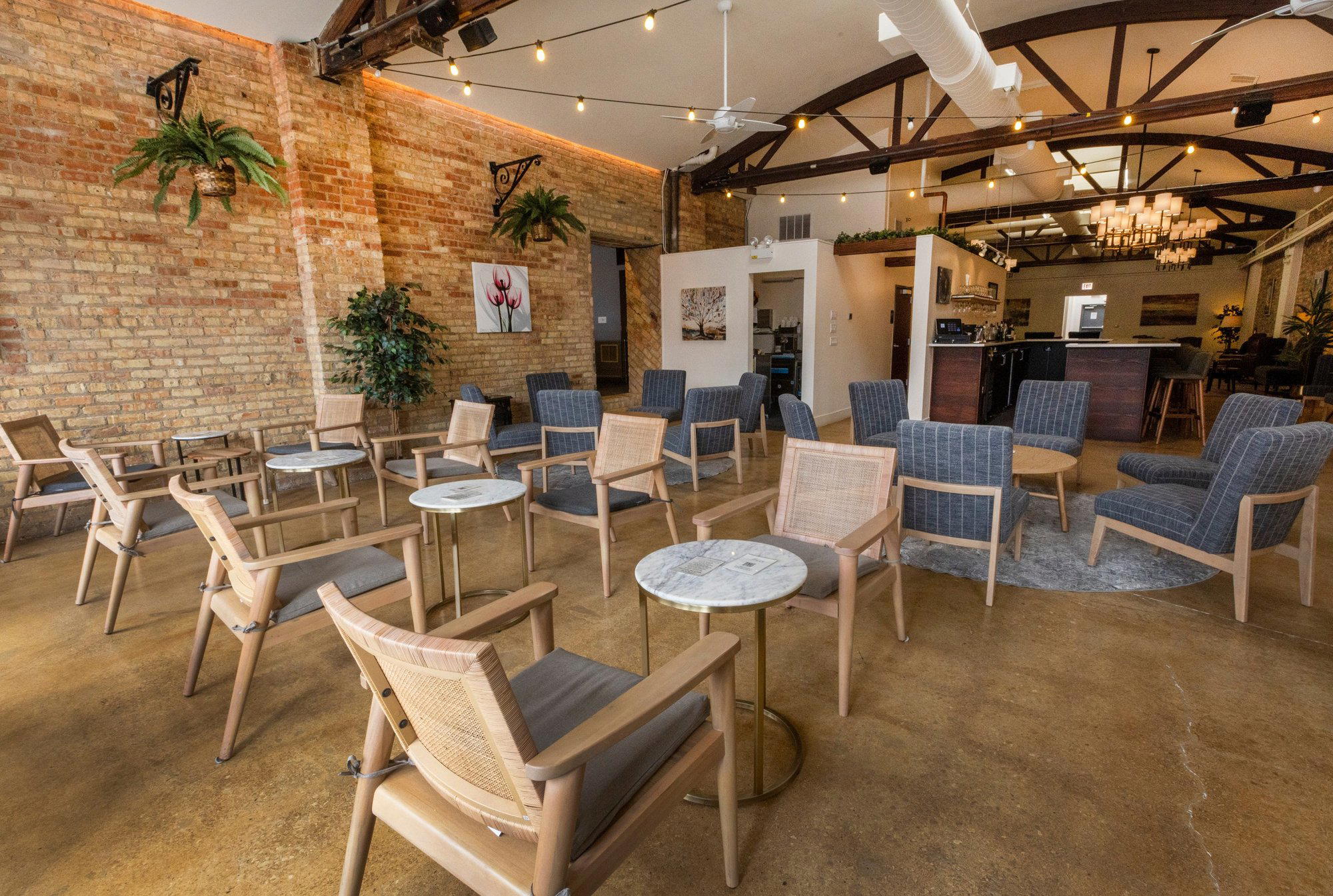
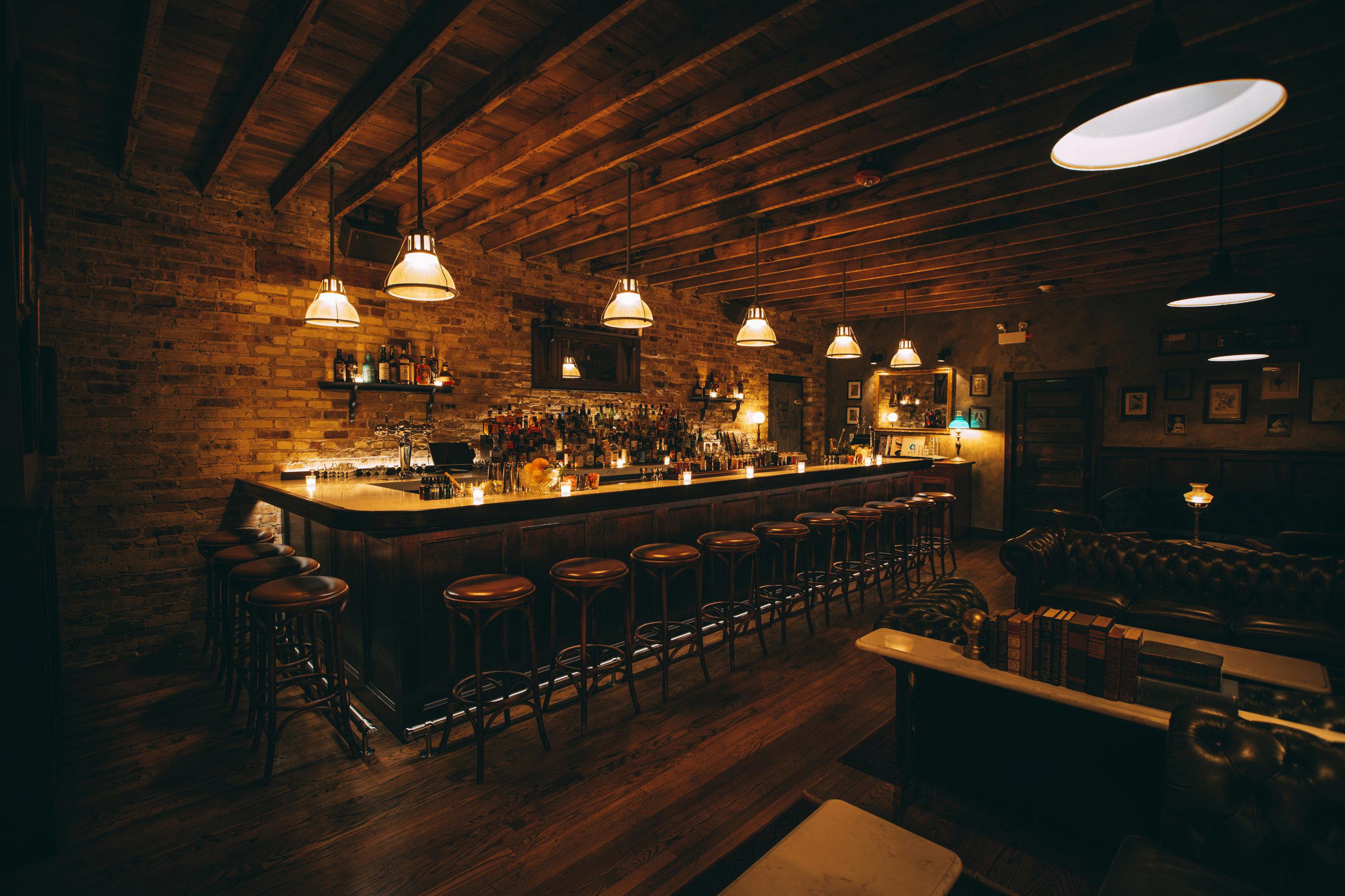
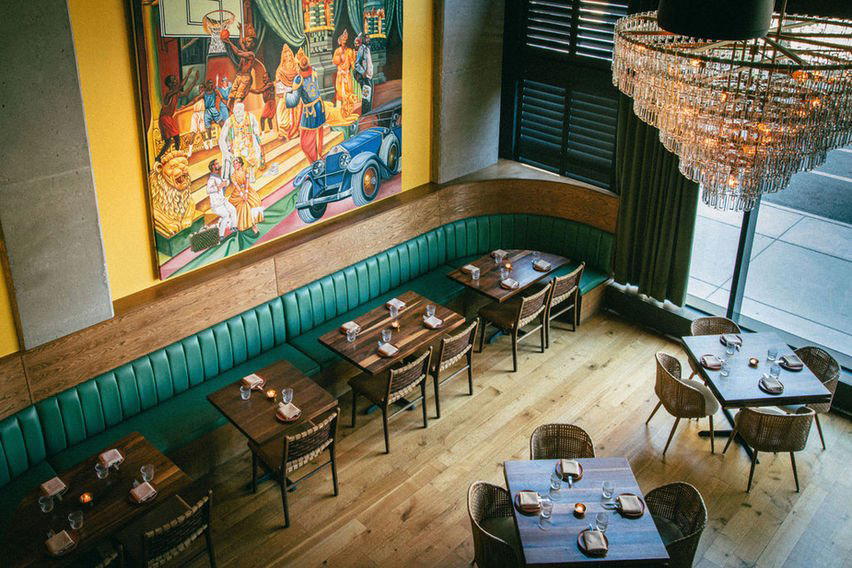
The room at NADU is set up for the kind of communal eating the menu demands. The sharing format encourages ordering across multiple dishes simultaneously, which means the pace of a meal here is driven by the table's rhythm rather than a fixed progression. The full-service bar is available to walk-ins, which gives the restaurant a flexibility that the reservation-recommended policy might otherwise obscure: it is not a closed-door operation, but one that accommodates spontaneous visits without requiring the advance planning of Chicago's tighter-format tasting menus.
That accessibility is a meaningful distinction. Restaurants like Alinea or Oriole operate on prepaid ticketing systems with booking windows that extend weeks or months ahead. NADU's format sits closer to what Kasama does with its daytime bakery and evening tasting counter: a layered access model where the full experience rewards planning, but the restaurant does not close itself off entirely to those who arrive without a reservation.
Where NADU Sits in a Wider Dining Conversation
The broader movement toward taking regional Asian cuisines seriously at the fine-dining level is well underway in American cities. In New York, Atomix has done for Korean cuisine what Sarkar is attempting with Indian: frame a deep, specific regional tradition inside a dining format that commands serious critical attention. In Los Angeles, Providence has long demonstrated how American fine dining can build on non-European culinary traditions. The questions being asked by NADU are the same questions being asked across the country: how do you honor the specificity of a cuisine that is actually dozens of cuisines, without reducing it to an accessible lowest common denominator?
The Resy 2025 Hit List recognition suggests the answer at NADU is credible, at least to the kind of audience that tracks that publication. It is not a Michelin distinction, but it signals that the restaurant is registering in the right critical circles and drawing the attention of informed diners across Chicago's competitive restaurant market.
Planning Your Visit
| Venue | Cuisine | Price Tier | Booking | Format |
|---|---|---|---|---|
| NADU Regional Indian | Regional Indian | Not confirmed | Reservations suggested; walk-ins at bar | Sharing plates |
| Kasama | Filipino | $$$$ | Advance booking required for tasting | Tasting counter (PM) / Bakery (AM) |
| Next Restaurant | American | $$$$ | Ticketed prepay | Set menu |
| Smyth | Progressive American | $$$$ | Advance booking required | Tasting menu |
NADU is located at 2518 N Lincoln Ave in Lincoln Park. Reservations are recommended and can be made via Resy. The bar accepts walk-ins without a reservation.
For more on dining across the city, see our full Chicago restaurants guide. If you are building a broader trip, our Chicago hotels guide, bars guide, wineries guide, and experiences guide cover the rest. For reference points on how other cities handle ambitious regional cuisine at this level, Le Bernardin in New York, Lazy Bear in San Francisco, The French Laundry in Napa, Single Thread Farm in Healdsburg, Emeril's in New Orleans, and 8 1/2 Otto e Mezzo Bombana in Hong Kong each illustrate a different model for building a serious restaurant around a specific culinary tradition.
Frequently asked questions
Is NADU Regional Indian child-friendly?
The sharing-plate format at NADU works well for families comfortable with communal eating, and the menu spans mild options like vegetable moilee alongside spicier preparations such as meen gassi in coconut-tamarind curry. The atmosphere at this Lincoln Park spot runs warm and upbeat rather than formal, which keeps the room accessible.
What kind of setting is NADU Regional Indian?
NADU occupies a spot on 2518 N Lincoln Ave in Chicago's Lincoln Park neighborhood, set up specifically for communal, sharing-style dining. The room is designed to encourage ordering broadly across the menu, and the mood skews convivial rather than hushed. A full-service bar runs walk-in throughout service, making it functional as both a sit-down dinner and a drop-in drinks stop.
What's NADU Regional Indian known for in terms of accolades?
NADU Regional Indian has received recognition including: Nadu is the newest spot from Chef Sujan Sarkar, the same chef behind lauded Indienne, with a focus on contemporary, regional Indian cuisine. Expect a warm welcome, and with dishes designed for sharing, the mood is always upbeat. Order with ….
What dish is NADU Regional Indian famous for?
Meen gassi draws consistent attention: walleye in a coconut and tamarind curry built with dried chilies, turmeric, and curry leaves, reflecting the coastal south Indian cooking that anchors one side of the menu. Chef Sujan Sarkar, who holds a Michelin star through his Chicago restaurant Indienne, uses NADU to range from those southern coastal preparations through to the bolder flavors of northern India. The apricot dessert has also been singled out in Resy's 2025 Hit List recognition of the restaurant.
Cost and Credentials
| Venue | Cuisine | Price | Awards | Notes |
|---|---|---|---|---|
| NADU Regional IndianThis venue — the venue you are viewing | Regional Indian | $50–100 | Michelin Bib Gourmand · James Beard Award Semi Finalist | Not listed |
| Alinea | Avant-Garde Molecular Gastronomy | $300–500 | 2 Michelin Stars · World's 50 Best #37 | Progressive American, Creative |
| Smyth | Modern American Tasting Menu | $200–300 | 3 Michelin Stars · World's 50 Best #1 | Progressive American, Contemporary |
| Kasama | Modern Filipino | $30–50 | 2 Michelin Stars · World's 50 Best #31 | Filipino |
| Next Restaurant | Avant-Garde Themed Tasting Menus | Not listed | 1 Michelin Star · We're Smart World 2 Radishes | American Cuisine |
| Boka | Modern American Seasonal Fine Dining | $150–200 | 1 Michelin Star · La Liste Top Restaurants | New American, Contemporary |
Recognition history
Dated appearances from independent guides and award organizations, with the underlying list record or original source where available.
Michelin Bib Gourmand
Michelin
James Beard Award Semi Finalist
James Beard Award
Eater Best New Restaurants
Eater
Resy Best of the Hit List
Resy