Myazū
.png)
Myazū brings a structured modern Japanese format to Al Rawdah, with a menu organised across tempura, robata, and sushi stations. The spacious room on Prince Mohammed Bin Abdulaziz Road accommodates counter seating, main hall tables, and a patio. It sits within Jeddah's growing appetite for Japanese cuisine that ranges from quick-format ramen spots to multi-section dining rooms like this one.
 Discover on Pearl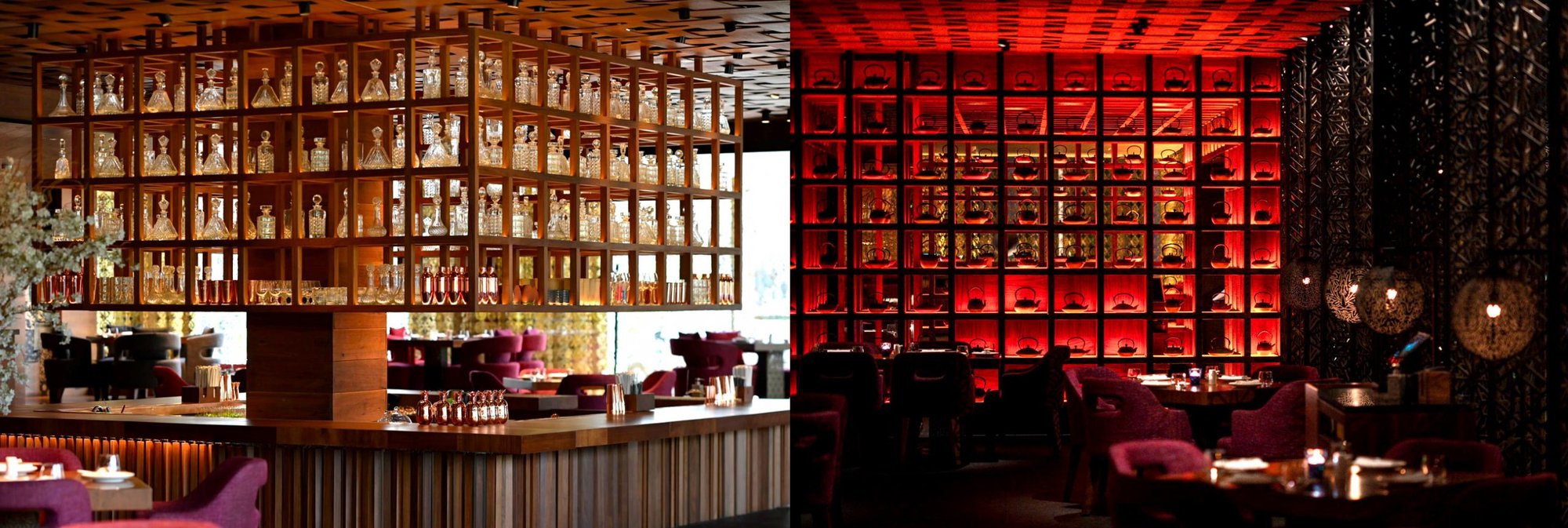
A Japanese Menu Built Around Stations, Not a Single Signature
The shift in how Jeddah receives Japanese cuisine has been gradual but clear. Where the city once relied on pan-Asian menus that touched on sushi as one element among many, a newer set of restaurants has committed to format discipline: distinct sections, dedicated preparation methods, and staff trained to a single technique. Myazū, located inside Al Basateen Mall on Prince Mohammed Bin Abdulaziz Road in Al Rawdah, sits within this second wave. The room is spacious, the menu is sectioned by cooking method, and the seating arrangements are designed to make the kitchen part of the experience rather than something that happens behind closed doors.
That last point is worth registering before anything else. Counter seating here faces the sushi preparation area directly, which means the experience of watching nigiri assembled is built into the room's logic, not offered as a novelty. Jeddah's Japanese dining options that allow this kind of proximity are fewer than in cities with longer sushi traditions — it is a format more common at high-end omakase counters in Tokyo's Ginza district or at focused sushi-only rooms in cities like Hong Kong, where venues like 8½ Otto e Mezzo Bombana and their peers have raised the baseline expectation for kitchen transparency. At Myazū, the format is more accessible and less ceremony-heavy, but the counter option still delivers something the main hall tables do not: a front-row read on prep discipline and knife work.
The shortlist, unlocked.
Hard-to-book tables, cellar releases, and concierge-planned trips.
Get Exclusive Access →How the Menu Is Organised
Menu architecture in Japanese restaurants is one of the clearest signals of a kitchen's priorities. A venue that leads with a sashimi platter and ends with a wagyu beef bowl is making a different argument than one that separates its menu into distinct cooking disciplines and holds each section to a different technical standard. Myazū takes the latter approach. The menu is divided across a tempura section, a robata section, and a sushi section, each with its own logic.
The tempura section moves beyond the standard prawn-and-vegetable lineup — popcorn shrimp represents a more playful, approachable register that sits closer to what Japanese-American menus have developed than to the refined, lightly-battered style of Tokyo's specialist tempura houses. This is a useful signal about the room's register overall: it is not attempting to replicate traditional Japanese kaiseki rigour, but rather to run a modern Japanese format that accommodates both purists and guests less familiar with the cuisine's structural rules.
The robata section presents wagyu beef kushi grilled skewers. Robata , the charcoal-grilled preparation method originating from Hokkaido fishing communities , has become one of the more globally-travelled Japanese cooking formats, appearing in everything from specialist robata counters in London to casual Japanese grill rooms across Southeast Asia. The wagyu skewer option here positions Myazū in a middle tier of that format: it is not a dedicated robata bar with single-product focus, but it takes the technique seriously enough to apply it to premium beef cuts.
Sushi section completes the trio, with freshly prepared nigiri as the anchor. For context across Jeddah's Japanese dining scene, nigiri quality is one of the harder variables to maintain consistently, given the logistics of sourcing the rice temperature control and fish quality that the format demands. Venues like Kuuru and others in Jeddah's current Japanese and contemporary Asian cohort approach this differently, but Myazū's decision to make freshly prepared nigiri a listed section , rather than a secondary option on a broader menu , suggests it treats the format as a pillar rather than an add-on.
Reading the Room
Physical layout at Myazū is worth considering as a practical variable. The room handles multiple seating configurations: the counter for single diners or pairs who want the preparation-watching experience, the main hall for groups, and a patio for those who prefer outdoor dining. Al Rawdah is a central Jeddah neighbourhood, and the Al Basateen Mall location means footfall is consistent across the week. Compared to destination-dining restaurants that draw on occasion-dining logic , places built around a special-trip justification , Myazū operates in a more accessible register. It is the kind of venue where four dishes per person lands as a reasonable planning marker, which places it in a mid-format, moderate-volume category rather than a long-form tasting or omakase structure.
Jeddah's dining scene has diversified considerably as Vision 2030 initiatives have expanded the hospitality sector. Alongside Japanese formats, the city now sustains a wide range of cuisines, from the seafood-focused rooms at Fish Market and Maritime to the local and regional cooking at Karamna. Contemporary spots like Meez round out a scene that now competes on both local character and international format discipline in ways that were less developed only a decade ago. Myazū's position within that scene is as a Japanese multi-station room with enough format depth to satisfy guests who know the cuisine well, while remaining accessible enough in tone and pricing register to work for a broader dining public.
For visitors building a Jeddah itinerary around food, the city's restaurant scene extends well beyond Japanese cuisine. Our full Jeddah restaurants guide covers the broader range, while our Jeddah hotels guide, bars guide, and experiences guide fill in the surrounding infrastructure. For comparison beyond Saudi Arabia, the multi-section modern Japanese format that Myazū applies has analogues in restaurants across the region and internationally , from Lunch Room in Riyadh to the kind of technique-led cooking found at Lazy Bear in San Francisco or the format rigour applied at Alinea in Chicago, even if those venues operate in entirely different price tiers and culinary traditions.
Reaching Myazū is direct from central Jeddah, given the Prince Mohammed Bin Abdulaziz Road address places it on one of the city's main arteries. Mall-adjacent dining in Jeddah tends to trade on convenience as much as destination logic , a practical detail that shapes both the clientele mix and the ambient noise level on a busy evening. The patio option provides an alternative to the main hall for those who prefer a lower-decibel setting.
Elsewhere in the Kingdom, venues like Harrat in AlUla are building dining formats tied to specific regional contexts. Myazū is not making that argument , it is offering a Japanese dining format with real structural commitment in a city that now has the appetite and the dining literacy to reward that approach. For Jeddah's Japanese dining options, the wineries guide and broader EP Club Saudi coverage provide additional context for the city's evolving hospitality picture.
The shortlist, unlocked.
Hard-to-book tables, cellar releases, and concierge-planned trips.
Get Exclusive Access →Frequently Asked Questions
Recognition Snapshot
A short peer set to help you calibrate price, style, and recognition.
Need a table?
Our members enjoy priority alerts and concierge-led booking support for the world's most difficult tables.
Get Exclusive AccessThe shortlist, unlocked.
Hard-to-book tables, cellar releases, and concierge-planned trips.
Get Exclusive Access →