Kuuru

Ranked 30th at the World's 50 Best Restaurants MENA 2024, Kuuru brings Nikkei cuisine to Jeddah's Al Khalidiyyah district under the Leylati Group banner. The restaurant draws a direct line between Japanese technique and Peruvian ingredient tradition, a pairing that finds unexpected resonance in a city shaped by generations of migrant communities. It is one of the more considered entries in Saudi Arabia's accelerating fine-dining scene.
 Discover on Pearl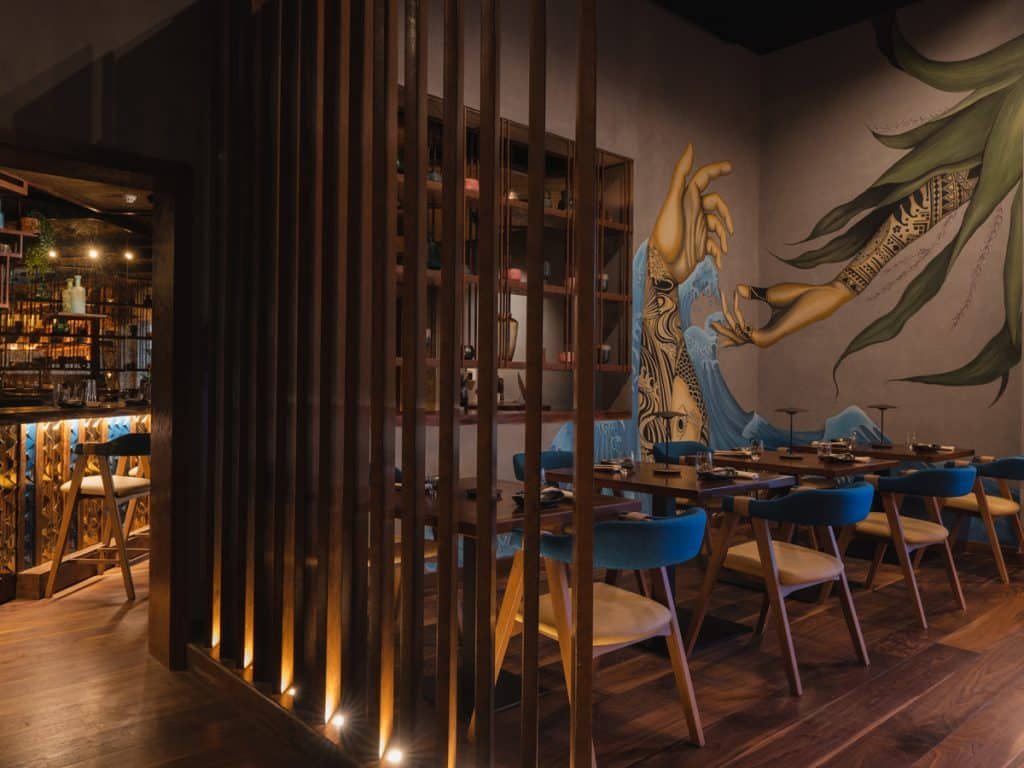
Where Two Food Cultures Converge
There is a particular logic to Nikkei cuisine arriving in Jeddah rather than, say, Riyadh or Dubai. The style, born when Japanese immigrants settled along Peru's Pacific coast in the late nineteenth and early twentieth centuries, is itself a product of migration and cultural negotiation. Its foundational technique is the layering of Japanese precision over Peruvian ingredients: raw fish treated with Japanese restraint, citrus-forward acids from Lima's market stalls, chilli heat introduced in calibrated doses rather than as a blunt instrument. It is a cuisine that only makes sense when you understand where both sets of cooks came from. Al Khalidiyyah, the Jeddah district on Al Malik Road where Kuuru operates, has been shaped by exactly that kind of layered arrival: the city has absorbed traders, pilgrims, and migrants for centuries, and the neighbourhood carries that history in its street-level diversity. Nikkei, in this context, does not feel imported. It reads as a continuation.
The Leylati Group's Track Record in Saudi Dining
Kuuru operates under the Leylati Group, one of the more established hospitality operators in the Saudi market. The group's existing footprint matters here because it changes the risk calculus for a cuisine as technically demanding as Nikkei. Fermentation timings, sourcing cold-chain fish of the right quality, balancing Japanese umami structures with Peruvian acidity: all of these require operational infrastructure that a start-up restaurateur in a market still building its fine-dining supply chains would struggle to maintain. The Leylati Group's backing means Kuuru entered the market with supplier relationships and kitchen staffing depth that would otherwise take years to construct. The result is a restaurant that arrived with a degree of consistency that younger independent entrants to the Saudi scene rarely manage in their first years.
The shortlist, unlocked.
Hard-to-book tables, cellar releases, and concierge-planned trips.
Get Exclusive Access →That context shows in the recognition Kuuru has attracted. Ranking 30th at the World's 50 Best Restaurants MENA 2024 edition is not an incidental achievement. The MENA list draws from a voting academy of food professionals spread across the region, and a placement that high in the list signals that the kitchen is performing at a level that impresses industry peers, not just paying guests. For comparison, other Saudi entries in the broader regional conversation, including Aseeb in Riyadh, tend to anchor themselves in local and Gulf tradition. Kuuru's MENA ranking is unusual precisely because it earns that position with a cuisine that has no Saudi roots at all, only arriving here through the convergence of institutional support and a city open to the unexpected.
The Ingredient Logic of Nikkei
The editorial angle that makes Kuuru worth understanding is not the restaurant itself but the sourcing philosophy built into the cuisine it serves. Nikkei kitchens occupy an unusual position in global fine dining because they are structurally committed to two distinct ingredient traditions simultaneously. Japanese technique demands fish of exceptional freshness and consistent fat content, leaning heavily on cold-water species with clean flavour profiles. Peruvian cooking, particularly in its high-end Lima expression, draws on the extraordinary biodiversity of the Andes and the Amazon basin: native potato varieties, ají amarillo and rocoto peppers, corn with a deeper starch structure than anything grown in East Asia, and citrus profiles shaped by the Peruvian coast's particular microclimate.
Running both ingredient streams through a single kitchen in Jeddah means the supply chain stretches across multiple continents. This is not unusual at the highest level of international fine dining. Restaurants like Le Bernardin in New York City or Amber in Hong Kong manage equally complex ingredient logistics. What distinguishes Nikkei sourcing is that the two traditions are not interchangeable or substitutable: the Peruvian elements are not garnishes on a Japanese framework, they are structural. A Nikkei tiradito without rocoto or ají is not an adapted version; it is a different dish. This means Kuuru's kitchen has no easy localisation shortcuts. The integrity of the cuisine depends on getting the Peruvian side of the larder right, which in a market as geographically removed from Lima as Jeddah represents a genuine operational commitment.
Atmosphere and Setting
Approaching a Leylati Group venue in Al Khalidiyyah, the expectations are set by the group's consistent positioning across its portfolio: formal-casual, design-considered spaces that signal premium without the stiffness of European-style fine dining. Jeddah's dining culture has moved in that direction across the board over the past several years, with the post-Vision 2030 hospitality expansion producing interiors that compete with Dubai and Beirut at the design level. Kuuru fits that pattern. The visual identity of Nikkei cuisine translates well to considered interior design: the aesthetic cues of Japan (clean lines, natural materials, restrained colour) blend with the warmer, more textural influences of Peru to produce environments that feel composed rather than either cold or ostentatious.
If you are arriving from the context of global fine dining, the atmosphere at this level of the Jeddah market will feel recognisable: attentive service, a room where the noise level is calibrated to allow conversation, and a pace of service that stretches the meal across two hours or more. The clientele skews towards Jeddah's internationally oriented professional class, with a significant share of visitors from the Gulf who treat the city as a dining destination in its own right. The restaurant holds a Google rating of 4.5 from over 1,400 reviews, which at that volume indicates a consistent floor of quality rather than a handful of euphoric early fans.
Who Should Book Kuuru
Nikkei is not an entry-level cuisine for a diner unfamiliar with either Japanese or Peruvian food in their separate forms. The pleasure of a tiradito well executed, or of a ceviche where the leche de tigre is balanced by dashi-level umami depth, is only fully readable if you have some existing reference point for what the component traditions each bring to the combination. If your Jeddah dining has been anchored primarily in Gulf and Levantine cooking, Kuuru rewards a degree of curiosity and a willingness to sit with flavour combinations that do not follow familiar local logic. That is not a criticism. It is a description of what Nikkei does: it asks questions that neither Japanese nor Peruvian cuisine alone would raise.
Practically, the Al Malik Road location in Al Khalidiyyah puts Kuuru in one of Jeddah's better-connected commercial districts, accessible by car from the city's main hotel corridor without requiring a lengthy cross-city trip. Reservation policy and hours are not listed in publicly available data, but for a restaurant at this recognition level, advance booking is advisable, particularly for weekend evenings when Jeddah's dining culture reaches its peak intensity. Dress expectations at Leylati Group venues trend toward smart casual at minimum.
For a broader read of where Kuuru sits within Jeddah's dining options, including the city's parallel strengths in Saudi regional cooking and Gulf seafood traditions, see our full Jeddah restaurants guide. Those planning a longer stay will also find relevant context in our full Jeddah hotels guide, our full Jeddah bars guide, our full Jeddah experiences guide, and our full Jeddah wineries guide.
The shortlist, unlocked.
Hard-to-book tables, cellar releases, and concierge-planned trips.
Get Exclusive Access →Frequently Asked Questions
Comparison Snapshot
These are the closest comparables we have in our database for quick context.
| Venue | Cuisine | Price | Awards | Notes |
|---|---|---|---|---|
| Kuuru | Part of the wellestablished Leylati Group Kuuru has rapidly established itself o… | This venue | ||
| تكية - TAKYA | Saudi Arabian | Saudi Arabian | ||
| Aseeb | World's 50 Best | |||
| Lunch Room | World's 50 Best | |||
| Marble | World's 50 Best | |||
| Myazu | World's 50 Best |
Need a table?
Our members enjoy priority alerts and concierge-led booking support for the world's most difficult tables.
Get Exclusive AccessThe shortlist, unlocked.
Hard-to-book tables, cellar releases, and concierge-planned trips.
Get Exclusive Access →