Murano




Open since 2008, Murano has held a Michelin star and a firm place in Mayfair's top tier of Modern European dining. Angela Hartnett's Italian-inflected cooking draws on prime British ingredients, Dorset crab, Herdwick lamb, set against an assured, unhurried room on Queen Street. Ranked 261st in Opinionated About Dining's Classical Europe list for 2025, it remains one of London's most consistent à la carte destinations at the ££££ price point.
Pearl is the En Primeur Club membership app — saves, bookings, and concierge access live there. Same editors, same standards.
- Address
- 20 Queen St, London W1J 5PP, United Kingdom
- Phone
- +44 20 7495 1127
- Website
- muranolondon.com
- Directions
- Get directions
 Saves & bookings on Pearl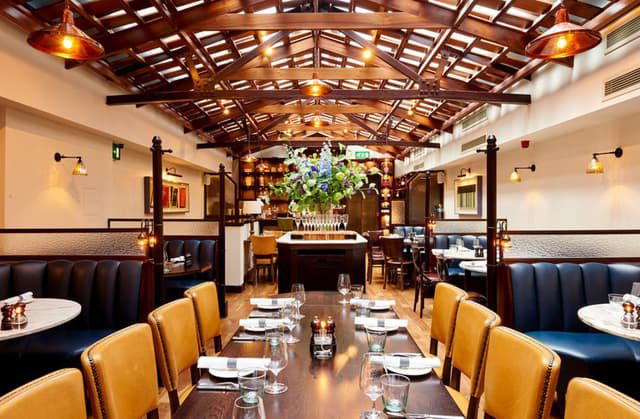
Seventeen Years in Mayfair's Upper Tier
When Murano opened on Queen Street in 2008, Mayfair's fine-dining map was already crowded with formal French rooms and international hotel restaurants. The decision to anchor a Modern European menu in Italian technique, rather than the prevailing Franco-British formula, was a deliberate positioning choice, and one that has held. The room on W1J 5PP has carried a Michelin star and appeared on Opinionated About Dining's Classical Europe ranking in three consecutive cycles: Recommended in 2023, 261st in 2025 after climbing to 195th in 2024. That kind of sustained recognition, across two independent critical systems, is a more reliable signal than a single award cycle.
At the ££££ price point, Murano sits alongside a specific peer group in central London. CORE by Clare Smyth, Sketch, The Lecture Room and Library, The Ledbury, Restaurant Gordon Ramsay, and Dinner by Heston Blumenthal all operate in the same bracket. What separates them is emphasis. Several lean into progressive technique or British-heritage theatrics. Murano operates differently: its distinguishing quality is assurance and refinement over spectacle, with Italian culinary grammar shaping the dish logic even when the ingredients are entirely British.
Italian Framework, British Larder
The tension between Italian technique and British produce is the defining characteristic of the kitchen's approach. Italy's regional cooking tradition places enormous weight on ingredient quality and restraint of intervention, pasta, for instance, is not a vehicle for complexity but a test of execution. At Murano, that philosophy meets a British larder of notable range: Dorset crab, Herdwick lamb from the Lake District fells, and Scottish venison appear on the à la carte alongside pasta formats that recall specific Italian regional references, such as pappa al pomodoro agnolotti.
This is a kitchen that treats prime raw materials as arguments in themselves. The sweetbreads, fried to preserve textural integrity rather than reduced to something uniform, represent a quietly confident approach: the accompaniments, carrot variations, toasted hazelnuts in a soy dressing, are designed to complete the main ingredient's argument, not override it. Rice-crusted partridge with confit leg, Scottish venison with beetroot and pickled walnuts, cured salmon with dulse, shaved fennel and elderflower: the combinations are not loud, but they are considered. In a neighbourhood where showy presentations are common currency, Murano's restraint registers as a deliberate stance.
The dessert menu has retained a fixed point across multiple years. The caramelised Amalfi lemon tart has remained a permanent fixture and, according to Michelin's own notes, should not be passed over. Its simplicity, confident presentation, zesty balance, is part of the point. A kitchen that can anchor its reputation on a single, unreconstructed tart for more than a decade is making a statement about conviction over novelty. For those who prefer something more theatrical, the mandarin soufflé, stuffed tableside with orange and Grand Marnier compote before a scoop of pancake ice cream, provides it without abandoning the kitchen's broader framework.
Wine, Italy, and the Case for Regional Pairing
Italian wine and Italian food are among the more codified pairing traditions in the world, and not by accident. The country's thousands of indigenous grape varieties evolved in proximity to specific regional dishes: Nebbiolo alongside the braised meats and truffles of Piedmont, Vermentino with the coastal seafood of Sardinia and Liguria, Fiano with the richer, dairy-forward cooking of Campania. That internal logic is harder to replicate when Italian culinary technique meets British produce, but the principle, that wine should extend and articulate the food rather than compete with it, remains the operating framework for a room like this.
Murano's wine list is assiduously well-chosen, with selections by the glass that allow meaningful pairing without committing to a full bottle at each course. For a menu that moves between delicate seafood preparations, pasta, game, and citrus-forward desserts, that flexibility matters.
The Italian-British axis of the food creates specific pairing questions that a thoughtful sommelier earns their keep answering. Does Herdwick lamb, which carries more lanolin and mineral weight than French agneau, pair better with a structured Barolo or a leaner Chianti Classico Riserva? Does Dorset crab call for a Campanian Greco di Tufo or a northern Italian Pinot Grigio from Alto Adige? These are not rhetorical questions, they are the practical territory of any meal at Murano, and the calibre of the glass pours determines how well the food-wine argument lands.
The Room and Its Register
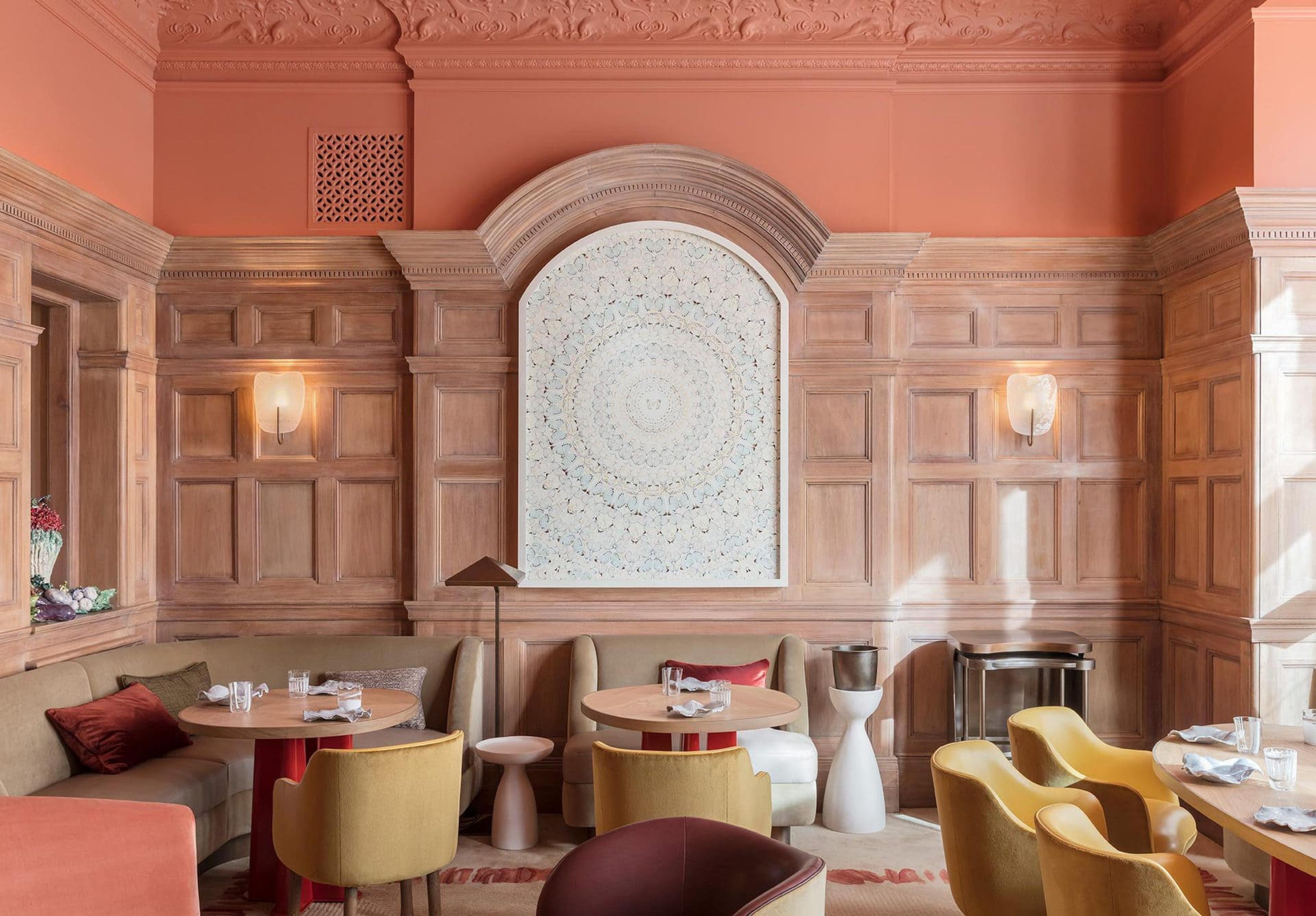
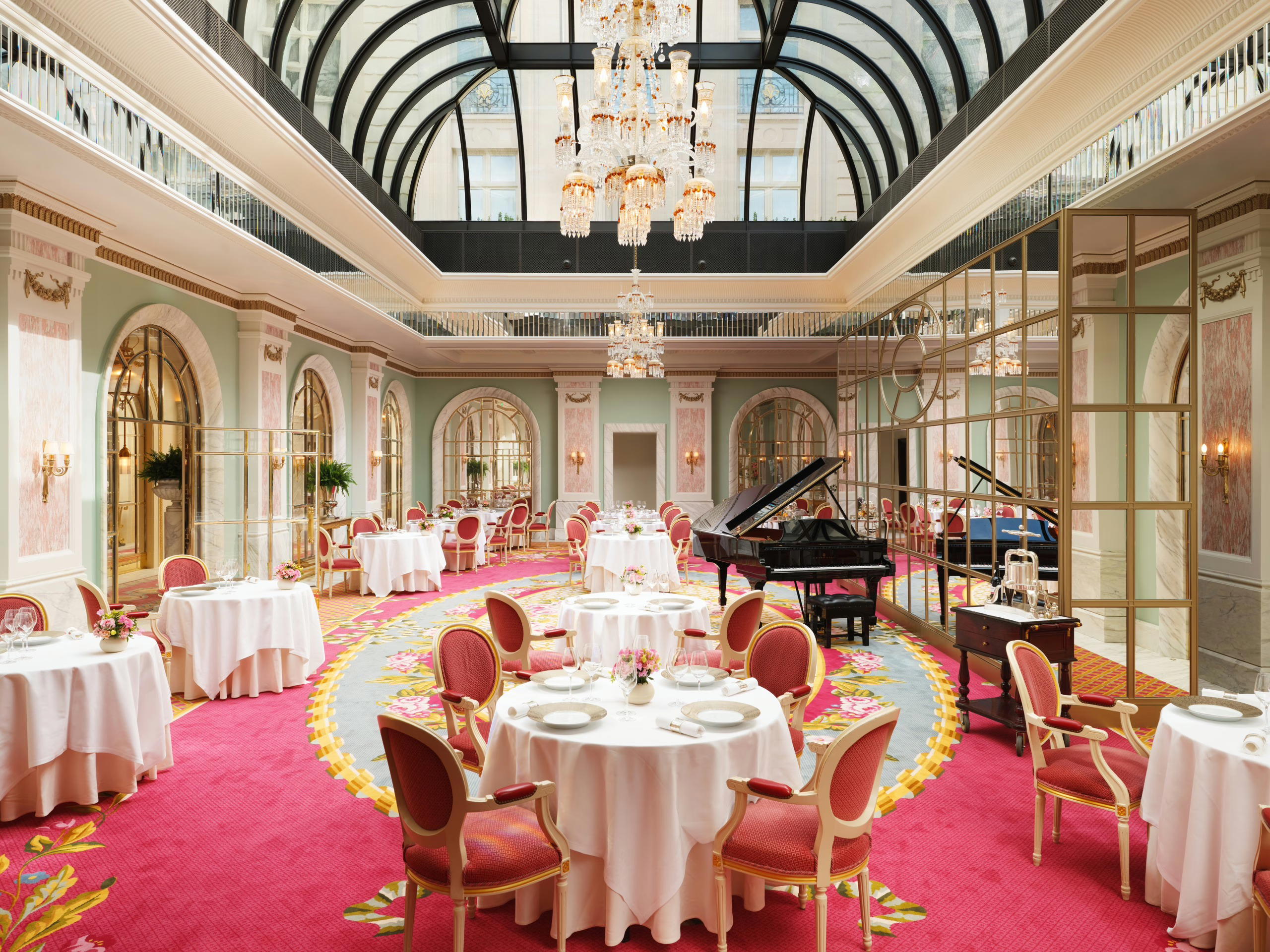
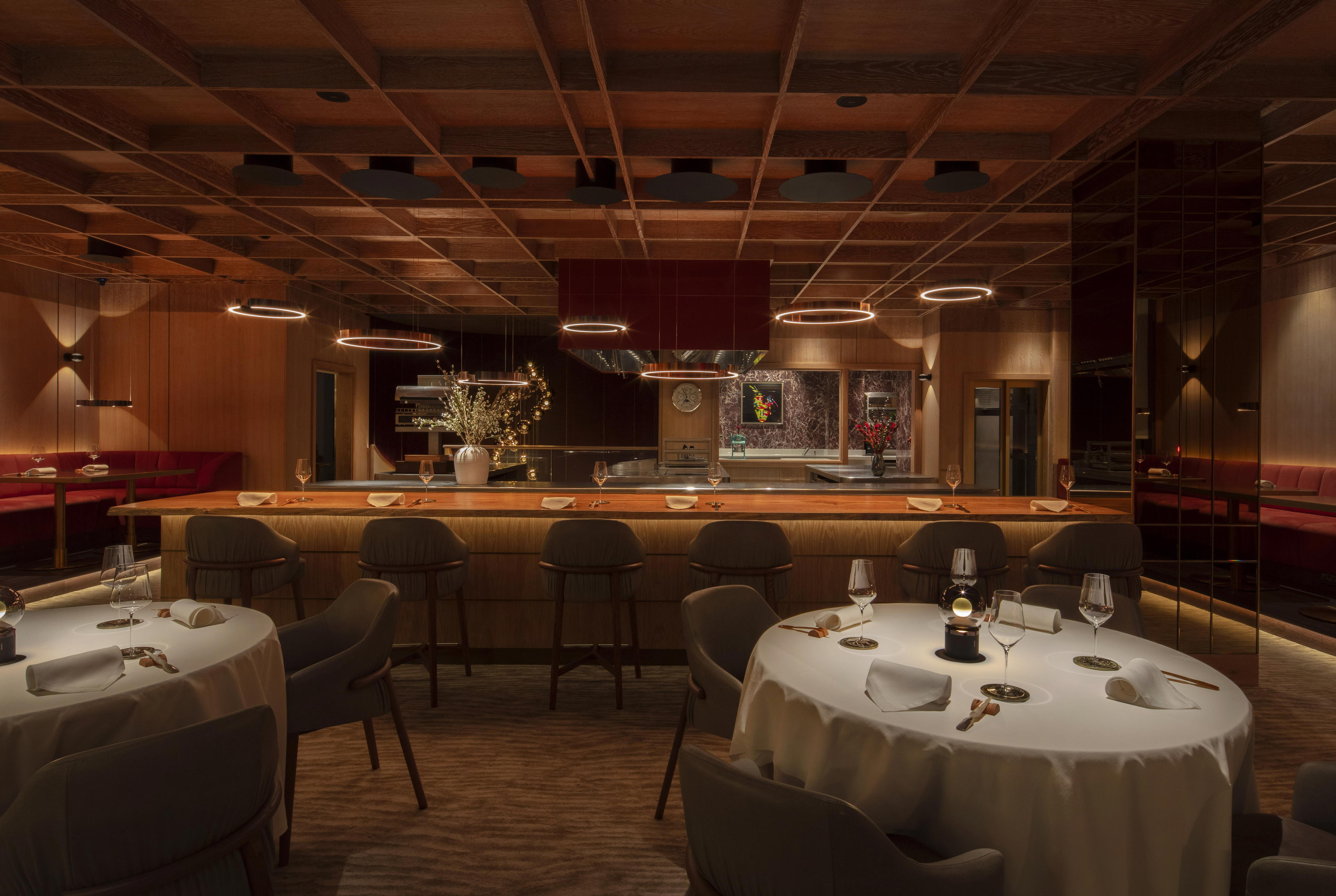
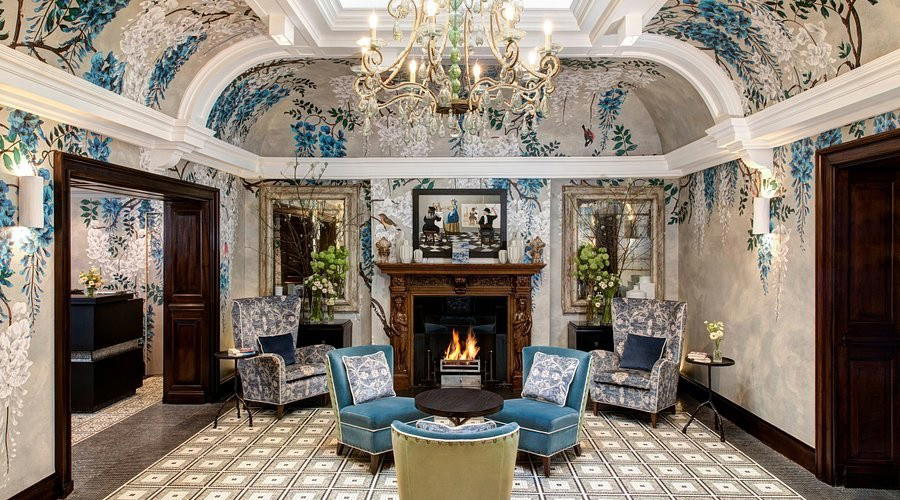
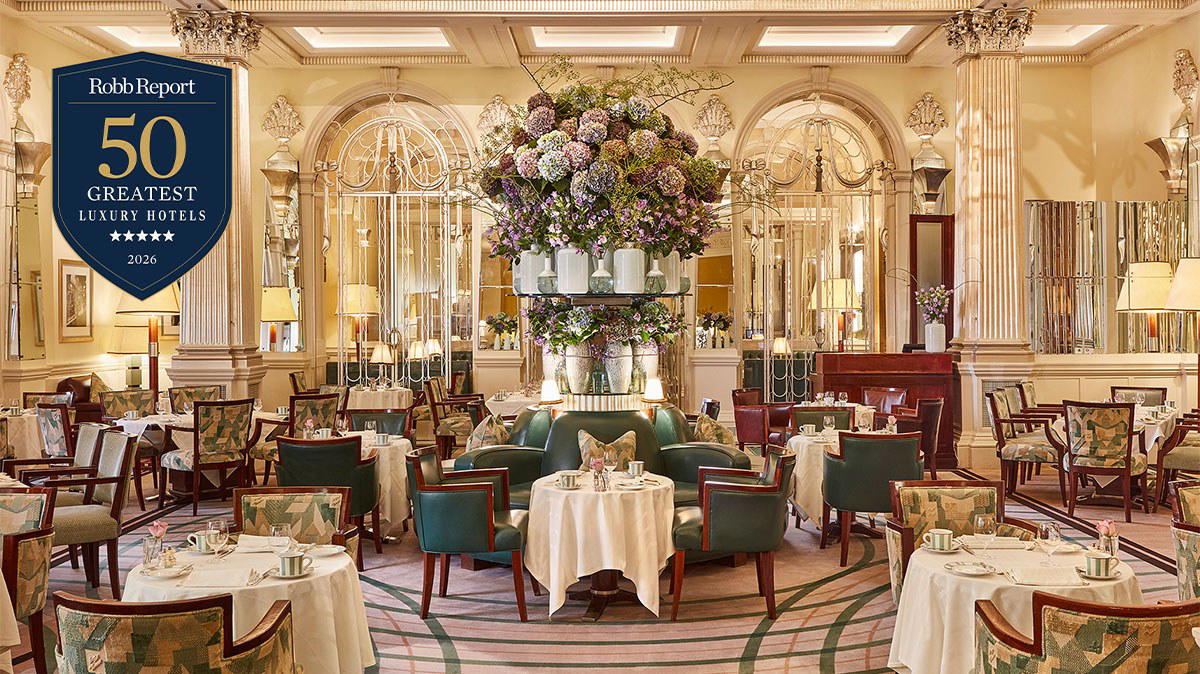
Mayfair fine dining has, since the mid-2010s, divided between formal rooms that maintain classical service codes and a newer cohort that pursues a more deliberately relaxed register. Murano occupies the former camp without tipping into stiffness. The room is carpeted and expansive, the service attentive, the decorative tone muted, rolling wave patterns on the walls contribute to what one set of published notes describes, accurately, as visual tranquillity. It is the kind of room where a two-hour lunch or a three-hour dinner is equally plausible, and where the format accommodates both: à la carte runs from three courses to something closer to six depending on appetite, and a fixed-price lunch operates on weekday and Saturday service.
These hours place Murano in the category of restaurants that do not compete for casual Monday or Sunday traffic, it is a destination booking, not a neighbourhood drop-in.
Where Murano Sits in a Wider British Context
London's ££££ Modern European tier has many reference points, but Murano's Italian-inflected position is genuinely less common in the capital than the French-British fusion dominant elsewhere. Outside London, the broader UK fine-dining conversation includes destinations at different price tiers and formats: The Fat Duck in Bray, L'Enclume in Cartmel, Moor Hall in Aughton, Gidleigh Park in Chagford, Hand and Flowers in Marlow, and Le Manoir aux Quat' Saisons in Great Milton. These represent the range of approaches the British fine-dining scene has developed. Internationally, London's Modern European tier is also increasingly compared with Michelin-level peers in New York, where restaurants like Le Bernardin and Atomix set the reference points for sustained multi-year recognition in high-price urban dining.
Angela Hartnett's training lineage through Gordon Ramsay's kitchens in the early 2000s explains the classical French foundations beneath the Italian surface, and accounts for why dishes like the sweetbread preparation or the venison with beetroot and braised accompaniments feel rooted in a classical idiom even when the ingredient combinations are distinctly contemporary.
Planning a Visit
| Detail | Murano | Comparable Peers |
|---|---|---|
| Price tier | ££££ | ££££ across Mayfair/Notting Hill comparators |
| Michelin recognition | 1 Star (2024) | CORE: 3 Stars; Gordon Ramsay: 3 Stars; Ledbury: 2 Stars |
| OAD ranking | 261 Classical Europe (2025) | Ledbury ranked higher; Sketch ranked separately |
| Lunch service | Tue–Sat from noon | Several peers do not offer weekday lunch |
| Format | À la carte (3 to 6 courses); fixed-price lunch | Many peers tasting-menu only |
| Closed | Monday and Sunday | Common pattern at this tier |
The à la carte format is worth noting specifically. At the ££££ level in London, several restaurants now operate exclusively on tasting menus, removing the option to order selectively. Murano's retention of à la carte, with the flexibility to scale from three to six courses, is a meaningful practical point for diners who prefer to direct their own meal.
Compact Comparison
Comparable venues nearby, for context on price, style, and recognition.
| Venue | Cuisine | Price |
|---|---|---|
| MuranoThis venue — the venue you are viewing | Mayfair, Modern Italian Fine Dining | $$$$ |
| Endo at The Rotunda | White City, Modern Japanese Omakase | $$$$ |
| Amaya | Belgravia, Modern Indian Grill | $$$$ |
| Quillon | Victoria, Modern South Indian Coastal | $$$$ |
| 1890 by Gordon Ramsay | Strand, Modern French Fine Dining | $$$$ |
| Umu | Mayfair, Kyoto-style Kaiseki | $$$$ |
Recognition history
Dated appearances from independent guides and award organizations, with the underlying list record or original source where available.
AA Rosettes 4 Rosettes
AA Rosettes
Michelin 1 Star
Michelin
Michelin 1 Star
Michelin
Opinionated About Dining Classical in Europe Ranked #261
Opinionated About Dining
The Good Food Guide GFG Very Good
The Good Food Guide
Michelin 1 Star
Michelin
Opinionated About Dining Classical in Europe Ranked #195
Opinionated About Dining
Opinionated About Dining Classical in Europe Recommended
Opinionated About Dining
World's Best Wine Lists Awards WBWL 3-Star
World's Best Wine Lists Awards
Continue exploring
More in London
More from Chef Angela Hartnett
Browse all →
Restaurants in London
Browse all →
Bars in London
Browse all →
Hotels in London
Browse all →

At a Glance
- Elegant
- Sophisticated
- Intimate
- Relaxed
- Date Night
- Special Occasion
- Business Dinner
- Private Dining
- Open Kitchen
- Hotel Restaurant
- Extensive Wine List
- Sommelier Led
Current opening hours
- Monday
- 12–2:30 p.m., 6–10 p.m.
- Tuesday
- 12–2:30 p.m., 6–10 p.m.
- Wednesday
- 12–2:30 p.m., 6–10 p.m.
- Thursday
- 12–2:30 p.m., 6–10 p.m.
- Friday
- 12–3 p.m., 6:30–10 p.m.
- Saturday
- 12–3 p.m., 6:30–10 p.m.
- Sunday
- Closed
Hours can change for holidays and private events. Last verified .
Relaxed yet sophisticated atmosphere with well-spaced tables, muted decor, lush carpeting, and a calm, conversational dining room.