Mujō




1 Michelin Star · James Beard Award Nominee · OpenTable Top 100 Restaurants
Our verdict
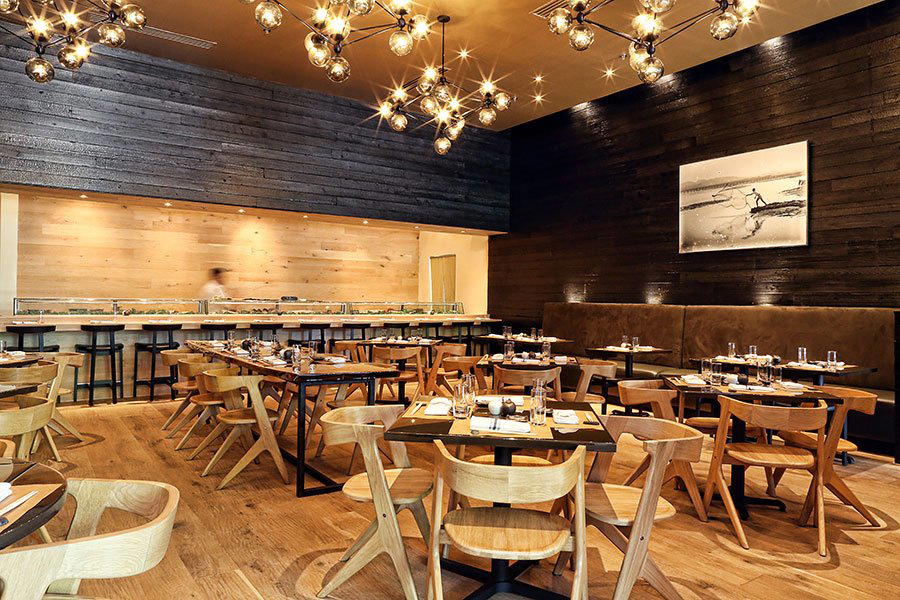
Tucked into West Midtown, Mujō is an intimate 15-seat omakase sanctuary where Chef J. Trent Harris orchestrates an evening of moody elegance and exquisite precision. A U-shaped Southern cypress counter glows against inky walls and low light, setting the stage for an ever-evolving procession—from zensai like binchotan-kissed Florida cobia with red miso to pristine nigiri that speaks in whispers rather than shouts. Top-tier ingredients, often flown in live from Japan, punctuate the experience with thrilling clarity—think Hokkaido hair crab with tosazu and mozuku—while polished hospitality ensures every guest feels both indulged and effortlessly at ease. Dessert is a destination, not an afterthought; linger for a final, memorable coda.

Pearl is the En Primeur Club membership app — saves, bookings, and concierge access live there. Same editors, same standards.
- Address
- 691 14th St NW c, Atlanta, GA 30318, United States
- Phone
- (404) 400-6832
- Hours
- Mon–Tue ClosedWed–Sat 5:30–9:30 p.m.Sun Closed
- Website
- mujoatl.com
- Directions
- Get directions
- Booking
- Book on OpenTable
A Counter in West Midtown Where the Format Does the Talking
On 14th Street NW, West Midtown's transition from warehouse district to dining destination is visible in real time. The address is unassuming, the entrance deliberately understated. What happens inside, however, belongs to a different register entirely. Mujō operates in the Edomae tradition, the centuries-old Tokyo school of sushi craft that prizes rice temperature, fish aging, and the sequence of a meal over spectacle. In a city where the $$$$ tier is populated by ambitious New American kitchens like Bacchanalia, contemporary tasting menus at Lazy Betty, and the European-inflected dining room at Atlas, a focused omakase counter occupies its own lane entirely.
What the Format Delivers at This Price Point
The editorial case for omakase at the $$$$ tier rests on a direct exchange: you surrender the menu entirely, and the kitchen commits everything to a single uninterrupted sequence. There are no upsells, no a la carte decisions, no table drift toward a middling shared plate. At Mujō, that contract is anchored in the Edomae method, meaning the chef determines the order, the temperature, the resting time, and the pace. In practical terms, you are paying for expertise in form, not volume on a plate. That distinction separates omakase pricing from tasting menu pricing in the minds of guests accustomed to French or New American formats: the value proposition is precision over abundance.
Executive Chef J. Michelin awarded one star in both 2024 and 2025, consecutive recognition that signals sustained consistency rather than a debut novelty. Esquire placed the restaurant at number 20 on its Leading New Restaurants list in 2023, a national editorial signal that arrived early in the venue's life. Together, those two trust signals place Mujō in the tier of American omakase counters that have earned external verification, a group that includes destinations like Atomix in New York City in the broader range of serious contemporary Japanese dining in the United States.
Edomae Tradition in an American City
Edomae sushi developed in Edo-period Tokyo around the idea that each piece of fish required individual preparation: curing, aging, marinating, or lightly cooking rather than simply slicing raw. The method demands that a chef understand not just knife technique but the biochemistry of each protein over time. In Japan, that tradition is densely populated with practitioners, many of whom train for a decade before touching a piece of nigiri in front of a guest. In the American South, the lineage is thinner, which means the few counters that operate at this level carry more representative weight for their cities.
Atlanta's Japanese dining scene has deepened over the past five years. Hayakawa and O by Brush have both contributed to that expansion, each from a different point on the Japanese cuisine spectrum. Mujō sits at the formal omakase end of that range, where the counter format, the chef-driven sequence, and the Edomae technical vocabulary define the experience rather than support it.
The guiding concept is ichi-go ichi-e, the Japanese phrase translating roughly to "one time, one meeting." As a philosophical framing, it asks that every service be treated as unrepeatable, not as a performance of a fixed script but as a specific encounter between this chef, this produce, and this group of guests on this particular evening. Whether that resolves into something felt by the diner or remains a backstage orientation is a function of execution, but as structural commitments go, it pushes against the repeatability that defines most high-end dining programs.
The Competitive Set and What the Stars Mean
One Michelin star, sustained across consecutive years, tells a reader something specific. It does not signal the two-star territory of highly distinctive cuisine or the three-star category reserved for a handful of rooms in any given country. What it confirms is that the inspectors returned, found the cooking consistent, and placed the restaurant inside the tier of Atlanta tables worth a special trip within or to the city. In Atlanta's current Michelin cohort, that places Mujō alongside a small group of restaurants that have earned the guide's formal recognition, a cohort that grew significantly after Michelin's 2023 Atlanta entry.
For context on what $$$$ omakase delivers nationally, the comparison point shifts depending on city. Counters in New York, San Francisco, and Los Angeles operate in a market where competition is dense and prices have climbed sharply. Destination formats like The French Laundry in Napa or Alinea in Chicago establish the outer tier of what American fine dining charges for a fixed-format experience. Mujō sits below that ceiling but inside the Michelin-starred category, which suggests its pricing reflects Atlanta market positioning rather than the premium Manhattan omakase bracket. For a traveler arriving from a high-cost market, that difference can be notable.
Internationally, the Edomae reference set includes counters in Tokyo's Ginza and Nihonbashi districts where comparable technique costs more and books further in advance. The gap between Tokyo omakase pricing and Atlanta omakase pricing is a persistent feature of the American market, and it generally favors the diner outside the coasts. Alongside globally recognized addresses like Le Bernardin in New York City, Lazy Bear in San Francisco, or 8½ Otto e Mezzo Bombana in Hong Kong, Mujō's Michelin recognition places it in a recognizable international frame of reference even at a regional price point.
Planning the Visit
Service runs Wednesday through Saturday, with seatings from 5:30 PM to 9:30 PM. The restaurant is closed Sunday through Tuesday. That four-day window narrows booking availability meaningfully, and the omakase format combined with Michelin recognition typically means reservations are sought well in advance, particularly for Friday and Saturday evenings. First-time visitors coming to Atlanta with a single night available should treat this as a restaurant that rewards planning ahead rather than walk-in optimism.
The address at 691 14th Street NW places Mujō in the West Midtown corridor, within reasonable reach of Atlanta's Midtown hotel cluster and accessible by rideshare from Buckhead or Downtown. For visitors building a broader Atlanta itinerary, the full Atlanta restaurants guide maps the city's dining range, and for accommodation context, the full Atlanta hotels guide covers the major options by neighborhood. Those planning more than a dining evening can also reference the Atlanta bars guide, the Atlanta wineries guide, and the Atlanta experiences guide for a fuller picture of what the city offers across categories.
The omakase format means the kitchen sets the pace and the menu. There is no a la carte fallback and no customization in the traditional sense, which is precisely the point. If you have dietary restrictions, those should be communicated at booking. If the counter format is new to you, the practical reality is that you will be seated close to the chef's preparation space, the sequence will run anywhere from 90 minutes to two-plus hours depending on the program length, and the pacing is the chef's prerogative. For guests accustomed to tasting menus at places like Single Thread Farm in Healdsburg or Emeril's in New Orleans, the structure will feel familiar, even if the cuisine language is entirely different.
Frequently asked questions
Is Mujō Michelin-listed?
Mujō has received recognition including: MUJŌ is a one MICHELIN star modern, Edomae-style Sushiya led by Executive Chef J. Trent Harris. We are inspired by the Japanese concept of ichi-go ichi-e, or "one time, one meeting."; Michelin 1 Star (2025); Michelin 1 Star (2024); Esquire ….
What cuisine category does Mujō fall under?
What's the must-try dish at Mujō?
Mujō operates as a pure omakase counter, meaning the kitchen decides every course — there is no à la carte selection and no single dish to request. The Edomae format, which underpins the restaurant's Michelin star recognition in both 2024 and 2025, centres on individually prepared nigiri where curing, aging, and marinating technique carry as much weight as the fish itself. Arriving with a specific request misses the point of the format.
What does dinner at Mujō typically cost?
Pricing at Mujō is listed as $$$$.
What are the operating hours at Mujō?
Hours at Mujō: Monday closed Tuesday closed Wednesday 5:30 PM-9:30 PM Thursday 5:30 PM-9:30 PM Friday 5:30 PM-9:30 PM Saturday 5:30 PM-9:30 PM Sunday closed.
What part of town is Mujō in?
Mujō is located at 691 14th St NW c, Atlanta, GA 30318, United States, Atlanta.
What is Mujō known for?
Mujō is known for bringing disciplined Edomae-style sushi to Atlanta at a level that earned consecutive Michelin stars in 2024 and 2025, alongside an Esquire Best New Restaurants ranking (no. 20, 2023). The counter operates on the Japanese principle of ichi-go ichi-e — one time, one meeting — which frames the omakase as a single, unrepeatable occasion rather than a replicable dining transaction. It is among a small number of sushi-focused Michelin-starred venues in the American South.
Cost Snapshot
A quick peer list to put this venue’s basics in context.
| Venue | Cuisine | Price | Awards | Notes |
|---|---|---|---|---|
| MujōThis venue — the venue you are viewing | Modern Edomae Omakase | $200–300 | 1 Michelin Star · James Beard Award Nominee | Not listed |
| Bacchanalia | Contemporary American Fine Dining | $100–150 | 1 Michelin Star · James Beard Award Best Chefs | New American, American |
| Lazy Betty | Modern Inventive Tasting Menu | $200–300 | 1 Michelin Star · Star Wine List | Contemporary |
| Staplehouse | New American Fine Dining | $50–100 | Michelin Plate | New American, Contemporary |
| Atlas | Modern American Fine Dining | $200–300 | 1 Michelin Star · La Liste Top Restaurants | Modern European, New American, American |
| Gunshow | Modern Southern Dim Sum-Style | $50–100 | Michelin Plate | Northern Chinese, American |
Recognition history
Dated appearances from independent guides and award organizations, with the underlying list record or original source where available.
Michelin 1 Star
Michelin
James Beard Award Nominee
James Beard Award
OpenTable Top 100 Restaurants
OpenTable
Esquire Best New Restaurants #20
Esquire
Full recognition history (6 entries)
James Beard Award Semi Finalist
James Beard Award
Michelin 1 Star
Michelin