Lazy Betty




1 Michelin Star · Star Wine List · Wine Spectator Best of Award of Excellence
Our verdict
Lazy Betty holds a Michelin star and a place on Opinionated About Dining's North America list, operating from a Midtown address on Peachtree Street with a contemporary French-American tasting format. Chefs Ron Hsu and Aaron Phillips run both the kitchen and the business, keeping the program tightly owner-operated. A wine list of more than 1,000 bottles, led by France, California, and Italy, gives the dining room weight beyond its modest exterior.

Pearl is the En Primeur Club membership app, where members save venues, book tables and use the concierge.
The menu
What to order
- Bluefin tuna roll with feuille de brick
- Poached cod with ham hock broth
- Crown-roasted duck with caramelized miso
- Potato and white shrimp dish
What the Room Tells You Before the Food Arrives
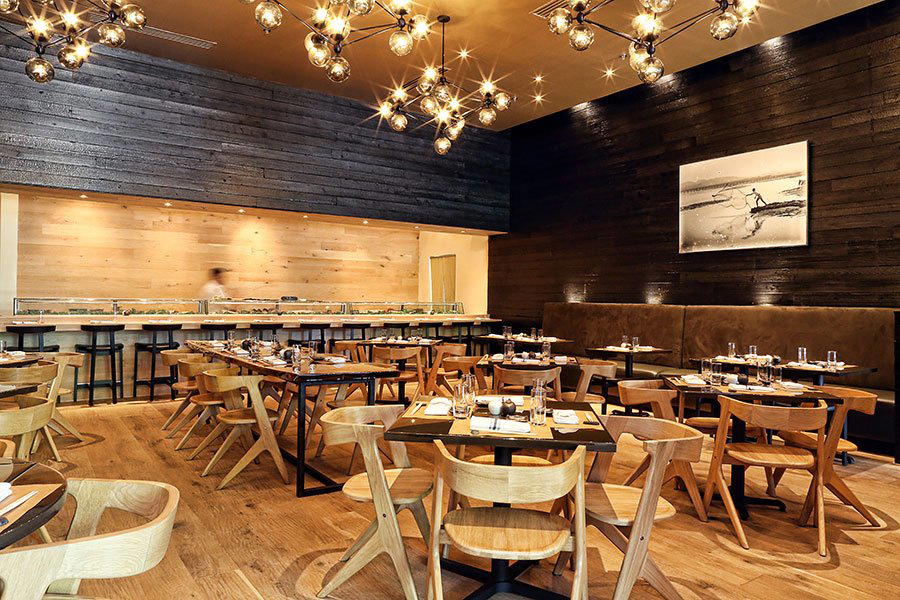
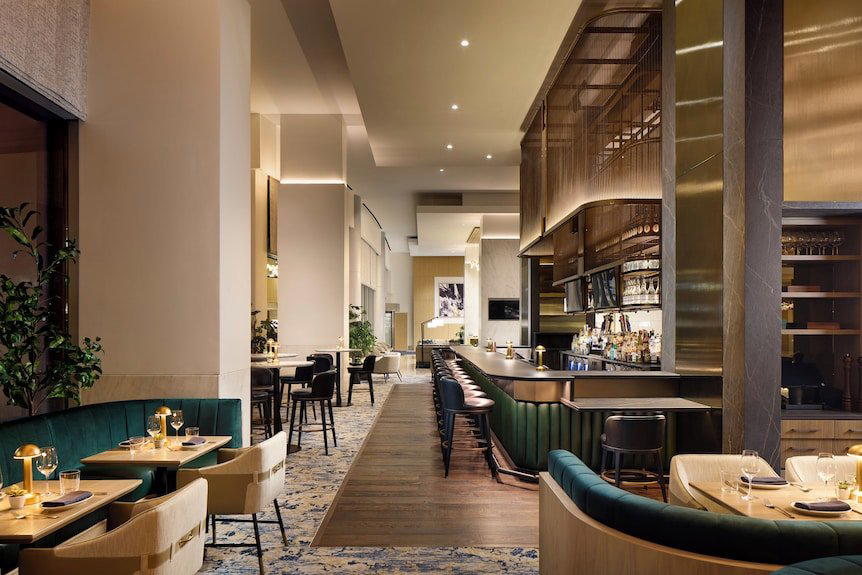
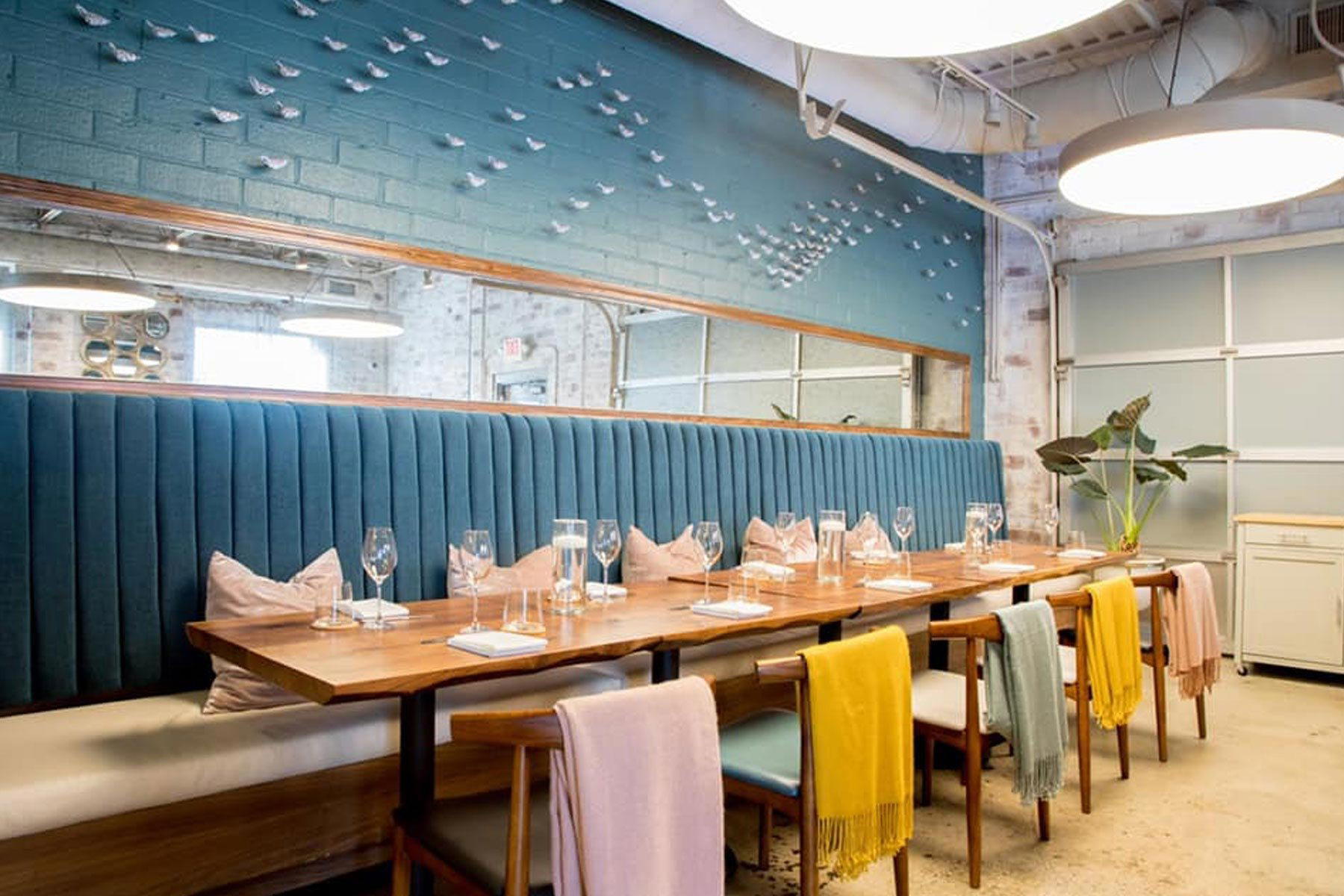
Peachtree Street in Midtown Atlanta carries a lot of competing signals: office towers, boutique hotels, casual lunch spots. Suite 140 at 999 Peachtree sits in that flow without announcing itself aggressively, and the restraint is deliberate. Atlanta's upper tier of tasting-menu restaurants has generally avoided the maximalist interiors that defined American fine dining in the 1990s and early 2000s. Lazy Betty belongs to that quieter school, where the room is composed rather than theatrical, and attention is directed inward toward the plate and the glass rather than upward toward architectural spectacle.
The physical container here functions less as scenery and more as a frame. Seating arrangements at Michelin-starred tasting counters and dining rooms in American cities have shifted over the past decade toward formats that prioritize sightlines to the kitchen and reduce the distance between cook and guest. Lazy Betty's layout operates within that tradition. The effect is a room that feels considered rather than decorated, where the architecture of the meal itself becomes the primary sensory event.
Where Lazy Betty Sits in Atlanta's Fine Dining Tier
Atlanta's $$$$ dining tier has deepened considerably over the past fifteen years. Bacchanalia established the template for owner-operated, ingredient-focused American fine dining in the city, and that lineage runs through subsequent entrants. Staplehouse brought a more emotionally charged narrative to the same price bracket. Atlas at the St. Regis positioned itself within a luxury hotel context with a European-leaning wine program. Gunshow introduced a format built around circulation and discovery rather than set-course progression.
Lazy Betty operates in a different register from all of them. Its French-American contemporary format, Michelin recognition in both 2024 and 2025, and placement on Opinionated About Dining's Leading Restaurants in North America for 2025 position it as the city's clearest representative of the precision tasting-menu tradition. That tradition, visible at places like The French Laundry in Napa or Alinea in Chicago, prizes technical discipline and ingredient integrity over format experimentation. Lazy Betty's sustained dual recognition suggests it has found a stable identity within that category rather than chasing novelty.
The comparison set in Atlanta is worth naming precisely because it clarifies the decision a diner makes when booking here. Georgia Boy and Little Bear operate with Southern ingredients and more casual formats at lower price points. Poor Hendrix and Southern Belle reflect the city's strong neighborhood dining culture. Ticonderoga Club anchors the bar-forward end of the Ponce City Market scene. Lazy Betty sits apart from all of those, occupying the narrow tier where formal tasting-menu discipline meets a wine program with genuine depth.
The Kitchen and Its Credentials
The tasting-menu format in American cities runs a spectrum from chef-personality vehicles, where the menu is essentially an autobiography, to more classically grounded programs where technique and sourcing are the argument. Lazy Betty belongs to the latter. Chefs Ron Hsu and Aaron Phillips are co-owners as well as operators, which in practice means the kitchen has no institutional distance between creative decision-making and business accountability. That ownership structure is more common at the top of the market in cities like San Francisco, where Lazy Bear operates under similar conditions, than in Atlanta, where the restaurant scene has historically been dominated by larger hospitality groups.
French-American designation places Lazy Betty in a lineage that extends from classic French technique applied to American ingredients. That approach is well-established at the highest levels of the category: Le Bernardin in New York City holds it as a foundational identity, and Single Thread Farm in Healdsburg applies it through a Japanese-influenced lens. Lazy Betty's version is less codified by a single cultural reference point and more focused on the execution discipline that Michelin evaluators reward consistently across markets.
Opinionated About Dining list functions differently from Michelin in that it aggregates opinions from a global network of frequent diners rather than anonymous inspector visits. Appearing on both in the same year is a credentialing signal that cuts across two distinct evaluation methodologies, which is meaningful for a restaurant in a city that is still working to establish itself in the broader national fine-dining conversation. For context, Emeril's in New Orleans built its national reputation across decades. Lazy Betty is doing it faster.
The Wine Program as a Structural Commitment
A wine list of 1,020 bottles with 425 selections is not incidental. At the $$$ wine pricing tier, which by Star Wine List's own framework implies many bottles above $100, the program is clearly positioned as a co-equal part of the dining proposition rather than a supporting element. Wine Director Gracie Barwick and Conrad C. Helms IV oversee a list built around France, California, and Italy, which is a classical alignment that prioritizes depth in established appellations over breadth across emerging regions.
That positioning matters in the context of contemporary American fine dining, where wine programs have split between two dominant schools: the exploration-first list, which emphasizes natural wine, obscure appellations, and producer narratives, and the depth-first classical list, which builds around Burgundy, Bordeaux, Barolo, and California Cabernet. Lazy Betty's list signals the latter. A corkage fee of $75 is on the higher end of Atlanta's market, which is a reasonable indicator that the house wants to sell from its own cellar rather than accommodate outside bottles.
Sommelier Brian McCrae and Marlo Mauricio complete a wine team of four, which is a staffing ratio that few Atlanta restaurants maintain. At restaurants like César in New York City or Jungsik in Seoul, where the beverage program is treated as structurally equivalent to the food, similar staffing ratios are the norm. Lazy Betty's investment in wine service is a measurable commitment, not a cosmetic one.
Planning a Visit
Lazy Betty operates Tuesday through Sunday for dinner only, with Tuesday and Sunday closing at 8 PM and Wednesday through Saturday running until 9 PM. The Monday closure is standard for Michelin-starred tasting restaurants, which typically require the full weekly cycle for prep and sourcing. The Midtown Peachtree location at Suite 140 places it within the corridor that connects the arts district to the upper stretches of Buckhead, accessible from most of the city's hotel stock. For travelers building a full Atlanta program around dining, our full Atlanta hotels guide maps the accommodation options by neighborhood proximity to the restaurant tier.
The $$$$ price range for food and $$$ for wine at a two-course baseline above $66 means a full tasting with wine pairing will reach the upper range of what Atlanta's market asks. For the broader dining picture across the city, our full Atlanta restaurants guide covers the range from neighborhood spots to formal tasting rooms. Those interested in bars and cocktail programming can find coverage in our full Atlanta bars guide, and wine-focused travelers should also look at our full Atlanta wineries guide and our full Atlanta experiences guide for the wider picture.
Frequently asked questions
Where is Lazy Betty in Atlanta?
Lazy Betty is located at 999 Peachtree St NE Suite #140, Atlanta, GA 30309, Atlanta.
Who's behind the kitchen at Lazy Betty?
The chef associated with Lazy Betty is Ron Hsu and Aaron Phillips.
What do regulars order at Lazy Betty?
Lazy Betty runs a set tasting-menu format, so individual dish selection isn't on the table, the kitchen decides the progression. What repeat visitors tend to track is the wine pairing: with 425 selections across a 1,020-bottle list weighted toward France, California, and Italy, the sommelier team led by Gracie Barwick has enough range to vary the pairing meaningfully across visits. The restaurant holds a 2025 Michelin star and an Opinionated About Dining North America recognition, credentials that keep the room at capacity and the regulars returning.
What cuisine category does Lazy Betty fall under?
What should I budget for a meal at Lazy Betty?
Pricing at Lazy Betty is listed as $$$$.
What time does Lazy Betty open and close?
Hours at Lazy Betty: Monday closed Tuesday 5 PM-8 PM Wednesday 5 PM-9 PM Thursday 5 PM-9 PM Friday 5 PM-9 PM Saturday 5 PM-9 PM Sunday 5 PM-8 PM.
What awards or recognition does Lazy Betty have?
Lazy Betty has received recognition including: Lazy Betty is a restaurant in Atlanta, USA. It was published on Star Wine List on August 1, 2025 and is a White Star.; Opinionated About Dining Top Restaurants in North America (2025); WINE: Wine Strengths: France, California, Italy Pricing….
Cuisine-First Comparison
| Venue | Cuisine | Price | Awards | Notes |
|---|---|---|---|---|
| Lazy BettyThis venue (the venue you are viewing) | Modern Inventive Tasting Menu | $200–300 | 1 Michelin Star · Star Wine List | Not listed |
| Bacchanalia | Contemporary American Fine Dining | $100–150 | 1 Michelin Star · James Beard Award Best Chefs | New American, American |
| Staplehouse | New American Fine Dining | $50–100 | Michelin Plate | New American, Contemporary |
| Atlas | Modern American Fine Dining | $200–300 | 1 Michelin Star · La Liste Top Restaurants | Modern European, New American, American |
| Gunshow | Modern Southern Dim Sum-Style | $50–100 | Michelin Plate | Not listed |
| Heirloom Market BBQ | Korean-American BBQ Fusion | $10–20 | Michelin Bib Gourmand | Not listed |
Recognition history
Dated appearances from independent guides and award organizations, with the underlying list record or original source where available.
Michelin 1 Star
Michelin
Star Wine List
Star Wine List
Opinionated About Dining Top Restaurants in North America Recommended
Opinionated About Dining
Wine Spectator Best of Award of Excellence
Wine Spectator
Full recognition history (7 entries)
Opinionated About Dining Top Restaurants in North America
Opinionated About Dining
Wine Spectator Best of Award of Excellence
Wine Spectator
Michelin 1 Star
Michelin