Mühlenhelle

Mühlenhelle holds a Michelin star in Gummersbach, an Oberbergisches Land town rarely associated with destination dining, where chef Julien Boscus applies a Modern French framework to the rural Bergisches Land region.
Pearl is the En Primeur Club membership app — saves, bookings, and concierge access live there. Same editors, same standards.
- Address
- Hohler Str. 1, 51645 Gummersbach, Germany
- Phone
- +49 2261 290000
- Website
- muehlenhelle.de
- Directions
- Get directions
 Saves & bookings on Pearl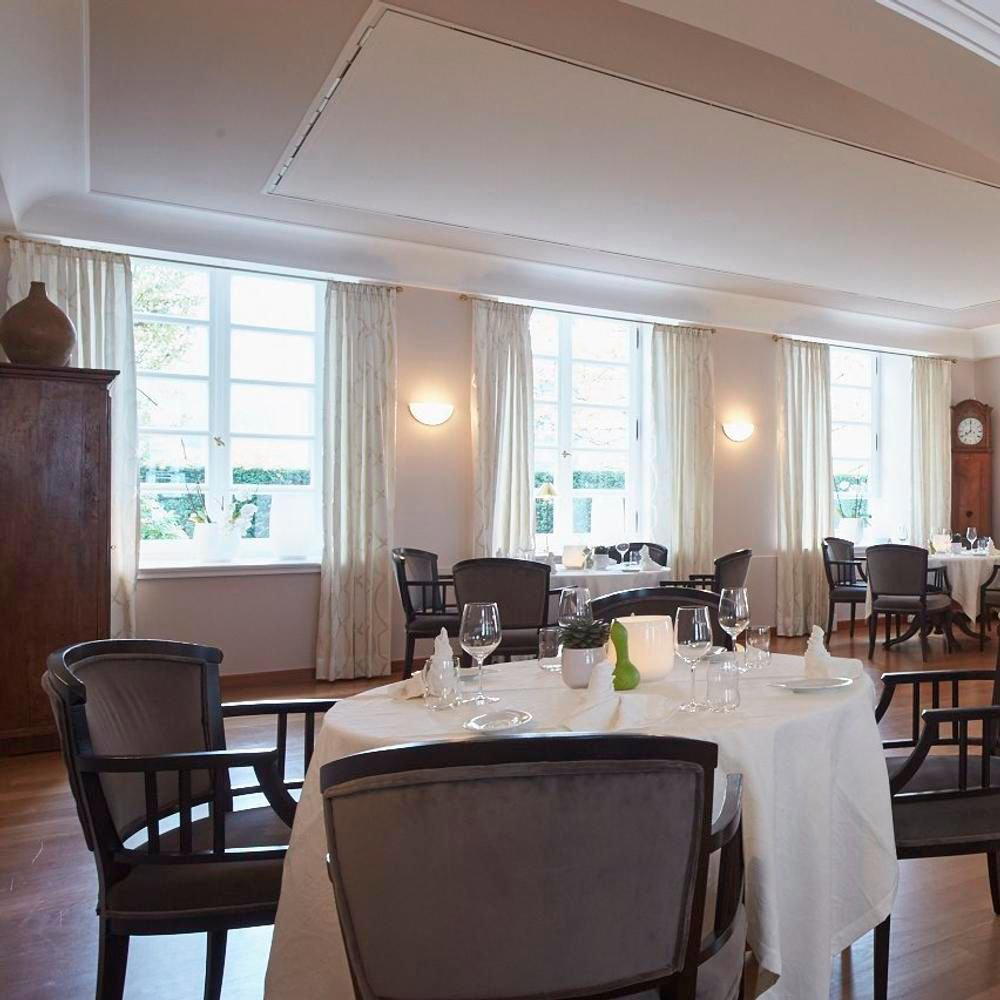
Fine Dining in the Bergisches Land: A Case for the Provincial
Germany's Michelin-starred dining map clusters predictably: Munich, Berlin, Hamburg, and the Rhine-corridor towns pull greater attention, while the rural stretches of North Rhine-Westphalia sit largely beneath the radar of travelling food writers. Gummersbach, a mid-sized town in the Oberbergisches Land district roughly an hour east of Cologne, does not appear in most itineraries. That positioning is precisely what makes Mühlenhelle worth examining. When a kitchen earns a Michelin star in a location that generates almost no dining tourism, the cooking is carrying all the weight.
The address, Hohler Str. 1, on the edge of town, places the restaurant away from the commercial centre, in the kind of setting that rewards guests who have specifically sought it out rather than stumbled upon it. That self-selecting dynamic is common to serious provincial restaurants across Europe: the room fills with locals who know what they have and occasional visitors who have done the research. Arrive with a reservation and the experience begins before you sit down, in the quietness of the approach and the absence of the ambient noise that surrounds city-centre fine dining.
Modern French Cooking in a German Rural Context
The culinary positioning at Mühlenhelle is Modern German Fine Dining, a category that in Germany tends to place a restaurant in a specific competitive and cultural bracket. The tradition runs deep in the country's fine-dining history. Properties like Schwarzwaldstube in Baiersbronn and Vendôme in Bergisch Gladbach built their reputations on French classical technique applied with German rigour; Waldhotel Sonnora in Dreis and Victor's Fine Dining by Christian Bau in Perl occupy similar territory near the Luxembourg and French borders. What these kitchens share is a willingness to let French structure and saucing logic carry dishes, even when the ingredients themselves are German or regional.
Chef Julien Boscus brings that same axis to Gummersbach. The name signals French formation, and in the context of this region, where the upland landscape is defined by beech forests, small farms, and the river valleys of the Agger and Wiehl, there is a plausible conversation between French kitchen discipline and local raw material. The Bergisches Land has never been an agricultural showpiece in the way that, say, Baden or Bavaria present themselves, but its pastoral character, game, dairy, and river produce provide a working pantry for a kitchen attuned to provenance.
Provenance and the EA-FR-01 Argument
The editorial case for Mühlenhelle rests partly on what it represents about terroir-led cooking in non-obvious locations. Across Germany, a growing number of starred kitchens have decoupled their identity from city adjacency and built around regional sourcing instead. ES:SENZ in Grassau operates in similar logic at the foot of the Bavarian Alps; Schanz in Piesport draws its identity directly from the Mosel valley. In each case, the location is not incidental, it shapes what the kitchen can source, what the kitchen chooses to emphasise, and how the menu reads across seasons.
For Mühlenhelle, the Bergisches Land context invites attention to ingredients that rarely appear on city menus: woodland mushrooms, upland lamb, cold-water fish from regional rivers, and the dairy traditions of the local Bergisches Kaffeetafel culture. Whether the kitchen makes explicit reference to these traditions in its Modern French menu is a question the on-the-ground experience answers, but the geography provides the framework. A starred kitchen in this location has structural reasons to source regionally, supplier relationships are local by default, and the menu's seasonality is tied to what the surrounding countryside produces rather than to what a metropolitan produce market can import.
comparable set and Critical Standing
Mühlenhelle's Michelin star places it in a specific peer tier: German one-star restaurants working in fine dining formats at the €€€ price point. That bracket includes destinations like JAN in Munich and Restaurant Haerlin in Hamburg, both of which sit in high-visibility urban markets where the competitive density is considerably greater. Holding a star in Gummersbach requires a different kind of consistency: there is no overflow from the broader dining scene, no passing tourist trade, and no secondary reputation as a hotel restaurant or associated bar programme to supplement the dining room's appeal.
7 from 366 reviews reinforces the Michelin reading. That volume of reviews for a restaurant at this price point in a mid-sized provincial town suggests a genuinely loyal local audience alongside the destination visitors. It is a different crowd from the city-centre starred restaurant, where critics, expense-account diners, and celebratory tables dominate the guest mix. In Gummersbach, the room is more likely to contain people for whom this is their regular fine-dining option, a familiarity that tends to make service more grounded and less performative.
For international comparison, Modern French cooking at this tier also invites comparison with London addresses such as Sketch, The Lecture Room and Library and Alex Dilling at Hotel Café Royal, both of which operate at two stars in the French idiom. The gap in recognition between those rooms and Mühlenhelle is largely a function of geography and visibility rather than a ceiling on ambition. The starred consistency suggests a kitchen operating well within its category.
The Wider Gummersbach Context
Gummersbach is not a destination that requires extensive advance planning beyond the restaurant booking itself. The town sits within the Oberbergisches Land natural park, and visitors making the trip for Mühlenhelle will find a landscape more suited to walking and cycling than to urban sightseeing. If the restaurant is the primary reason for the visit, it is worth building the trip around an overnight stay. Our full Gummersbach hotels guide covers the accommodation options within reach of the town.
For those exploring the broader Gummersbach scene, the restaurant exists alongside a companion property: Mühlenhelle Bistro offers a less formal register under the same roof, providing a lower-commitment entry point for guests who want a sense of the kitchen's cooking before committing to a full evening at the starred table. This two-format structure is increasingly common in German fine-dining establishments: Aqua in Wolfsburg and CODA Dessert Dining in Berlin both operate within larger hospitality structures that offer adjacent, more accessible formats. The bistro option also solves the planning problem for those who arrive in Gummersbach without a reservation at the starred table, which, given the restaurant's recognition and limited market, is a real risk.
For a fuller picture of what the town offers beyond the restaurant, our Gummersbach restaurants guide maps the dining options, and guides for bars, wineries, and experiences round out the regional picture.
Planning Your Visit
Mühlenhelle is located at Hohler Strasse 1, 51645 Gummersbach. Given its Michelin recognition and the contained size of a provincial fine-dining room, booking well ahead is advisable, particularly for Friday and Saturday evenings, when demand from Cologne and the Ruhr cities adds to local pressure. The €€€€ price designation places this in the upper tier of German fine dining, consistent with the starred format. Direct booking is recommended.
Comparable Venues
Comparable venues nearby, for context on price, style, and recognition.
| Venue | Cuisine | Price | Awards | Notes |
|---|---|---|---|---|
| MühlenhelleThis venue — the venue you are viewing | Modern German Fine Dining | $$$ | Michelin 1 Star | Not listed |
| Mühlenhelle - Bistro | Modern German Bistro | $$ | Bib Gourmand | Gummersbach |
| Burg Nideggen - Brockel Schlimbach | Modern German Fine Dining with French Influences | $$$$ | Michelin 1 Star | Nideggen |
| Ratsstuben | Modern German Fine Dining | $$$$ | Michelin 1 Star | historic centre |
| Zur Tant | Classic German Fine Dining | $$$ | Michelin 1 Star | Langel |
| Rüssel's Landhaus | Modern New German Cuisine | $$$$ | Michelin 1 Star | Naurath (Wald) |
Recognition history
Dated appearances from independent guides and award organizations, with the underlying list record or original source where available.
Michelin 1 Star
Michelin
Michelin Bib Gourmand
Michelin
Michelin 1 Star
Michelin
Michelin Bib Gourmand
Michelin
Michelin Bib Gourmand
Michelin
Michelin 1 Star
Michelin
Continue exploring
More in Gummersbach
Restaurants in Gummersbach
Browse all →
Bars in Gummersbach
Browse all →
Hotels in Gummersbach
Browse all →

At a Glance
- Elegant
- Cozy
- Romantic
- Sophisticated
- Date Night
- Special Occasion
- Business Dinner
- Historic Building
- Terrace
- Hotel Restaurant
- Extensive Wine List
- Sommelier Led
- Local Sourcing
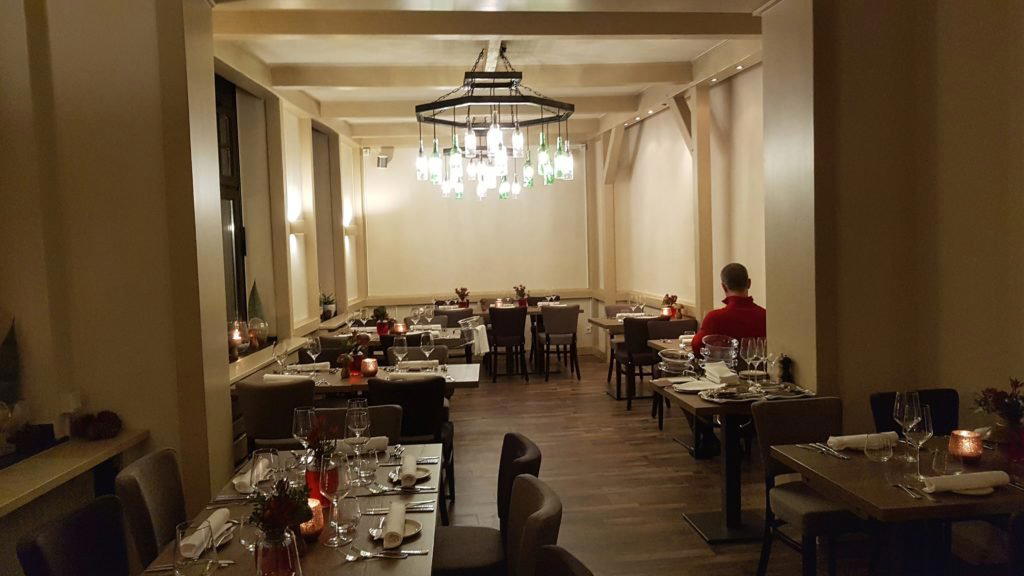
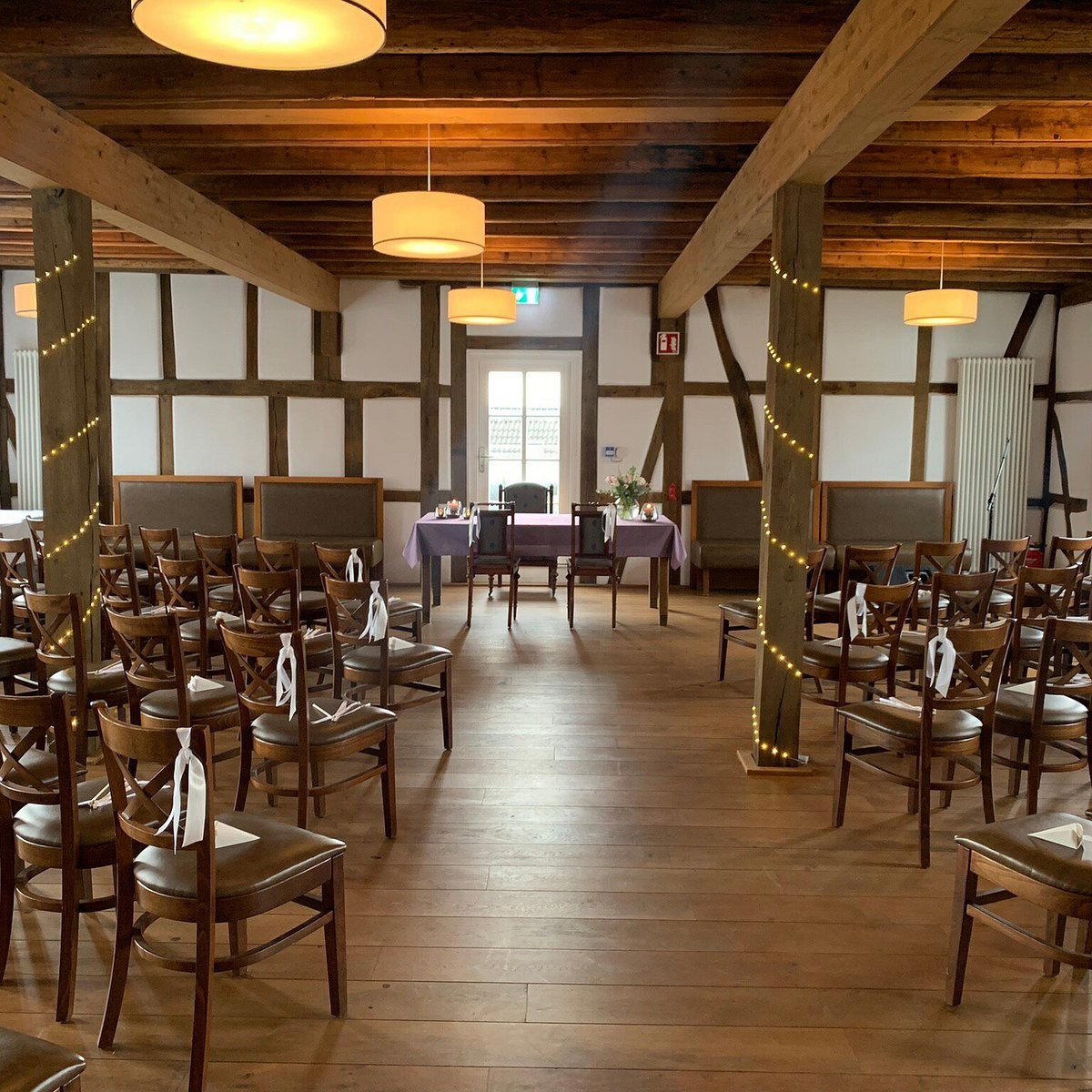
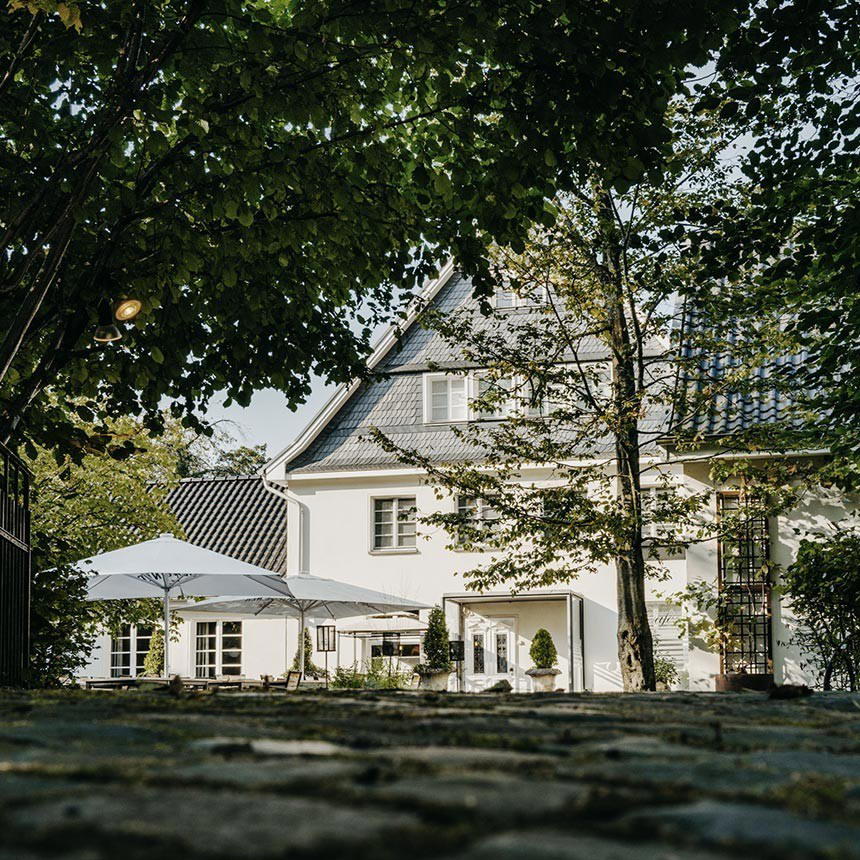
Elegant style with warm tones, beautiful wooden floors, large mullioned windows, and inviting atmosphere.