Mr Ji
Mr Ji brings experimental Taiwanese cooking to London, applying the techniques of char siu, open-fire roasting, and fermentation to a menu that sits outside the city's mainstream Chinese dining circuit. The kitchen draws on Taiwanese street-food tradition and reframes it for a contemporary counter format, placing Mr Ji in a different comparable set from the Cantonese roast houses of Chinatown.
- Address
- London, United Kingdom
- Directions
- Get directions
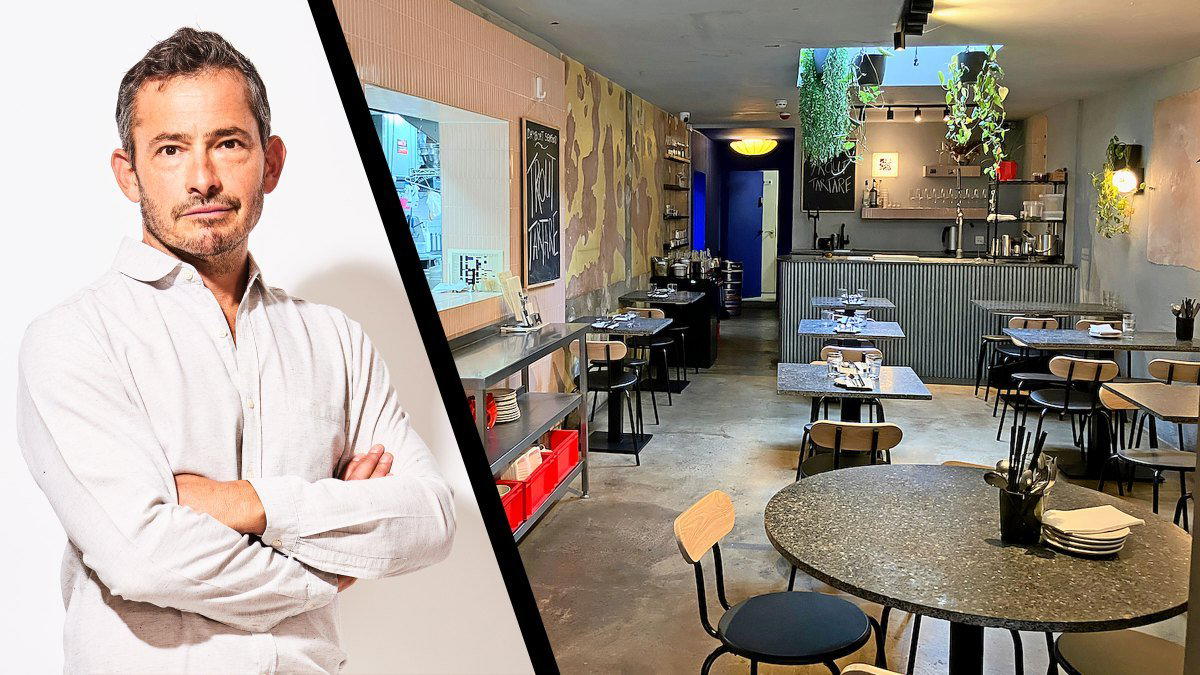
Fire, Fat, and the Taiwanese Roasting Tradition
Chinese roasting as a culinary discipline divides broadly into two schools: the Cantonese tradition of char siu and siu yuk, where lacquered pork and crackling-skinned suckling pig are roasted in dedicated hanging ovens, and the northern Peking duck lineage, where air-drying, scalding, and controlled high-heat roasting produce a fundamentally different textural result. London's Chinese restaurant scene has historically been weighted toward the Cantonese model, concentrated in and around Chinatown and the larger roast-meat houses of Queensway. What the city has lacked is serious engagement with the Taiwanese interpretation of these techniques: the night-market sensibility that takes the same fire and fat logic and applies it with more lateral, less reverential energy. Mr Ji is an experimental Taiwanese restaurant in London.
Taiwan's food culture is, in culinary terms, one of the more complex in the Chinese-speaking world. It absorbed Hokkien and Hakka traditions from southern Fujian, layered in Japanese colonial influence across five decades, and then received a second wave of mainland Chinese regional cooking after 1949. The result is a cuisine that treats roasting, braising, and open-fire cooking not as separate disciplines but as a connected toolkit. Char siu in Taiwan tends toward a smokier, less sweet glaze than its Hong Kong counterpart. Scallion oil appears as a finishing element rather than a condiment. The boundary between street food and restaurant cooking is deliberately blurred. Mr Ji's experimental framing suggests a kitchen working within this tradition while pushing its parameters rather than reproducing it faithfully.
What Experimental Taiwanese Looks Like in Practice
The term "experimental" in a restaurant context carries genuine risk: it can mean technique-forward cooking that loses sight of flavour, or fusion work that uses cultural reference as decoration rather than foundation. The strongest version of experimental Taiwanese cooking treats the roasting tradition as a base layer, then asks what happens when fermentation timelines are extended, when the cut of pork is reconsidered, when Japanese knife technique meets the blunt heat of a Taiwanese charcoal grill. That approach places Mr Ji in a conversation with a small number of restaurants globally that treat Asian street-food canon with the same seriousness that modernist European kitchens apply to classical French technique.
London's broader market for this kind of cooking is meaningful. The city's Chinese dining scene has matured considerably in the past decade, moving beyond the homogenous Chinatown model toward greater regional specificity. Sichuan cooking found its London moment through a cluster of restaurants in the 2010s. Shanghainese and Hunanese kitchens followed. Taiwanese, by contrast, has been slower to develop a serious London footprint, which is part of what makes Mr Ji's positioning notable from a competitive standpoint. The comparison set is thin domestically, which means the kitchen competes less against neighbourhood peers and more against the standard it sets for itself.
The Roasting Question in a Modern Context
Within the editorial angle of roast and BBQ traditions, it is worth understanding what makes Taiwanese-style roasting technically distinct. Char siu, in its Taiwanese form, often uses a different fat-to-lean ratio than the Cantonese cuts most familiar to London diners, favouring pork jowl or collar over the loin-heavy cuts that produce the more uniform slices seen in Chinatown windows. The glaze chemistry differs: Taiwanese marinades frequently incorporate rice wine, five-spice, and fermented red bean curd at ratios that produce a deeper, less candy-like finish. The cooking environment also matters; traditional Taiwanese charcoal grills produce a more aromatic smoke profile than the gas-assisted ovens that dominate commercial Cantonese roast houses in London.
Against this backdrop, an experimental approach to Taiwanese roasting might mean shorter cure times with higher-acidity marinades, or applying the char siu glaze logic to non-pork proteins, or treating the lacquering technique as a finishing step on vegetables that have been slow-cooked first. Without specific menu data from the venue's current kitchen programme, it would be speculative to describe Mr Ji's dishes in detail. The category requires a kitchen willing to have a clear position on these technical questions, rather than defaulting to a generalised pan-Asian approach.
Mr Ji in the London Context
London's premium dining circuit is heavily weighted toward European cooking traditions. The highest-profile addresses, including CORE by Clare Smyth, Restaurant Gordon Ramsay, Sketch, The Lecture Room and Library, The Ledbury, and Dinner by Heston Blumenthal, all operate within broadly European frameworks. The space for Asian-rooted experimental cooking to develop its own critical language in London is real, and Mr Ji's cuisine type suggests an intent to occupy that space rather than to serve as an accessible introduction to Taiwanese flavours. This is not a restaurant positioned as a gateway. It is positioned as a destination for diners who already understand the reference points.
Planning Your Visit
Mr Ji is closed.
A Pricing-First Comparison
Comparable venues nearby, for context on price, style, and recognition.
| Venue | Cuisine | Price | Notes |
|---|---|---|---|
| Mr JiThis venue — the venue you are viewing | Camden, East-West Asian Fusion | $$ | Not listed |
| Gura Gura | St Giles, Innovative Pan-Asian | $$ | Not listed |
| Kaffeine | Fitzrovia, Australian-Style Coffee Cafe | $$ | Not listed |
| Art du Fromage | Chelsea, Dining | Not listed | Not listed |
| Towpath | Not listed | $$ | De Beauvoir Town, Seasonal Mediterranean Canal-Side Café |
| Zeen | Euston, Dining | Not listed | Not listed |
Continue exploring
More in London
Restaurants in London
Browse all →
Bars in London
Browse all →
Hotels in London
Browse all →

At a Glance
- Trendy
- Lively
- Modern
- Casual Hangout
- Date Night
- Open Kitchen
- Craft Cocktails
Casual and laid-back with benches, metal tables, a busy neighbourhood vibe inspired by Taipei canteens, and a killer soundtrack.