Mouna

We're Smart World 3 Radishes
Our verdict
Mouna occupies a square-facing address in Palma's historic centre and operates within the We're Smart-recognised pure plant philosophy, placing vegetables and Mediterranean seasonality at the centre of every plate. It sits in a niche tier of Mallorcan dining where ingredient provenance and flavour-led cooking matter more than format spectacle. Book ahead for a table in the old town's tightest dining corridor.

Pearl is the En Primeur Club membership app — saves, bookings, and concierge access live there. Same editors, same standards.
- Address
- Plaça de la Drassana, 15, Centre, 07012 Palma, Illes Balears, Spain
- Phone
- +34 971 72 85 15
- Hours
- Mon 1–11 PMTue–Wed ClosedThu–Sun 1–11 PM
- Website
- mouna.es
- Directions
- Get directions
- Booking
- Book on the venue's website
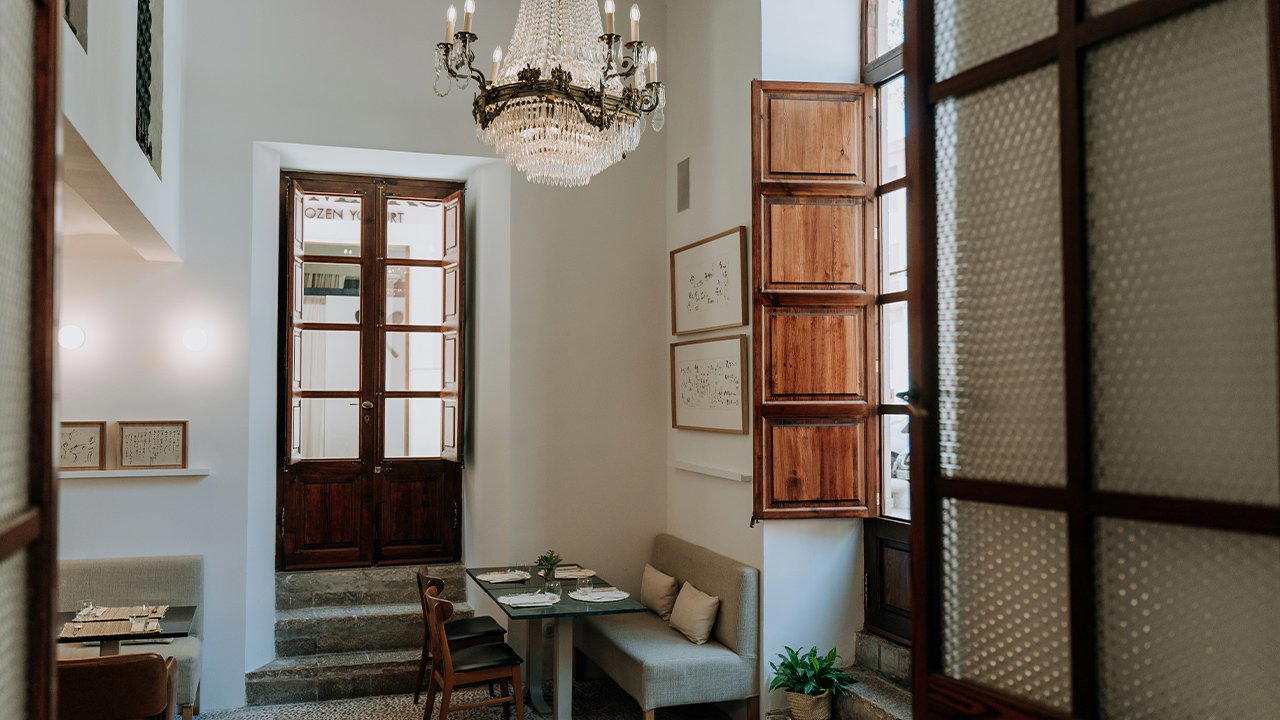
Plaça de la Drassana and the Quiet Shift in Palma's Dining Conversation
Palma de Mallorca has spent the past decade sorting itself into two recognisable dining registers: the coastal-facing seafood tables that trade on Balearic abundance, and a smaller, harder-to-define group working through what Mediterranean cooking actually owes to the land rather than the sea. Mouna sits squarely in the second category. Its address on Plaça de la Drassana places it at the edge of the old city's densest historic quarter, where the streets narrow and the foot traffic slows. Arriving at the square, you're already some distance from the tourist-facing promenade restaurants, and that distance is part of the editorial point. The venues that occupy these tighter spaces tend to have a cleaner sense of what they're doing and who they're doing it for.
Pure Plant as a Mediterranean Argument, Not a Dietary Compromise
The most useful frame for understanding Mouna is not the category label of plant-based dining, which carries associations formed mostly outside the Mediterranean tradition. In the Balearic and broader Spanish kitchen, vegetables have always held a structural role: the sofregit base of slow-cooked onion and tomato, the charred aubergines of escalivada, the slow-roasted peppers that define so many Catalan preparations. What Mouna does is press further into that tradition rather than departing from it. The We're Smart recognition the restaurant holds is built around a European framework that evaluates vegetable-focused kitchens on their own terms, measuring depth of technique and ingredient quality rather than applying a modified version of the conventional fine-dining scorecard.
That framework matters because it positions Mouna inside a coherent competitive set. The Spanish restaurant scene has produced plant-forward approaches at various price points and ambition levels, from the laboratory precision of Azurmendi in Larrabetzu — see our full review at Azurmendi in Larrabetzu — to the technique-driven theatrics of DiverXO in Madrid where vegetables often appear as counterweights to protein-heavy constructions. Mouna's operating register is different: the plant material is not the supporting cast but the entire argument. That approach aligns more closely with the ethos at El Celler de Can Roca in Girona, where the vegetable garden has become an increasingly central reference point, than with the spectacle-driven end of Spanish gastronomy.
Mediterranean Roots as Structural Logic
The Mediterranean diet carries enough cultural weight that it risks becoming a branding shorthand rather than a culinary argument. What distinguishes the better practitioners is a specificity about which part of the Mediterranean they're drawing from and how that translates into actual plate decisions. Mallorca has its own seasonal calendar: spring brings faves (broad beans) and wild asparagus; summer pushes tomatoes and courgettes; autumn yields root vegetables and dried legumes; winter settles into braised preparations and stored alliums. A kitchen built around pure plant philosophy lives or dies on how honestly it engages with that calendar rather than supplementing it with imported produce to fill gaps.
The We're Smart recognition, which functions as the primary third-party endorsement for vegetable-focused restaurants across Europe, signals that Mouna engages with seasonality as an operating principle rather than a marketing claim. That kind of recognition is not issued on the basis of concept alone. It requires demonstrated consistency in sourcing and flavour execution, which is the harder part of seasonal cooking. The venues in Palma that have sustained similar levels of critical attention, including Clandestí and NUS, tend to share that commitment to local provenance as a non-negotiable starting point rather than an aspiration.
Where Mouna Sits in Palma's Dining Tier
Palma's restaurant scene has diversified considerably over the past five years, with new openings that place the city's gastronomy alongside comparable Spanish coastal cities. The competition is sharpest in the mid-to-upper price band, where venues like Andana operate with strong local followings and serious kitchen credentials. Mouna's niche within that tier is defined by its focus: in a city where most celebrated tables still anchor their identity in seafood or meat-led Mallorcan traditions, a pure plant kitchen with external recognition from a specialist European body occupies a distinct position. It is not competing directly with the traditional cuina mallorquina tables, nor with the high-volume resort dining that still shapes much of the island's hospitality economy.
For comparison outside the island, the pure plant approach at this level of quality and recognition mirrors what has emerged in other Spanish coastal cities. Quique Dacosta in Dénia has long treated the land-sea relationship as a serious culinary proposition. Aponiente in El Puerto de Santa María has reframed the coastal pantry entirely. These are larger-scale, higher-profile operations, but they share with Mouna a refusal to treat vegetables and seasonal produce as secondary material. The Spanish kitchen's increasing international standing, seen also in the sustained reputations of Arzak in San Sebastián and Martin Berasategui in Lasarte-Oria, has created space for specialist approaches to gain recognition on their own terms rather than having to justify themselves against meat-centred benchmarks.
Planning Your Visit
Mouna's address at Plaça de la Drassana, 15, in Palma's Centre district, puts it within walking distance of the cathedral quarter and the major old-town streets, but in a residential pocket that sees less tourist traffic than the main thoroughfares. Given the We're Smart recognition and the specificity of the format, booking ahead is advisable, particularly for evening sittings in high season when Palma's dining options fill quickly across the board. The address and critical profile suggest this is not a large-format operation, which typically means a limited number of covers per service. Arriving without a reservation on a busy summer evening carries real risk of missing out.
For a broader view of where Mouna fits into the city's food and drink offer, the full Palma de Mallorca restaurants guide covers the range from traditional Mallorcan cooking to the newer wave of technique-driven kitchens. If you're planning a full trip itinerary, the Palma de Mallorca hotels guide, bars guide, wineries guide, and experiences guide provide the surrounding context. For those planning dining itineraries that extend beyond Spain's borders, the depth of commitment to product and seasonal logic on display at venues like Mouna is worth measuring against international references including Le Bernardin in New York City and Cocina Hermanos Torres in Barcelona, both of which demonstrate what rigorous ingredient focus produces at the top of the market. Mouna operates at a different scale, but the underlying discipline is recognisably part of the same conversation. Emeril's in New Orleans offers a useful counterpoint from the American tradition, where produce-led cooking also carries significant cultural weight.
Frequently asked questions
Does Mouna work for a family meal?
Mouna's focus on vegetables, seasons, and Mediterranean produce makes it a practical choice for mixed-diet families, since plant-forward menus tend to accommodate a wider range of preferences than protein-centred formats. The address at Plaça de la Drassana, 15, in Palma's Centre district, is accessible on foot from the cathedral quarter, which helps if you're coordinating a group. That said, the restaurant's philosophy is built around considered, ingredient-led cooking rather than casual sharing plates, so it suits families comfortable with a more deliberate pace.
What's the overall feel of Mouna?
Mouna reads as a conviction-led restaurant rather than a trend-chasing one. We're Smart, the international authority on plant-based gastronomy, singled it out for placing flavour and seasonal quality at the centre of its pure plant approach — a distinction that separates it from venues where vegetables play a supporting role. The setting at Plaça de la Drassana places it in Palma's historic Centre, which gives the room a neighbourhood permanence rather than the transient energy of the waterfront strip.
Does Mouna have a Michelin star or similar recognition?
Mouna has received recognition including: This pure plant restaurant truly stands out! Strong believers of the pure plant philosophy, they showcase the power of vegetables and the seasons as a healthy and preventive lifestyle choice. With Mediterranean roots in their DNA, a sharp f….
What dish is Mouna famous for?
Mouna's reputation rests on its commitment to the pure plant philosophy as a whole rather than any single signature dish. We're Smart's recognition specifically cited the restaurant's handling of seasonal vegetables and its use of Mediterranean roots as a culinary framework, suggesting the cooking changes with the market rather than anchoring to a fixed menu. Specific current dishes are best confirmed directly with the restaurant before visiting.
Where do I go for Mouna?
Mouna is located at Plaça de la Drassana, 15, Centre, 07012 Palma, Illes Balears, Spain, Palma de Mallorca.
Can I walk in to Mouna?
The address at Plaça de la Drassana, 15, in central Palma, is easy to reach on foot, but for current booking details, check the venue's official channels or check their website for the most up-to-date availability.
Price and Positioning
Comparable venues nearby, for context on price, style, and recognition.
| Venue | Cuisine | Price | Awards | Notes |
|---|---|---|---|---|
| MounaThis venue — the venue you are viewing | Organic Artisan Mediterranean Vegetarian | $20–30 | We're Smart World 3 Radishes | Not listed |
| La Rosa Vermuteria & Colmado | Spanish Tapas & Vermuteria | $20–30 | Not listed | Centre, Spanish Tapas & Vermuteria |
| Andana | Modern Mallorcan Mediterranean | $50–100 | Star Wine List | Plaça d'Espanya, Modern Mallorcan Mediterranean |
| NUS | Spanish Fusion with Asian Influences | $30–50 | Star Wine List | Santa Catalina, Spanish Fusion with Asian Influences |
| Clandestí | Modern Spanish Market Cuisine | $100–150 | Star Wine List | Nord, Modern Spanish Market Cuisine |
Recognition history
Dated appearances from independent guides and award organizations, with the underlying list record or original source where available.
We're Smart World 3 Radishes
We're Smart World
Continue exploring
More in Palma de Mallorca
Restaurants in Palma de Mallorca
Browse all →
Bars in Palma de Mallorca
Browse all →
Hotels in Palma de Mallorca
Browse all →
Details
- Elegant
- Cozy
- Intimate
- Sophisticated
- Date Night
- Special Occasion
- Historic Building
- Farm To Table
- Organic
- Local Sourcing
- Street Scene
- A La Carte
- Small Plates
- Vegetarian Friendly
- Vegan Options
Current opening hours
- Monday
- 1–11 PM
- Tuesday
- Closed
- Wednesday
- Closed
- Thursday
- 1–11 PM
- Friday
- 1–11 PM
- Saturday
- 1–11 PM
- Sunday
- 1–11 PM
Hours can change for holidays and private events. Last verified .
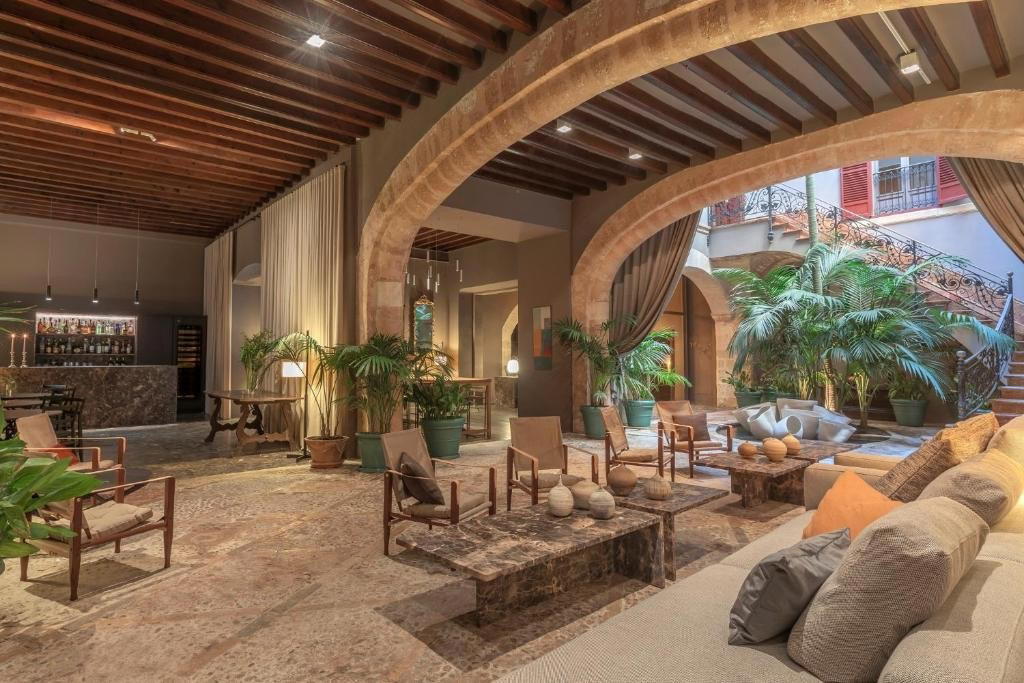
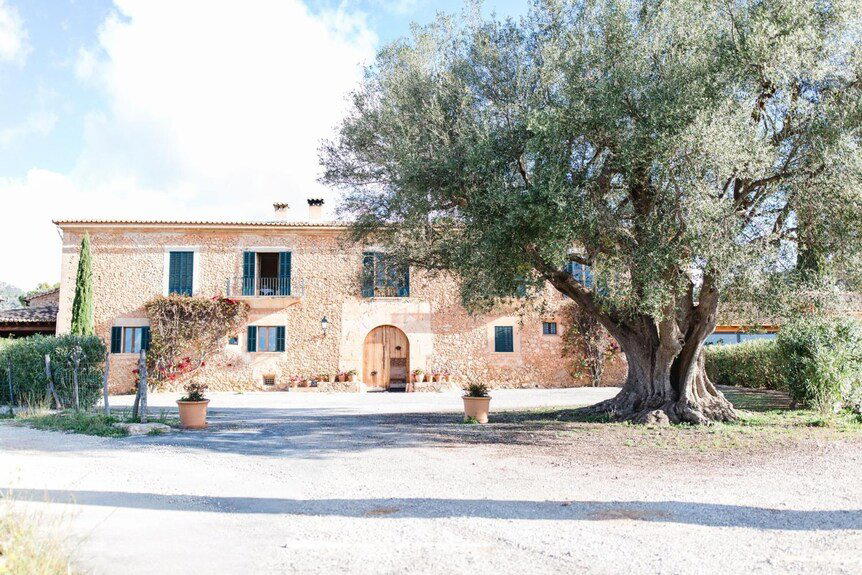
Relaxed and welcoming atmosphere in a charming historic palazzo-style house with spaced-out tables creating an intimate, private dining experience.