
Michelin Plate
Our verdict
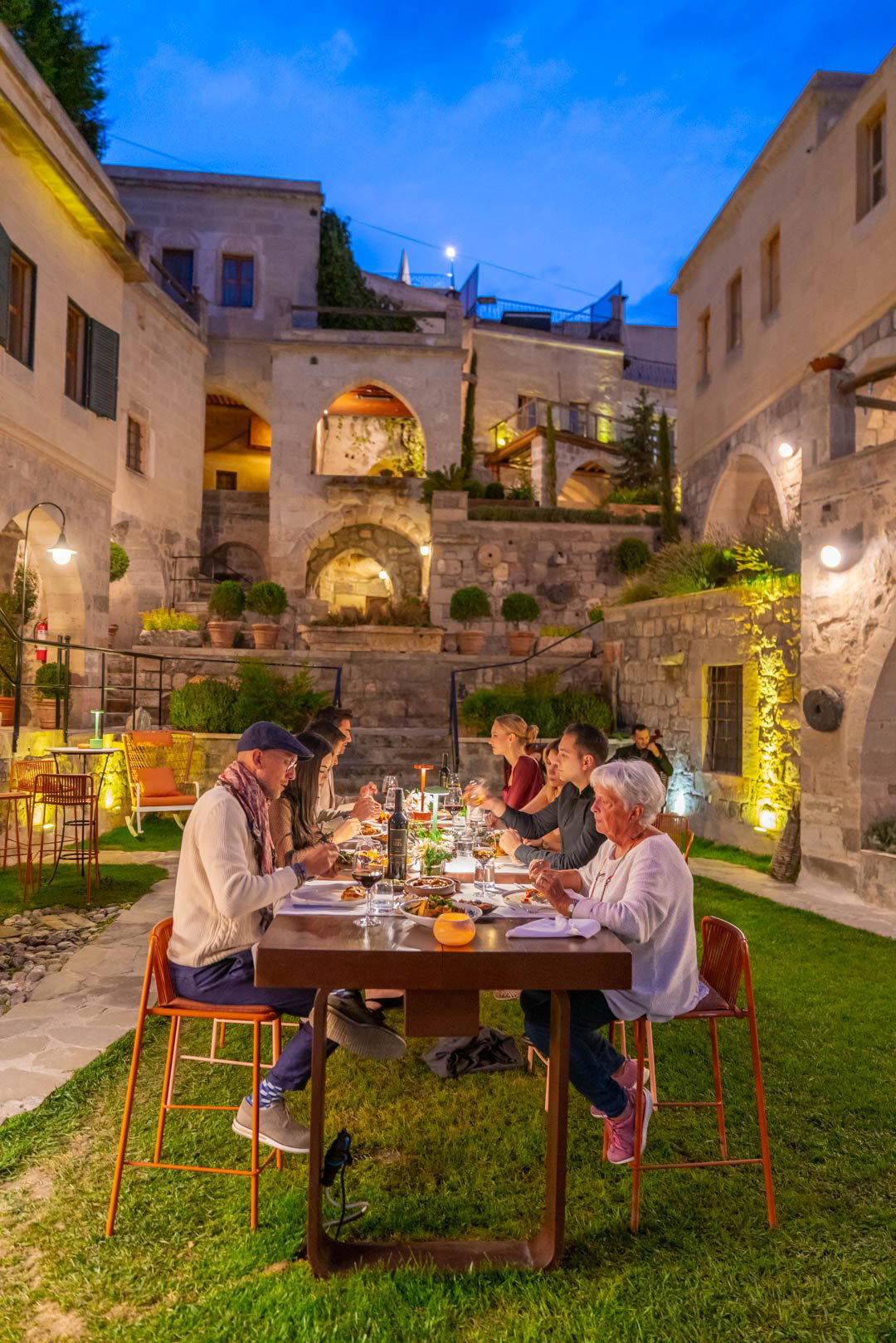
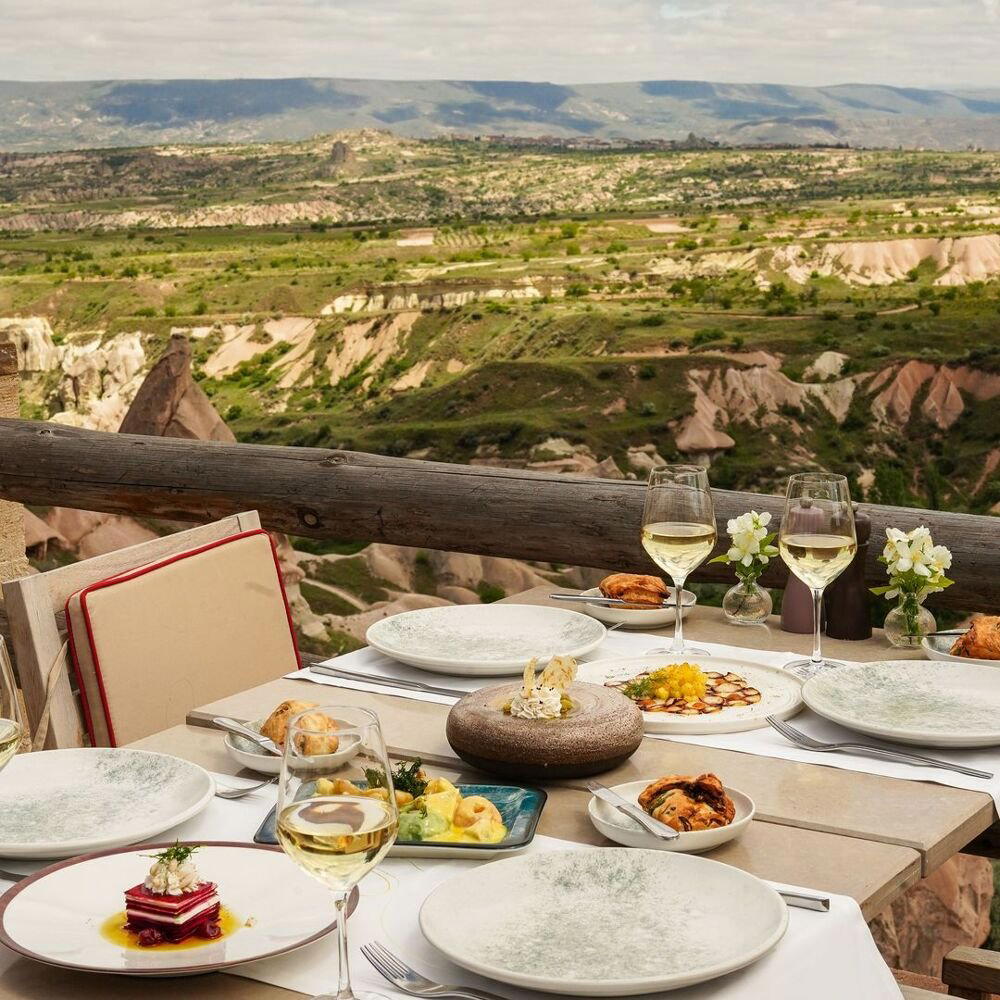
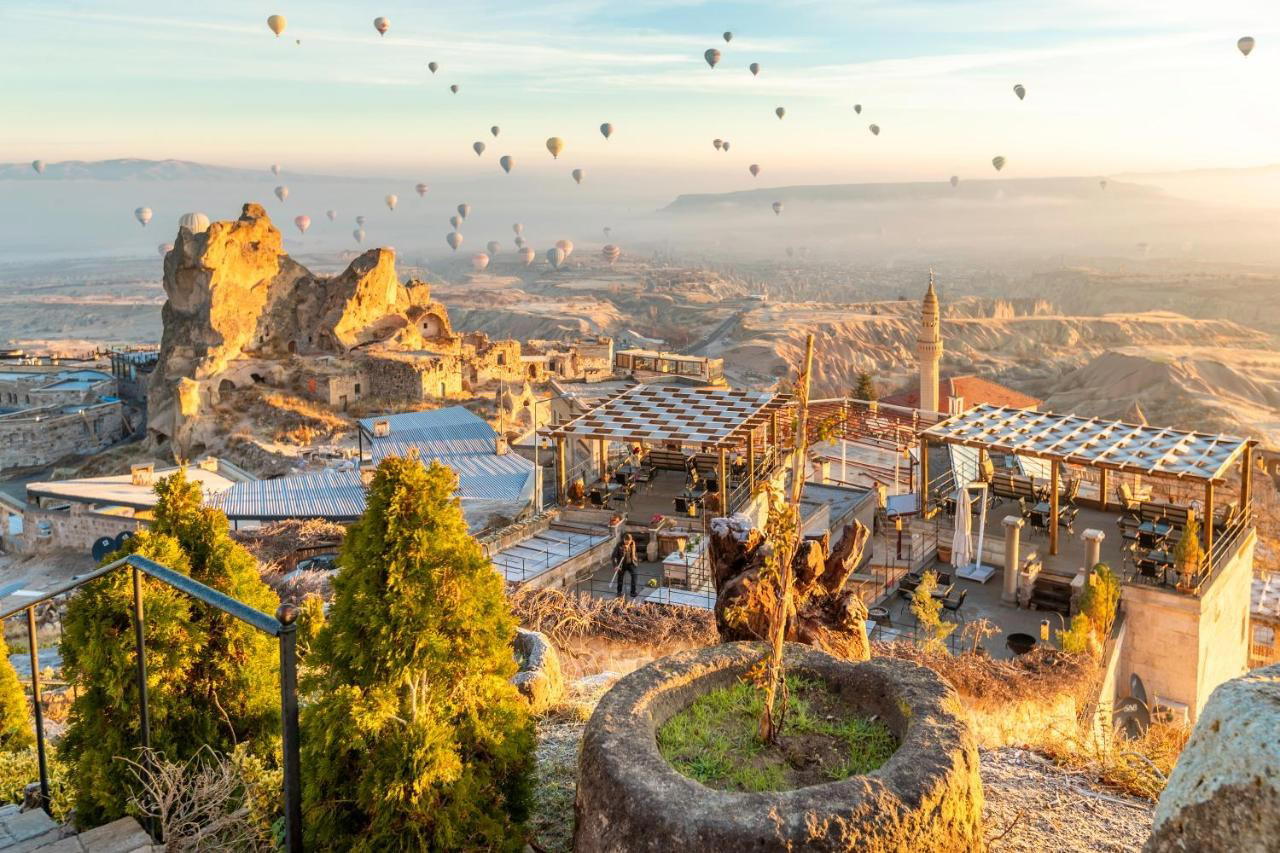
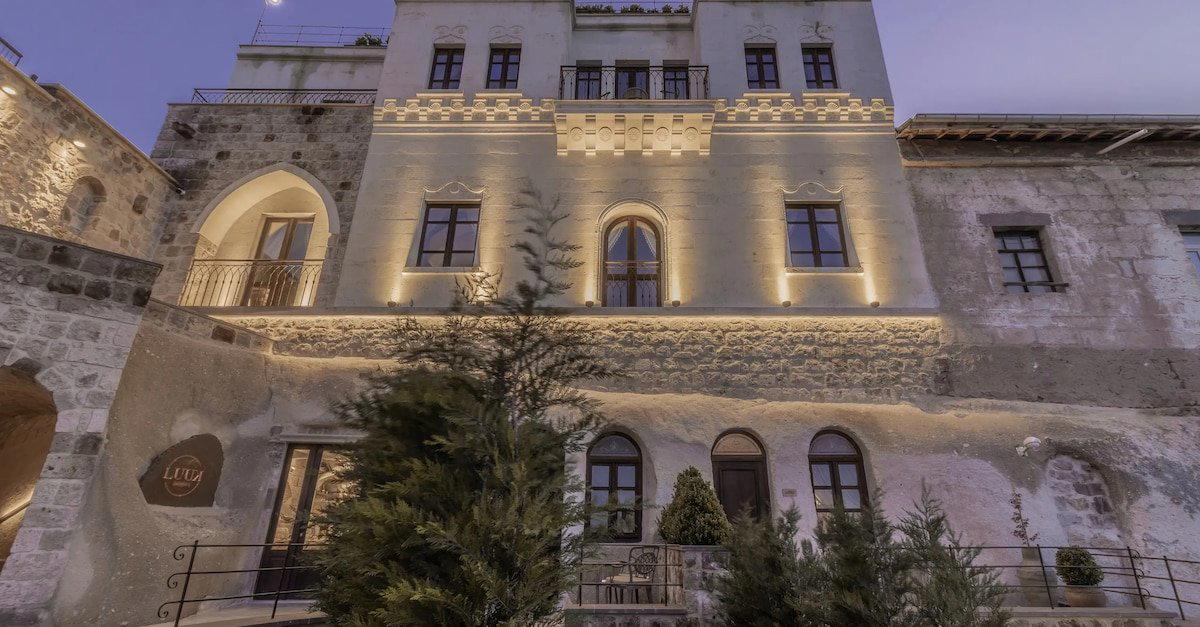
Set within the cave architecture of Taskonaklar hotel in Uçhisar, Moniq Restaurant draws on Cappadocian village recipes developed with local women from nearby communities. Chef Mustafa Türkten anchors the menu in regional ingredients, with dishes like manti with roasted aubergine and lamb casserole with stewed peppers. The terrace view over Pigeon Valley is worth timing your reservation around.

Pearl is the En Primeur Club membership app, where members save venues, book tables and use the concierge.
The menu
What to order
- Manti with roasted aubergine
- Lamb casserole
- Ottoman mutancana
Stone, Valley, and the Weight of Anatolian Cooking
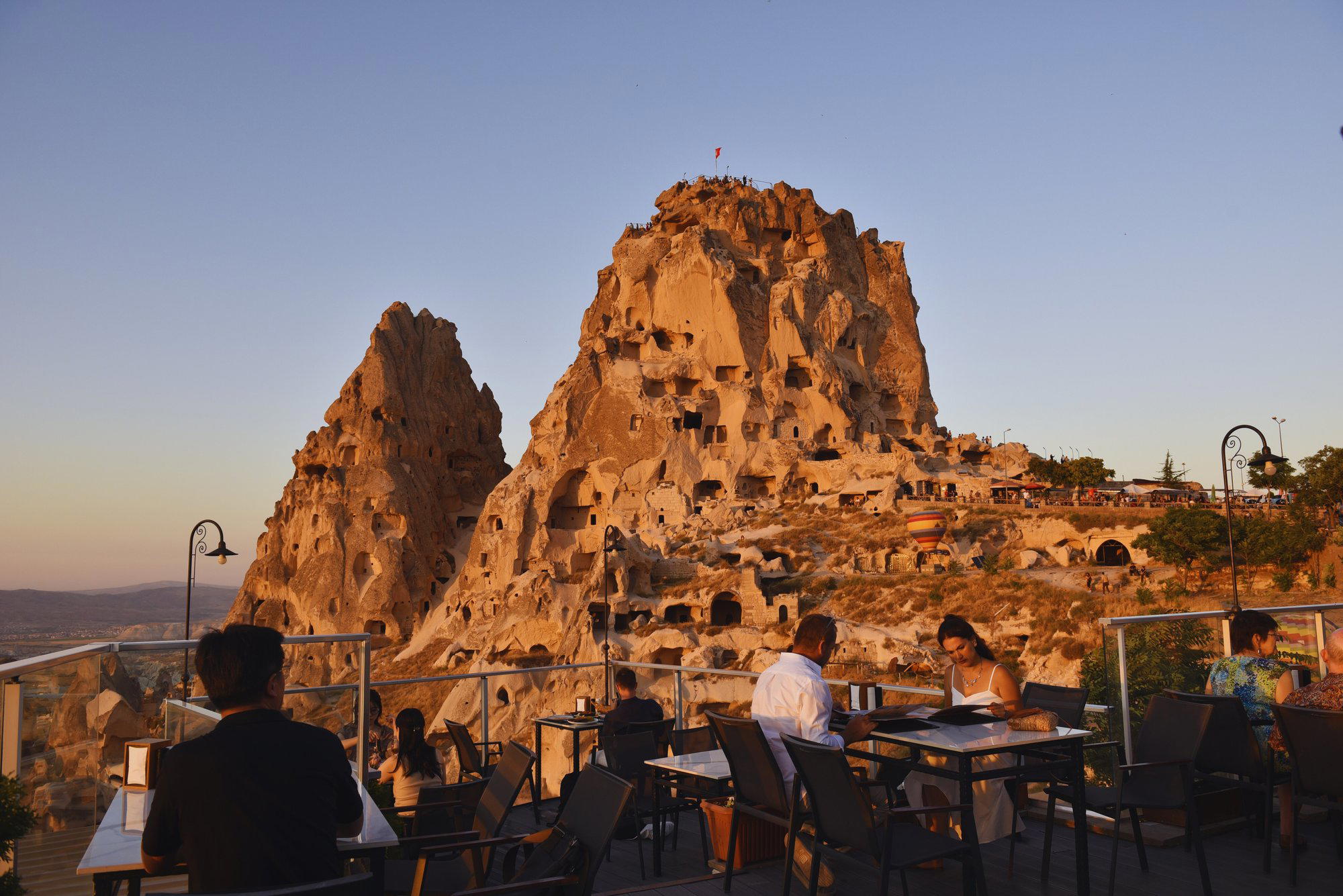
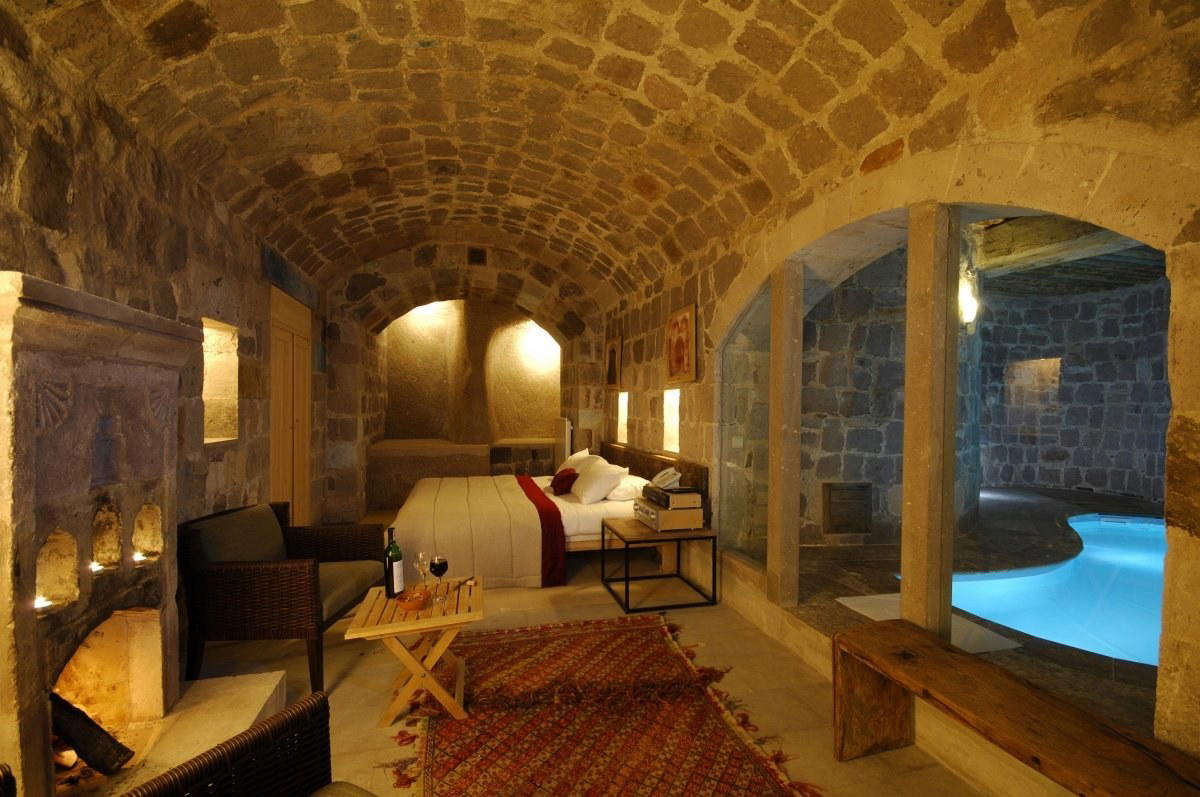
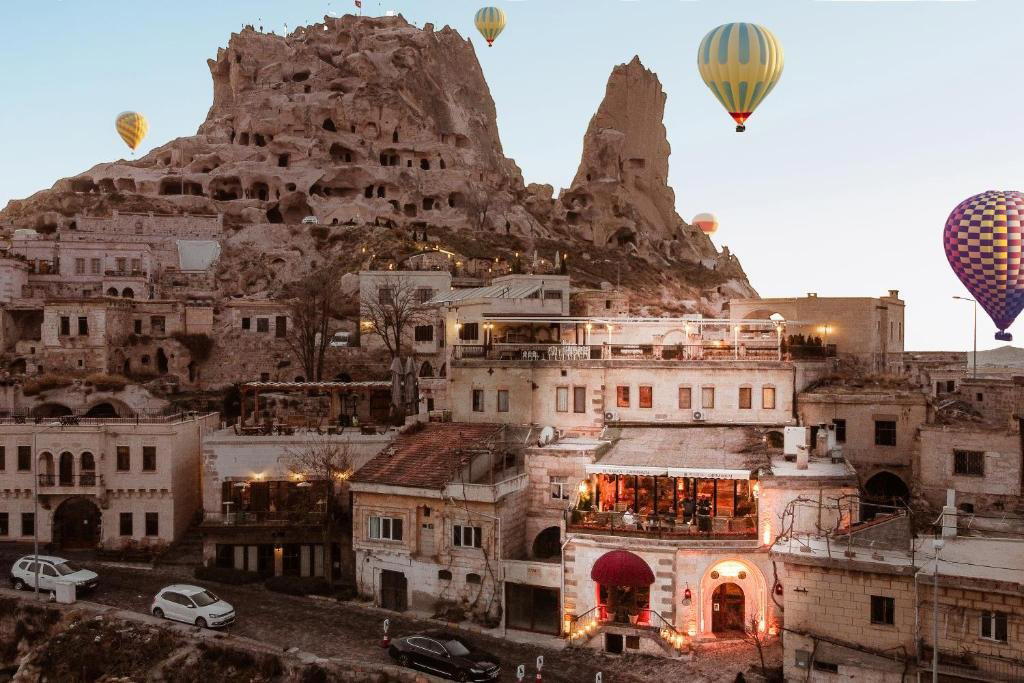
Uçhisar sits at the highest point in Cappadocia, its rock-cut citadel visible from most of the surrounding plateau. The village has attracted a particular kind of hotel conversion over the past two decades: cave structures that preserve the volcanic tuff architecture while embedding contemporary interiors. Moniq Restaurant operates within Taskonaklar, one of those converted properties, and the dining room reflects the approach honestly. Rough-hewn stone walls, low-vaulted ceilings, and the weight of geological time overhead set a context that no amount of interior design could manufacture. This is what Cappadocian hospitality at the upper tier looks like: the environment does most of the work.
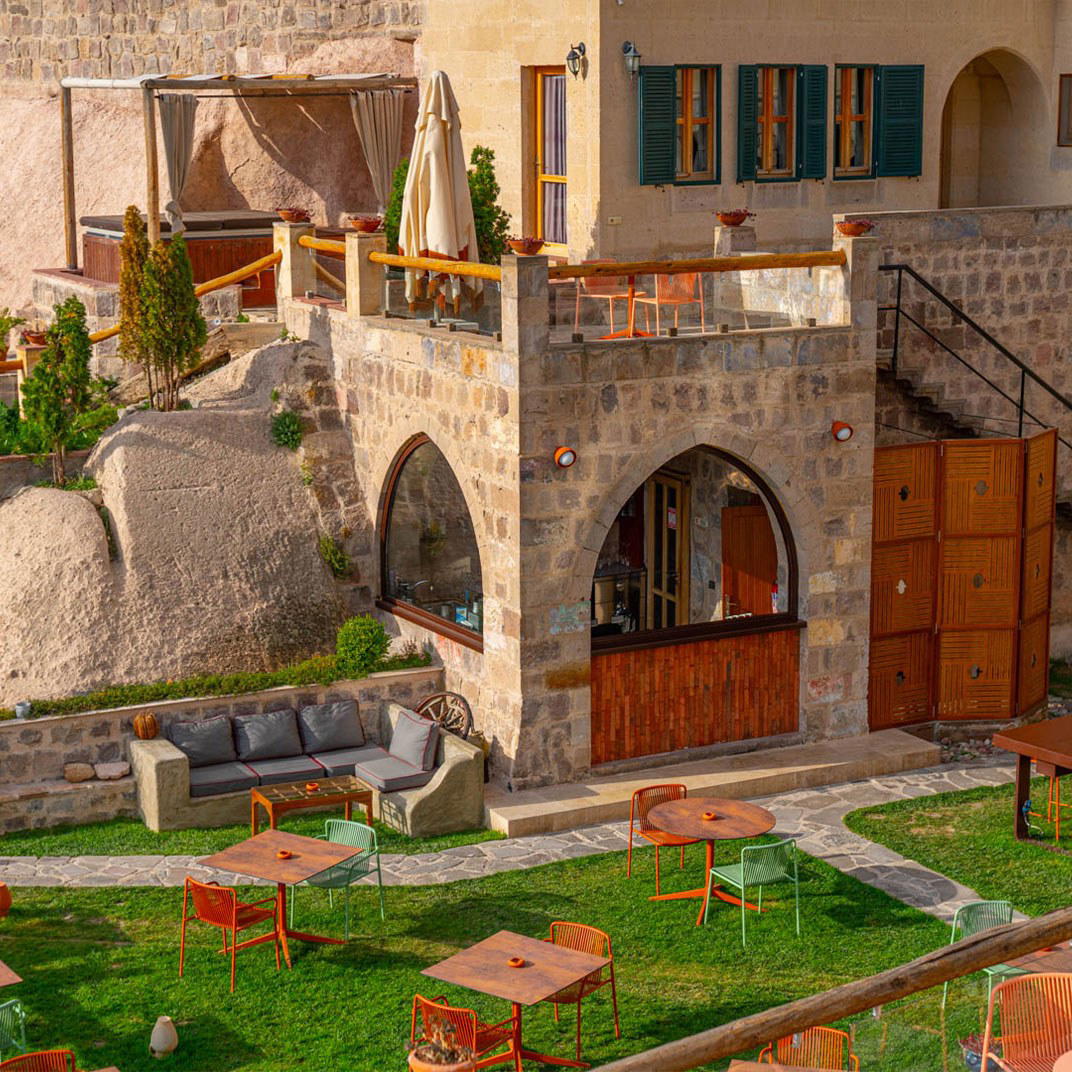
Before sitting down, the terrace commands attention. Pigeon Valley, the deep gorge carved between Uçhisar and Göreme and named for the dovecotes that early inhabitants cut into the rock to harvest fertiliser, stretches out below. At dusk, the light shifts from amber to deep rose across the fairy chimneys and eroded tuff formations. Aperitifs on that terrace, before descending into the cave dining room, calibrate the meal well.
A Menu Built From the Villages, Not From a Concept Kitchen
Turkish restaurant dining in internationally recognised cities has moved in two directions simultaneously. Places like Turk Fatih Tutak in Istanbul apply rigorous tasting-menu discipline to Anatolian ingredients, while coastal restaurants such as Maçakızı in Bodrum and Narımor in Izmir lean into regional seafood traditions with a modern editorial eye. Interior Anatolia, by contrast, has largely kept its culinary identity closer to the source. Moniq sits firmly in that second current.
Chef Mustafa Türkten works with local women from nearby villages to develop the menu, a collaboration model that grounds the food in living tradition rather than documented archive. The approach produces something that neither nostalgia tourism nor modern Anatolian fine dining fully captures: recipes with actual domestic continuity, adjusted for a dining room context rather than reconstructed from cookbooks. That distinction matters. The difference between a dish that has been eaten in variations by the same families for generations and one that has been studied and reproduced is audible in the flavour.
The menu draws on Cappadocian staples: manti with roasted aubergine, lamb casserole with stewed peppers and tomatoes finished with a spiced lamb jus and served with pita bread. Manti, the small stuffed dumplings that appear across Central Asian and Anatolian cooking in dozens of regional variants, are one of the clearer markers of culinary heritage in this part of Turkey. The Cappadocian version served here, paired with roasted aubergine, speaks to the valley's agricultural character. The lamb casserole follows a similar logic: the cooking of a region where livestock farming shaped daily life more than any urban food trend.
On Friday and Saturday evenings, Ottoman mutancana appears on the menu. Mutancana is one of the older entries in the Ottoman palace kitchen canon, a slow-cooked meat preparation built around fruit, nuts, and aromatic spicing that reflects the hybrid culinary vocabulary of the imperial court. Its appearance on a weekend menu in a cave restaurant in Uçhisar is not theatrics. Cappadocia was a significant node on trade routes long before tourism arrived, and the Ottoman kitchen drew heavily on Central Anatolian produce and technique. Mutancana on a Friday or Saturday evening at Moniq is the clearest single argument for timing your reservation accordingly.
Where Moniq Sits in the Cappadocian Dining Scene
The restaurant dining options in and around Uçhisar and Göreme have expanded considerably as the region's tourism profile has grown. Happena, Reserved Restaurant, Saklı Konak Cappadocia, and Uzundere Kapadokya Mutfağı each occupy different positions in the local market. Moniq's positioning is specific: hotel-integrated, village-tradition-rooted, with the terrace and cave setting doing work that a freestanding restaurant would struggle to replicate. The comparison set in Cappadocia for this tier is small, and the collaborative village-recipe model gives it a curatorial identity that is harder to reproduce than a well-sourced menu.
Elsewhere in Turkey, the question of how restaurants engage with regional tradition has produced varied answers. 7 Mehmet in Antalya has built a long-term reputation on Taurus Mountain cuisine; Aravan Evi in Ürgüp, just a short drive from Uçhisar, addresses Cappadocian tradition from within the same geography. Outside Turkey, the debate about how fine dining engages with cultural inheritance is as active at Le Bernardin in New York City or Emeril's in New Orleans as it is here, though the terms of that debate look very different when the tradition in question is still practiced by the people who invented it.
Planning Your Visit
Moniq Restaurant is located at Gedik Sokak No:8, Uçhisar, within the Taskonaklar hotel property. Uçhisar itself is a short drive or taxi ride from both Göreme and Nevşehir. The terrace timing is worth considering: arrivals before sunset allow for aperitifs with the valley view before moving to the cave dining room, and the transition from the outdoor light into the stone interior is part of the experience. The Ottoman mutancana is only available on Friday and Saturday evenings, which is worth factoring into any itinerary. Visitors staying in the region for multiple nights should hold one of those evenings for Moniq specifically.
For wider planning in the region, our full Nevşehir restaurants guide covers the dining options across the valley. Our Nevşehir hotels guide addresses the cave accommodation market in more depth, while our bars guide, wineries guide, and experiences guide cover the rest of the region's offer. For coastal comparison with other Turkish restaurants working regional traditions seriously, Ahãma in Göcek and Agora Pansiyon in Milas are worth consulting.
Frequently asked questions
Where is Moniq Restaurant in Nevşehir?
Moniq Restaurant is located at Aşağı, Gedik Sokak No:8, Uçhisar, Nevşehir.
Is Moniq Restaurant Michelin-listed?
Moniq Restaurant has received recognition including: Nestled in one of the stylishly transformed caves that together form the remarkable Taskonaklar hotel, Moniq Restaurant showcases the rugged stone beauty of Cappadocia. The opportunity to take an aperitif on one of the terraces overlooking ….
What's the must-try dish at Moniq Restaurant?
The Ottoman mutancana is the most historically grounded item on the menu and is only available on Fridays and Saturdays, making it worth planning your visit around. The broader menu, built by Chef Mustafa Türkten alongside local village women, also features manti with roasted aubergine and lamb casserole finished with spiced lamb jus, dishes drawn from Central Anatolian tradition rather than a concept kitchen.
Do they take walk-ins at Moniq Restaurant?
Moniq operates within the Taskonaklar hotel at Gedik Sokak No:8, Uçhisar, a cave-integrated property with limited capacity by design. Walk-in availability is unpredictable, particularly if you have a specific day in mind, the Ottoman mutancana is only served on Fridays and Saturdays, so advance contact with the hotel is advisable before arrival.
A Pricing-First Comparison
Comparable venues nearby, for context on price, style, and recognition.
| Venue | Cuisine | Price | Awards | Notes |
|---|---|---|---|---|
| Moniq RestaurantThis venue (the venue you are viewing) | Traditional Turkish Cappadocian | Not listed | Michelin Plate | Not listed |
| Seki Restaurant | Modern Turkish Mediterranean | $50–100 | Michelin Plate · Gault & Millau Türkiye 1 Toque | Uchisar, Modern Turkish Mediterranean |
| Saklı Konak Cappadocia | Traditional Cappadocian Turkish | $20–30 | Michelin Plate | Uchisar, Traditional Cappadocian Turkish |
| Nahita Cappadocia | Traditional Anatolian Turkish | Not listed | Michelin Plate · Gault & Millau Türkiye 2 Toques | Uchisar, Traditional Anatolian Turkish |
| Happena | Ancient Hittite-Inspired Turkish Cuisine | $30–50 | Michelin Bib Gourmand | Göreme, Ancient Hittite-Inspired Turkish Cuisine |
| Lil'a | Traditional Turkish Anatolian | $30–50 | Relais Chateaux Award · Gault & Millau Türkiye 2 Toques | Uchisar, Contemporary Anatolian & Cappadocian Fine Dining |
Recognition history
Dated appearances from independent guides and award organizations, with the underlying list record or original source where available.
Michelin Plate
Michelin · 2026 Michelin Plate
Continue exploring
More in Nevsehir
Restaurants in Nevsehir
All restaurants in Nevsehir →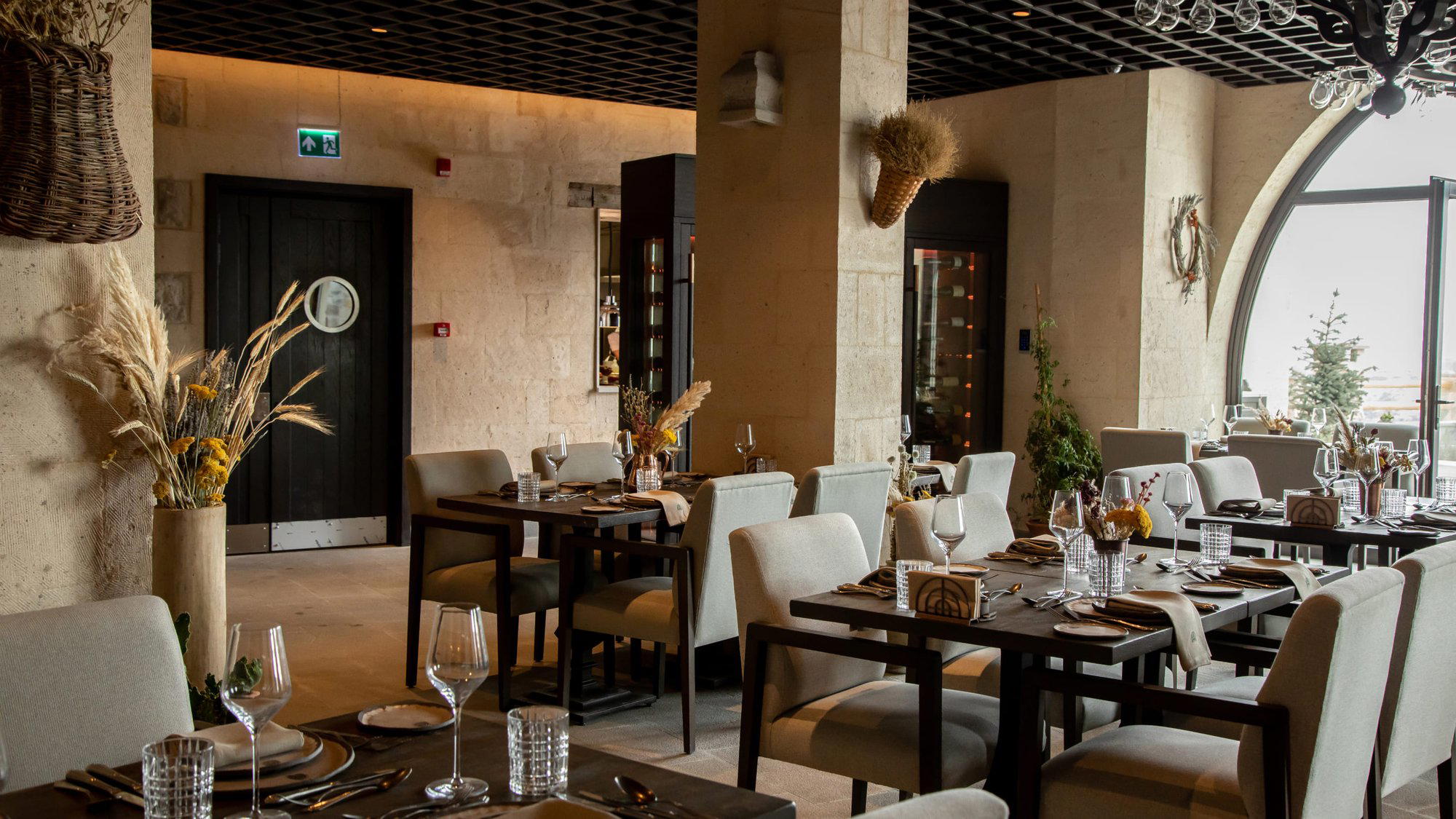
Details
- Romantic
- Cozy
- Elegant
- Intimate
- Scenic
- Date Night
- Special Occasion
- Terrace
- Panoramic View
- Historic Building
- Hotel Restaurant
- Local Sourcing
- Mountain
- A La Carte
Current opening hours
- Monday
- 8 AM–11 PM
- Tuesday
- 8 AM–11 PM
- Wednesday
- 8 AM–11 PM
- Thursday
- 8 AM–11 PM
- Friday
- 8 AM–11 PM
- Saturday
- 8 AM–11 PM
- Sunday
- 8 AM–11 PM
Hours can change for holidays and private events. Hours as of .
Charming and inviting cave interior with terraces overlooking dramatic Pigeon Valley.