

Google: 4.6 · 425 reviews
.png)


On the edge of Ebeltoft's harbour, Molskroen holds two consecutive Michelin Plates (2024 and 2025) for cooking that takes the surrounding landscape of the Mols Bjerge seriously as a sourcing principle. Chef Steffen Villadsen's menu follows the bay and its hinterland closely, with fish at the centre and a plant-based programme that Michelin's own assessors have flagged as a work still in progress.
Pearl is the En Primeur Club membership app — saves, bookings, and concierge access live there. Same editors, same standards.

Where the Djursland Coast Meets the Plate
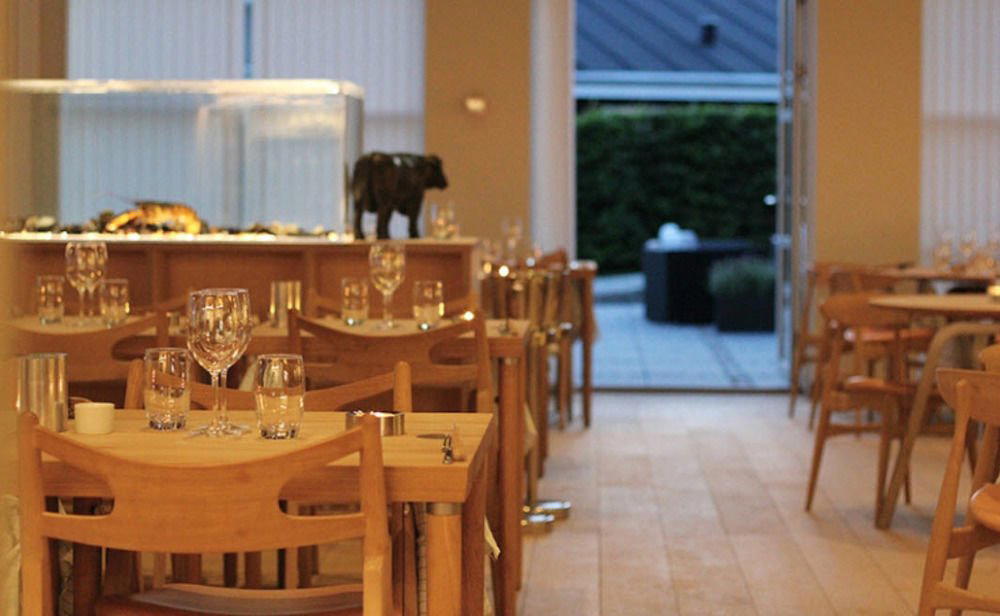
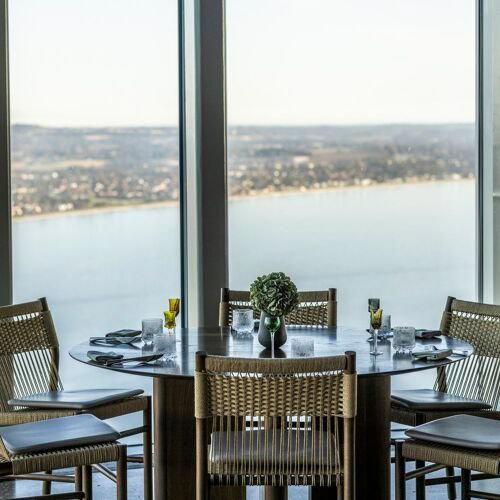
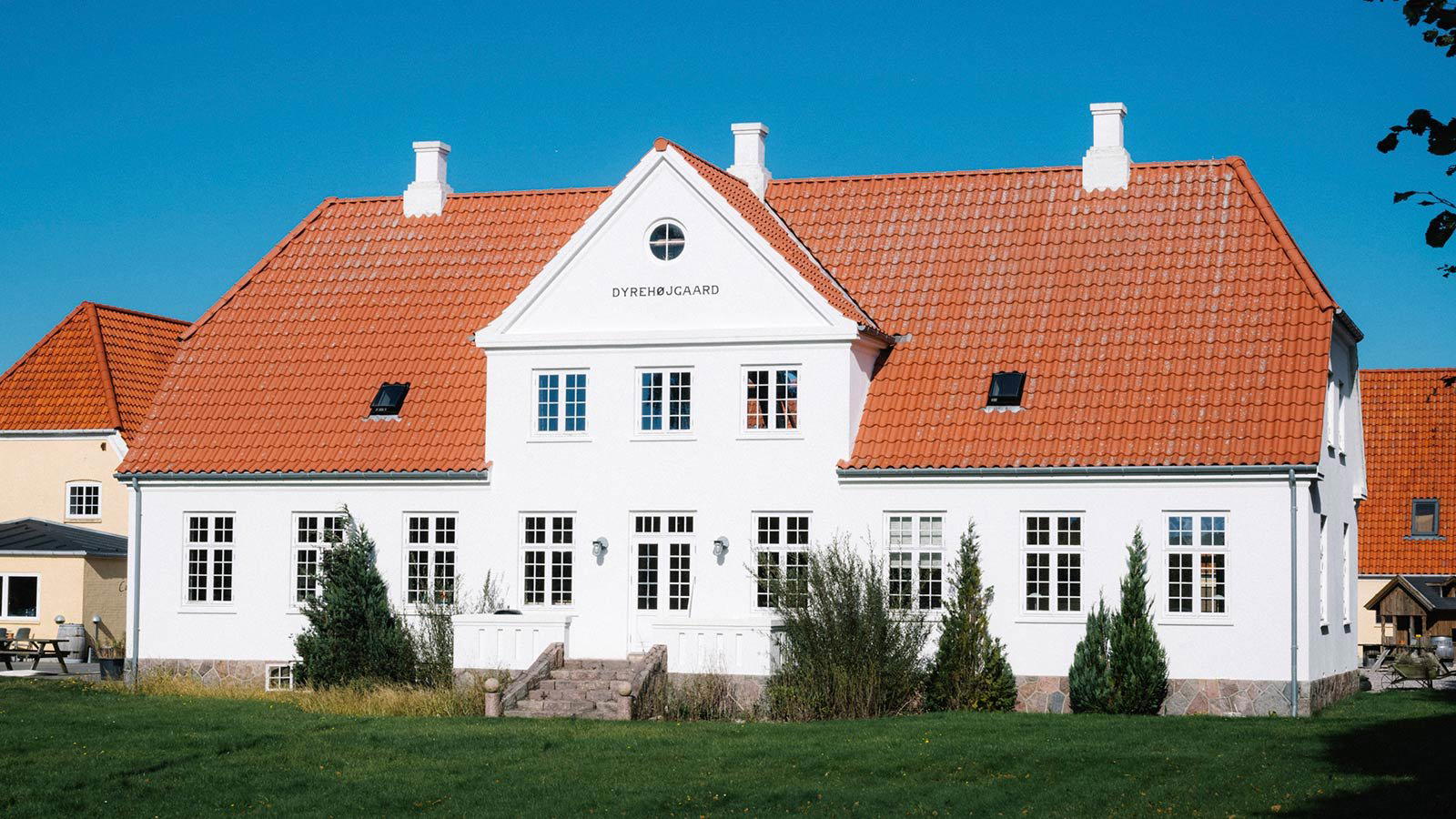
Approach Molskroen along Ebeltoft's Hovedgaden and the setting does the first work. The Mols Bjerge hills roll behind the town, the Ebeltoft Vig bay opens in front, and the restaurant sits at that junction in a way that stops feeling incidental once you understand how the kitchen operates. The natural environment here is not backdrop; it functions as a sourcing framework. That orientation — towards place as larder rather than place as view — puts Molskroen in a specific and growing cohort of Danish coastal restaurants where the supply chain runs a matter of kilometres, not hundreds of them.
For broader context on where Molskroen fits within Denmark's current fine dining moment, see our full Ebeltoft restaurants guide, and for accommodation and other planning, our full Ebeltoft hotels guide.
The Sourcing Argument at the Centre of the Menu
Danish New Nordic cooking established an ingredient-origin logic in the early 2010s that has since filtered into restaurants well outside Copenhagen. At its core, the argument is simple: proximity and seasonality are culinary values, not just ethical ones, because ingredients picked or caught within hours of service carry qualities that imported alternatives cannot replicate. Molskroen operates inside that logic, with the bay providing fish and the farmland and foraging territory of Djursland supplying much of what surrounds it on the plate.
The fish deserves particular attention here. The Ebeltoft Vig and wider Kattegat waters produce flatfish, shellfish, and round fish that appear on the menu in forms dictated by what the water offers at a given moment. This is a kitchen that responds to catch rather than ordering to spec, which means the menu shifts with the season and the sea , a discipline that separates restaurants genuinely committed to local sourcing from those using it as a marketing premise.
Michelin awarded Molskroen a Plate in both 2024 and 2025. The Plate designation signals cooking worth attention without reaching the star tier; in Michelin's own language, it marks a restaurant using quality ingredients prepared with care. The assessors' accompanying note is unusually candid: they identify the fish cookery and the natural setting as strengths, and flag the plant-based selection as underdeveloped. That critique is worth taking seriously. Djursland's agricultural hinterland and the foraging possibilities of Mols Bjerge represent material that could support a more ambitious vegetable programme. The Michelin observation reads less as dismissal and more as a pointed invitation , the same invitation that restaurants like Kadeau Bornholm in Åkirkeby and Henne Kirkeby Kro in Henne have answered by building vegetable cookery into the identity of the menu rather than treating it as a secondary track.
Sustainability as Operating Principle
Across Scandinavia, sustainability in hospitality has split between properties that treat it as a communications exercise and those that have embedded it into daily operations. Molskroen sits in the latter category, according to Michelin's assessment, which notes that waste management, sourcing integrity, and treatment of staff are all factored into how the place runs. That operational commitment matters because it shapes what actually arrives on the table: a kitchen disciplined about waste tends to be disciplined about using the whole animal or whole vegetable, which produces different cooking from one optimising for the most photogenic cuts.
The Michelin note phrases it directly: sustainability is a verb here, not a noun. For a restaurant at the €€€ price point in a town of Ebeltoft's scale, that level of operational scrutiny is an investment that filters through into ingredient quality and cooking consistency.
Ebeltoft and the Case for Provincial Fine Dining
Danish fine dining is heavily weighted towards Copenhagen. Geranium and Jordnær in Gentofte represent the upper tier of what the capital and its immediate surrounds can produce. Outside that gravitational pull, the case for provincial fine dining depends on restaurants doing something the capital cannot: direct access to a specific terroir, a pace of service that reflects the surrounding town rather than a metropolitan schedule, and a sense that the meal is contingent on where you are rather than interchangeable with what you might eat in any city.
Molskroen makes that case through its sourcing geography. The Djursland peninsula is not a well-mapped food destination for international visitors in the way that Bornholm has become, partly through Kadeau's influence, or the way Jutland's west coast has been shaped by Henne Kirkeby Kro. Molskroen operates in a less codified territory, which gives it room but also means the vegetable programme gap matters more: there is no surrounding restaurant ecosystem to absorb the shortfall. Comparable efforts in the provinces , Frederikshøj in Aarhus, Alimentum in Aalborg, and Domæne in Herning , each anchor their identity to a specific strength. Molskroen's strength is the water and what comes out of it; building equivalent authority over the land around it would close the gap Michelin has identified.
For those travelling specifically to eat in Denmark outside the capital, the ARO in Odense, MOTA in Nykøbing Sjælland, and Dragsholm Slot Gourmet in Hørve form part of the same provincial fine dining conversation, each with a distinct relationship to their local ingredient supply. Further afield, Parsley Salon in Hellerup and the technically demanding work at Frantzén in Stockholm and FZN by Björn Frantzén in Dubai offer useful comparison points for what Scandinavian-influenced modern cuisine looks like at different price tiers and geographic contexts.
Planning a Visit
Molskroen is located at Hovedgaden 16 in Ebeltoft, a town on the Djursland peninsula in eastern Jutland, roughly an hour's drive northeast of Aarhus. The €€€ pricing positions it at a level where a full dinner represents a significant spend relative to the local market, though well below the €€€€ tier occupied by the Copenhagen flagships. Given the setting and the operational commitments Michelin has documented, it warrants a trip built around it rather than a casual drop-in , the kind of evening where the drive through Mols Bjerge becomes part of the experience rather than an inconvenience. For everything else in the area, see our full Ebeltoft bars guide, our full Ebeltoft wineries guide, and our full Ebeltoft experiences guide.
Peer Set Snapshot
These are the closest comparables we have in our database for quick context.
| Venue | Cuisine | Price | Awards | Notes |
|---|---|---|---|---|
| Molskroen | Modern Cuisine | €€€ | If you like pure nature, you will love this setting. Sustainability is a verb he… | This venue |
| Geranium | New Nordic, Creative | €€€€ | Michelin 3 Star | New Nordic, Creative, €€€€ |
| Noma | Creative | €€€€ | Michelin 3 Star | Creative, €€€€ |
| Alchemist | Progressive, Creative | €€€€ | Michelin 2 Star | Progressive, Creative, €€€€ |
| Koan | New Nordic, Kaiseki, Creative | €€€€ | Michelin 2 Star | New Nordic, Kaiseki, Creative, €€€€ |
| a|o|c | New Nordic, Mediterranean Small Plates, Creative | €€€€ | Michelin 2 Star | New Nordic, Mediterranean Small Plates, Creative, €€€€ |
At a Glance
- Scenic
- Cozy
- Elegant
- Romantic
- Date Night
- Special Occasion
- Family
- Waterfront
- Terrace
- Extensive Wine List
- Waterfront
Charming, calm, and beautiful atmosphere with pleasant acoustics and attentive service.