Our verdict
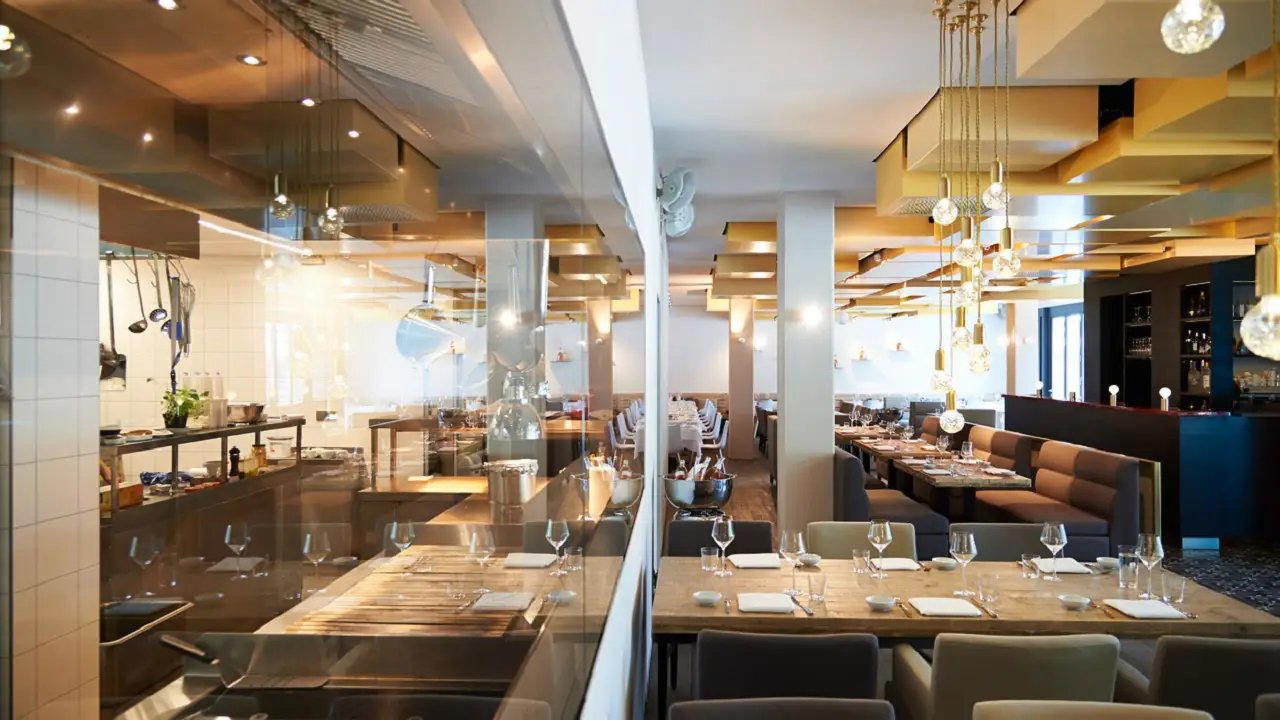
On Zschortauer Strasse in Leipzig's northern residential fringe, MITO Restaurant sits away from the city's more trafficked dining corridors, positioning itself within a local scene that increasingly rewards venues willing to operate outside the established centre. Leipzig's restaurant culture has grown more architecturally diverse in recent years, and MITO represents part of that outward spread beyond the inner ring.

Pearl is the En Primeur Club membership app — saves, bookings, and concierge access live there. Same editors, same standards.
- Address
- Zschortauer Str 68, 04129 Leipzig, Germany
- Phone
- +49341909626198
- Hours
- Mon 12–3 PM, 5–10 PMTue 5–10 PMWed–Thu 12–3 PM, 5–10 PMFri–Sat 12–3 PM, 5–10:30 PMSun 12–3 PM, 4–10 PM
- Website
- mito-leipzig.de
- Directions
- Get directions
Leipzig's Northern Fringe and What It Signals About the City's Dining Spread
Leipzig's dining culture has historically concentrated around the Innenstadt and Südvorstadt, where address recognition and foot traffic made commercial sense for ambitious restaurants. That pattern has been shifting. Venues operating on streets like Zschortauer Strasse, in the northern residential quarters away from the tourist circuit, tend to serve a more local constituency and rarely need the visibility that central placement provides. MITO Restaurant, at number 68 on that street, sits squarely in this northward drift. The address alone positions it as a neighbourhood-oriented operation rather than a destination aimed at visitors clearing the Gewandhaus off their itinerary.
This geographic positioning carries editorial weight. Restaurants that establish themselves in low-footfall residential zones are typically sustained by repeat local custom and word-of-mouth rather than by passing trade. In Leipzig, where the dining scene has expanded considerably since the city's post-reunification cultural resurgence, that kind of neighbourhood anchor role has become more, not less, significant. For a comparable read on how Leipzig's mid-tier fine dining operates closer to the centre, Kuultivo (Modern Cuisine) and Stadtpfeiffer (Creative) offer useful reference points at the €€€ and €€€€ price brackets respectively.
Menu Architecture and What It Reveals
The editorial angle that matters most for any restaurant operating outside a city's established dining corridor is how its menu is structured. A venue in a residential neighbourhood cannot rely on ambient footfall to fill seats across multiple sittings; it needs a menu architecture that gives regulars a reason to return on different occasions while offering enough coherence to build a reputation through recommendation. This usually resolves into one of two formats: a tight, rotating menu with strong seasonal logic, or a broader card that covers multiple eating occasions without diluting identity.
What can be said with confidence is that the restaurant's address and positioning within Leipzig's northern residential district suggest an operation calibrated to neighbourhood demand rather than to the tasting-menu circuit that venues like Aqua in Wolfsburg or Schwarzwaldstube in Baiersbronn occupy at the top of Germany's fine dining tier. Those venues, with multiple Michelin stars and dedicated destination audiences, represent one end of the German restaurant spectrum; MITO operates in a different register, where the relationship between the kitchen and its immediate community is more likely to define the menu's shape than international recognition benchmarks.
Germany's restaurant scene outside its major metropolitan hubs has developed a recognisable mid-tier that balances culinary seriousness with accessibility. Cities like Leipzig have benefited from this, producing restaurants that do not chase star credentials but maintain consistent quality across a focused offer. In this context, the absence of formal award recognition does not signal absence of quality; it often signals a deliberate choice to remain outside the circuits that award structures reward. For reference on how that plays out at the decorated end of the German dining scene, Vendôme in Bergisch Gladbach and Victor's Fine Dining by Christian Bau in Perl illustrate the upper bracket.
Leipzig's Broader Restaurant Context
Understanding MITO's position requires understanding Leipzig's current dining spread. The city has attracted significant restaurant investment over the past decade, much of it concentrated in the southern and central districts. The northern quarters, by contrast, have developed more organically, with independent operators rather than destination-format venues setting the tone. This creates a different kind of dining ecology: less competitive on prestige signals, more reliant on quality consistency and genuine local embeddedness.
Leipzig's more internationally oriented dining options, including 997 Sushi Restaurant, Addis Café, and Alfa Restaurant, each occupy distinct niches within the city's culinary spread. Our full Leipzig restaurants guide maps the broader landscape if you are planning across multiple meals.
The comparison with restaurants at the decorated end of the German scene is instructive for understanding what Leipzig's mid-tier represents in relative terms. ES:SENZ in Grassau and Schanz in Piesport both operate in small-town or rural settings with Michelin recognition, demonstrating that geographic remoteness and formal recognition can coexist in Germany. Leipzig's independent sector, MITO included, operates in a different relationship to that recognition infrastructure, one where local relevance often outweighs national profile.
Planning a Visit
MITO Restaurant is located at Zschortauer Strasse 68, 04129 Leipzig. The address places it in Leipzig's northern districts, outside the immediate centre, so visitors arriving by public transport should plan the route in advance; Leipzig's tram network covers much of the northern city, and the address is accessible without requiring a taxi. For visitors building a Leipzig dining itinerary that also covers the city's more central options, pairing MITO with a visit to Kuultivo or Stadtpfeiffer would give a useful cross-section of the city's dining range across price tiers and formats.
Germany's broader fine dining circuit, anchored by venues like Restaurant Haerlin in Hamburg, JAN in Munich, and Waldhotel Sonnora in Dreis, provides a reference frame for understanding where any individual Leipzig restaurant sits in the national picture. MITO does not compete in that tier by any available signal; it operates in the neighbourhood segment where different measures apply. For an international comparison of how city-fringe dining operates at the high end, CODA Dessert Dining in Berlin, Le Bernardin in New York City, and Atomix in New York City illustrate how format discipline and neighbourhood positioning intersect with formal recognition at the upper end of the global dining market.
Frequently asked questions
What's the address for MITO Restaurant?
MITO Restaurant is located at Zschortauer Str 68, 04129 Leipzig, Germany, Leipzig.
Is MITO Restaurant in Leipzig suitable for a dinner reservation rather than a casual drop-in?
MITO sits at Zschortauer Strasse 68 in Leipzig's northern districts, an address that positions it as a neighbourhood destination rather than a central walk-in spot. The location and setting suggest a sit-down dining format rather than a quick-service offer.
What's the best thing to order at MITO Restaurant?
Given its position on Zschortauer Strasse in Leipzig's northern districts, away from the high-turnover central restaurant belt, the menu architecture is worth asking about directly when you arrive. Venues in this kind of location tend to build around a tighter, more considered selection rather than broad crowd-pleasing range.
Can I walk in to MITO Restaurant?
No confirmed booking policy is available for MITO. The address at Zschortauer Strasse 68 places it outside Leipzig's main foot-traffic corridors, which typically means less competition for tables on the door compared to Innenstadt venues. Checking in advance is the sensible approach regardless.
What makes MITO Restaurant worth seeking out?
The address itself is part of the argument. Leipzig's restaurant investment has concentrated in Südvorstadt and the centre, so a venue operating from Zschortauer Strasse 68 in the northern districts is drawing a local, neighbourhood audience rather than passing trade. That context tends to produce restaurants with a clearer point of view.
The Essentials
Comparable venues nearby, for context on price, style, and recognition.
| Venue | Cuisine | Price | Notes |
|---|---|---|---|
| MITO RestaurantThis venue — the venue you are viewing | Modern Japanese Sushi & Robata Grill | $30–50 | Not listed |
| Sona | Japanese Sushi & Asian Fusion | $30–50 | Zentrum-Süd, Japanese Sushi & Asian Fusion |
| 997 Sushi Restaurant | Modern Japanese Sushi & Robata | $20–30 | Plagwitz, Modern Japanese Sushi & Robata |
| Umaii Ramenbar | Authentic Japanese Ramen | $10–20 | Zentrum, Authentic Japanese Ramen |
| Niiko Asia Streetfood | Vegan Sushi Fusion | $20–30 | Zentrum, Vegan Sushi Fusion |
| Burgerheart | Modern American Burgers | $10–20 | Zentrum-West, Modern American Burgers |