Mint Progressive Indian
Mint Progressive Indian occupies a first-floor address on 1st Avenue in Seattle's downtown corridor, positioning modern Indian cooking within a city scene more accustomed to Pacific Rim and New American formats. The menu advances traditional subcontinent technique through a contemporary lens, placing Mint in a small peer set of Indian restaurants operating above the conventional curry-house tier across the American West Coast.
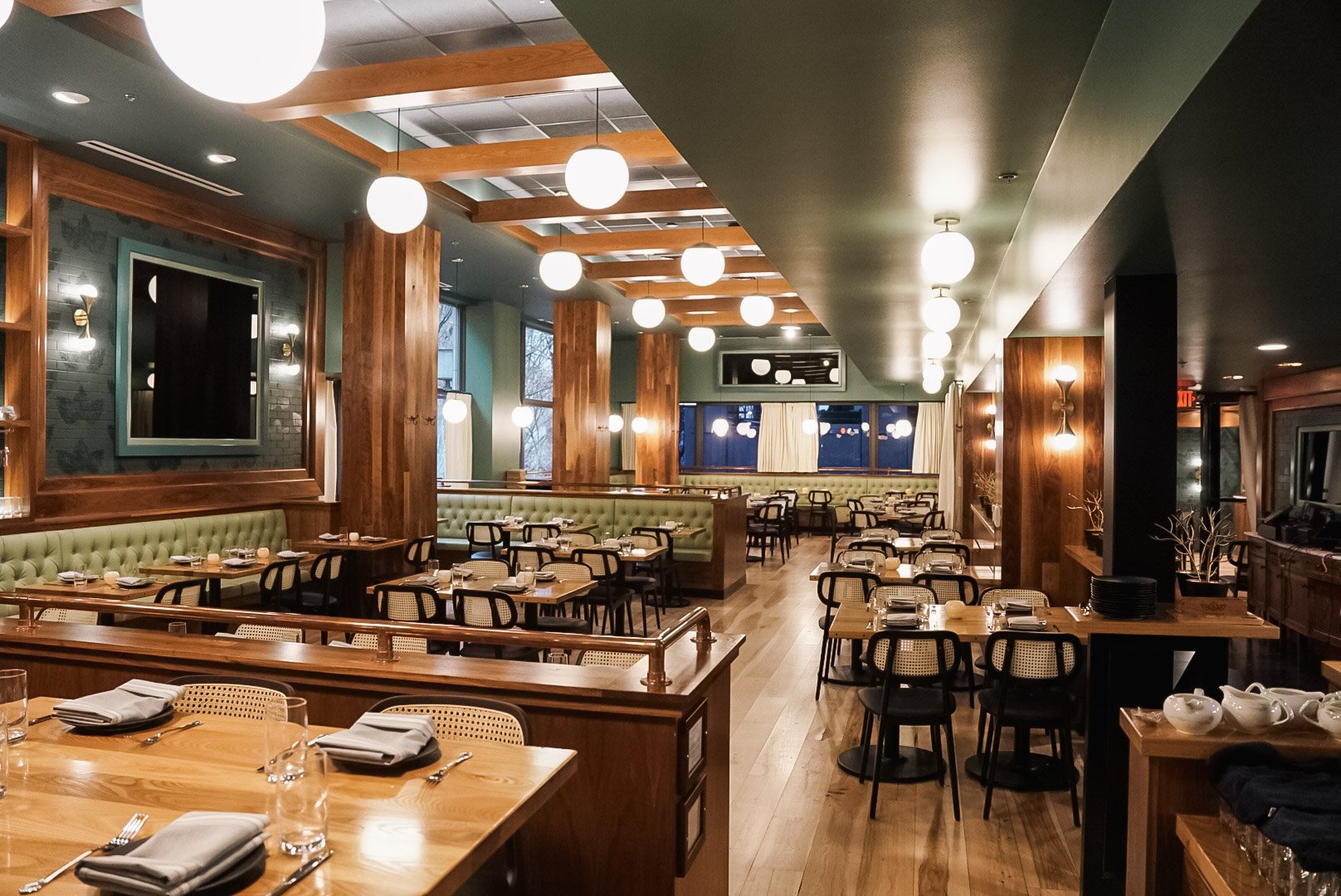
Where Progressive Indian Cooking Fits in Seattle's Dining Order
Seattle's serious dining scene has long been anchored by Pacific Rim technique and New American sourcing discipline. The city that made room for counter-service ramen temples, Vietnamese kitchens like Ba Bar, and technically demanding formats such as Joule (New Asian) has been slower to produce Indian restaurants operating at comparable ambition. That gap is precisely the context in which Mint Progressive Indian, at 1103 1st Ave, warrants attention. Progressive Indian as a format — applying classical subcontinent spice logic to modernist plating, seasonal sourcing, and multi-course structure — has gained ground in London, New York, and Chicago without achieving the same foothold on the West Coast. Mint occupies that opening.
The address places the restaurant in Seattle's downtown First Avenue corridor, a stretch that functions as a through-line between Pike Place Market and the waterfront and draws a mix of after-work professionals and visitors with more than a passing interest in where they eat. It is not the neighbourhood where you expect to find cooking that challenges received ideas about what Indian food can be in an American context. That tension, between the commercial density of the location and the specificity of the culinary proposition, is part of what makes the format legible: this is Indian cooking addressed to an audience that cross-references it against the broader ambitious dining conversation rather than against the nearest tikka masala benchmark.
The shortlist, unlocked.
Hard-to-book tables, cellar releases, and concierge-planned trips.
Get Exclusive Access →The Progressive Indian Format and What It Demands of a Wine Program
Few cuisines challenge a wine program as thoroughly as serious Indian cooking. The spice calibration shifts constantly across courses, moving from cooling yogurt-forward preparations to slow-heat reductions to acidic tamarind finishes. A cellar that services a New American tasting menu , where Burgundy whites and structured Pinot Noirs do most of the heavy lifting , needs a different architecture when the kitchen is working with cardamom, fenugreek, and black lime. The restaurants internationally that have solved this problem have done so by building lists that move laterally: Alsatian Riesling and Gewurztraminer for aromatic lift against warm spice; aged Champagne for textural contrast with fried preparations; skin-contact whites from the Friuli or Georgia to match fermented and pickled elements; and occasionally Rhône reds, where the peppery garrigue of Grenache-Syrah blends creates a complementary rather than competing spice register.
It is a curation philosophy that requires conviction, because it runs against the default assumptions many diners bring to the table. At the tier of restaurants in Seattle where wine programs carry editorial weight , Canlis (New American) has long maintained one of the Pacific Northwest's most considered cellars, and destinations like 1415 1st Ave signal the kind of address-level seriousness that extends to the glass , the expectation is that a list does intellectual work alongside the kitchen. Progressive Indian formats internationally have begun to meet that expectation: in New York, Atomix in New York City demonstrates how a Korean-American tasting menu can build a wine program around the specific chemical demands of fermented and charred flavours, and the parallel challenge for Indian cooking is comparable in complexity if not in identical solution. At Mint, the degree to which the wine list rises to the cuisine's demands is one of the markers worth tracking for anyone approaching the restaurant as a full-evening proposition rather than a standalone dinner.
Placing Mint in the Wider American Progressive Dining Conversation
The American progressive dining tier has consolidated around a familiar axis in recent years. Restaurants like Alinea in Chicago, The French Laundry in Napa, Le Bernardin in New York City, and Lazy Bear in San Francisco define what the category looks like when it achieves full institutional recognition. Further along the Pacific Coast, Providence in Los Angeles and Addison in San Diego anchor the California end of that conversation. What most of these addresses share is a French or New American technical spine, whatever their sourcing philosophy. The handful of restaurants applying comparable structural ambition to non-European culinary traditions , Atomix for Korean; Blue Hill at Stone Barns in Tarrytown for agricultural-concept dining; Single Thread Farm in Healdsburg for Japanese kaiseki principles , represent a different strand of the same ambition.
Progressive Indian sits within that second strand, bringing subcontinent spice architecture into dialogue with the multi-course pacing and sourcing rigour that the American tasting-menu format has established as its baseline. The gap between the cuisine's potential at this level and its actual footprint in the United States remains significant, which gives addresses like Mint a role in the story that extends beyond a single restaurant review. For the Seattle diner mapping the city's dining range , from the neighbourhood-level options on 1744 NW Market St and 2963 4th Ave S up through the institutional anchors , Mint represents a format still establishing its credentials in the local hierarchy.
For a broader orientation to what Seattle's serious dining offers across categories and price points, the full Seattle restaurants guide maps the scene in detail. Internationally, the progressive format applied to non-Western culinary traditions is well-documented at addresses like 8 1/2 Otto e Mezzo Bombana (Hong Kong) in Hong Kong and Emeril's in New Orleans, which demonstrate how regional identity and technical precision can coexist without either term dominating the other. The The Inn at Little Washington in Washington offers another reference point for how a restaurant can sustain a singular culinary identity across decades at the upper end of American fine dining.
Know Before You Go
| Address | 1103 1st Ave, Seattle, WA 98101 |
|---|---|
| Cuisine | Progressive Indian |
| Neighbourhood | Downtown Seattle / First Avenue corridor |
| Reservations | Contact venue directly; booking details not publicly listed at time of writing |
| Price | Not publicly listed; verify before visiting |
| Hours | Not publicly listed; confirm before visiting |
| Phone / Website | Not currently available through EP Club data |
1103 1st Ave, Seattle, WA 98101
+12065333399
Price and Recognition
A compact peer set to orient you in the local landscape.
| Venue | Price | Awards | Notes |
|---|---|---|---|
| Mint Progressive Indian | This venue | ||
| Canlis | New American | ||
| Joule | New Asian | ||
| Altura | New American | ||
| Ba Bar | Vietnamese | ||
| Bakery Nouveau | Bakery |
Need a table?
Our members enjoy priority alerts and concierge-led booking support for the world's most difficult tables.
Get Exclusive AccessThe shortlist, unlocked.
Hard-to-book tables, cellar releases, and concierge-planned trips.
Get Exclusive Access →