MiMi Mei Fair


Michelin Plate · The Good Food Guide GFG Very Good
Our verdict
A three-storey Georgian townhouse on Curzon Street reimagined as the private residence of a fictional Empress, MiMi Mei Fair brings together 1920s Shanghai aesthetics and a menu anchored in classic Chinese cooking. The kitchen, led by a veteran of Hakkasan, centres on ceremonial Peking duck roasted over applewood and first-rate dim sum. Michelin Plate recognition in both 2024 and 2025 confirms its position in Mayfair's premium Chinese tier.

Pearl is the En Primeur Club membership app — saves, bookings, and concierge access live there. Same editors, same standards.
The menu
What to order
- Roasted Peking Duck
- Lantern Chicken
- Char Siu Iberico Pork
Mayfair's Chinese Dining Scene and Where MiMi Sits Within It
Mayfair has long hosted London's most polished Chinese restaurants, a cohort that includes Hakkasan Mayfair at the top of the price-and-production scale and Imperial Treasure representing the Singaporean fine-dining tradition. The team behind Jamavar and Bombay Bustle opened the restaurant on Curzon Street in a Georgian townhouse, and the project signals an ambition to make Chinese cooking in London feel as immersive as a stage production without sacrificing kitchen rigour. With Michelin Plate recognition in both 2024 and 2025, the restaurant has earned a foothold in the credentialled tier of London Chinese dining, distinct from the canteen-style operators and well below the starred bracket occupied by Hakkasan.
That positioning matters because it shapes expectations. MiMi is not trying to deliver the minimal, product-forward approach that drives the current trend in Chinese fine dining, as seen internationally at venues like Mister Jiu's in San Francisco or the European-Chinese synthesis of Restaurant Tim Raue in Berlin. It is doing something more deliberately seductive: using design, service warmth, and a broad menu to create the atmosphere of eating in a private house whose owner collected beautiful things across several decades.
The Craft of Dim Sum at MiMi Mei Fair
Dim sum in London occupies two distinct tiers. The first is the traditional yum cha format, characterised by trolley service, high volume, and pricing that keeps the ritual accessible. The second is the premium interpretation now embedded in Mayfair and the West End, where dim sum appears as a composed course rather than an accumulative spread, with technique and sourcing foregrounded. MiMi operates firmly in the second category.
The dim sum selection includes colourful xiao long bao presented in a bamboo box, king crab dumplings with Chinese garlic, and sea urchin turnip puffs. Each of those three dishes signals a deliberate ambition: the xiao long bao acknowledges the canonical Shanghainese reference point; the king crab version moves it into luxury-ingredient territory; and the sea urchin turnip puff signals genuine kitchen curiosity about texture and contrast. Xiao long bao, at the technical level, demand precision in dough thickness, filling ratio, and sealing, because the soup inside depends on a solid gel that converts to liquid during steaming. Getting the calibration right across multiple sittings requires a kitchen that takes the format seriously rather than treating it as an entry course.
The broader context here: London's premium dim sum has improved materially over the past decade, partly because chefs trained in Hong Kong, Singapore, and mainland China have taken senior positions in West End kitchens. Four Seasons in Chinatown continues to anchor the roast-duck-led end of the spectrum, while Hunan in Pimlico has always operated with a set-menu philosophy that removes choice entirely. MiMi's approach, offering dim sum as a first movement within a wide-ranging à la carte, reflects the Mayfair hospitality model where diners expect both flexibility and craft.
The Main Menu: Peking Duck as Centrepiece
Wood-fire roasted Peking duck is listed as the house specialty, and by the inspector's account it is the dish that makes the visit: painstakingly prepared, roasted over applewood, and carved theatrically at the table. The applewood fuel is not an incidental detail. Different woods produce different smoke profiles and heat intensities, and applewood, which burns at a moderate temperature with a mild sweetness, allows for longer roasting without scorching the skin. The tableside carving ritual belongs to a long tradition of ceremonial duck service in high-end Chinese restaurants, one that reinforces the dish's status as an event within the meal rather than a protein selection. Barshu in Soho demonstrates how distinct regional Chinese cooking can be when taken seriously; MiMi's duck roots itself in the northern Chinese tradition with comparable conviction.
A second dish worth noting from the main menu: langoustines wrapped with angel-hair pasta, deep-fried, and paired with black Périgord truffle. The construction draws on a Chinese technique of using pasta or pastry as a shell for seafood, then elevating the result with an expensive European ingredient. Whether that kind of cross-reference works as a coherent dish depends on execution, and the inspector's account suggests it does.
Three Floors, Three Moods
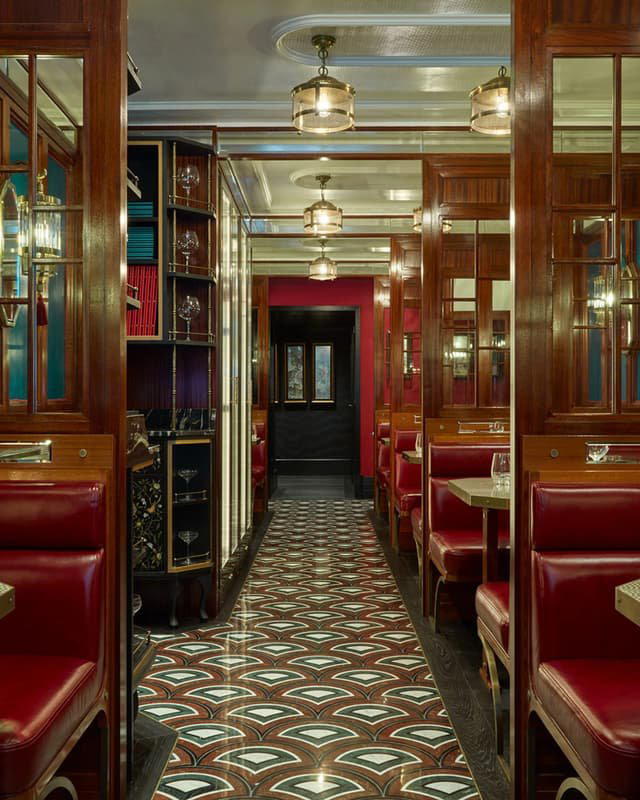
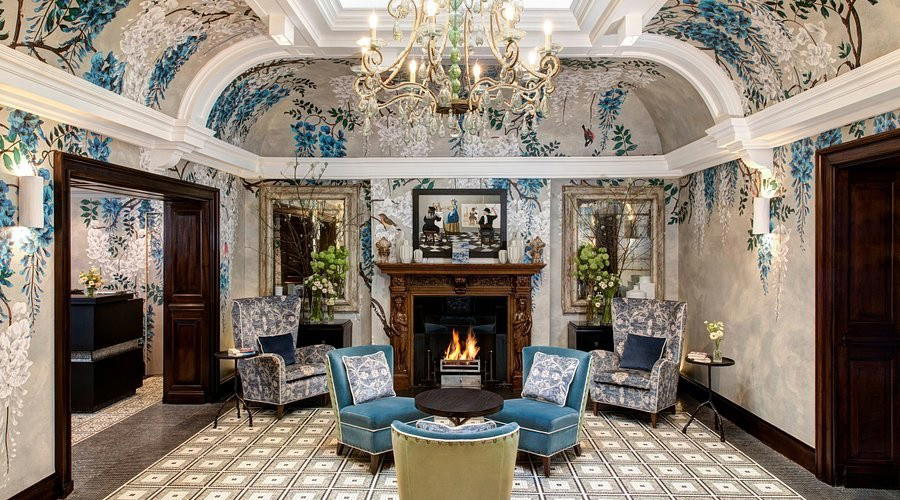
The townhouse format allows MiMi to differentiate its spaces in a way that a single-floor restaurant cannot. Ground-floor booths offer privacy and enclosure; the first-floor Parlour is described as brighter and more open. The design across all three floors references early twentieth-century Chinese interiors, with floral wall coverings, peachy-coloured leather, and Ming-inspired porcelain. A Michelin inspector described the effect as evoking a Wong Kar-Wai film set, which is a specific and useful reference: the director's aesthetic combines saturated colour, period detail, and a sense of time slightly out of joint. That the restaurant achieves this without tipping into pastiche is partly a function of the quality of materials and partly a function of what happens in the kitchen reinforcing the setting's ambitions.
The three-floor structure also means that different visits can feel genuinely different depending on where you are seated, a property that few London Chinese restaurants can claim. By comparison, the high-production rooms at the four-star end of London dining, from Sketch's Lecture Room to the countryside formality of Le Manoir aux Quat'Saisons, tend to deliver a single unified environment. MiMi's segmented floor plan is an asset, and booking with a preference in mind is worth doing.
Drinks and Pricing
Cocktail programme is described as cool and original, and in the context of a restaurant built on fantasy and aesthetic pleasure, that is where the drinks budget is leading spent. The wine list, by the inspector's direct assessment, does not offer good value. That is a relevant signal for anyone planning an extended dinner with multiple bottles: the food pricing sits at the £££ level, which in Mayfair terms represents a meaningful spend before wine.
Sharing is encouraged across the menu, which suits the dim sum format and the theatrical duck service. Groups of three or four will cover more of the menu and will absorb the cost structure more comfortably than a table of two ordering modestly.
Know Before You Go
- Address: 55 Curzon St, London W1J 8PG
- Price range: £££ (Mayfair mid-to-upper tier)
- Awards: Michelin Plate 2024, Michelin Plate 2025
- Format: À la carte; sharing encouraged
- Standout dishes: Applewood-roasted Peking duck; xiao long bao; king crab dumplings
- Drinks note: Cocktails are the stronger choice; wine list carries a premium
- Floors: Ground-floor booths; first-floor Parlour; three-storey townhouse
How MiMi Fits London's Wider Dining Picture
It represents the design-and-theatre end of London's Chinese dining spectrum, without sacrificing the kitchen standards that Michelin recognition requires. See our full London restaurants guide, our full London hotels guide, our full London bars guide, our full London wineries guide, and our full London experiences guide for broader planning context.
Frequently asked questions
What should I eat at MiMi Mei Fair?
The applewood-roasted Peking duck is the dish that anchors the menu, prepared over an extended roasting process and carved at the table. Before that, the dim sum selection earns its own attention: the xiao long bao, king crab dumplings with Chinese garlic, and sea urchin turnip puffs collectively reflect a kitchen that treats the dumpling format as a craft exercise rather than a preliminary. From the main menu, the langoustines wrapped in angel-hair pasta and paired with black Périgord truffle has drawn specific praise. Chef Peter Ho's background at Hakkasan, one of London's most technically demanding Chinese kitchens, provides the credentials behind a menu that covers considerable ground without losing focus on the two or three dishes that define the restaurant's identity. Michelin Plate recognition in 2024 and 2025 corroborates the kitchen's consistency.
Similar Picks
| Venue | Cuisine | Price | Awards | Notes |
|---|---|---|---|---|
| MiMi Mei FairThis venue — the venue you are viewing | Modern Cantonese Chinese | $50–100 | Michelin Plate · The Good Food Guide GFG Very Good | Not listed |
| The Ledbury | Modern British Fine Dining | $300–500 | 3 Michelin Stars · World's 50 Best #42 | Modern European, Modern Cuisine |
| Sketch, The Lecture Room and Library | Modern French Fine Dining | $200–300 | 3 Michelin Stars · World's 50 Best #18 | Modern French |
| CORE by Clare Smyth | Modern British Fine Dining | $150–200 | 3 Michelin Stars · World's 50 Best #97 | Modern British |
| Restaurant Gordon Ramsay | French Fine Dining | $200–300 | 3 Michelin Stars · World's 50 Best #13 | Contemporary European, French |
| Dinner by Heston Blumenthal | Historic British Fine Dining | $200–300 | 2 Michelin Stars · World's 50 Best #45 | Modern British, Traditional British |
Recognition history
Dated appearances from independent guides and award organizations, with the underlying list record or original source where available.
Michelin Plate
Michelin
The Good Food Guide GFG Very Good
The Good Food Guide
Full recognition history (4 entries)
Michelin Plate
Michelin
Michelin Plate
Michelin
Continue exploring
More in London
Restaurants in London
All restaurants in London →
Bars in London
All bars in London →
Hotels in London
All hotels in London →

MiMi Mei Fair
The wine
- Wine program
- Curated wine list
- Extensive wine list
Details
- Elegant
- Sophisticated
- Ornate
- Intimate
- Date Night
- Group Dining
- Special Occasion
- Open Kitchen
- Extensive Wine List
- A La Carte
- Tasting Menu
- Small Plates
- Vegetarian Friendly
- Vegan Options
Current opening hours
- Monday
- 12–2:30 PM, 5:30–10:30 PM
- Tuesday
- 12–2:30 PM, 5:30–10:30 PM
- Wednesday
- 12–2:30 PM, 5:30–10:30 PM
- Thursday
- 12–2:30 PM, 5:30–10:30 PM
- Friday
- 12–2:30 PM, 5:30–10:30 PM
- Saturday
- 12–2:30 PM, 5:30–10:30 PM
- Sunday
- 12–3 PM, 5:30–10 PM
Hours can change for holidays and private events. Last verified .
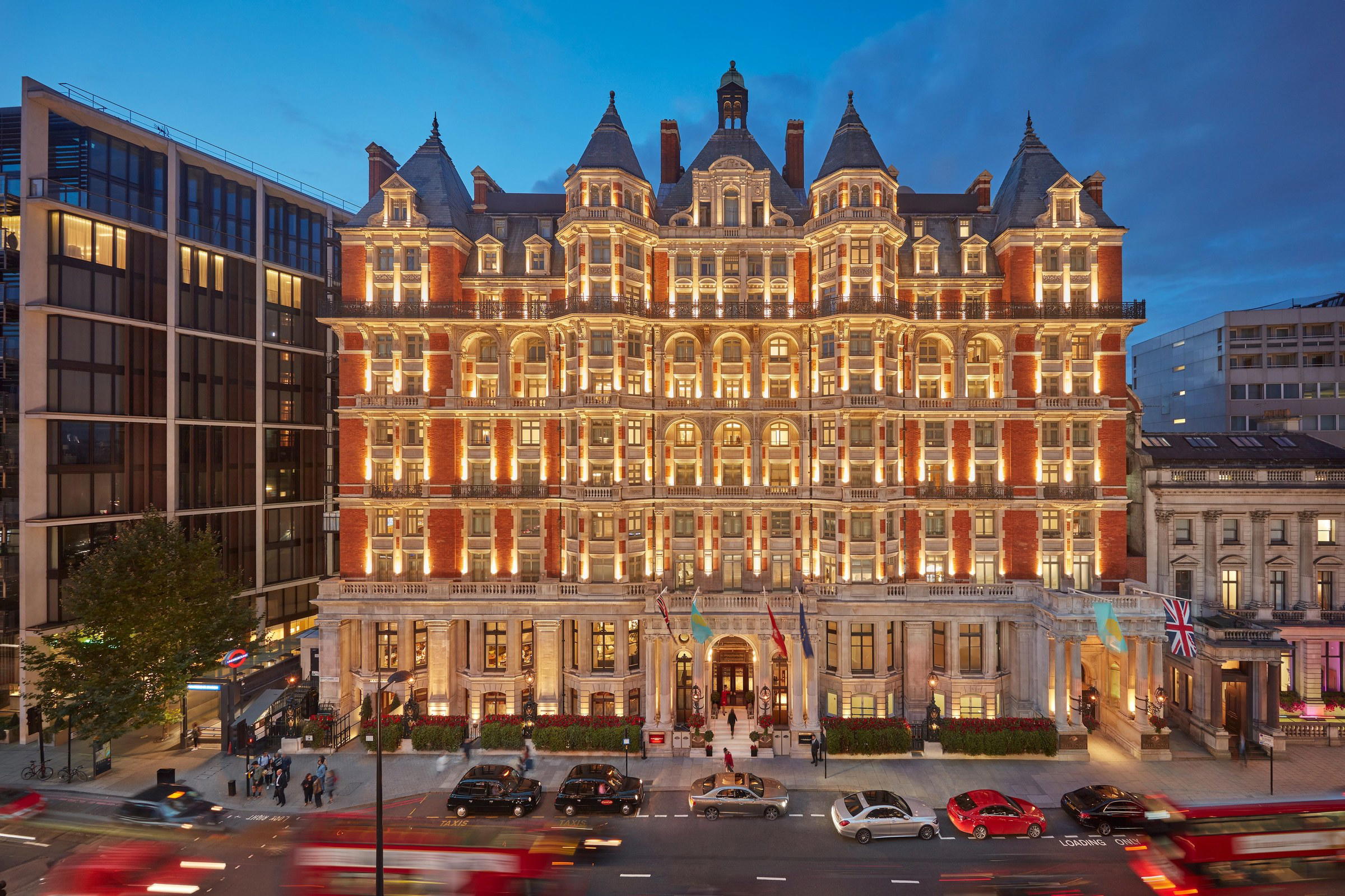
Ornate Georgian townhouse with 1920s Chinese-inspired interiors, plush rooms in rich colors, elegant and playful atmosphere.