
Tabelog 100 #94
Our verdict
Mendoriya places Asakura’s everyday shokudo culture in a sharper frame: chicken-led cafeteria cooking, low pricing, and a compact room recognized by Tabelog’s 2026 Diner 100. The draw is not luxury theatre but regional utility, where kara-age, yakitori, counter seats, table seating, and raised-platform seating point to a local lunch rhythm rather than destination fine dining.

Pearl is the En Primeur Club membership app, where members save venues, book tables and use the concierge.
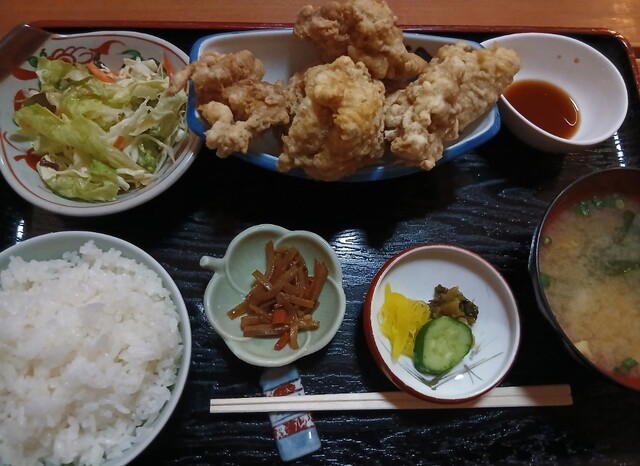
Approaching an everyday Asakura dining room changes the dining contract. The cues are practical before they are theatrical: a modest room, an everyday pace, and a format that puts the meal ahead of ceremony. In Asakura, that matters because lunch is not built around spectacle. It is built around price, familiar categories, and the expectation that cooking can be direct without being careless.
Mendoriya belongs to that tradition. Its listed categories, cafeteria, kara-age, and yakitori, place it in the Japanese diner lineage rather than the polished restaurant tier. That distinction is useful for travellers: this is a local room operating within the everyday economy of Asakura, not a tasting-menu address. Recognition in Tabelog’s Hyakumeiten selection for 2026 gives the place a wider signal inside a category often overlooked by visitors who chase more formal restaurants first.
Chicken as the local measure, not a luxury signal
Ingredient sourcing in this kind of casual room is not usually expressed through long producer lists or chef manifestos. It appears through repetition: kara-age, grilled skewers, rice, set-meal logic, and a menu structure that treats familiar preparations as the point rather than the prelude. Asakura’s contribution is quiet, closer to the everyday lunch stop than the urban dining room.
That is why the award category is telling. Tabelog’s Hyakumeiten recognition is not measuring luxury in the Michelin sense; it points toward casual dining rooms where consistency, local attachment, and value carry weight. Mendoriya’s listed price band of - JPY 999 puts it in the same broad affordability bracket as casual peers such as Maa Boya, Marukou Ramen Center Kiyama honten, Tachibana Udon, and Maruboshi Ramen. Dharmasagara, by contrast, sits apart from this chicken-and-diner comparison, which makes the contrast less about cuisine and more about how different casual formats position themselves outside the large-city restaurant economy.
The practical strength of a chicken-led diner is that execution shows up quickly. Fried chicken and skewers leave less room for distraction than composed plates: portioning, oil management, grilling rhythm, and rice service do the judging. No named signature dish is needed to understand the proposition. The kitchen’s category already says enough: this is a place where familiar preparations have to earn repeat custom from diners who know the difference between convenience and competence.
A compact room with shokudo logic
The room is best understood through shokudo logic rather than grand-restaurant vocabulary. It is the kind of setting where counter-style eating, table meals, and quick local visits can sit comfortably within the same everyday rhythm. The underlying mood remains casual and local, with the emphasis on a useful meal rather than a staged dining performance.
For Asakura, this matters. The city does not need to behave like a major dining capital, where restaurant choice often clusters around station districts and nightlife corridors. Asakura’s dining map can be read more locally, and a restaurant can be valued as much for access and lunch utility as for culinary ambition. That detail is not incidental; it places the restaurant inside everyday Japanese food culture, where good casual cooking often sits beyond the most obvious tourist grid.
The format reinforces the point. Mendoriya reads as a practical casual stop rather than a long, formal evening destination. Travellers who treat it as a luxury reservation will misread the format. The better read is to fold it into an Asakura day built around local errands, short stops, and purposeful meals rather than a long evening reservation.
How to place it in an Asakura itinerary
Mendoriya is strongest as a lens on everyday dining, especially for travellers who already understand that Japan’s restaurant culture is not only about high-counter precision. The appeal is the opposite of the scarce-seat omakase economy: a modest price band, recognisable categories, and a room scaled for repeat local use. Its Tabelog Hyakumeiten 2026 selection gives that modesty a credential, which is precisely why it belongs on a serious Asakura food map.
Use it as the casual anchor in a broader local plan. For more city context, start with the full Asakura restaurants guide, then widen the trip through the full Asakura hotels guide, the full Asakura bars guide, the full Asakura wineries guide, and Our full Asakura experiences guide. Travellers comparing Japan’s casual dining range can also scan different formats across other cities, but Mendoriya’s usefulness is clearest when kept in its own Asakura context. For Japanese food culture abroad, the conversation changes again once everyday formats leave Japan and become part of a different dining landscape.
Frequently asked questions
Can I bring kids to Mendoriya?
Mendoriya’s casual shokudo format can be a workable choice for families looking for a straightforward meal in Asakura. Its listed pricing sits at - JPY 999, which keeps the budget easy to understand.
What kind of setting is Mendoriya?
Mendoriya is a casual Asakura shokudo listed in the cafeteria, kara-age, and yakitori categories. Its Tabelog Hyakumeiten 2026 recognition underlines its standing.
What should I budget for a meal at Mendoriya?
Pricing at Mendoriya is listed as - JPY 999.
What is Mendoriya known for?
Mendoriya is known for its cafeteria, kara-age, and yakitori categories in Asakura.
Comparison Snapshot
Comparable venues by cuisine and price in the same metro.
| Venue | Cuisine | Price | Awards | Notes |
|---|---|---|---|---|
| MendoriyaThis venue (the venue you are viewing) | Japanese Cafeteria / Teishoku | Not listed | Tabelog 100 #94 | Not listed |
| Ippudo (一風堂) | Tonkotsu Ramen | $10–20 | Not listed | Narita International Airport |
| 幻の中華そば加藤屋 百万遍にぼ次朗 | Niboshi (Dried Sardine) Jiro-Style Ramen | Not listed | Not listed | Hyakumanben, Sakyo Ward |
| Seiko Udoku | Soupless Tantanmen Ramen | $10–20 | Tabelog 100 #19 | Uji |
| Miyazato Soba | Okinawan Soba | Not listed | Not listed | Miyazato |
| Tempura Dokoro Hirao Honten | Casual Tempura Specialist | $10–20 | Tabelog 100 #32 | Hakata |
Recognition history
Dated appearances from independent guides and award organizations, with the underlying list record or original source where available.
Tabelog 100 #94 · No. 94
Tabelog · Tabelog 100 - Diner - 2026
Continue exploring
More in Asakura
Details
- Cozy
- Classic
- Family
- Casual Hangout
- Group Dining
- Solo
- Standalone
- Set Menu
- A La Carte
Current opening hours
- Monday
- 11 AM–3 PM
- Tuesday
- 11 AM–3 PM
- Wednesday
- 11 AM–3 PM
- Thursday
- 11 AM–3 PM
- Friday
- 11 AM–3 PM
- Saturday
- Closed
- Sunday
- Closed
Hours can change for holidays and private events. Hours as of .
Simple, cozy, and traditional, with an intimate neighborhood eatery feel.