Medlar




A Chelsea neighbourhood fixture since the early 2010s, Medlar has spent more than a decade refining a Franco-European menu that trades in gutsy, full-flavoured cooking without the ceremony of its pricier King's Road neighbours. With a Michelin Plate, consistent Opinionated About Dining recognition, and a wine list that runs from household names to obscure finds, it occupies a distinct tier: serious food, relaxed room, neighbourhood prices.
Pearl is the En Primeur Club membership app — saves, bookings, and concierge access live there. Same editors, same standards.
- Address
- 438 King's Rd, London SW10 0LJ, United Kingdom
- Phone
- +44 20 7349 1900
- Website
- medlarrestaurant.co.uk
- Directions
- Get directions
 Saves & bookings on Pearl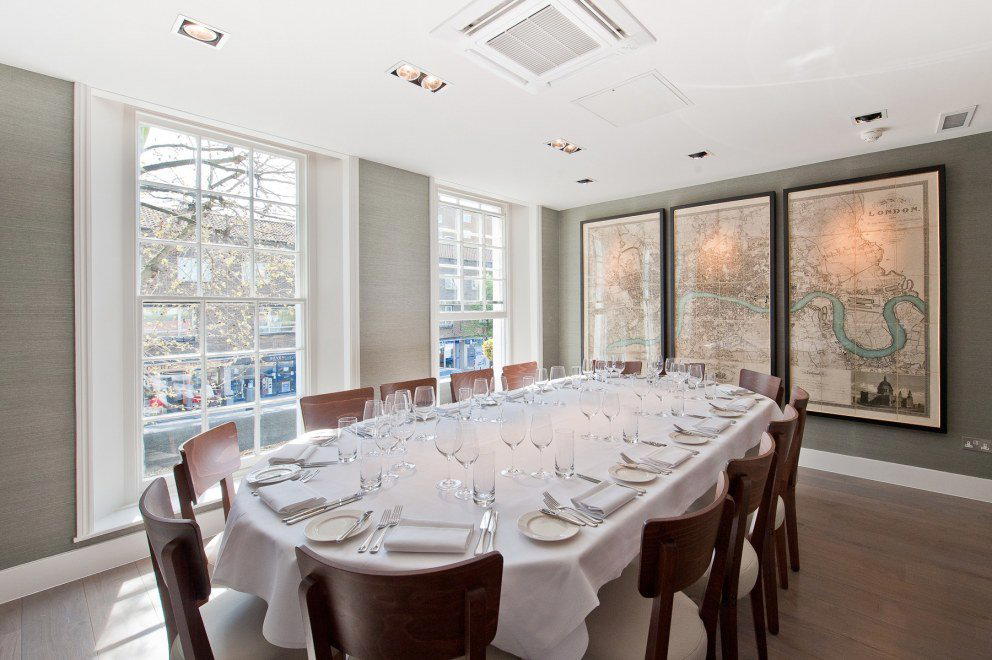
Chelsea's Franco-European Anchor
The stretch of King's Road that runs towards World's End has never been a dining destination in the way that, say, Mayfair or Marylebone command attention from restaurant hunters. That relative anonymity has suited Medlar well. Over more than a decade of service, the restaurant has built the kind of local loyalty that tells you more about its reliability than any single award could. The regulars keep coming; the room stays full; the cooking stays honest. Medlar is a London restaurant on King's Road in Chelsea, known for modern British fine dining and a fixed-price menu. In a city where restaurants at this price point often pivot toward trend or spectacle, Medlar's commitment to Franco-European classicism reads as a considered position rather than a failure of ambition.
The room itself sets expectations clearly. Apple-green banquettes, muted walls, contemporary artwork, and artificial blossom-laden trees give the interior a spring-like calm that holds across seasons. In warmer months, pavement tables and a terrace overlook one of the leafier stretches of the King's Road. The effect is hospitable without being precious, the kind of dining room that invites a long lunch rather than demanding attention from its guests. That atmosphere is not incidental to Medlar's success; it is load-bearing. The cooking that follows is serious, but the room refuses to make that seriousness feel like work.
How the Menu Is Structured, and What It Tells You
Medlar's menu architecture is one of the clearest expressions of its culinary identity. The fixed-price format, available for one, two, or three courses at lunch, signals a kitchen that wants to be accessible without sacrificing depth. The structure allows the cooking to unfold at a measured pace: dishes build in weight and intensity from first course to dessert, following the Franco-European tradition where the menu is a sequence, not a collection of options.
The savoury courses follow a muscular, full-blooded register. Classic French technique is the foundation, but the kitchen doesn't treat it as a constraint. Dishes like crab raviolo with leek fondue and bisque sauce, and duck egg tart with red wine sauce, turnip purée, lardons, and sautéed duck hearts occupy the first-course tier, where the kitchen establishes flavour intensity early. The raviolo in particular has become something close to a permanent fixture, the kind of dish that earns its place by being executed consistently well rather than by novelty.
Main courses push further into the gutsy register: rump of Belted Galloway beef with Café de Paris snails, shallot purée, and béarnaise; chargrilled calf's liver with new season's garlic, potato galette, crispy bacon, Tropea onion, and sherry vinegar; monkfish and squid with sauce vierge, coco beans, and sea aster. These are dishes that use classical combinations as a starting point and then apply genuine attention to sourcing, Belted Galloway beef, sea aster, Tropea onion, to give them specificity. The kitchen doesn't reach for fashionable ingredients; it reaches for the right ones.
The dessert section diverges from the savoury register in an instructive way. Where the mains stay within classical idiom, the desserts pursue something more eclectic: canelés de Bordeaux served alongside pistachio cream, Argentinian garrapiñadas, tonka bean, and spiced drinking chocolate. This is a kitchen that takes the final course seriously enough to invest in multi-part constructions that require technique and confidence. It also suggests a creative ambition that the savoury courses, by design, keep in check.
The menu structure, taken as a whole, reflects a kitchen trained in the Chez Bruce tradition, a lineage that values coherent flavour above novelty and refuses to apologise for dishes that require quality produce rather than show. Chef and co-owner Joe Mercer Nairne's training there is audible in every course, not as imitation but as a shared set of values about what a restaurant at this level should deliver.
The Wine List as a Second Menu
London restaurants at the £££ tier rarely invest in wine to the degree that Medlar does. The list here is knowledgeably assembled and, more importantly, actively curated over time, the language used to describe it is consistent: classical framework, ever-evolving, built from great names and undiscovered producers in equal measure. By-the-glass selections are generous, reinforced by Coravin access to higher-end bottles that would otherwise require full purchase. Bottle prices open at £38, which positions the list as genuinely accessible rather than performatively so.
Wine pairings are suggested for every dish on the menu, a detail that indicates a kitchen and front-of-house team working from the same set of priorities. That coherence is part of what has earned Medlar repeated recognition from Opinionated About Dining, which ranked the restaurant at #417 in Europe in 2024 and #634 in 2025, and which flagged it as a recommended new entry in 2023.
For readers building a broader picture of the Modern European category across Europe, Rutz in Berlin and AIRA in Stockholm offer a useful comparative frame for how different cities approach the same broad tradition.
Chelsea in Context
The World's End stretch of King's Road sits some distance from Chelsea's wealthier dining clusters near Sloane Square, and that geography matters. Medlar's clientele is neighbourhood-heavy rather than destination-driven, which has shaped the restaurant's character in practical ways: the room is designed for return visits, the menu changes with enough frequency to reward regulars, and the service operates without the stiffness that can accompany a more tourist-facing room.
This neighbourhood anchoring also explains the restaurant's durability. In a London market where fine dining restaurants at the £££ tier face sustained pressure from above (the ££££ tasting-menu circuit) and below (ambitious casual openings), Medlar has held its position by being exactly what the King's Road needs rather than chasing a wider audience. More technically adventurous alternatives in London's Modern European category, including Cycene, serve a different purpose. Medlar's proposition is reliability with substance, a combination that proves consistently harder to deliver than it sounds.
For readers exploring beyond London, the Franco-European tradition that informs Medlar's cooking has deeper and more elaborate expressions at Le Manoir aux Quat' Saisons in Great Milton or Gidleigh Park in Chagford, while the broader UK fine dining conversation includes The Fat Duck in Bray, L'Enclume in Cartmel, Moor Hall in Aughton, and Hand and Flowers in Marlow.
Planning Your Visit
Medlar runs lunch service daily from noon to 2:30pm, with dinner from 6:30pm Monday through Thursday (last orders 9:15pm), from 6:30pm on Friday (last orders 9:45pm), from 6pm on Saturday (last orders 9:45pm), and from 6pm on Sunday (last orders 9pm). The fixed-price lunch format allows one, two, or three courses, making it a practical option for a weekday meal that doesn't require a full evening commitment. Wine bottle prices start at £38, with Coravin by-the-glass options extending access to higher-tier selections. The address is 438 King's Road, London SW10 0LJ.
What Do Regulars Order at Medlar?
The crab raviolo with leek fondue and bisque sauce is the dish most associated with the restaurant's identity. It has appeared on the menu long enough to qualify as a signature, and across multiple independent sources it is cited as the starting point for any first visit. The duck egg tart with red wine sauce, turnip purée, lardons, and sautéed duck hearts occupies a similar position in the first-course tier for those who prefer richer, more autumnal flavours. Among main courses, the Belted Galloway beef with Café de Paris snails and béarnaise represents the kitchen's Franco-European register at its most direct. The dessert section's multi-part constructions, built around combinations like canelés de Bordeaux with pistachio cream and spiced drinking chocolate, are worth preserving appetite for rather than treating as optional. For wine, the front-of-house team offers pairings for every dish, and the Coravin selection extends access to bottles that would otherwise require full-table commitment.
Cuisine and Awards Snapshot
Comparable venues nearby, for context on price, style, and recognition.
| Venue | Cuisine | Price | Awards | Notes |
|---|---|---|---|---|
| MedlarThis venue — the venue you are viewing | Modern British Fine Dining | $$$$ | Michelin Plate | Not listed |
| Ekstedt at The Yard | Nordic Wood-Fire Cuisine | $$$$ | Michelin Plate | Whitehall |
| Mount St. | Modern British Fine Dining | $$$$ | Michelin Plate | Mayfair |
| Corrigan's Mayfair | Modern British and Irish | $$$$ | Michelin Plate | Mayfair |
| Planque | Modern British | $$$$ | Michelin Plate | Kingsland |
| Bob Bob Ricard Soho | Classic British & French | $$$$ | Michelin Plate | Soho |
Recognition history
Dated appearances from independent guides and award organizations, with the underlying list record or original source where available.
AA Rosettes 3 Rosettes
AA Rosettes
Michelin Plate
Michelin
Opinionated About Dining Top Restaurants in Europe Recommended
Opinionated About Dining
Star Wine List
Star Wine List
Michelin Plate
Michelin
Opinionated About Dining Top Restaurants in Europe Ranked #634
Opinionated About Dining
The Good Food Guide GFG Good
The Good Food Guide
Michelin Plate
Michelin
Opinionated About Dining Top Restaurants in Europe Ranked #417
Opinionated About Dining
Opinionated About Dining Top New Restaurants in Europe Recommended
Opinionated About Dining
Continue exploring
More in London
Restaurants in London
Browse all →
Bars in London
Browse all →
Hotels in London
Browse all →


At a Glance
- Elegant
- Sophisticated
- Intimate
- Cozy
- Date Night
- Special Occasion
- Business Dinner
- Private Dining
- Extensive Wine List
Current opening hours
- Monday
- 12–2:30 PM, 6:30–9:15 PM
- Tuesday
- 12–2:30 PM, 6:30–9:15 PM
- Wednesday
- 12–2:30 PM, 6:30–9:15 PM
- Thursday
- 12–2:30 PM, 6:30–9:15 PM
- Friday
- 12–2:30 PM, 6:30–9:45 PM
- Saturday
- 12–2:30 PM, 6–9:45 PM
- Sunday
- 12–2:30 PM, 6–9 PM
Hours can change for holidays and private events. Last verified .
Quietly elegant setting with effective acoustic panels ensuring conversational noise levels, pleasant and relaxing atmosphere.