Cycene


A Michelin-starred counter in Shoreditch's Chance Street, Cycene operates a structured multi-room format that moves diners from bar to kitchen to intimate dining room across a single evening. Chef Theo Clench's Modern European tasting menu draws on foraged and traceable British produce, ranked #323 in Opinionated About Dining's European list in 2024 and rising to #335 in 2025.
Pearl is the En Primeur Club membership app — saves, bookings, and concierge access live there. Same editors, same standards.
- Address
- Cycene, 9 Chance St, London E2 7JB, United Kingdom
- Phone
- +44 20 7739 9733
- Website
- bluemountain.school
- Directions
- Get directions
 Saves & bookings on Pearl
Shoreditch's Quiet Street, London's Serious Table
Chance Street sits a few blocks east of the Shoreditch High Street axis, past the gallery units and the wholesale fabric traders that still hold out in this corner of E2. It is not a dining street in any obvious sense, which is part of what makes Cycene's placement here a statement. London's tasting-menu tier has, for the past decade, concentrated around Mayfair, Marylebone, and increasingly south of the river. The emergence of a Michelin-starred, OAD-ranked room in Bethnal Green's borderlands signals a broader shift: that the city's most serious cooking no longer needs a postcode to validate it.
Cycene is a one-star restaurant in London, serving a Modern British Fine Dining with Eastern Asian Influences tasting menu at about $240 per person. The name comes from the Old English word for kitchen, which sets the tone before you even ring the bell. You ring because there is no lobby, no doorman, no obvious commercial signage drawing you in. That threshold moment is deliberate. London's premium dining rooms have increasingly sorted themselves into two formats: the grand-room experience where the architecture announces itself on arrival, and the intimate counter or house-style operation where entry itself is part of the ritual. Cycene belongs firmly to the second category, and it executes the format with discipline.
A Room That Moves With You
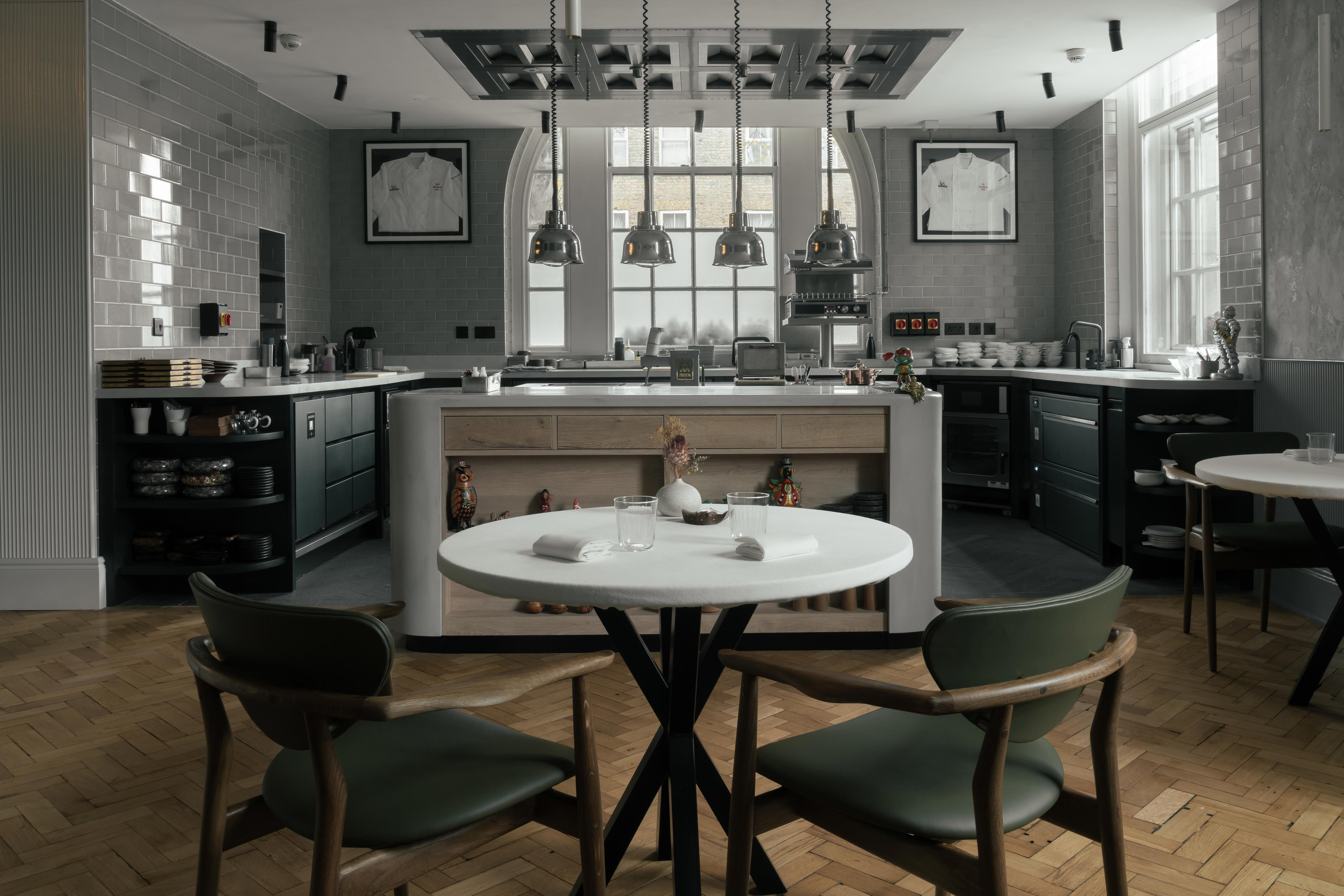
The structure at Cycene is sequential in a way that most London tasting menus are not. Guests begin in the bar, where the first course arrives alongside a welcome drink. From there, the evening progresses upstairs through the kitchen, where a snack is served in the working space itself, before diners are seated in the dining room proper. It is a format with clear precedents in the broader European fine dining tradition, the idea that a meal should be a composed progression through space as much as through courses, but it remains relatively uncommon in London at this price point.
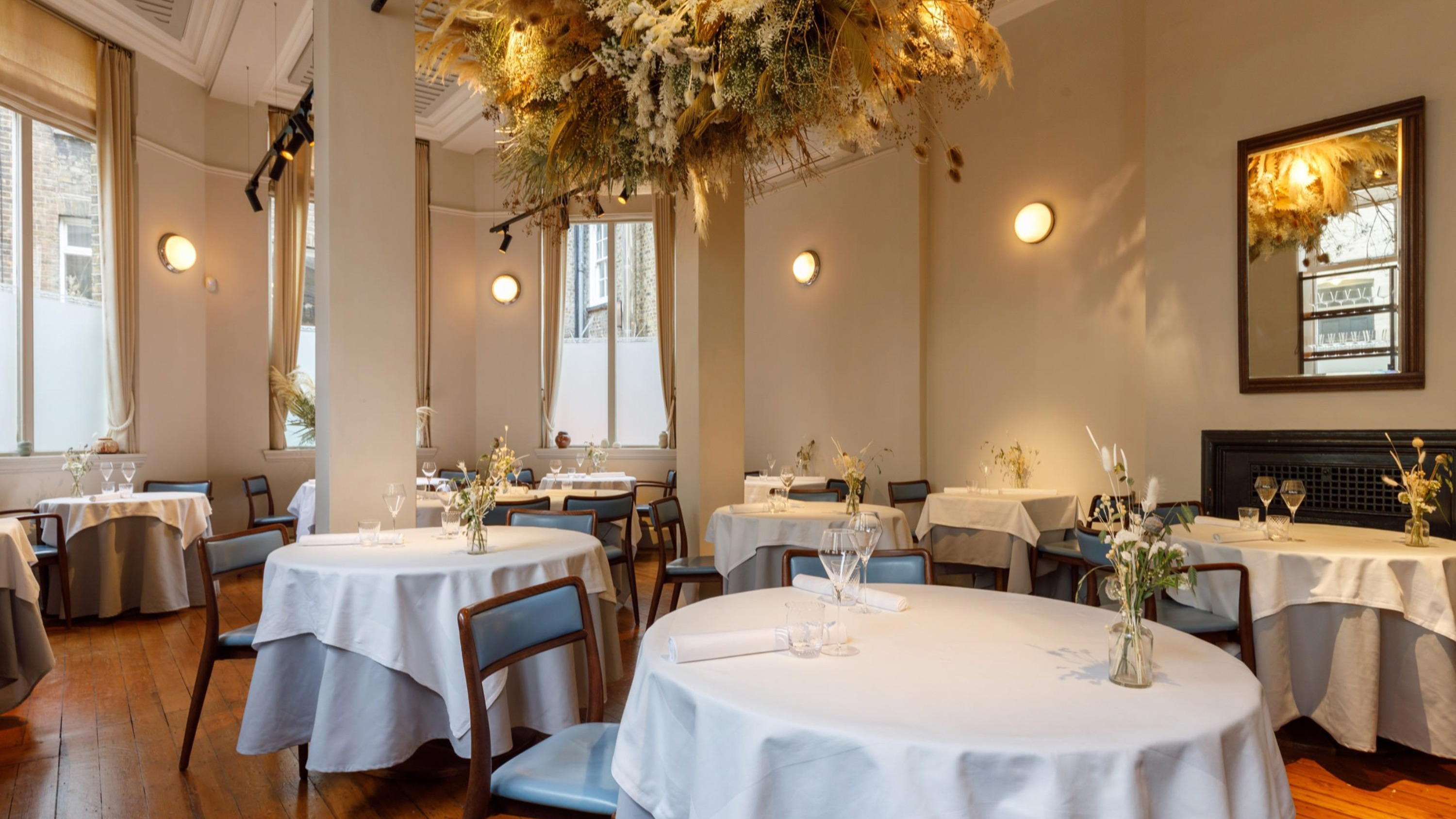
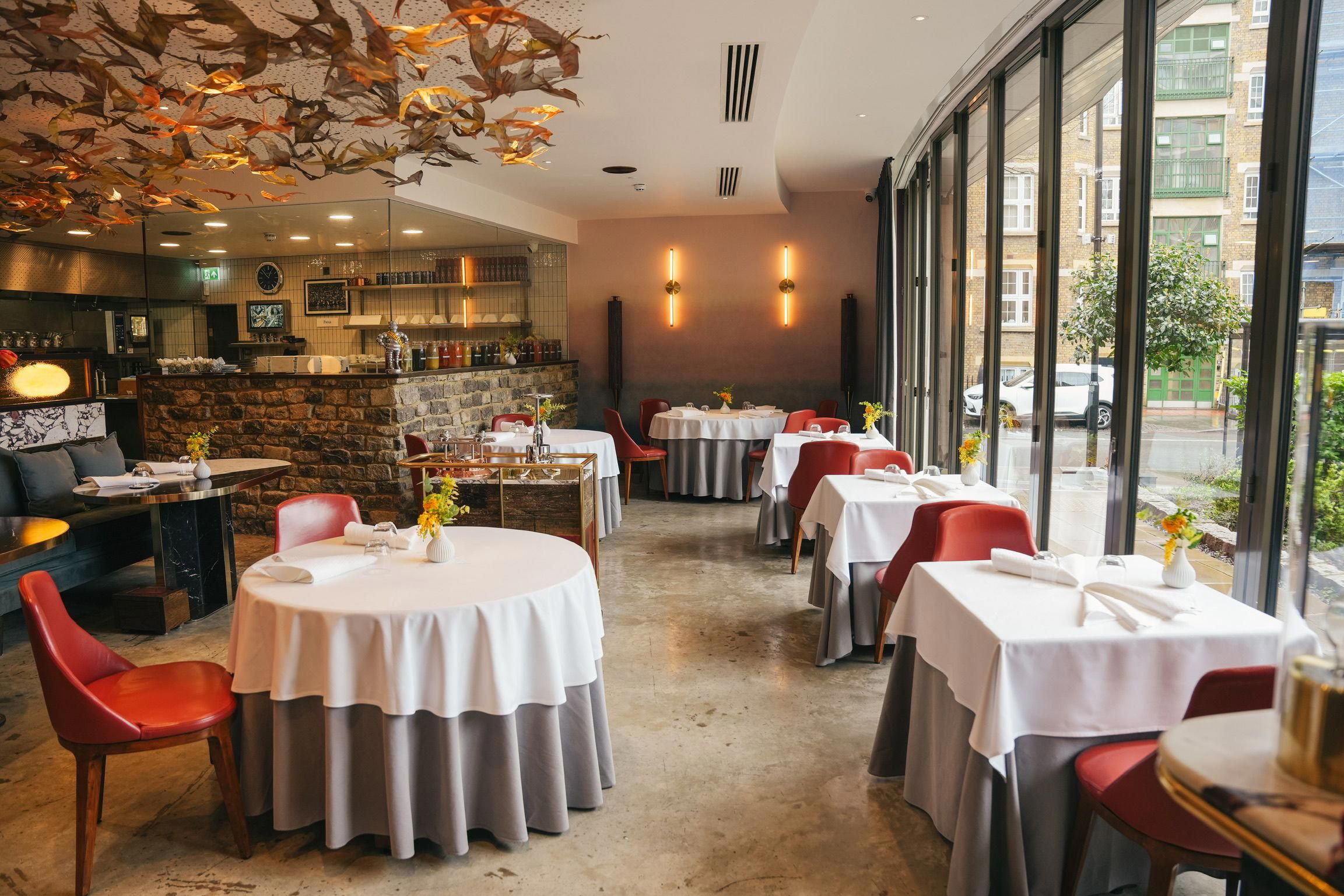
Compare this to the fixed-room format that defines most of the city's starred tables, where The Ledbury or CORE by Clare Smyth seat you once and work the menu around you. Cycene's approach demands more from the guest, spatially and attentively, which narrows its appeal but also deepens the experience for those who engage with it. The dining room itself is small, with bespoke crockery and pottery that are made for the space rather than sourced from a supplier's catalogue, which places it in a tradition of ceramics-forward fine dining that has become a meaningful signal of kitchen seriousness across northern Europe.
The Sourcing Argument
Modern European cooking in London operates across a wide spectrum. At one end sit rooms defined by classical French technique applied to British produce; at the other, more ingredient-led operations where the sourcing story is the structural spine of the menu. Cycene operates closer to the latter. Chef Theo Clench leads the kitchen, and the menu reflects a traceable, place-specific approach to produce. Shetland cod and Highland wagyu appear as recurring reference points, ingredients that carry a geographic specificity that positions Cycene's sourcing differently from much of London's ££££ tier.
This places Cycene in a comparable set that includes British countryside-focused operations at the level of L'Enclume in Cartmel and Moor Hall in Aughton, even if those venues operate from rural locations where the foraging credential is more immediately legible to the guest. In an urban E2 setting, the same sourcing philosophy requires more explanation from the team, and by all accounts, the kitchen delivers that explanation thoroughly and at pace, with the team treating the detailing of dishes as a core part of service rather than a supplementary narration.
For context on how this approach maps onto the wider British fine dining register, rooms like Gidleigh Park in Chagford and hide and fox in Saltwood similarly foreground provenance in their editorial identity. Within London itself, the comparable register sits at rooms such as Lorne and Medlar, though Cycene's tasting-menu format and award trajectory place it in a smaller, more specialist sub-tier.
What the Awards Say About the Trajectory
The recognition record at Cycene is concise but pointed.
That trajectory matters when locating the venue in London's starred landscape. While three-star rooms such as The Ledbury operate with years of accumulated reputation behind them, and established houses like Chapter One hold their own consistent following, Cycene represents a more recent entry into the Michelin-starred tier, with a recognition arc that is still building.
Within the Modern European tasting-menu format across Europe, useful comparisons sit at rooms like Rutz in Berlin and AIRA in Stockholm, operations that share Cycene's combination of ingredient-led menus, intimate room sizes, and multi-award positioning. The shared characteristic across this peer group is that critical credibility precedes or accompanies mainstream visibility, rather than following from it.
East London as a Dining Address
The east London tasting-menu segment has historically operated under a size constraint: the creative talent has been present, but the customer base willing to pay ££££ prices east of Liverpool Street has been thinner than in central or west London. That dynamic has shifted. The residential density in Bethnal Green and Hackney has changed materially over the past decade, and the assumption that serious spending on food requires a W1 address has weakened. Cycene's success in this location contributes to and reflects that shift simultaneously.
For visitors rather than residents, Chance Street is accessible from Shoreditch High Street overground or Liverpool Street, making it easier to reach from central London than the E2 postcode might suggest. The evening-only format, Wednesday through Saturday, from 6:15pm, means the journey fits naturally into a dining-focused evening without requiring early starts. For a broader look at where this sits in London's overall dining picture, the full London restaurants guide maps the city's tasting-menu tier alongside more casual options.
Visitors to London combining dinner with accommodation should consult the full London hotels guide for options proximate to E2. For pre- or post-dinner drinks, the full London bars guide covers the east London scene alongside central options. Those with a broader interest in the UK's fine dining register beyond London will find reference points at The Fat Duck in Bray and Hand and Flowers in Marlow in the surrounding counties.
Planning Your Visit
Cycene operates Wednesday to Saturday, with sittings from 6:15pm. The address is 9 Chance Street, London E2 7JB. Entry is by bell. Reservations are essential. Reservations are essential.
Quick reference: Cycene, 9 Chance St, London E2 7JB. Wed-Sat, 6:15pm-11pm. Michelin 1 Star (2024). ££££. Ring bell on arrival.
What Should I Order at Cycene?
Cycene does not operate an à la carte menu. The format is a set tasting progression, so the question of ordering is less about individual dish selection and more about what the menu is built around. Based on ingredients highlighted in the venue's published recognition record, Shetland cod and Highland wagyu have featured as centrepiece elements of the tasting sequence, both carrying the traceable, geographically specific sourcing that defines the menu's identity. Chef Theo Clench's background in foraging means that seasonal and foraged components shift the menu with the calendar, which makes any specific dish recommendation provisional. The kitchen provides detailed verbal explanation of each course, meaning the guest receives the context that would otherwise come from a printed menu. If dietary requirements exist, these should be communicated at booking, as the format's sequential and prepared nature leaves limited flexibility for last-minute substitutions.
How It Stacks Up
Comparable venues nearby, for context on price, style, and recognition.
| Venue | Cuisine | Price | Awards | Notes |
|---|---|---|---|---|
| CyceneThis venue — the venue you are viewing | Modern British Fine Dining with Eastern Asian Influences | $$$$ | Michelin 1 Star | Not listed |
| Kitchen W8 | Modern English with French Soul | $$$ | Michelin 1 Star | South Kensington |
| Aulis London | Modern British Chef's Table | $$$$ | Michelin 1 Star | Soho |
| The Harwood Arms | Michelin-Starred British Gastropub | $$$ | Michelin 1 Star | Walham Green |
| Pétrus by Gordon Ramsay | Modern French Fine Dining | $$$$ | Michelin 1 Star | Belgravia |
| Dorian | Modern British Bistro | $$$ | Michelin 1 Star | Notting Hill |
Recognition history
Dated appearances from independent guides and award organizations, with the underlying list record or original source where available.
Michelin 1 Star
Michelin
Opinionated About Dining Top Restaurants in Europe Recommended
Opinionated About Dining
Michelin 1 Star
Michelin
Opinionated About Dining Top Restaurants in Europe Ranked #335
Opinionated About Dining
Michelin 1 Star
Michelin
Opinionated About Dining Top Restaurants in Europe Ranked #323
Opinionated About Dining
Opinionated About Dining Top New Restaurants in Europe Recommended
Opinionated About Dining
Continue exploring
More in London
Restaurants in London
Browse all →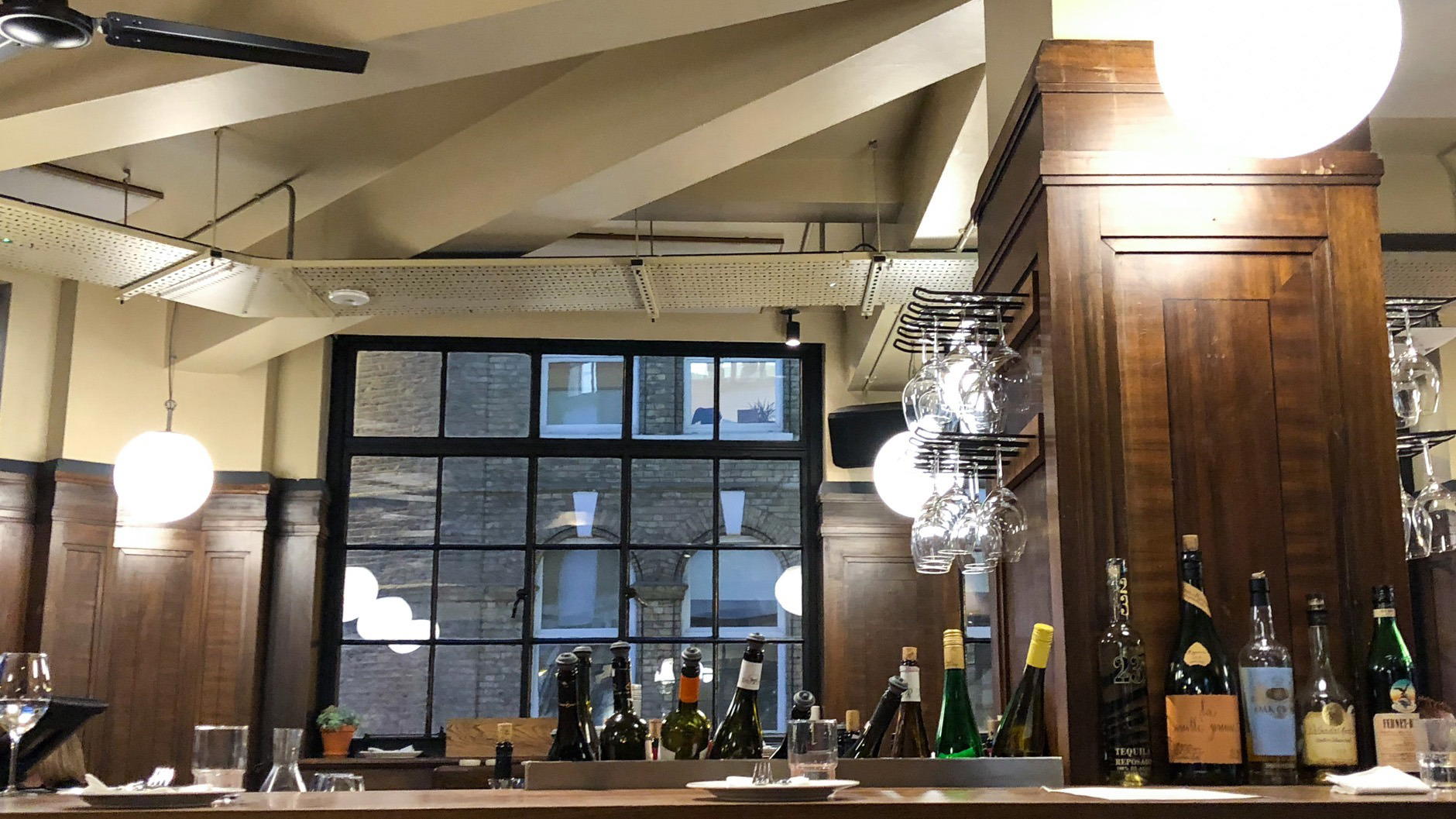
Bars in London
Browse all →
Hotels in London
Browse all →



At a Glance
- Intimate
- Elegant
- Sophisticated
- Modern
- Special Occasion
- Date Night
- Chefs Counter
- Open Kitchen
- Extensive Wine List
- Sommelier Led
- Local Sourcing
Intimate candlelit dining room with white starched tablecloths, flickering hypnotic candles creating a gothic, relaxed, and sophisticated atmosphere.