





1 Michelin Star · La Liste Top Restaurants · Star Wine List
Our verdict
A Michelin-starred restaurant in a former wood-processing factory on the edge of Rīga, Max Cekot Kitchen runs a surprise tasting menu rooted in Latvian seasonal produce, with ingredients drawn from the restaurant's own garden and greenhouse. Open Thursday to Saturday evenings only, it holds a 2026 Michelin star, 75 points on La Liste, and four consecutive Star Wine List rankings.

Pearl is the En Primeur Club membership app — saves, bookings, and concierge access live there. Same editors, same standards.
A Warehouse on the Edge of the City
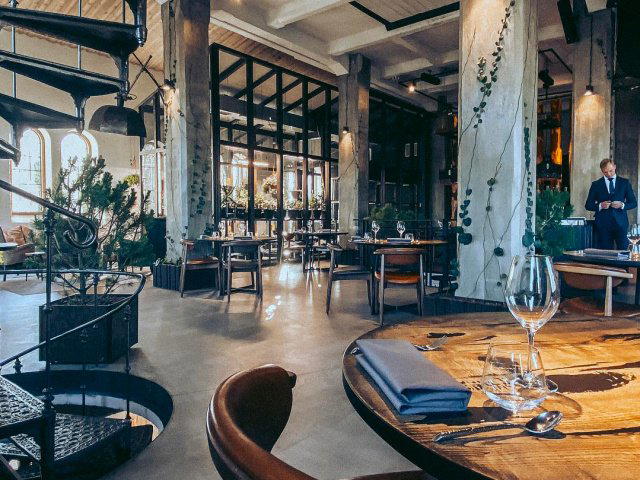
Rīga's fine-dining scene has historically concentrated in the Old Town, where tourist footfall and heritage interiors do a lot of the atmospheric work. The emergence of serious kitchens in the city's post-industrial periphery represents a different logic: a deliberate distance from the obvious, where the food has to carry the evening rather than the setting. Max Cekot Kitchen operates from a red-brick former wood-processing factory in Zemgales priekšpilsēta, a southern district that few visitors cross into by accident. That address is itself an editorial statement about what the restaurant intends to be.
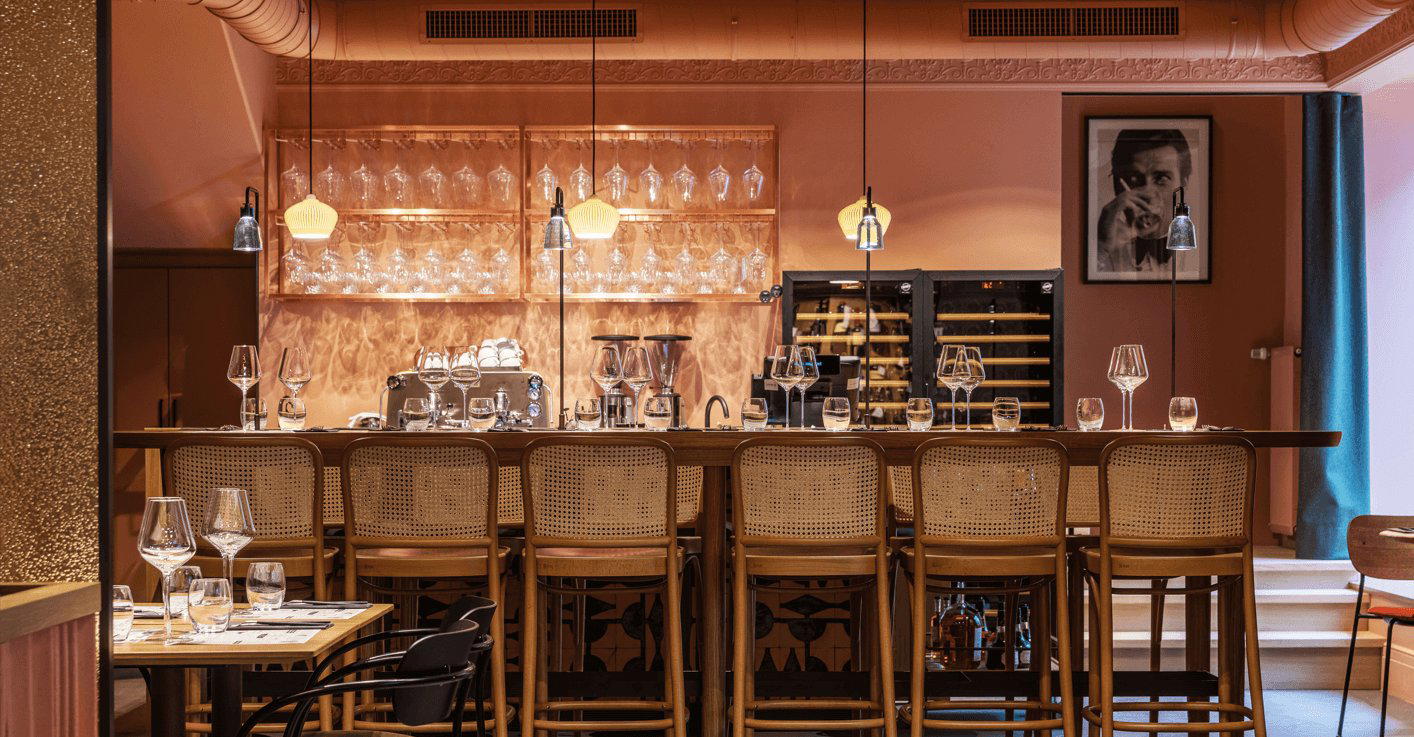
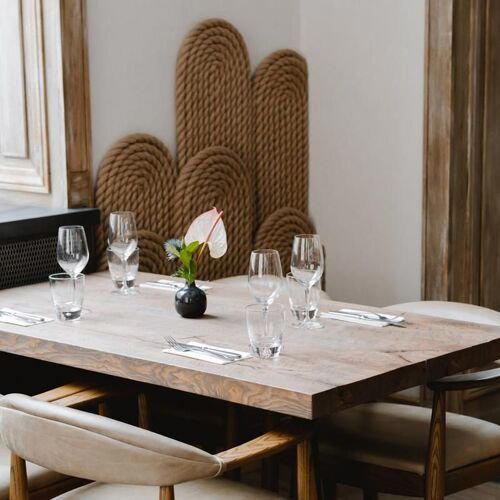
The physical sequence on arrival reinforces the shift in register. Guests begin downstairs with drinks and amuse-bouches before moving up a narrow spiral staircase to the dining room, where the furniture and crockery were designed by Chef Maxim Cekot himself. The building's industrial bones remain present — exposed brick, warehouse proportions — while the interior has been transformed into something that, as the Michelin inspectors noted, would sit comfortably in any major European city. The We're Smart Green Guide, which tracks vegetable-forward cooking internationally, arrived at the same conclusion when it added Max Cekot Kitchen as a top-ranked entry and placed Latvia, as its 51st country, inside the movement. For a single restaurant to serve as a country's entry point into that index says something about the ambition concentrated in this address.
How the Menu Has Evolved
The format at Max Cekot Kitchen has clarified over time into something specific: a 10-course surprise tasting menu built around Latvian seasonal ingredients, with the kitchen's own garden and greenhouse providing the raw material for its most individual touches. The vegetarian menu is a signal worth reading carefully. Fine-dining restaurants across northern Europe have increasingly introduced vegetable-led options alongside their primary menus, but structuring the kitchen's identity around a standalone 10-course vegetarian format is a more committed position.
Michelin awarded a first star in 2024 and retained it for 2026. La Liste scored the restaurant at 75.5 points in 2025 and 75 points in 2026, placing it among the tracked restaurants in its global index. These are not decorative credentials: they indicate that independent reviewers with broad European reference points have assessed the cooking as meeting a standard that applies across cities with far longer fine-dining histories.
Rīga's Fine-Dining Tier in Context
The Michelin star placed Max Cekot Kitchen inside a small group of Rīga restaurants operating at the €€€€ price tier with tasting-menu formats. JOHN Chef's Hall and 3 Chefs occupy similar price territory with modern-cuisine orientations, while B7 represents another contemporary approach to Latvian ingredients. The difference at Max Cekot Kitchen is the specific commitment to the garden-to-table model: the greenhouse and on-site growing operation mean that the menu's seasonal movement is tied to what the kitchen can physically produce, not only to what the market offers. That constraint produces a menu architecture more akin to what Nordic kitchens built their reputations on than to the supplier-led seasonal menus common in Western European fine dining.
For visitors orienting themselves across Rīga's dining register, BABO at the €€ tier offers traditional Latvian cuisine with a different set of expectations, and Barents Cocktail and Seafood Bar handles the seafood-led format at a lower price point. The fuller picture of where Max Cekot Kitchen sits in the city's current offering is mapped in our full Rīga restaurants guide.
The Wine Program
Star Wine List has ranked Max Cekot Kitchen in its leading four positions for three consecutive years, appearing at positions one, two, and three in both 2024 and 2025, and holding a fourth-place ranking in 2025 as well. Multiple placements within the same year's index suggest that the wine program has been assessed across different categories or criteria rather than a single aggregate ranking, which implies both depth and breadth. For a restaurant open only three evenings per week, the consistency of these rankings across 2024 and 2025 is a meaningful indicator of program quality. Visitors should treat this as a reason to engage seriously with the wine list rather than treating it as secondary to the food. Our Rīga wineries guide provides further context on the Latvian wine and producer landscape.
Latvia's Broader Fine-Dining Geography
Max Cekot Kitchen does not sit in isolation within Latvian gastronomy. The country has developed a small but increasingly tracked set of serious restaurants outside the capital: 36. Line in Jūrmala, Akustika in Valmiera, Biblioteka Number One in Rīga, H.E. Vanadziņš in Cēsis, MO in Liepāja, and Pavāru māja in Līgatne each represent distinct approaches to Latvian produce and regional dining formats. The national picture, taken together, suggests a culinary infrastructure developing beyond the capital, with foraging, seasonal produce, and local identity as recurring organising principles. Max Cekot Kitchen's Michelin star represents the most formally recognised point in that network so far.
Planning the Visit
The restaurant operates Thursday through Saturday, 6 PM to 11 PM, and is closed Sunday through Wednesday. The limited weekly schedule concentrates demand significantly, and the format, a set surprise tasting menu in an intimate warehouse space, means that walk-in access is not a realistic expectation. The address is Jelgavas iela 42, in the Zemgales priekšpilsēta district south of the city centre, at a remove from Rīga's Old Town restaurant cluster. Visitors staying centrally should plan for a dedicated journey rather than a pre or post dinner stroll. For accommodation context, our Rīga hotels guide covers the full city range. Those building a longer evening programme around the meal may find our Rīga bars guide and our Rīga experiences guide useful for before and after. The price range sits at €€€€, in line with Rīga's leading tasting-menu tier.
Frequently asked questions
When is Max Cekot Kitchen open?
Hours at Max Cekot Kitchen: Monday closed Tuesday closed Wednesday closed Thursday 6 PM-11 PM Friday 6 PM-11 PM Saturday 6 PM-11 PM Sunday closed.
Price Lens
| Venue | Cuisine | Price | Awards | Notes |
|---|---|---|---|---|
| Max Cekot KitchenThis venue (the venue you are viewing) | Modern European Fine Dining | $200–300 | 1 Michelin Star · La Liste Top Restaurants | Not listed |
| JOHN Chef's Hall | Modern Latvian Fine Dining | Not listed | 1 Michelin Star · La Liste Top Restaurants | Modern Cuisine |
| Le Dome | Modern European Fine Dining with Seafood Focus | $100–150 | Michelin Plate | Seafood, Modern Cuisine |
| Shōyu | Authentic Japanese Ramen | $20–30 | Michelin Bib Gourmand | Japanese |
| Snatch | Modern Italian | $30–50 | Michelin Bib Gourmand · Star Wine List | Italian |
| BABO | Modern Georgian | $20–30 | Michelin Plate · Star Wine List | Traditional Cuisine |
Recognition history
Dated appearances from independent guides and award organizations, with the underlying list record or original source where available.
Michelin 1 Star
Michelin
La Liste Top Restaurants
La Liste
Star Wine List
Star Wine List
Falstaff Restaurant - 96 Falstaff Points
Falstaff
We're Smart World 4 Radishes
We're Smart World
Full recognition history (11 entries)
La Liste Top Restaurants
La Liste
Michelin 1 Star
Michelin
Star Wine List
Star Wine List
World's Best Wine Lists Awards WBWL 3-Star
World's Best Wine Lists Awards
Michelin 1 Star
Michelin
Star Wine List
Star Wine List
Continue exploring
More in Riga
Restaurants in Riga
All restaurants in Riga →
Bars in Riga
All bars in Riga →
Max Cekot Kitchen
The wine
- Wine program
- Deep wine list
- Extensive wine list
- Sommelier-led
Details
- Sophisticated
- Modern
- Industrial
- Intimate
- Elegant
- Special Occasion
- Date Night
- Celebration
- Open Kitchen
- Chefs Counter
- Extensive Wine List
- Sommelier Led
- Local Sourcing
- Farm To Table
- Tasting Menu
- Vegetarian Friendly
Current opening hours
- Monday
- Closed
- Tuesday
- Closed
- Wednesday
- Closed
- Thursday
- 6–11 PM
- Friday
- 6–11 PM
- Saturday
- 6–11 PM
- Sunday
- Closed
Hours can change for holidays and private events. Last verified .
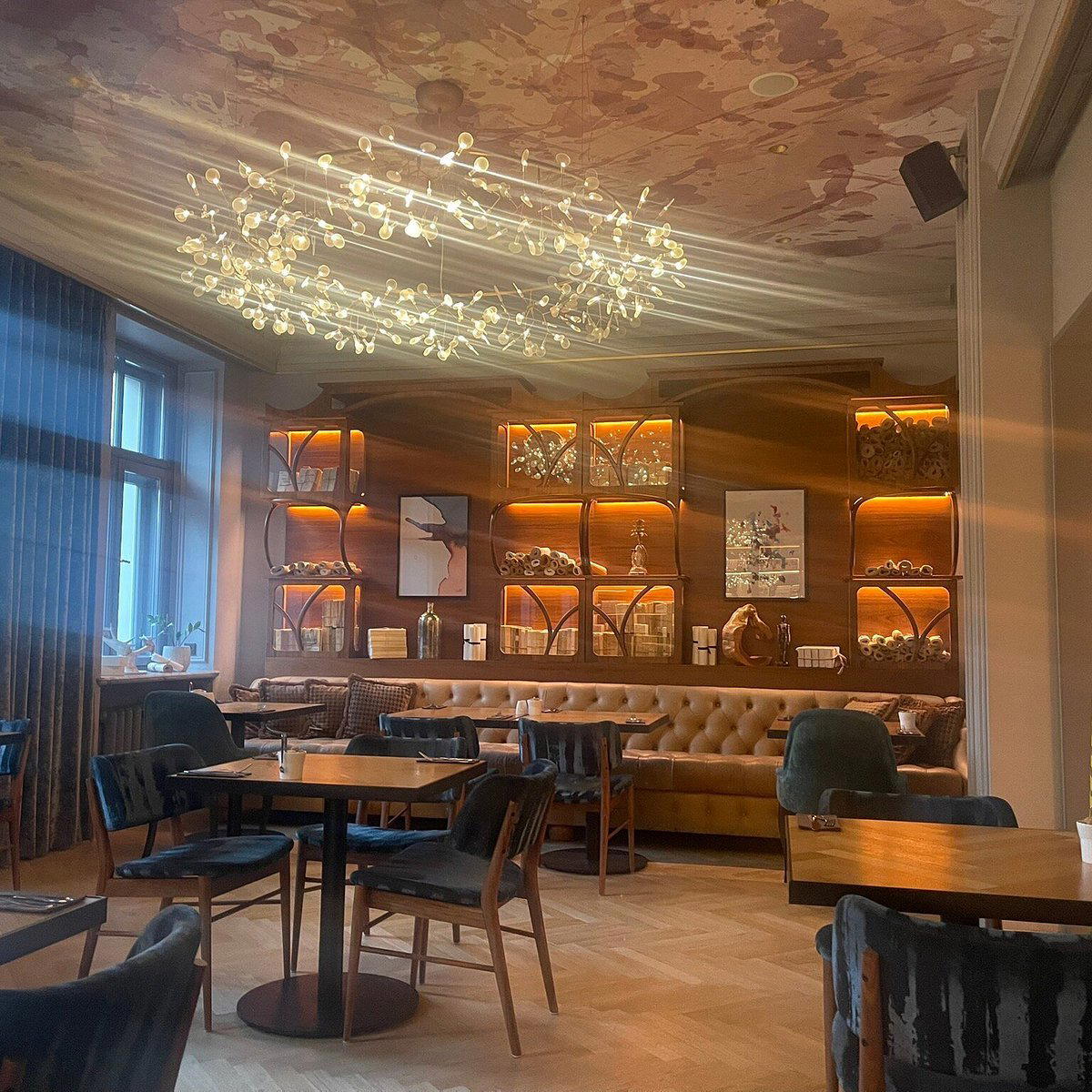
Sophisticated and minimalist atmosphere in a red-brick industrial warehouse with custom-designed furniture, soft lighting, and an intimate multi-level journey from welcome area to open kitchen dining.