
Michelin Selected
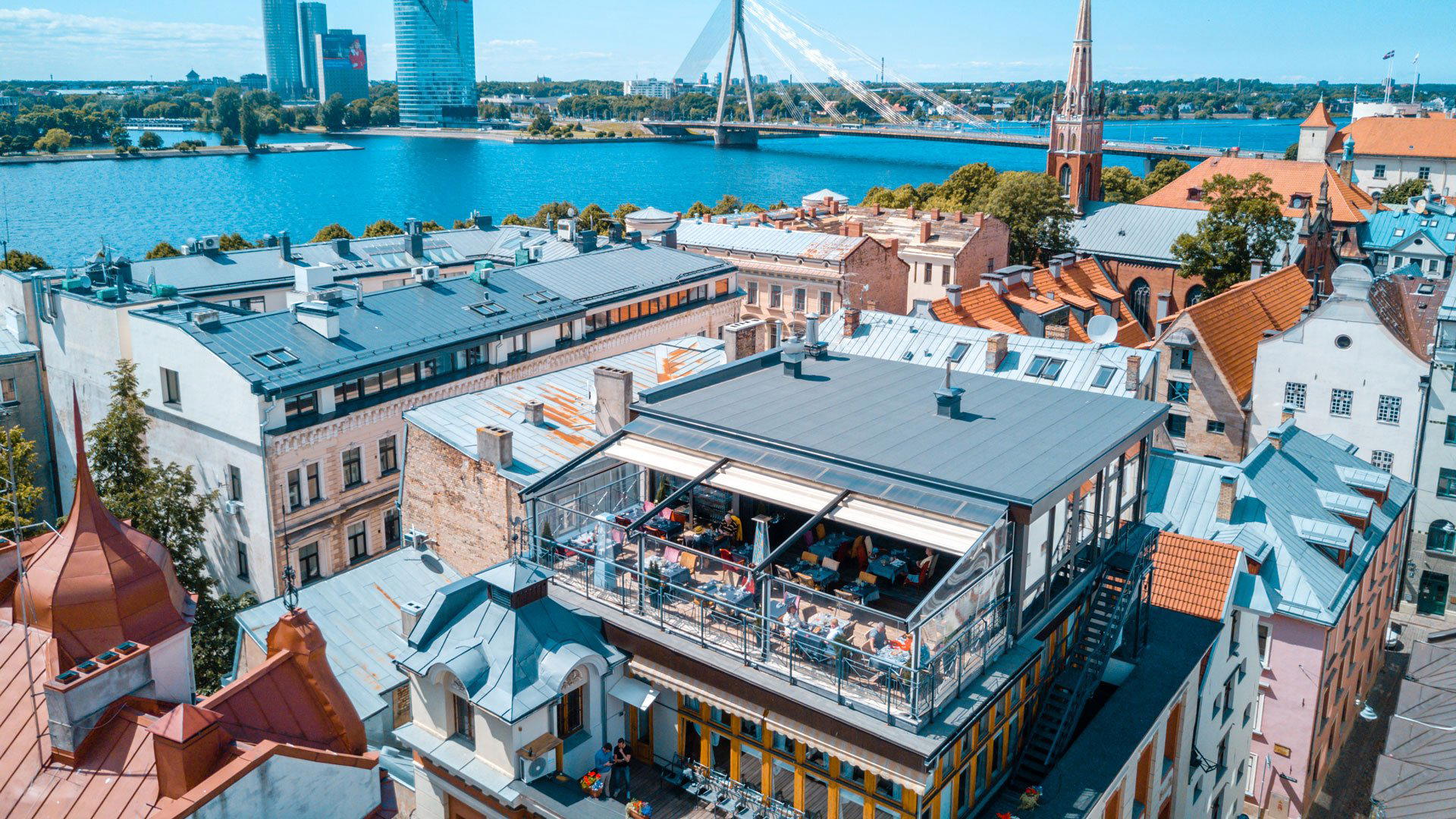
A Michelin Selected hotel occupying a restored Art Nouveau building on Jauniela street in Riga's Old Town, Hotel Neiburgs positions itself within the small tier of heritage-led properties that treat architectural preservation as a hospitality statement. The building's early twentieth-century bones inform everything from the room proportions to the public spaces, placing it closer to a design-forward boutique than a conventional city hotel.

Pearl is the En Primeur Club membership app — saves, bookings, and concierge access live there. Same editors, same standards.
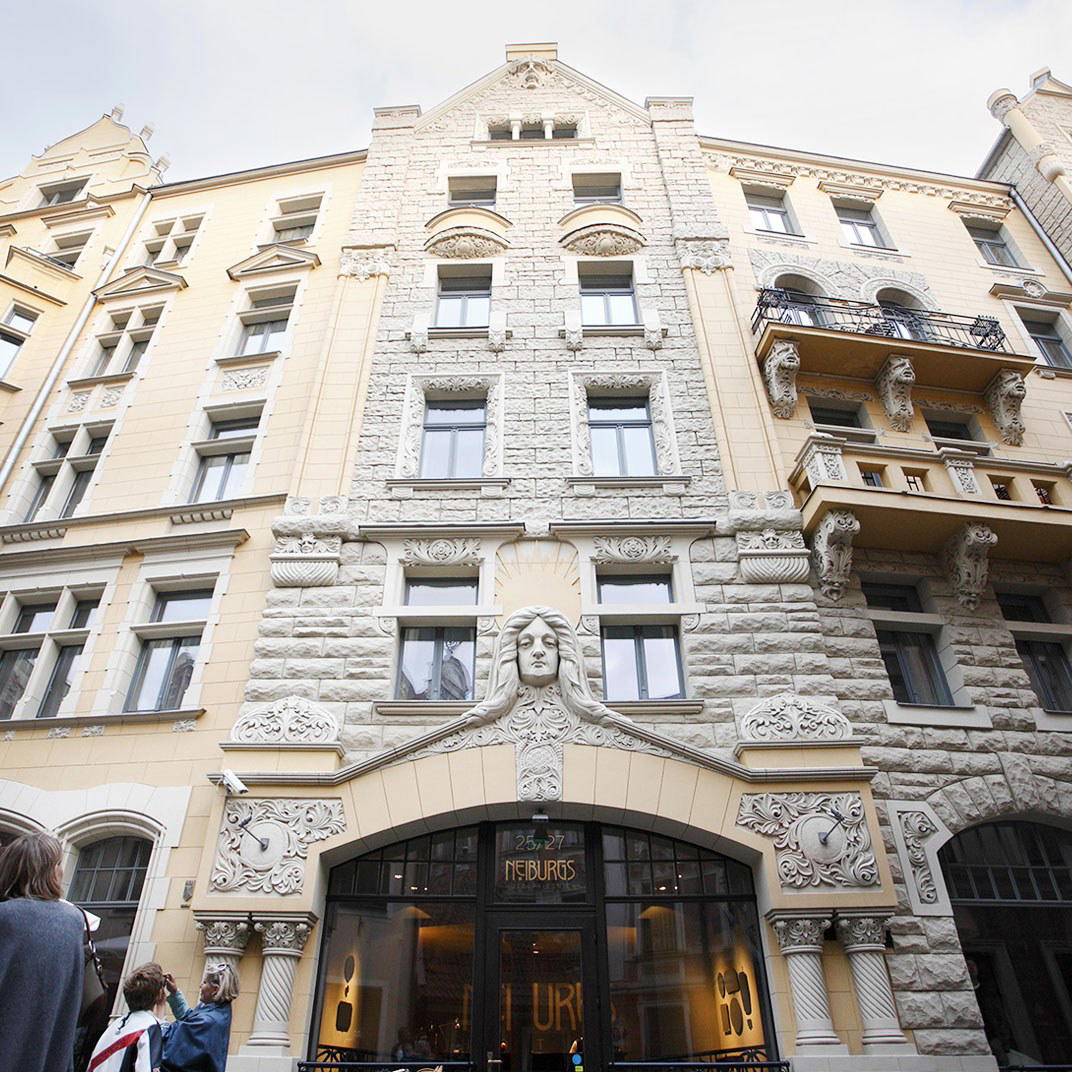
Where Riga's Art Nouveau Heritage Meets Considered Hospitality
Riga holds one of the largest concentrations of Art Nouveau architecture in Europe, and Jauniela street sits inside the Old Town quarter where that legacy is most legible at street level. Hotel Neiburgs occupies a building at numbers 25 and 27 on that street, a double address that signals the property's origins as two distinct structures later merged into a single hospitality offering. That kind of physical layering, where different construction periods and decorative vocabularies are reconciled under one roof, defines a particular approach to heritage hospitality that has become increasingly deliberate across the Baltic capitals.
The hotel holds a Michelin Selected designation from the 2025 guide, placing it within a curated tier of properties that the Michelin editors consider worth recommending on grounds that go beyond basic comfort. Michelin Selected is not a star category for hotels but a signal of consistent quality and character, and in a city like Riga, where the hotel market ranges from Soviet-era renovations to purpose-built contemporary blocks, that selection carries contextual weight.
The Architecture as the Argument
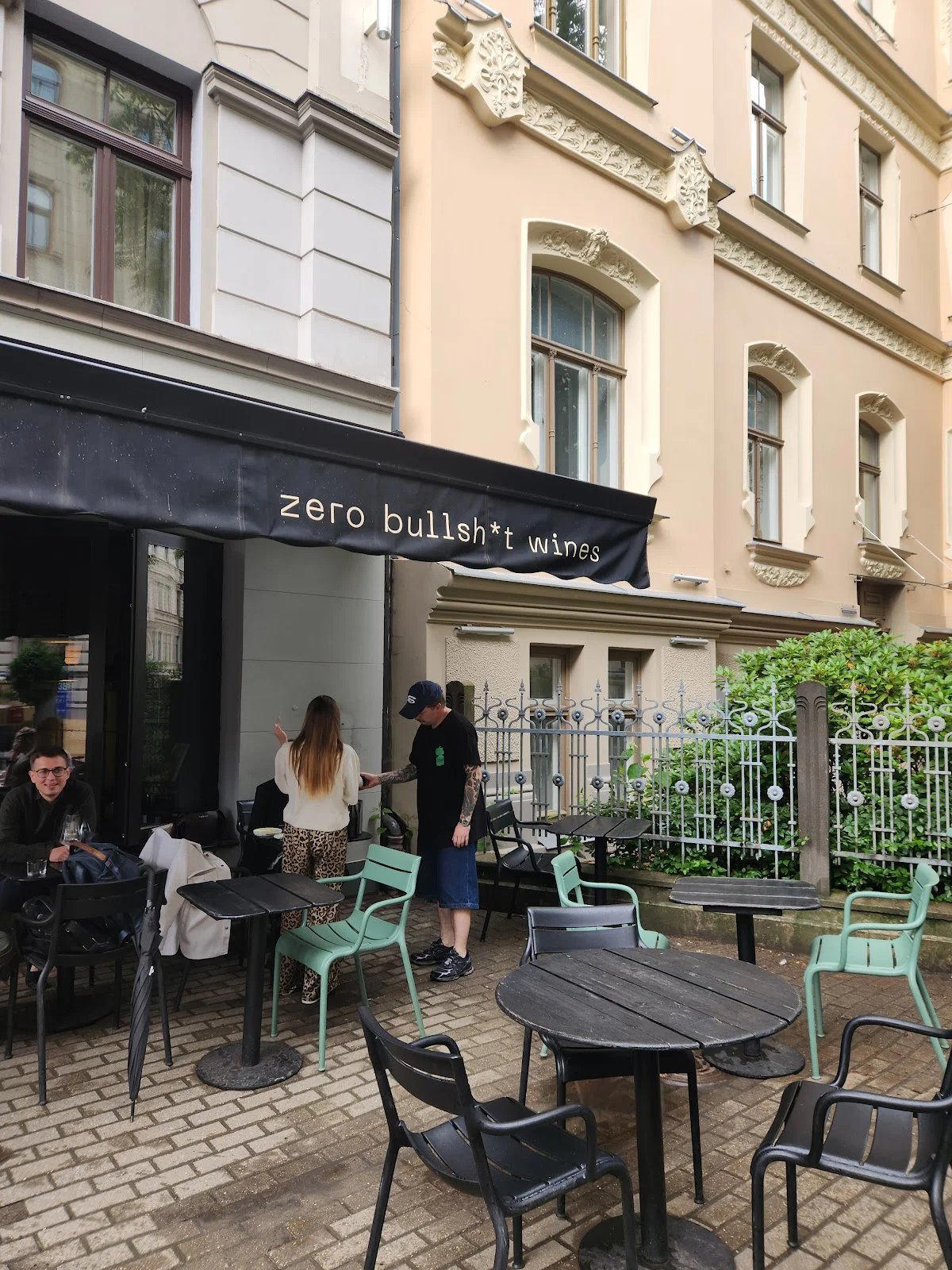
Old Town Riga operates under UNESCO World Heritage protection, which constrains what property owners can alter on listed facades. That constraint, frustrating for developers chasing uniformity, becomes an asset for hotels that understand how to read their buildings. The Neiburgs structure carries period detail across its exterior that situates it inside one of Europe's more concentrated architectural archives: stucco ornament, the characteristic window rhythms of early twentieth-century Latvian construction, and the vertical proportions that distinguish pre-war Old Town buildings from the flatter street frontages of later decades.
Inside, the more interesting editorial question is how a property reconciles original volume and proportion with contemporary hospitality expectations. Guests at heritage hotels in compact European city centres routinely encounter this tension. Rooms shaped by century-old structural logic rarely conform to the standardised footprints that international hotel brands optimise for. That irregularity is either a liability or an asset depending on how it is handled, and the properties that convert it into character rather than apology tend to be the ones that attract guests who have already stayed at the larger, more homogeneous addresses. For comparison, internationally scaled properties like the Grand Hotel Kempinski Riga or the Grand Poet Hotel and SPA by Semarah represent a different proposition entirely: broader footprint, more standardised room formats, and a brand architecture that offers predictability at the cost of specificity.
Hotel Neiburgs occupies the smaller, more locally specific end of that spectrum, comparable in positioning to what design-led boutiques have carved out in other Central and Eastern European capitals. Warsaw, Vilnius, and Tallinn each have their own variants of the formula: a historic building, a restoration that foregrounds original materials, and a room count that keeps the property at boutique scale. The Riga version of that formula has a particular asset in the Jauniela address itself, which sits within walking distance of the Cathedral Square and the Daugava riverbank.
Riga's Old Town as Context
Understanding Hotel Neiburgs requires understanding what Jauniela street means within Old Town Riga's internal geography. The Old Town is compact enough that almost everything within it is walkable, but streets vary significantly in character. Jauniela is a narrower lane by Old Town standards, with a scale that reinforces the sense of being inside the medieval street plan rather than on one of the wider arterials that accommodate tourist flow. Staying on a street like this, rather than on a facing boulevard, affects the quality of the experience in ways that don't appear in room category listings.
Riga's food and drink scene has developed substantially around the Old Town edges, with the Central Market a short walk south and a cluster of more considered restaurants operating in the streets immediately surrounding the cathedral. Guests using the hotel as a base for that kind of exploration, rather than as a departure point for airport transfers, tend to get the most from the address. The full context for dining and drinking in the city is covered in our full Riga restaurants guide.
Where It Sits Against the Broader Field
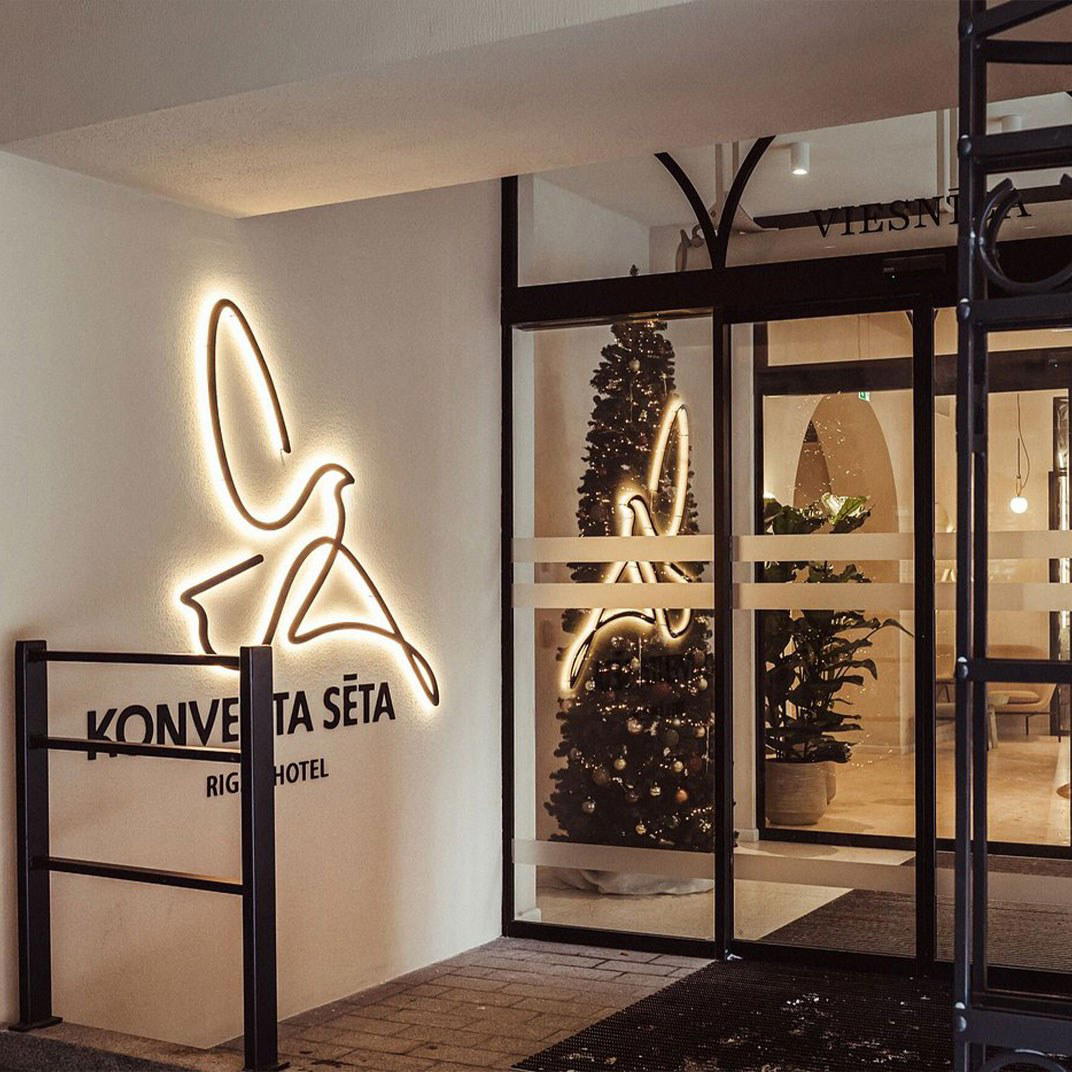
The heritage boutique segment in European city breaks has become genuinely competitive over the past decade, and the strongest comparators are not necessarily within the same city. Properties like Aman Venice and Cipriani, A Belmond Hotel, Venice operate at the upper end of that category with price points and brand infrastructure that sit well above what Old Town Riga commands. At the more accessible end, properties like A22 Hotel and Konventa Sēta Hotel Keystone Collection and TRIBE Riga City Centre represent different orientations within the same city market, ranging from design-forward contemporary to courtyard-cluster historic.
What the Michelin Selected designation signals in this context is that Hotel Neiburgs has cleared a threshold of consistency and character that the broader Riga hotel market has not uniformly reached. It does not compete with the grand-scale heritage palaces that define city hotel identity in cities like Vienna (see Hotel Sacher Wien) or Paris (see Le Bristol Paris or Cheval Blanc Paris). Nor does it position against the resort-scale properties that dominate other European leisure markets, from Hotel Du Cap-Eden-Roc on the Riviera to Badrutt's Palace Hotel in St. Moritz. It is a specific type of property for a specific type of traveller: someone who reads the architecture of their accommodation as part of the destination experience rather than as background noise.
Planning a Stay
Riga's peak visitor season runs from late spring through early autumn, when the city's outdoor spaces and festival calendar are most active and room rates across the Old Town tier tend to rise accordingly. The shoulder months of April and October offer a different version of the city: fewer crowds in the Old Town lanes, the architectural detail easier to read without summer foliage and tourist density, and a more local rhythm to the cafes and restaurants nearby. For bookings and current availability, the hotel is reachable via its address at Jauniela 25/27, and updated rates are best confirmed directly through the property.
Comparison Snapshot
Comparable venues nearby, for context on price, style, and recognition.
| Venue | Cuisine | Price | Awards | Notes |
|---|---|---|---|---|
| Hotel NeiburgsThis venue (the venue you are viewing) | Boutique apartment hotel in a preserved Art Nouveau building with modern suites. | Not listed | Michelin Selected | Not listed |
| Hotel Bergs Suites | Historic boutique hotel with contemporary suites | $100–200 | Michelin Selected | Centrs |
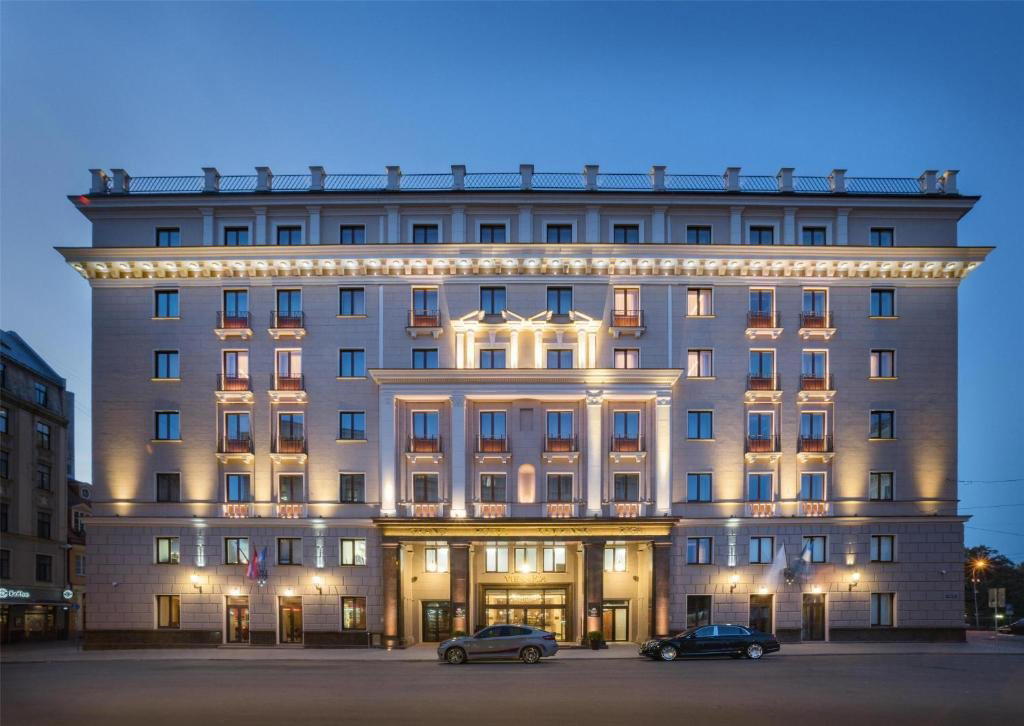
| Grand Hotel Kempinski Riga | Classic grandeur blended with modern luxury in Riga's historic heart. | Not listed | Michelin Selected · Virtuoso Luxury Hotel Partner | Vecpilsēta |
| Konventa Sēta Hotel Keystone Collection | historic complex renovated for modern luxury | $1–100 | Michelin Selected | Vecpilsēta |
| TRIBE Riga City Centre | Contemporary design hotel celebrating Art Nouveau heritage with bold creative energy and smart functionality. | $100–200 | Michelin Selected | Art Nouveau District |
| Grand Palace Hotel | Luxury boutique hotel in a historic 1877 building with modern amenities and personalized service; member of Small Luxury Hotels of the World and The Leading Hotels of the World. | $200–300 | Michelin Selected · Leading Hotels of World Member | Vecpilsēta |
Recognition history
Dated appearances from independent guides and award organizations, with the underlying list record or original source where available.
Michelin Selected
Michelin
Continue exploring
More in Riga
Hotels in Riga
All hotels in Riga →
Bars in Riga
All bars in Riga →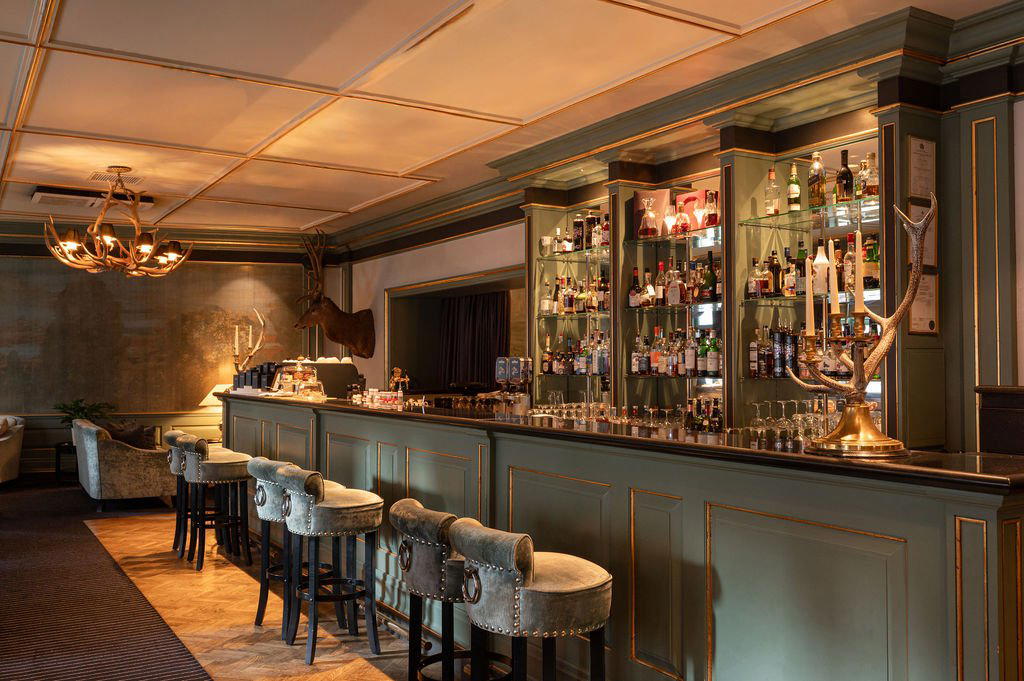
Details
- Elegant
- Sophisticated
- Modern
- Classic
- Romantic Getaway
- Business Trip
- Weekend Escape
- Historic Building
- Terrace
- Wi Fi
- Spa
- Fitness Center
- Room Service
- Concierge
- Restaurant
- Street Scene
- Elevator
- Step Free Entrance
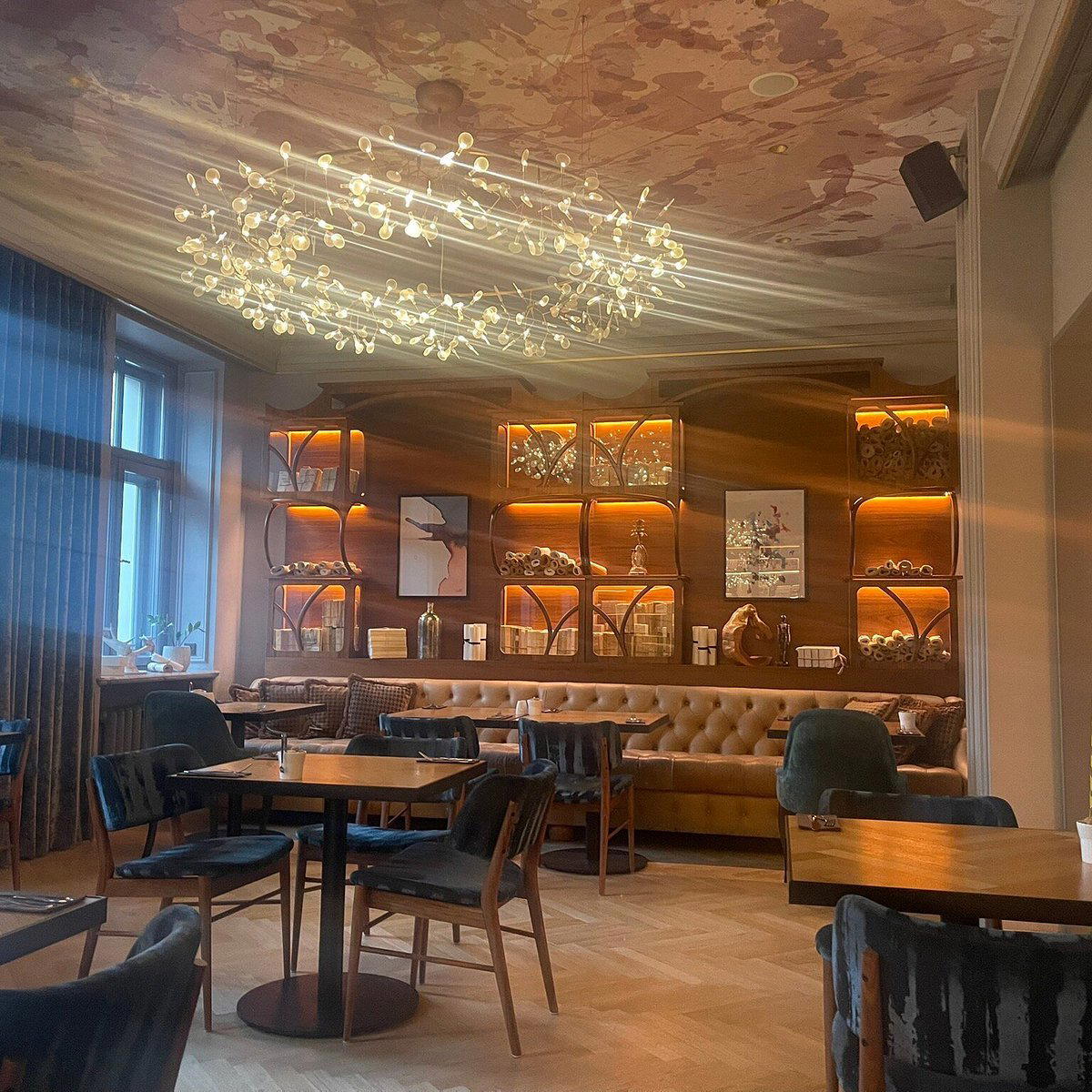
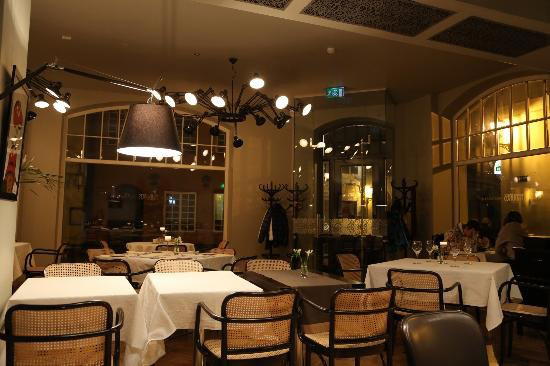
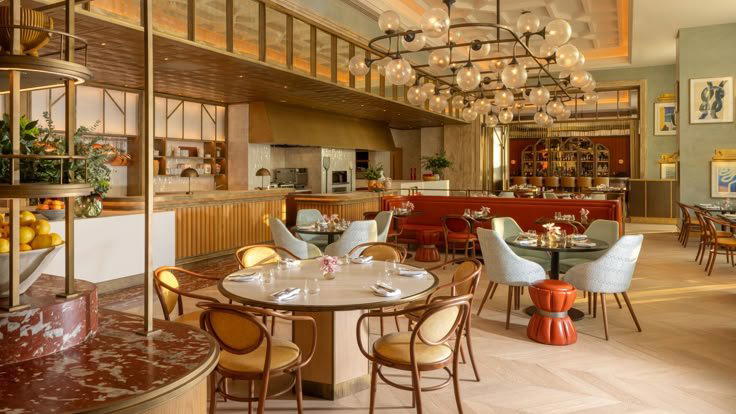
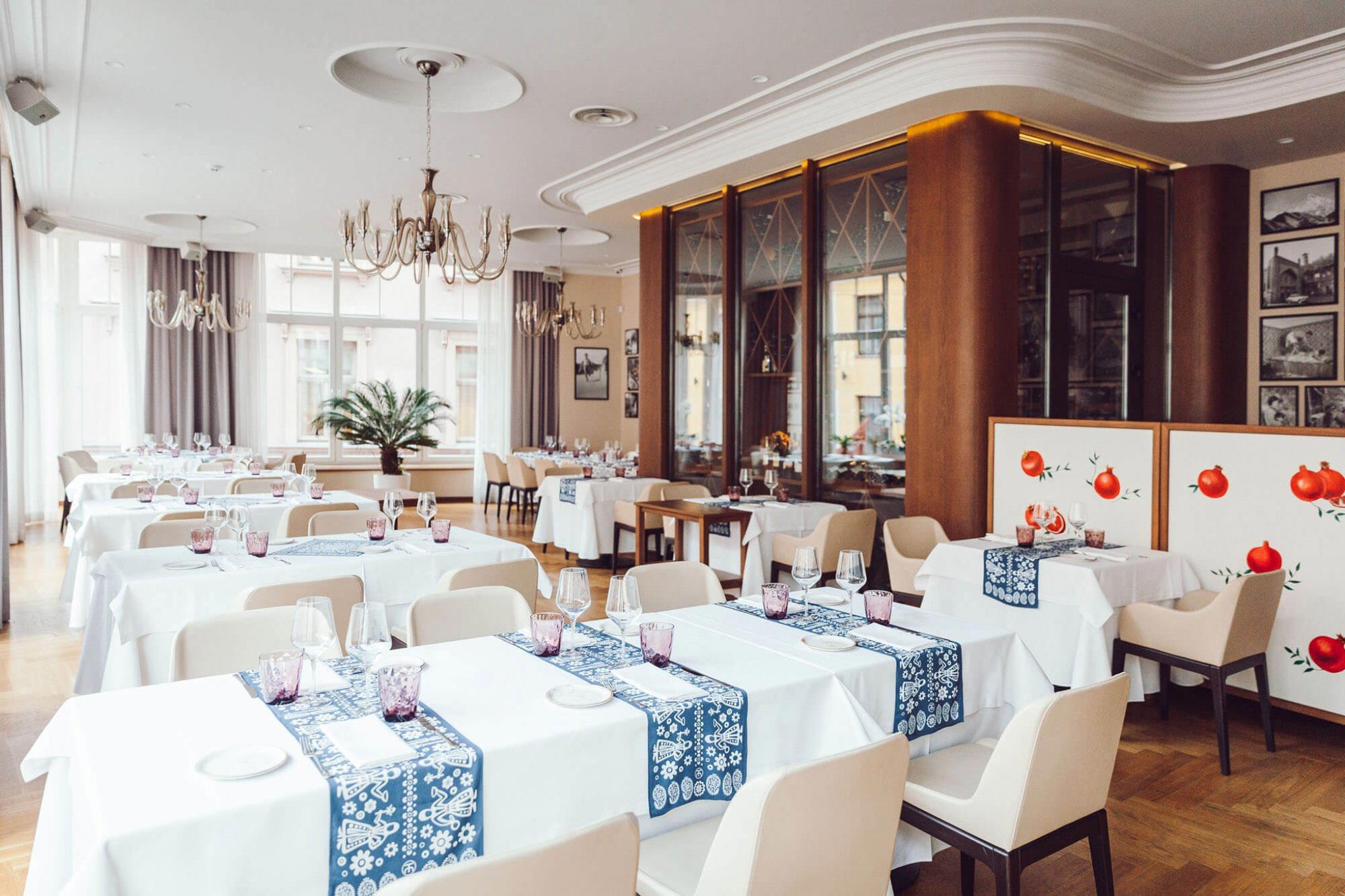
Sophisticated blend of historical heritage and contemporary design with minimalist color palettes, modernist furnishings, serene library, and streetside terrace.