

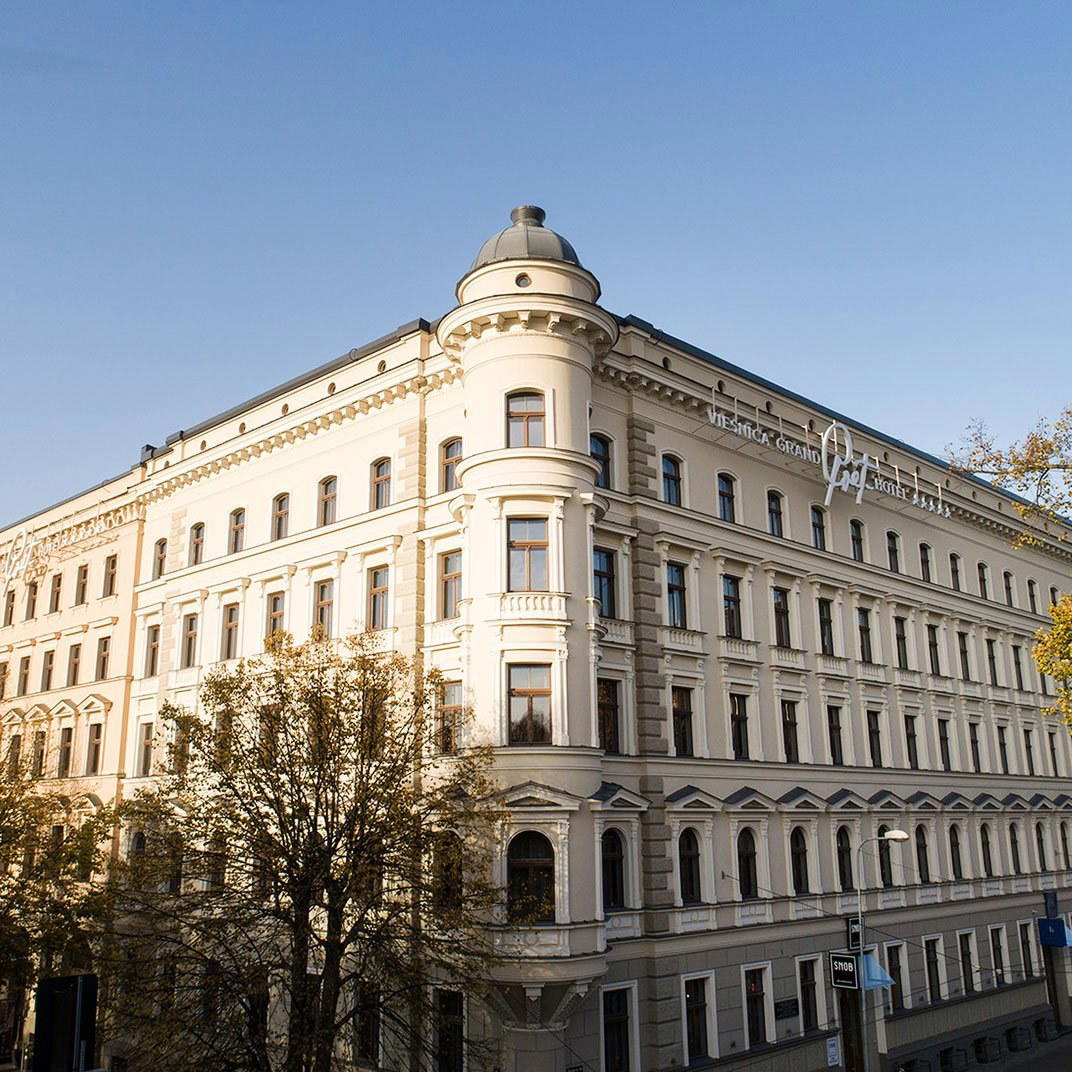
Situated on Aspazijas Boulevard opposite the National Opera House, Grand Hotel Kempinski Riga occupies one of the Latvian capital's most consequential addresses. The five-star property offers 141 rooms and suites alongside 23 residences, a Michelin-listed rooftop bar and restaurant, and an award-winning spa, positioning it firmly within Riga's small tier of internationally credentialed luxury hotels.
Pearl is the En Primeur Club membership app — saves, bookings, and concierge access live there. Same editors, same standards.
- Address
- 22, Aspazijas Boulevard
- Phone
- +371 67 671 111
- Website
- kempinski.com
- Directions
- Get directions
 Saves & bookings on Pearl
Where Aspazijas Boulevard Sets the Standard
Arriving at 22 Aspazijas Boulevard, the geometry of the address does much of the talking. The National Opera House sits directly opposite, and the boundary of Riga's Old Town, a UNESCO World Heritage site, begins within walking distance. For European city hotels in this category, position relative to cultural infrastructure matters as much as what happens inside: it signals who the hotel is competing with and what kind of guest it is built for. Grand Hotel Kempinski Riga occupies that junction with deliberate intent, placing itself at the point where the formal civic city meets the medieval street grid of the historic centre.
This is an address that needs little explanation or orientation. Guests step out onto a boulevard that connects the opera to the parks, the parks to the Old Town, and the Old Town to the broader arc of Riga's Art Nouveau district, one of the densest concentrations of Jugendstil architecture in Europe. For a hotel operating at five-star level, that walkability to verifiable cultural landmarks is a structural advantage that no amount of interior design can replicate from a peripheral location.
141 Rooms, 23 Residences, and the Logic of Scale
At 141 rooms and suites, Grand Hotel Kempinski Riga sits in the mid-tier of full-service luxury hotel inventory, large enough to support a complete hospitality infrastructure (spa, multiple dining formats, dedicated event spaces) but contained enough to sustain a more personalised service model than the city's larger conference-oriented properties. The room count includes residences, extending the hotel's appeal for longer stays and guests who want a more residential feel.
The residence tier also places the hotel in a specific competitive bracket. Across European capitals, the separation between standard luxury rooms and residences has become a meaningful differentiator. In Riga's context, where the luxury tier is thinner and the competition set includes the Dome Hotel & Spa, Grand Palace Hotel, Grand Poet Hotel and SPA by Semarah, and the A22 Hotel, offering residences alongside standard rooms creates a vertical that most local competitors do not match.
Service Architecture at This Level
Kempinski's service style leans toward formalised European traditions built around anticipatory attention rather than reactive efficiency. In practice at properties of this scale and category, that translates to a staffing model where guest preference tracking, proactive room preparation, and coordinated handoffs between departments are structural expectations rather than notable outcomes.
Guests can expect attentive staff, smooth transitions between dining and spa, and few of the frictions that can appear when departments work in isolation. Riga as a city may not carry the same ambient luxury density as Vienna or St. Moritz, but the Kempinski standard does not adjust downward for smaller markets.
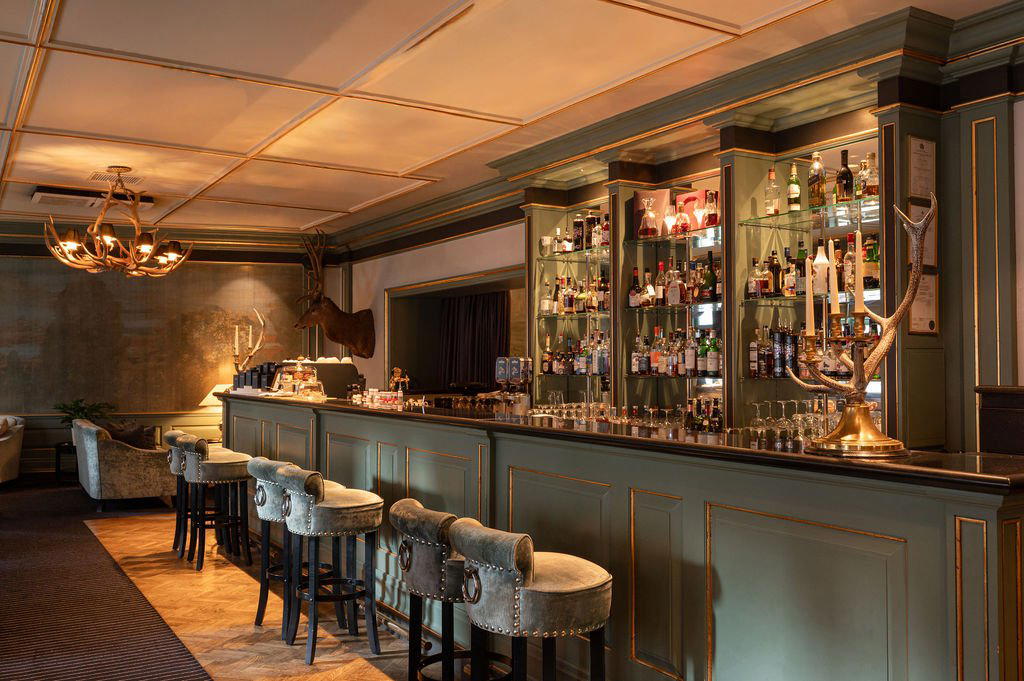
The cigar room also fits this service profile. Cigar lounges at five-star European hotels function less as revenue centres and more as signals about the depth of the hospitality offer, they exist because a certain guest profile expects them, and removing that option would represent a visible contraction of the service envelope. Their presence here indicates the hotel is not trimming its offer to match local demand patterns but holding to an international standard.
Dining and the Rooftop Position
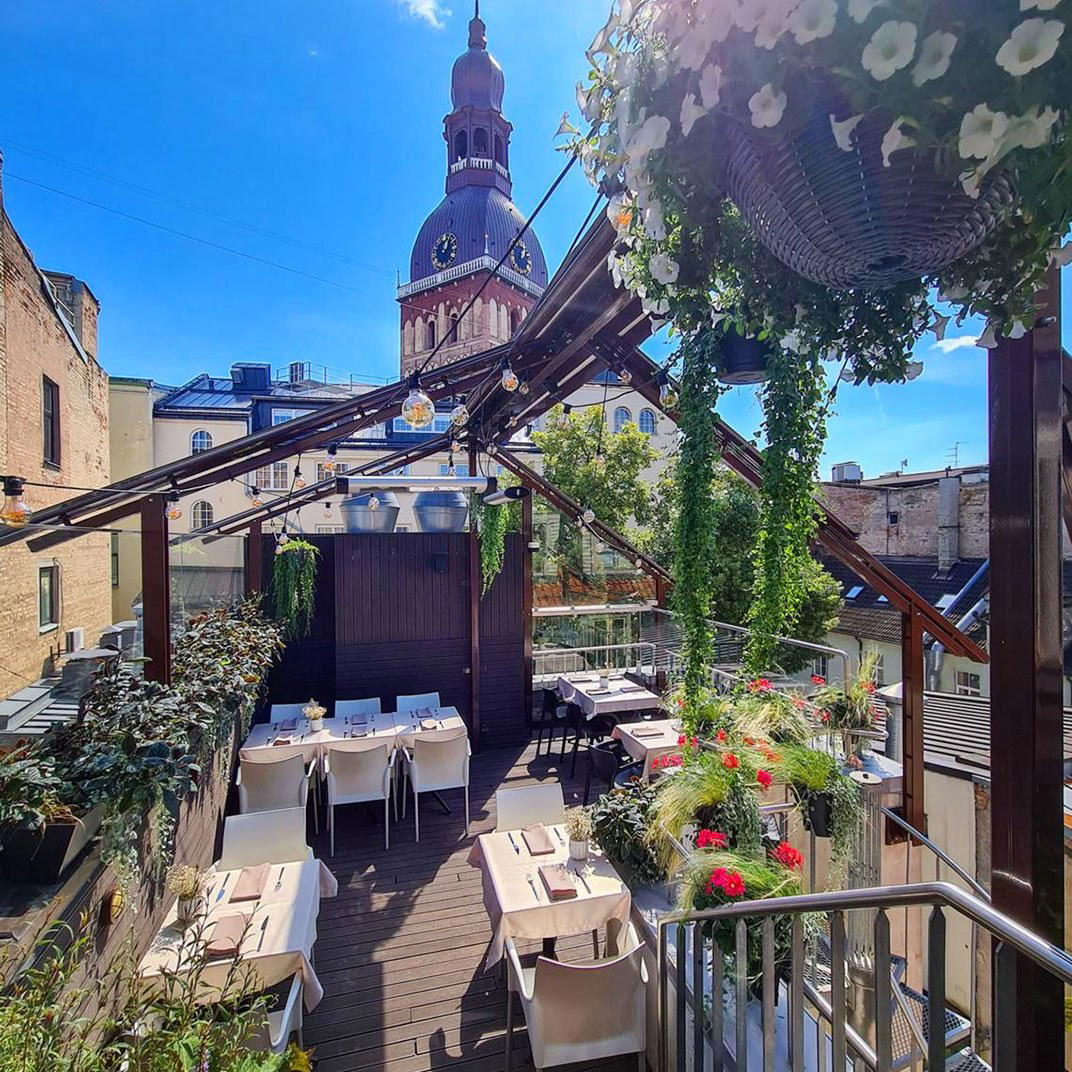
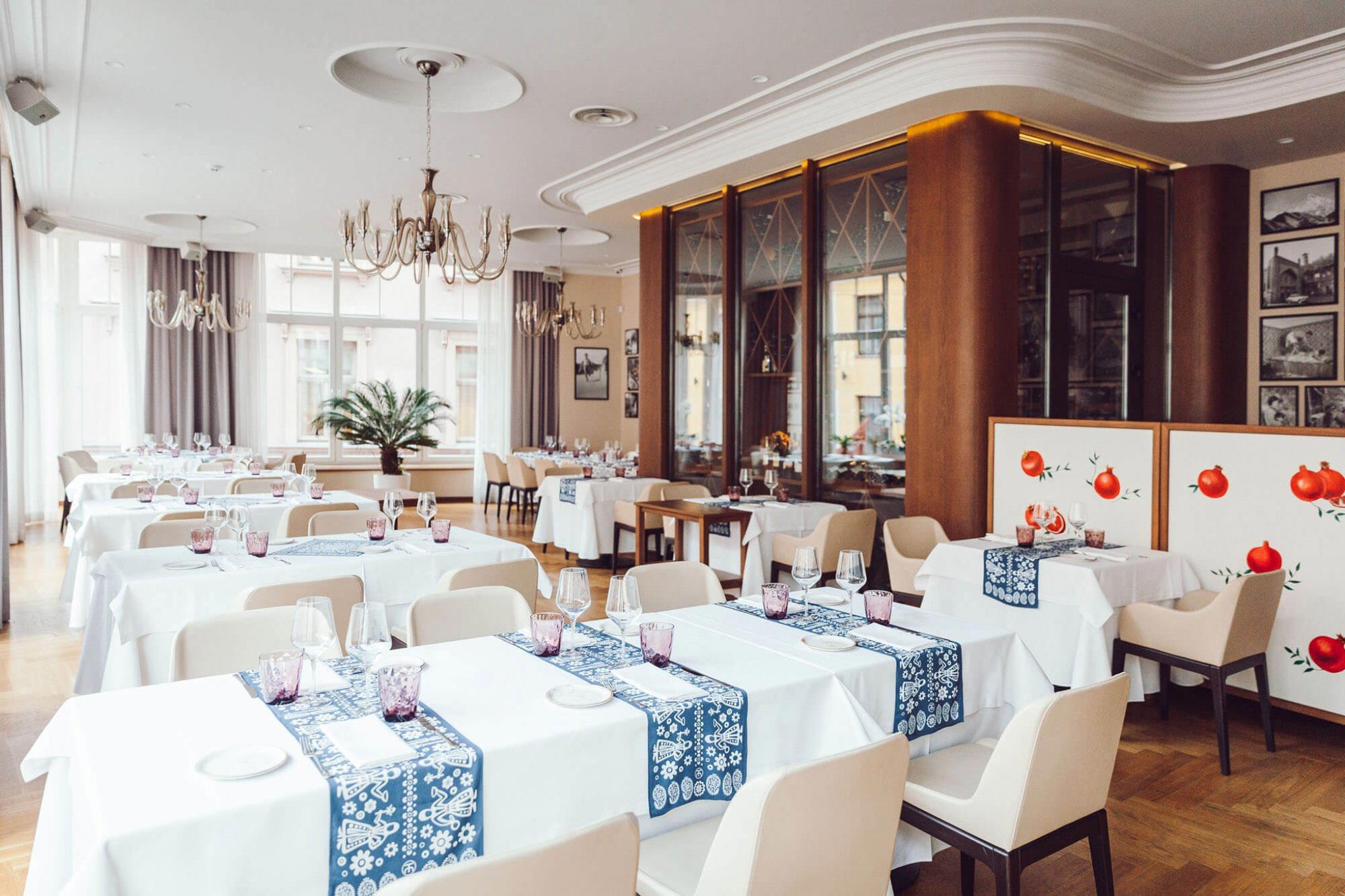
The Michelin-listed rooftop bar and restaurant is the hotel's most publicly credentialed dining outlet. The Michelin-listed rooftop bar and restaurant signals a level of quality and consistency that has cleared the guide's editorial threshold. In Riga's dining context, where the full restaurant scene remains relatively compact by Western European standards, a Michelin-listed rooftop represents a meaningful anchor for guests whose dining decisions would otherwise require sourcing options outside the hotel.
Lobby Lounge and cigar room operate as lower-intensity counterpoints to the rooftop, formats that serve different hours, different social temperatures, and different guest needs within the same building. This layered dining setup gives guests a choice of settings across a stay. Properties like Mandarin Oriental Bangkok or Hotel Bel-Air operate on the same principle at greater scale.
The Spa and Fitness Infrastructure
Kempinski The Spa, described as award-winning within the property record, operates with six treatment rooms, a swimming pool, and a health club with a dedicated fitness facility. For a 141-room city hotel, this represents a meaningful commitment to wellness infrastructure, proportionally more significant than the same numbers would suggest at a 400-room resort property. Six treatment rooms at this inventory level allows for genuine scheduling depth rather than the token spa offer common at smaller city hotels.
Hotels that maintain spa award credentials over time, as appears to be the case here given the property's positioning language, generally do so through investment in staffing continuity, high therapist turnover is incompatible with sustained award performance in this category.
Event Infrastructure and the Corporate Layer
A ballroom with natural daylight, a specific and consequential detail in the event planning market, alongside five meeting rooms positions Grand Hotel Kempinski Riga as a credible corporate host. Natural daylight in a ballroom is not universal at this level and is consistently rated as a preference signal by corporate event planners, particularly for full-day formats where artificial lighting fatigue becomes a real variable. The five additional meeting rooms create the flexibility for multi-stream conferences or breakout formats without relocating between venues.
For travellers whose itinerary includes both leisure and business components, the blended travel pattern that has intensified post-2020, this infrastructure removes a logistical pressure point. The hotel functions as a complete operating environment rather than a sleep-and-depart address.
Planning Your Stay
The hotel sits at 22 Aspazijas Boulevard, directly opposite the National Opera House, with the Old Town accessible on foot. Guests staying for cultural visits will find the positioning removes most transport dependency for daytime activity. For comparable reference points in terms of international five-star service standards in smaller European markets, Hotel Sacher Wien and Mandarin Oriental Ritz, Madrid offer useful calibration. For other reference points across the global Kempinski-tier category, Hôtel de Paris Monte-Carlo, Hotel Plaza Athénée, Aman New York, and Le Bristol Paris sit in adjacent competitive conversations across their respective markets.
What It’s Closest To
Comparable venues nearby, for context on price, style, and recognition.
| Venue | Cuisine | Price | Awards | Notes |
|---|---|---|---|---|
| Grand Hotel Kempinski RigaThis venue — the venue you are viewing | Classic grandeur blended with modern luxury in Riga's historic heart. | $$$$ | 5-Star | Not listed |
| TRIBE Riga City Centre | Contemporary design hotel celebrating Art Nouveau heritage with bold creative energy and smart functionality. | $$$ | 4-Star | Art Nouveau District |
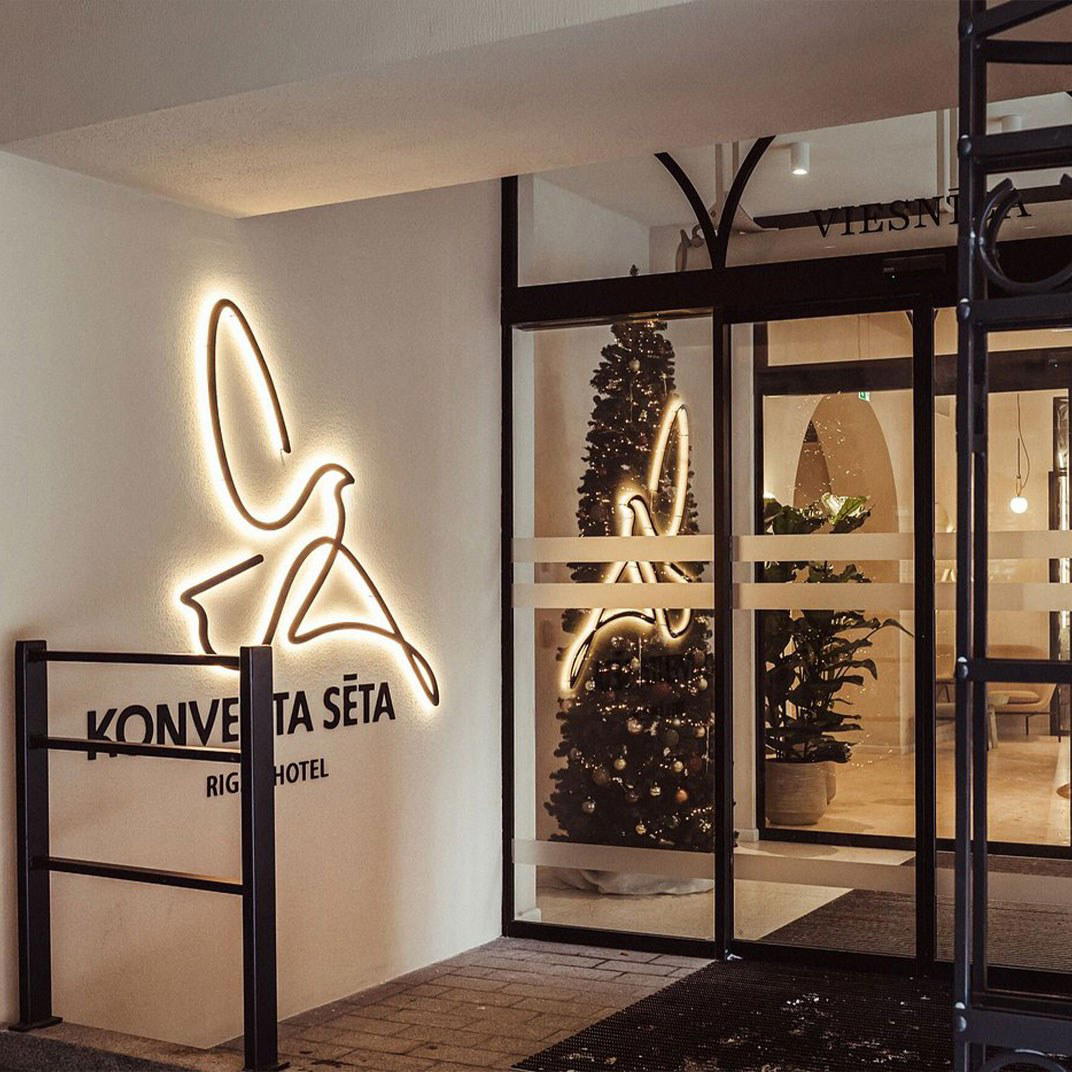
| Konventa Sēta Hotel Keystone Collection | historic complex renovated for modern luxury | $$$ | 4-Star | Vecpilsēta |
| Hotel Bergs Suites | Historic boutique hotel with contemporary suites | $$$$ | 4-Star | Centrs |
| Grand Palace Hotel | Luxury boutique hotel in a historic 1877 building with modern amenities and personalized service; member of Small Luxury Hotels of the World and The Leading Hotels of the World. | $$$$ | 5-Star | Vecpilsēta |
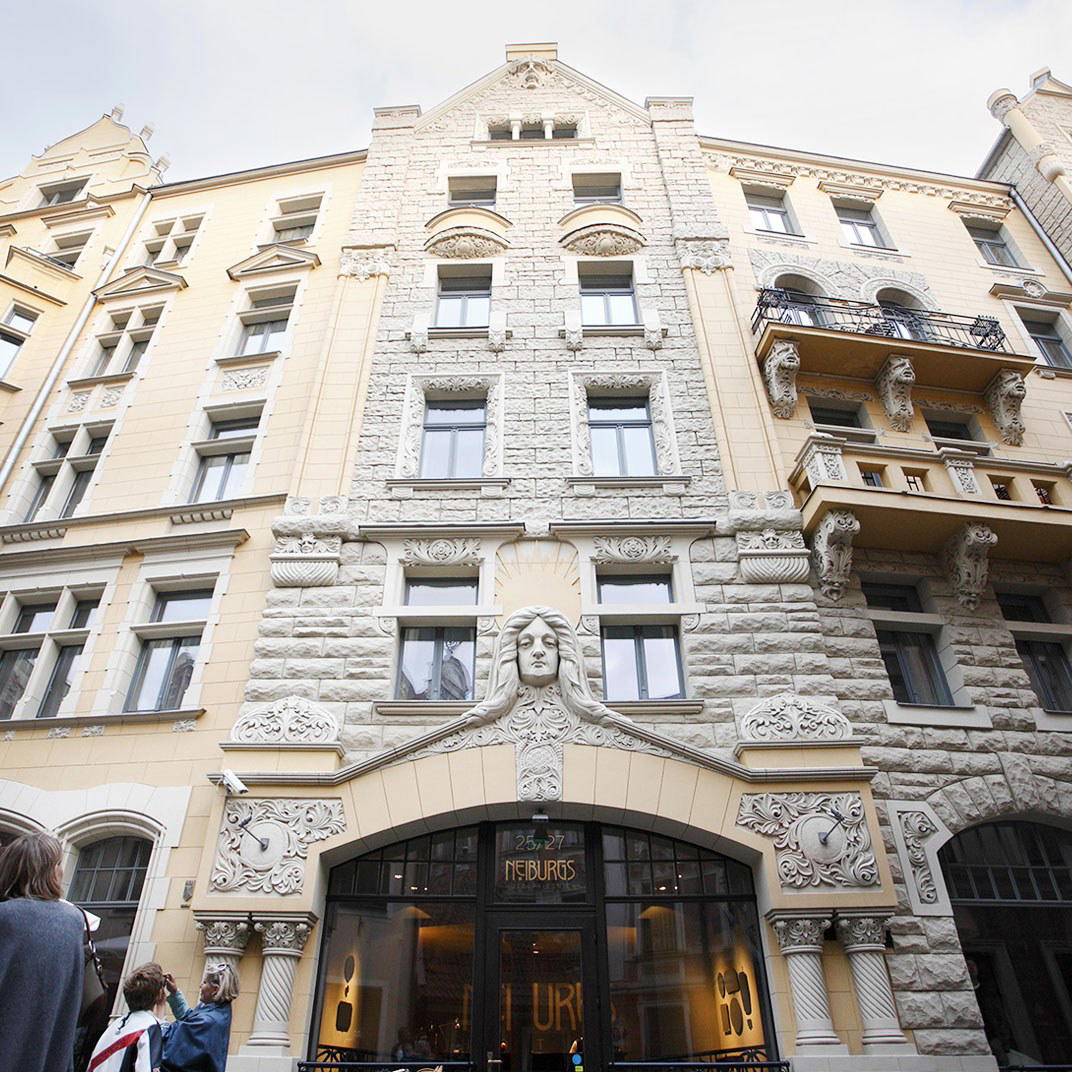
| Hotel Neiburgs | Boutique apartment hotel in a preserved Art Nouveau building with modern suites. | $$$ | 4-Star | Vecpilsēta |
Recognition history
Dated appearances from independent guides and award organizations, with the underlying list record or original source where available.
Virtuoso Luxury Hotel Partner
Virtuoso
Michelin Selected
Michelin
At a Glance
- Elegant
- Sophisticated
- Ornate
- Romantic Getaway
- Business Trip
- Anniversary
- Historic Building
- Panoramic View
- Rooftop Pool
- Spa
- Pool
- Fitness Center
- Room Service
- Concierge
- Valet Parking
- EV Charging
- Street Scene
- Spa
- Pool
- Fitness Center
- Room Service
- Concierge
- Valet Parking
- EV Charging
Ornate classic grandeur with modern luxury, soundproofed rooms, ambient touch-panel lighting, and a serene spa atmosphere.