
Michelin Plate
Our verdict
Le Dome holds three consecutive Michelin Plate recognitions (2024–2026) and sits at the top of Rīga's price tier, pairing a seafood-focused menu with modern technique under Chef Yoshihiko Miura. The address on Miesnieku iela places it in the city's Old Town-adjacent centre, with dinner service running until 10:30 pm daily. It is the most direct point of comparison for anyone weighing Rīga's serious fine-dining options against each other.

Pearl is the En Primeur Club membership app, where members save venues, book tables and use the concierge.
The menu
What to order
- Lobster risotto
- Black Angus beef
- Scallops
- Sea bass
- Monkfish
- Zucchini flowers
A Counter Argument for the Baltic
Rīga's fine-dining scene has been quietly consolidating around a small group of restaurants that take the €€€€ price point seriously. At that tier, the city now sustains a handful of kitchens JOHN Chef's Hall, Max Cekot Kitchen, and Le Dome among them, that compete not against tourist-facing brasseries but against each other and, increasingly, against the wider Baltic and Nordic circuit. What distinguishes Le Dome within that set is its explicit commitment to seafood as the structural spine of the menu, a choice that demands a different kind of kitchen intelligence and, more to the point here, a different kind of wine program.
The restaurant sits at Miesnieku iela 4 in Rīga's Centra rajons, the central district that holds most of the city's serious dining. The address is close enough to the Old Town to draw visitors, far enough from the most trafficked tourist corridors to maintain a local clientele. In a city where the dining infrastructure is thinner than in Warsaw or Vilnius, that positioning matters: the room fills with people who came specifically, not accidentally.
The Case for Seafood at This Latitude
Seafood-led fine dining in the Baltic states operates in an interesting tension. The Gulf of Riga and the wider Baltic Sea produce genuinely compelling fish, flounder, pike-perch, Baltic herring, but the prestige register of European fine dining still pulls kitchens toward North Atlantic species, Breton shellfish, and Norwegian product. The question any serious seafood kitchen at this price point must answer is how it mediates between local provenance and the imported luxury grammar that Michelin-adjacent guests expect.
Chef Yoshihiko Miura's presence at Le Dome adds a further dimension to that question. Japanese training and sensibility, applied to Northern European seafood, has become one of the more productive cross-cultural encounters in contemporary European fine dining, visible in kitchens from Copenhagen to Edinburgh. The approach typically emphasises restraint in heat application, precision in knife work, and an understanding of fish texture that European classicism sometimes subordinates to sauce. At Le Dome, that lineage operates within a modern cuisine framework rather than a strict Japanese format, which gives the menu range without forcing it into fusion territory.
For context on how this kind of seafood-modern hybrid plays out elsewhere in the region, 36. Line in Jurmala and MO in Liepaja both work the Baltic coastal register at different price points and scales. Internationally, Loch Bay on the Isle of Skye and Ondine in Strasbourg demonstrate how Michelin-recognised seafood restaurants anchor their identities in specific coastal geographies, a model Le Dome adapts to the Baltic context.
Wine and Sea: The Pairing Logic
The editorial angle that makes Le Dome most interesting to examine is not the menu itself but the wine-and-sea matching problem it sets up. Seafood menus at this price tier create a particular sommelier challenge: the range of textures and preparations, from raw or lightly cured fish through to richer, sauce-driven compositions, resists a single wine strategy. A list built only around Muscadet and Chablis handles the delicate end of the menu well but struggles with weightier preparations. A Burgundy-heavy list works in reverse.
The strongest wine programs at seafood-focused fine-dining restaurants tend to resolve this by maintaining genuine depth in a few key white-wine regions while building a thoughtful bridge to lighter reds for fish that can take them. In practical terms, that usually means serious Alsace and Loire representation, a real commitment to white Burgundy across multiple appellations and producers rather than just the obvious names, and increasingly, some investment in the coastal whites of Galicia and the Canary Islands, whose saline registers pair naturally with North Atlantic and Baltic fish. Aged white Rioja has also entered serious sommelier consideration for richer fish preparations over the past decade.
Restaurants at this tier that hold Michelin attention are typically reviewed in part on the coherence of the overall experience, which includes wine service.
For guests arriving with specific pairing preferences, it is worth treating the sommelier as the most reliable resource in the room. Seafood menus with Japanese-influenced preparation can move quickly between wine styles, a lightly dressed crudo calls for something entirely different from a deeper, umami-driven preparation, and the kitchen's approach to seasoning and fat will shape what works.
Rīga's Michelin Plate Tier in Context
Le Dome has held the Michelin Plate across three consecutive guides: 2024, 2025, and 2026. The Michelin Plate signals that a restaurant produces good cooking and merits inclusion in the guide, without carrying the star-level implication of exceptional technique or destination status. In a city like Rīga, where the Michelin presence is still relatively recent and the starred tier is thin, the Plate functions as a meaningful quality marker within the local hierarchy rather than a modest consolation in a star-dense city.
Both signals pointing in the same direction across multiple years is a reasonable indicator of operational consistency, which in fine dining is often harder to maintain than initial critical attention suggests.
Within Rīga's €€€€ tier, the comparison set includes JOHN Chef's Hall and Max Cekot Kitchen, both of which take modern cuisine approaches without Le Dome's seafood specialism. Further down the price scale, 3 Chefs and B7 operate in the modern cuisine register at lower price points, while BABO anchors the traditional end of the city's dining spectrum. The broader picture of where Le Dome sits is readable through our full Rīga restaurants guide.
Beyond the capital, the Latvian fine-dining circuit includes Akustika in Valmiera, Biblioteka Number One in Riga, H.E. Vanadziņš in Cēsis, and Pavāru māja in Līgatne, which together map the reach of serious cooking outside the capital. For planning the wider trip, our Rīga hotels guide, bars guide, and experiences guide cover the surrounding infrastructure.
Planning Your Visit
Le Dome operates seven days a week across two distinct services: a morning-to-early-afternoon window running from 9 am to 2:30 pm, and an evening service from 7 pm to 10:30 pm. The split-service format is common among European fine-dining restaurants that want to maintain quality control across a full day, and the 10:30 pm closing time gives the dinner service genuine length without pressuring a single turn. The address is Miesnieku iela 4, Centra rajons, walkable from the main hotel cluster in central Rīga.
at Le Dome?
Given that structure, the most reliable approach is to trust the tasting menu or the kitchen's current recommendation over individual selections, seafood menus at this level are designed to be experienced sequentially, where each course sets up the temperature and weight of the next. Ask the sommelier to match by the course rather than selecting a single bottle for the table; the range of preparations typical in a modern seafood tasting menu rewards that kind of course-by-course flexibility.
Frequently asked questions
How much does it cost to eat at Le Dome?
Pricing at Le Dome is listed as €€€€.
What are the operating hours at Le Dome?
Hours at Le Dome: Hours: Monday 9 am–2:30 pm, 7–10:30 pm Tuesday 9 am–2:30 pm, 7–10:30 pm Wednesday 9 am–2:30 pm, 7–10:30 pm Thursday 9 am–2:30 pm, 7–10:30 pm Friday 9 am–2:30 pm, 7–10:30 pm Saturday 9 am–2:30 pm, 7–10:30 pm Sunday 9 am–2:30 pm, 7–10:30 pm.
What's the address for Le Dome?
Le Dome is located at Miesnieku iela 4, Centra rajons, Rīga, LV-1050, Latvia, Rīga.
A Pricing-First Comparison
| Venue | Cuisine | Price | Awards | Notes |
|---|---|---|---|---|
| Le DomeThis venue (the venue you are viewing) | Modern European Fine Dining with Seafood Focus | $100–150 | Michelin Plate | Not listed |
| JOHN Chef's Hall | Modern Latvian Fine Dining | Not listed | 1 Michelin Star · La Liste Top Restaurants | Modern Cuisine |
| Max Cekot Kitchen | Modern European Fine Dining | $200–300 | 1 Michelin Star · La Liste Top Restaurants | Creative |
| Shōyu | Authentic Japanese Ramen | $20–30 | Michelin Bib Gourmand | Not listed |
| Snatch | Modern Italian | $30–50 | Michelin Bib Gourmand · Star Wine List | Not listed |
| BABO | Modern Georgian | $20–30 | Michelin Plate · Star Wine List | Not listed |
Recognition history
Dated appearances from independent guides and award organizations, with the underlying list record or original source where available.
Michelin Plate
Michelin
Full recognition history (3 entries)
Michelin Plate
Michelin
Michelin Plate
Michelin
Continue exploring
More in Riga
Restaurants in Riga
All restaurants in Riga →
Bars in Riga
All bars in Riga →
Details
- Elegant
- Intimate
- Romantic
- Sophisticated
- Date Night
- Business Dinner
- Special Occasion
- Celebration
- Rooftop
- Terrace
- Historic Building
- Hotel Restaurant
- Waterfront
- Extensive Wine List
- Sommelier Led
- Local Sourcing
- Sustainable Seafood
- Farm To Table
- Waterfront
- Tasting Menu
- A La Carte
- Wine Pairing
- Wine List
- Vegetarian Friendly
- Gluten Free Options
- Pescatarian Friendly
Current opening hours
- Monday
- Closed
- Tuesday
- 12–11 PM
- Wednesday
- 12–11 PM
- Thursday
- 12–11 PM
- Friday
- 12–11 PM
- Saturday
- 12–11 PM
- Sunday
- Closed
Hours can change for holidays and private events. Hours as of .
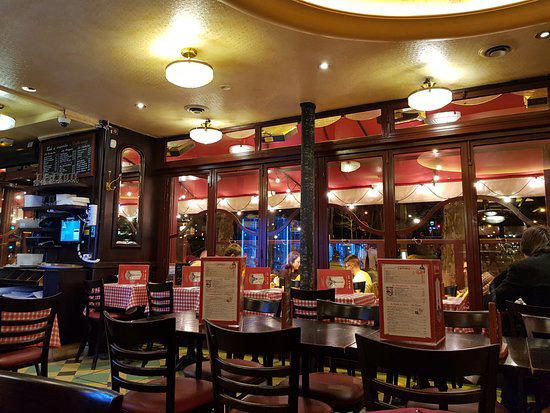
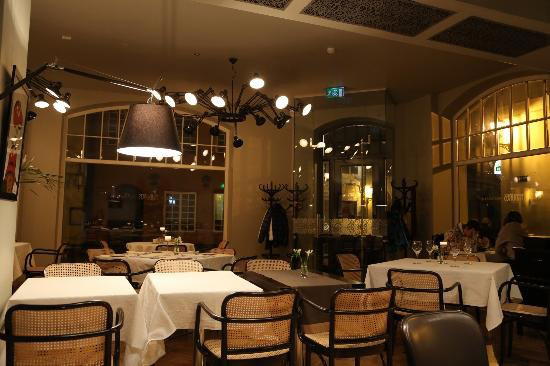
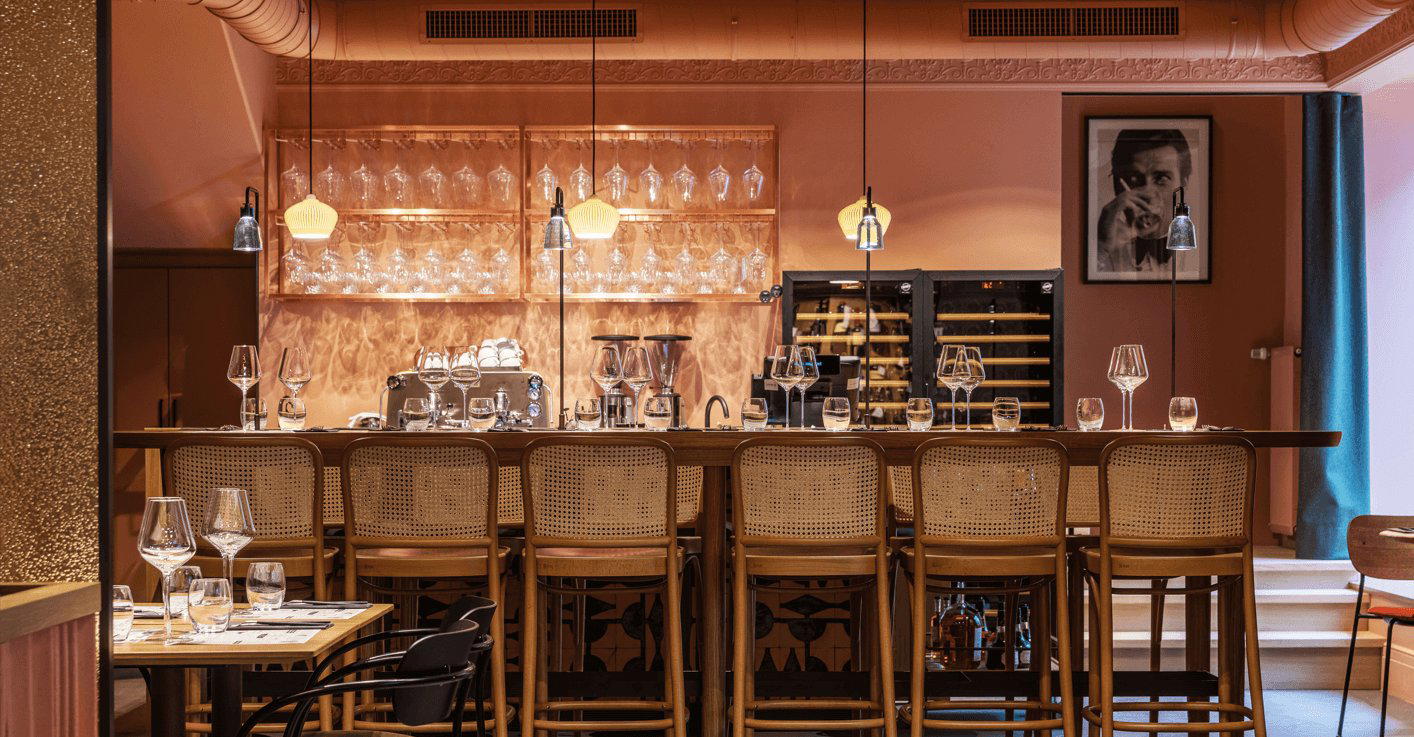
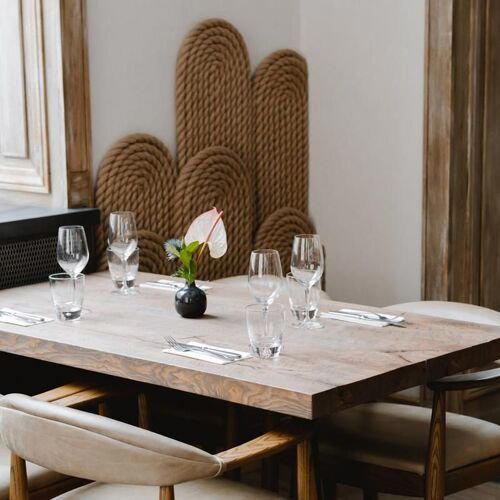
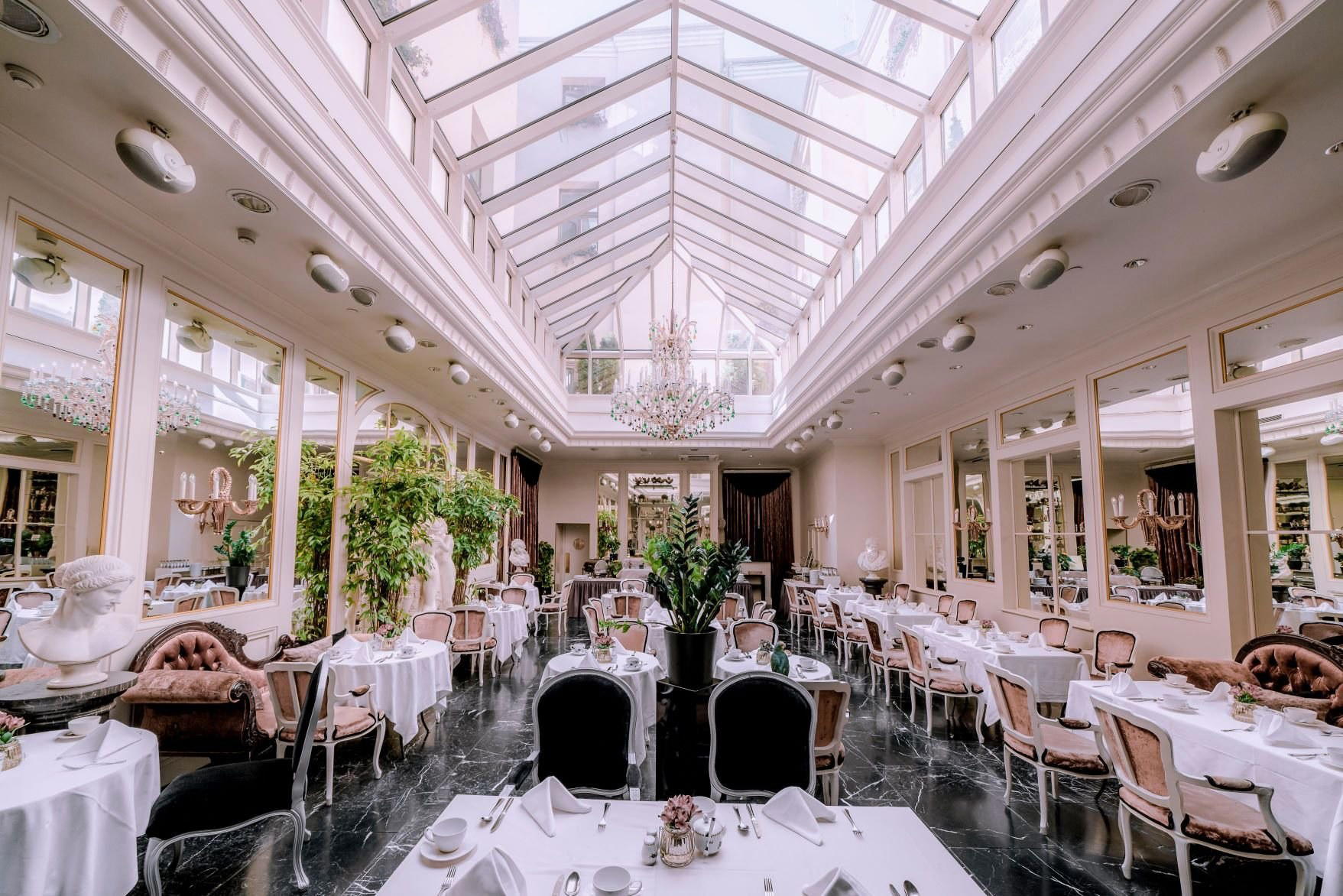
Elegant yet understated with simple, clean Danish Modern decor; long narrow dining room adorned with black and white photos of Riga; warm and cosy atmosphere with attentive service.