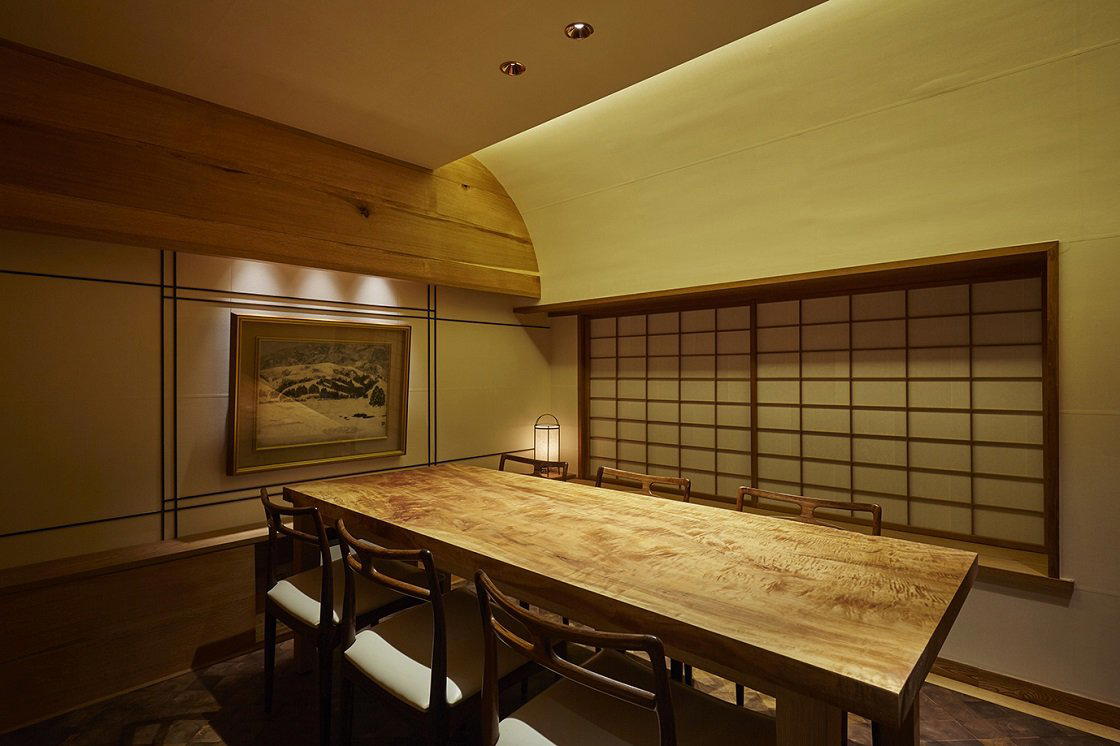
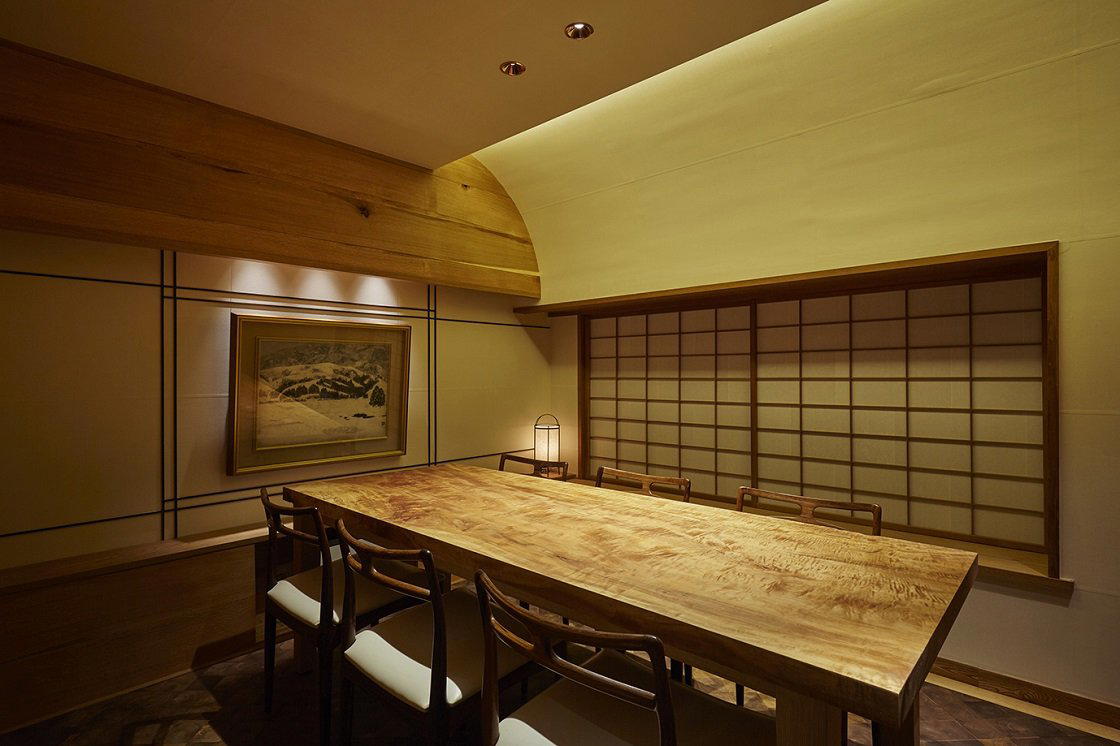
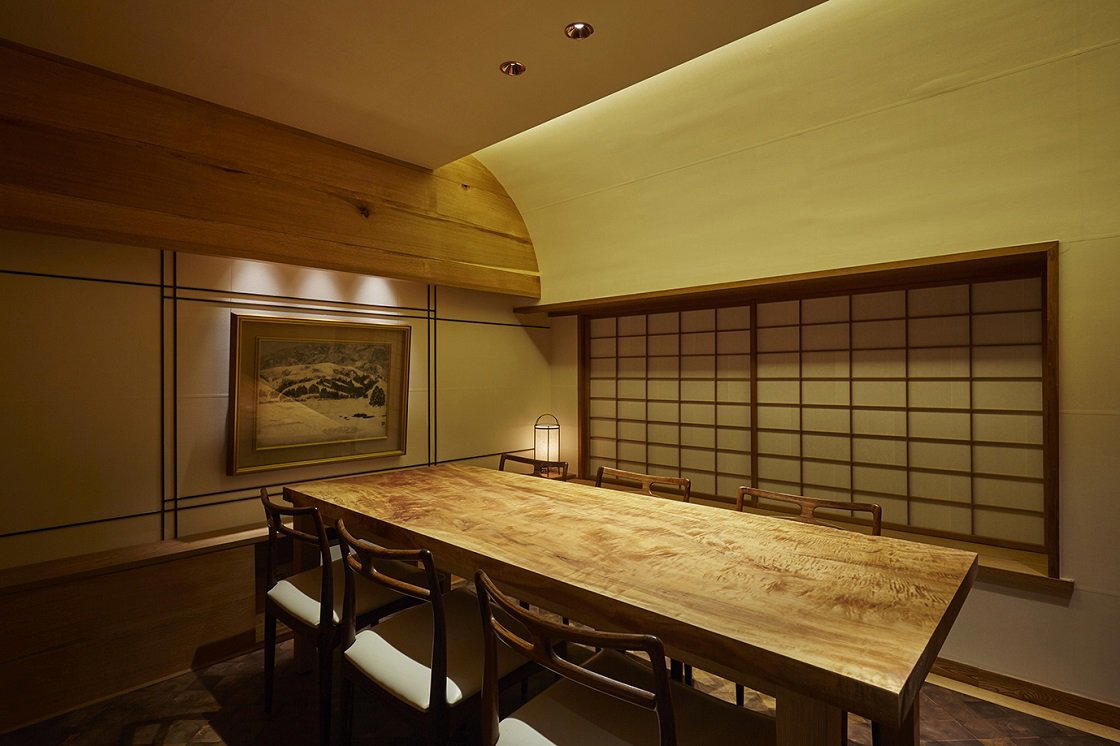
Michelin Plate · Tabelog 100 #58
Our verdict
On the second floor of a Tenma building in Osaka's Kita Ward, MATO serves a prix fixe menu rooted in regional Chinese cooking, shaped by seasonal Japanese ingredients and the cross-cultural heritage of its two founders. The name references Shanghai's identity as a city where East meets West, a frame that applies equally to the kitchen. Chinese tea pairings deepen the table further.

Pearl is the En Primeur Club membership app, where members save venues, book tables and use the concierge.
The menu
What to order
- Braised_pork
- Tea_smoked_duck
- Seasonal_steamed_fish
Where Tenma Meets the Yangtze Delta
The second floor of a low-rise commercial block in Tenma is not where most visitors to Osaka expect to encounter serious Chinese cooking. Tenma is a neighbourhood defined by its covered market and its density of small izakayas, a place where the evening crowd moves fast and the food is direct. MATO sits above that street-level rhythm, and the separation is deliberate, this is a room that asks for a different pace.
The venue takes its name from the Shanghai term for the city itself: a place that fuses East and West, ancient and modern, shifting in character almost without notice. That etymology is not decorative. It maps directly onto how the menu is assembled and how MATO positions itself within Osaka's broader fine dining conversation.
A Format That Has Shifted With Its City
Osaka's premium dining market has consolidated steadily over the past decade around a small number of formats: kaiseki counters drawing on centuries of Japanese culinary philosophy, and Franco-Japanese tasting menus that sit at the intersection of French technique and local product. Venues like HAJIME and La Cime occupy the ¥¥¥¥ tier of that Franco-Japanese tradition, while Kashiwaya Osaka Senriyama and Taian anchor the kaiseki end. The field is sophisticated, internationally recognized, and fairly legible to a well-travelled diner.
What MATO represents is a different evolution. Chinese regional cooking presented in a structured prix fixe format, cross-referenced with Japanese seasonal ingredients, is a rarer proposition in Japan's second city. It draws on a tradition that predates the current Franco-Japanese moment, the deep historical exchange between China and Japan that shaped everything from noodle culture to fermentation practice, but frames it through a contemporary dining structure. The menu's stated ambition is to assemble dishes from various regions of China with a balanced diet in mind, which in practice means the kitchen is making considered curatorial choices rather than anchoring to a single regional style.
That curatorial approach places MATO closer in sensibility to innovative tasting-menu formats like Fujiya 1935 than to a conventional Chinese restaurant, even if the reference points are entirely different. The question the venue is answering is the same one any serious tasting-menu operation must answer: what does the sequence tell the diner that a single dish cannot?
The Shanghai Inheritance
The concept was founded by two women with Shanghai heritage, and that origin matters to how the menu reads. Shanghai has historically been the point where continental Chinese culinary traditions come to negotiate with outside influence, first Western, then Japanese, then global. A Shanghai-rooted kitchen is by definition one that does not privilege purity over exchange, and that comfort with synthesis is visible in the decision to incorporate seasonal Japanese ingredients into a menu built on Chinese regional traditions.
This is not fusion in the diluted, market-softening sense the word often implies. It is closer to what restaurants operating at the intersection of national culinary traditions are increasingly being asked to articulate: where does the ingredient sourcing logic stop and where does the cultural reference logic begin? At MATO, the answer appears to be that Japanese seasonality governs what arrives in the kitchen, while Chinese regional thinking governs what happens to it. That is a precise and defensible position, and it distinguishes the kitchen from both the Chinese restaurants that ignore Japanese ingredient cycles and the Japanese restaurants that treat Chinese technique as an accent rather than a foundation.
Comparable cross-cultural seriousness appears in venues like Atomix in New York City, where Korean culinary logic is applied to an entirely contemporary tasting format, or Gion Sasaki in Kyoto, where the kaiseki format is stretched to accommodate Western reference points. The conversation about what happens when a strong culinary tradition encounters the norms of fine dining presentation is international, and MATO is making a contribution to it from Tenma.
The Tea Pairing as a Critical Layer
Chinese tea pairings are available on request, and this is worth treating as more than an optional add-on. Tea culture in China carries a specificity, regional, seasonal, varietal, that mirrors the complexity of wine culture in Europe, and a kitchen presenting dishes from multiple Chinese regions benefits from a beverage program that can match that geographic and temporal range. Where a wine pairing at a French tasting-menu restaurant reinforces the culinary logic through terroir alignment, a Chinese tea pairing at MATO performs the same function while deepening the cultural frame. It is one of the cleaner ways the venue has of teaching the diner something about Chinese culinary culture that the food alone cannot carry.
For context on how tea pairings function in serious regional Chinese dining, the tradition has analogs in the premium tea-house culture of Hangzhou and Chengdu, where the relationship between a dish's fat content, salinity, or spice level and a tea's oxidation, roast, and brewing temperature is treated with the same care a sommelier applies to acidity and tannin. The request, ask for the pairings, signals that this layer requires engagement from the diner, not just passive consumption.
Where MATO Sits in the Osaka Fine Dining Field
Osaka's serious dining options for international visitors tend to cluster in a few neighbourhoods: Shinsaibashi, Namba, and parts of the Minami district for the higher-volume end, with scattered destination rooms in Kita Ward for more deliberate evenings. Tenma's location within Kita Ward places MATO within reach of the central dining circuit without being inside it. That positioning suits a restaurant that is making a considered argument rather than competing on visibility.
For visitors building a multi-day Osaka itinerary that already includes a kaiseki counter or a Franco-Japanese tasting menu, MATO provides a register that is genuinely different. The prix fixe structure makes it comparable in format to the city's top-tier rooms, while the Chinese regional foundation means the flavour references, the pacing logic, and the beverage culture are operating from an entirely separate culinary canon. The combination, format legibility, cultural distinction, is a practical reason to include it alongside rather than instead of options like Taian or Kashiwaya.
For broader Osaka dining context, see our full Osaka restaurants guide. For planning your wider visit, our full Osaka hotels guide, bars guide, and experiences guide cover the rest of the city. Elsewhere in the Kansai region, akordu in Nara offers another cross-cultural tasting format worth comparing. Further afield, Harutaka in Tokyo, Goh in Fukuoka, 1000 in Yokohama, and 6 in Okinawa each represent serious regional fine dining with a distinct cultural argument of their own. See also our Osaka wineries guide for cellar options nearby. For international reference points in cross-cultural fine dining, Le Bernardin in New York City and Atomix demonstrate how deeply rooted culinary traditions translate into contemporary fine dining formats.
Planning Your Visit
| Detail | MATO | Taian | HAJIME |
|---|---|---|---|
| Format | Prix fixe (Chinese regional) | Kaiseki counter | French-Innovative tasting menu |
| Price tier | Not published | ¥¥¥ | ¥¥¥¥ |
| Beverage focus | Chinese tea pairings | Sake / wine | Wine |
| Location | Tenma, Kita Ward | Central Osaka | Central Osaka |
| Booking lead time | Confirm directly | Weeks to months ahead | Months ahead |
Frequently asked questions
Does MATO have a Michelin star or similar recognition?
MATO has received recognition including: ‘Mato’ means a fascinating city that fuses East and West, ancient and modern, and changes almost like magic. MATO was founded by two women with Shanghai heritage, and the name celebrates those roots of that classic ‘mato’. The prix fixe men….
How do I find MATO?
MATO is located at えびすビル 2F, 3 Chome-11-7 Tenma, Kita Ward, Osaka, 530-0043, Japan, Osaka.
What should I eat at MATO?
The menu is a single prix fixe format drawing on multiple regional Chinese traditions, so there are no à la carte choices to navigate. Each iteration incorporates seasonal Japanese ingredients alongside the regional Chinese foundation. Request the Chinese tea pairing when booking, it functions as a structured counterpart to the food rather than an afterthought, given that tea carries distinct regional and ceremonial weight in Chinese culinary culture.
Should I book MATO in advance?
Yes. MATO operates a prix fixe format from a second-floor address in Tenma, a neighbourhood outside Osaka's main tourist dining corridors, which means the kitchen works to a fixed headcount rather than walk-in volume. Small restaurants operating this model in Osaka's premium tier typically fill seats days to weeks ahead. check the venue's official channels to confirm current availability and reservation policy.
What is MATO known for?
MATO is known for bringing structured Chinese regional cooking to Osaka under a concept founded by two women with Shanghai heritage. The name itself references Shanghai's historical identity as a city fusing East and West, ancient and modern, and that framing shapes the menu's logic: traditional Chinese regional fare assembled with dietary balance in mind, given a modern treatment through seasonal Japanese ingredients. The optional Chinese tea pairing deepens the cultural context considerably.
Peers You’d Cross-Shop
Comparable venues nearby, for context on price, style, and recognition.
| Venue | Cuisine | Price | Awards | Notes |
|---|---|---|---|---|
| MATOThis venue (the venue you are viewing) | Modern Shanghai Chinese | Not listed | Michelin Plate · Tabelog 100 #58 | Not listed |
| Hinotori | Classical Chinese Fine Dining | $100–150 | Tabelog Bronze #115 | Chūō |
| Chukashunsai Morimoto | Modern Sichuan Chinese | $30–50 | Michelin Bib Gourmand | Chūō |
| Gessen | Modern Seasonal Chinese | $100–150 | Tabelog Silver #26 | Kita |
| Seiran | Chinese Fine Dining | $30–50 | Tabelog 100 #48 | Chūō |
| Bullet | Reservation-only seasonal Chinese course at an 8-seat counter | $50–100 | Tabelog 100 #35 | Nishi |
Recognition history
Dated appearances from independent guides and award organizations, with the underlying list record or original source where available.
Michelin Plate
Michelin
Tabelog 100 #58
Tabelog