Masu Sushi & Hibachi
Our verdict
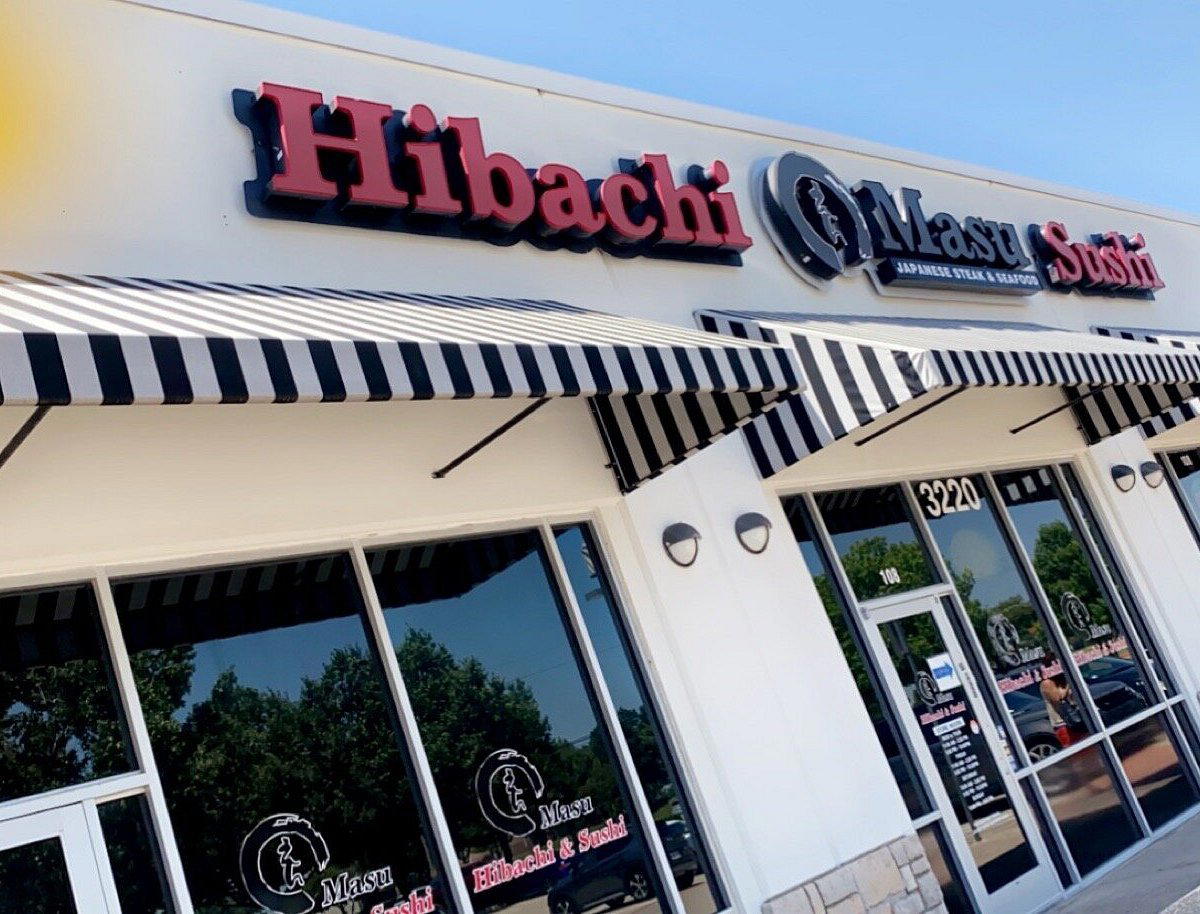
Masu Sushi & Hibachi sits along East Hebron Parkway in Carrollton, Texas, placing it squarely within the DFW suburb's growing corridor of Japanese and Asian dining options. The format pairs sushi counter fare with hibachi-style cooking, a combination that appeals to groups with divergent preferences. Carrollton's dense dining strip offers useful context for understanding where this restaurant fits within the local scene.

Pearl is the En Primeur Club membership app — saves, bookings, and concierge access live there. Same editors, same standards.
- Address
- 3220 E Hebron Pkwy Apt 108, Carrollton, TX 75010
- Phone
- (972) 306-4170
- Hours
- Mon–Thu 11 AM–2:30 PM, 4:30–9:30 PMFri 11 AM–2:30 PM, 4:30–10 PMSat 12–3 PM, 4:30–10 PMSun 12–9 PM
- Website
- masu-online.com
- Directions
- Get directions
- Booking
- Book on OpenTable
The menu
What to order
- Filet Mignon
- Chateaubriand
- Blazing 151 Roll
- Rainbow Roll
- Lobster Roll
Where Hibachi Theatre Meets Sushi Counter in Suburban DFW
East Hebron Parkway in Carrollton has become one of the more interesting secondary dining corridors in the Dallas-Fort Worth suburbs, a stretch where Korean BBQ houses, Japanese restaurants, and multi-format Asian concepts have quietly accumulated over the past decade. Masu Sushi & Hibachi, at 3220 E Hebron Pkwy, sits inside this cluster, occupying a position in the market that combines two formats which are often kept separate: the live-fire theatrics of teppanyaki-style hibachi cooking and the quieter discipline of a sushi counter. That pairing is a deliberate commercial strategy common to suburban American Japanese restaurants, and it tells you something about the dining culture of the area as much as it tells you about Masu specifically.
The dual-format model traces back to the postwar popularization of teppanyaki in the United States, most prominently through Benihana, which opened in New York in 1964 and built an entire brand identity around the spectacle of chefs cooking on flat-iron griddles at communal tables. The format migrated steadily into suburban markets through the 1980s and 1990s, where it found a durable audience in family groups and celebrations. Sushi, meanwhile, followed its own trajectory into American mainstream dining over roughly the same period, moving from coastal urban novelty to suburban staple by the mid-2000s. Restaurants like Masu that combine both formats are the practical outcome of that convergence: they serve the group that wants a show with one side of the table, and the guest who wants raw fish with the other.
Japanese Dining in Carrollton's Competitive Mix
Carrollton's dining corridor along Hebron and its surrounding streets presents genuine competition for any Japanese restaurant. Sushi Nekko Japanese Restaurant operates in the same general zone, offering another point of reference for what sushi-focused dining looks like in this part of the suburb. The presence of Korean BBQ venues like Ari Korean BBQ and Bros Korean BBQ & Sushi nearby signals how strong the live-fire, interactive-cooking format has become in this market segment — and how a hibachi-plus-sushi model is one strategy for competing against the Korean BBQ wave without abandoning a Japanese identity. KichiBar adds yet another dimension to the local scene with a bar-forward format, while Cane Rosso represents the Italian end of the corridor's diversity.
For a broader survey of how these restaurants map onto Carrollton's dining character, the full Carrollton restaurants guide tracks the scene across cuisines and formats. What emerges from that overview is a suburb that punches above its weight in terms of Asian dining variety, driven in part by the large Korean and South Asian communities that have settled in the northern DFW corridor over the past two decades.
The Cultural Roots of Hibachi Dining
The word hibachi refers in Japanese to a traditional heating device, a container holding burning charcoal used for warmth rather than cooking. What American restaurants call hibachi is more accurately teppanyaki, the style of cooking on a flat steel griddle that was codified as a restaurant format in Japan in the mid-twentieth century and then exported to the United States as an entertainment concept as much as a culinary one. The distinction matters because it reveals how Japanese dining traditions get translated and transformed as they cross into new markets. The teppanyaki format that arrived in suburban America retained the theatrical element — the knife work, the flame, the flying shrimp, while gradually detaching from the precise sourcing and technique standards of its Japanese antecedents.
This is not a critique specific to Masu or any individual restaurant; it is simply the pattern that characterizes the category across the American suburban market. The honest version of hibachi dining in this context is crowd-facing and celebratory, designed for birthdays and anniversary dinners, for groups of eight around a shared griddle, for people who want food and spectacle in one sitting. That is a legitimate dining format with its own pleasures and logic, distinct from but not inferior to the more austere traditions of kaiseki or omakase counter dining.
To understand what the upper register of American Japanese and broader fine dining looks like, the contrast is useful. Restaurants like Atomix in New York City and Le Bernardin in New York City operate at the credentialed apex of American restaurant culture. The French Laundry in Napa, Alinea in Chicago, and Lazy Bear in San Francisco represent the kind of ambitious, format-defining restaurants that define national conversation about fine dining. Further afield, Single Thread Farm in Healdsburg, Providence in Los Angeles, Blue Hill at Stone Barns in Tarrytown, Addison in San Diego, The Inn at Little Washington, and Emeril's in New Orleans anchor regional fine dining in their respective cities. At the international level, 8 1/2 Otto e Mezzo Bombana in Hong Kong illustrates how destination dining extends well beyond American borders. Masu occupies a fundamentally different tier and serves a fundamentally different purpose, which is not a failing but a description of its actual market position.
What to Know Before You Go
Masu Sushi & Hibachi is located at 3220 E Hebron Pkwy, Suite 108, Carrollton, TX 75010, in a strip-center format typical of this part of the suburb. Carrollton's Hebron corridor is accessible by car from central Dallas in approximately 25 to 30 minutes under normal traffic conditions, and parking in strip-center lots along this stretch is generally direct. The hibachi format typically requires a larger group commitment, and it is worth confirming reservation requirements in advance if visiting with a party of fewer than four, as teppanyaki tables are usually designed around communal seating.
Frequently asked questions
Where is Masu Sushi & Hibachi located?
Masu Sushi & Hibachi is located at 3220 E Hebron Pkwy Apt 108, Carrollton, TX 75010, Carrollton.
Is Masu Sushi & Hibachi suitable for a date night in Carrollton?
The dual-format setup at Masu — sushi counter plus hibachi teppanyaki — gives a date-night visit a natural two-act structure that single-format restaurants along the Hebron Pkwy corridor cannot replicate. Hibachi tables seat multiple guests together, so solo couples may share a grill with other diners during busy services; if a private table is a priority, confirming seating arrangements when booking is worth the call. The strip-center address at Suite 108 on E Hebron Pkwy sets a casual, neighbourhood tone rather than a formal dining room atmosphere.
What's the best thing to order at Masu Sushi & Hibachi?
Masu operates two distinct formats under one roof at 3220 E Hebron Pkwy in Carrollton: a hibachi teppanyaki side and a sushi counter. As a general orientation for this type of restaurant, first-time visitors typically split the experience — a sushi course followed by a hibachi entree — to gauge the kitchen's range across both formats.
How far ahead should I plan for Masu Sushi & Hibachi?
If your visit falls on a Friday or Saturday, or involves a group celebration, contacting the restaurant directly ahead of the week gives you the most options. Weekday evenings at strip-center Japanese spots in this part of DFW typically offer more flexibility.
What do critics highlight about Masu Sushi & Hibachi?
No formal critical citations, Michelin recognition, or James Beard nominations for Masu Sushi & Hibachi appear in verified records at this time. The restaurant sits in Carrollton's Hebron corridor, a secondary DFW dining strip that draws local regulars rather than destination food press.
Can Masu Sushi & Hibachi handle vegetarian requests?
Hibachi-format restaurants in general carry structural advantages for vegetarian diners — teppanyaki grills accommodate vegetable-only preparations, and sushi counters typically offer cucumber, avocado, and pickled vegetable rolls as baseline options. Contact Masu directly at their Carrollton location before visiting if this is a firm requirement for your group.
Cost Snapshot
Comparable venues nearby, for context on price, style, and recognition.
| Venue | Cuisine | Price | Notes |
|---|---|---|---|
| Masu Sushi & HibachiThis venue — the venue you are viewing | Japanese Sushi & Teppanyaki | $30–50 | Not listed |
| Bros Korean BBQ & Sushi | Korean BBQ, Sushi & Shabu Fusion | Not listed | Carrollton, Korean BBQ, Sushi & Shabu Fusion |
| Yo Bowl | Chinese Fusion Mifen Noodle Bowls | $10–20 | Carrollton, Chinese Fusion Mifen Noodle Bowls |
| Cane Rosso | Authentic Neapolitan Pizza | $20–30 | Downtown Carrollton, Authentic Neapolitan Pizza |
| Sushi Nekko Japanese Restaurant | Japanese Sushi | $20–30 | Carrollton, Japanese Sushi |
| KichiBar | Modern Japanese Sushi Bar | $30–50 | Koreatown, Modern Japanese Sushi Bar |
Continue exploring
More in Carrollton
Restaurants in Carrollton
Browse all →
Bars in Carrollton
Browse all →
Details
- Lively
- Energetic
- Group Dining
- Family
- Celebration
- Casual Hangout
- Open Kitchen
- Private Dining
- A La Carte
- Family Style
- Vegetarian Friendly
Current opening hours
- Monday
- 11 AM–2:30 PM, 4:30–9:30 PM
- Tuesday
- 11 AM–2:30 PM, 4:30–9:30 PM
- Wednesday
- 11 AM–2:30 PM, 4:30–9:30 PM
- Thursday
- 11 AM–2:30 PM, 4:30–9:30 PM
- Friday
- 11 AM–2:30 PM, 4:30–10 PM
- Saturday
- 12–3 PM, 4:30–10 PM
- Sunday
- 12–9 PM
Hours can change for holidays and private events. Last verified .
Split-level Japanese-themed interior with wood trellis partitions creating intimate spaces around hibachi grills; warm lighting with a long bar featuring counter seating for interactive dining experiences.